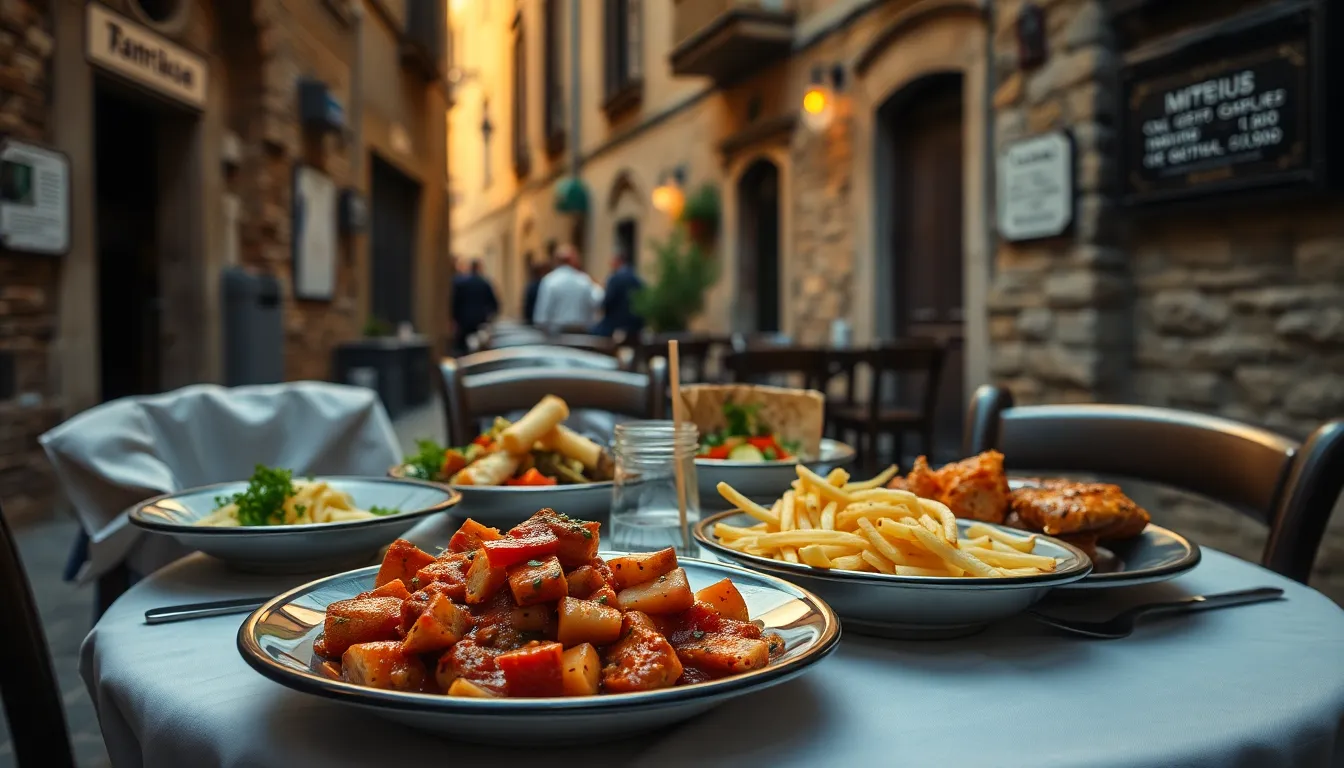
The question I get from almost every rabbi before an Italy trip is some version of this: “Can my people actually eat?” It is a fair question, and the honest answer is one of the happiest parts of my job. Italy is one of the easier countries in the world to lead a kosher-keeping group through, and the food is not a compromise you make to honor kashrut. In Rome, it is one of the reasons to come.
I have led groups with every level of observance, from a Reform congregation that wanted a few good kosher dinners to a strictly observant community where every meal had to meet a high bar. Both are doable in Italy. What changes is the planning, and planning is exactly what we handle. Let me walk you through what keeping kosher across Rome, Venice, and Florence actually looks like on the ground.
Rome: Where Kosher Is Part of the City’s Soul
Start with the good news, because Rome carries it. The Rome Ghetto is home to a living Jewish community more than two thousand years old, and it has the kosher infrastructure to match. The neighborhood around the Great Synagogue has kosher restaurants, bakeries, and shops within a short walk of one another. For a group, this is close to ideal. You can build several days of meals in Rome without ever leaving a comfortable radius.
Roman Jewish cuisine deserves its own paragraph, because your group will remember it. This is one of the oldest Jewish food traditions in the world, shaped over centuries inside the Ghetto. The carciofi alla giudia, deep-fried artichokes pressed flat and crisped golden, is the dish people fly back to Rome for. There are fried zucchini flowers, oxtail and beef preparations, baked goods that exist nowhere else. When a kosher group eats Roman Jewish food in the Ghetto where it was invented, the meal becomes part of the heritage experience rather than a logistical box to check.
The kosher restaurants in the Ghetto vary in their supervision, and an observant group needs the specifics confirmed in advance. That is part of what I sort out before we arrive: which establishments hold which certifications, what the supervising authority is, and what fits your community’s standard. I never hand a group a list and wish them luck. We match the meals to the level of observance before the trip begins.
Venice: Smaller Community, Careful Planning
Venice is a different picture, and I want to be straight with you about it. The Jewish community of Venice is small, and the kosher options are far more limited than in Rome. This is not a problem. It is a planning variable.
There is kosher food to be had in Venice, including in and around the historic Ghetto, the original Ghetto that gave the word to the world. A kosher bakery and dining options connected to the community exist there, and they carry real meaning, eating kosher in the very place where Venetian Jews lived under lock and curfew for centuries. But the quantity is smaller and the hours are narrower than what Rome offers, so a group cannot improvise its way through meals in Venice the way it can in Rome.
For groups passing through Venice, the practical approach is to confirm specific meals in advance, sometimes to arrange catered group meals, and sometimes to carry provisions for the gaps. None of this is difficult when it is planned. It becomes difficult only when a group arrives expecting Rome and finds Venice. Setting expectations correctly is half the work, and we set them clearly before departure.
Florence: Workable With Coordination
Florence sits between the two. It has a Jewish community, a magnificent Great Synagogue with its green dome, and kosher options that, with coordination, support a group comfortably. There is kosher dining associated with the community, and the surrounding region of Tuscany has more kosher availability than many travelers expect, including connections to kosher wine production in the area.
As in Venice, the key word is coordination. Florence is not a city where a kosher-keeping group should wander and hope. With meals arranged ahead, including group dinners and the right supervised sources, Florence supports an observant itinerary without strain. We confirm the specifics for your group’s standard before the trip, the same way we do everywhere.
Building the Kashrut Plan Around the Itinerary
Here is the principle that holds the whole thing together: the meals are designed alongside the route, not bolted on afterward. When I build an Italy itinerary for a kosher-keeping group, food is a first-class part of the planning, not an afterthought.
That means a few concrete things. We confirm the supervision standard your community requires before anything is booked. We anchor the heaviest kosher dining in Rome, where the infrastructure is richest, and we plan more carefully around Venice and Florence, where it is thinner. We arrange group meals where group meals make sense, both for kashrut reliability and because shared meals are where a traveling community actually becomes a community. And we build in the Shabbat meals with particular care, because Shabbat is the spine of a meaningful Jewish week abroad.
If you want to think through how Shabbat itself works on the road, our guide to observing Shabbat during an Italy heritage journey covers the rhythm of building a real Shabbat into the itinerary. And for the wider story your meals are set inside, our overview of Jewish heritage in Italy gives your group the context that turns a kosher dinner in the Ghetto into something more than dinner.
A Note on Levels of Observance
I work with the full range, and I want group leaders to know that the answer is rarely “no.” For a strictly observant group, Italy requires tighter planning and a focus on supervised establishments and arranged meals, with Rome as the strong anchor. For a community with a more flexible standard, the options open considerably, and many find that kosher-style dining and reliable kosher sources together give them an easy and rich experience.
The conversation I have with every rabbi at the start is simply this: what does your community keep, and what does it need? Once I know that, I can tell you exactly what your Italy trip will look like, meal by meal, honestly and specifically. No vague reassurances. A real plan.
With fifteen or more participants, the group leader travels at no cost, which makes the math easier for a congregation weighing a trip where careful kosher planning is part of the value.
FAQ: Keeping Kosher in Italy
Is it easy to keep kosher in Rome?
Rome is one of the easier major cities in the world for a kosher-keeping group. The Rome Ghetto holds a living Jewish community over two thousand years old, with kosher restaurants, bakeries, and shops clustered within a short walk of the Great Synagogue. Roman Jewish cuisine, including the famous fried artichokes, is a heritage experience in itself. Supervision standards vary by establishment, so an observant group should have the specifics confirmed in advance.
Can a strictly observant group keep kosher across all of Italy?
Yes, with planning. Rome offers the richest kosher infrastructure and anchors the itinerary. Venice and Florence have smaller communities and thinner options, which is a planning variable rather than an obstacle. For these cities we confirm supervised sources, arrange group meals, and sometimes carry provisions for the gaps. The supervision standard your community requires is settled before any booking is made.
What is Roman Jewish food, and is it kosher?
Roman Jewish cuisine is one of the oldest Jewish food traditions in the world, developed over centuries inside the Rome Ghetto. Signature dishes include carciofi alla giudia (flattened, twice-fried artichokes), fried zucchini flowers, and distinctive baked goods. Kosher versions are served in supervised restaurants in the Ghetto. We confirm which establishments meet your group’s standard before arrival.
How limited are kosher options in Venice?
More limited than in Rome. Venice has a small Jewish community and narrower kosher availability and hours, including options connected to the historic Ghetto. A group should not improvise meals in Venice. With meals confirmed in advance, sometimes catered, the city works well and carries real meaning, but expectations need to be set correctly before arrival.
How do you plan meals for a kosher group heritage tour?
Meals are designed alongside the route, not added afterward. We confirm your community’s supervision standard first, anchor the heaviest kosher dining in Rome, plan carefully around Venice and Florence, arrange group and Shabbat meals, and match every detail to your level of observance. The starting conversation is simple: what does your community keep, and what does it need.
If keeping kosher is the question standing between your congregation and an Italy trip, let me put it to rest with a real, specific plan. Learn more about our Italy heritage tours, see how the group leader experience works, and contact us to talk through exactly what your community needs.