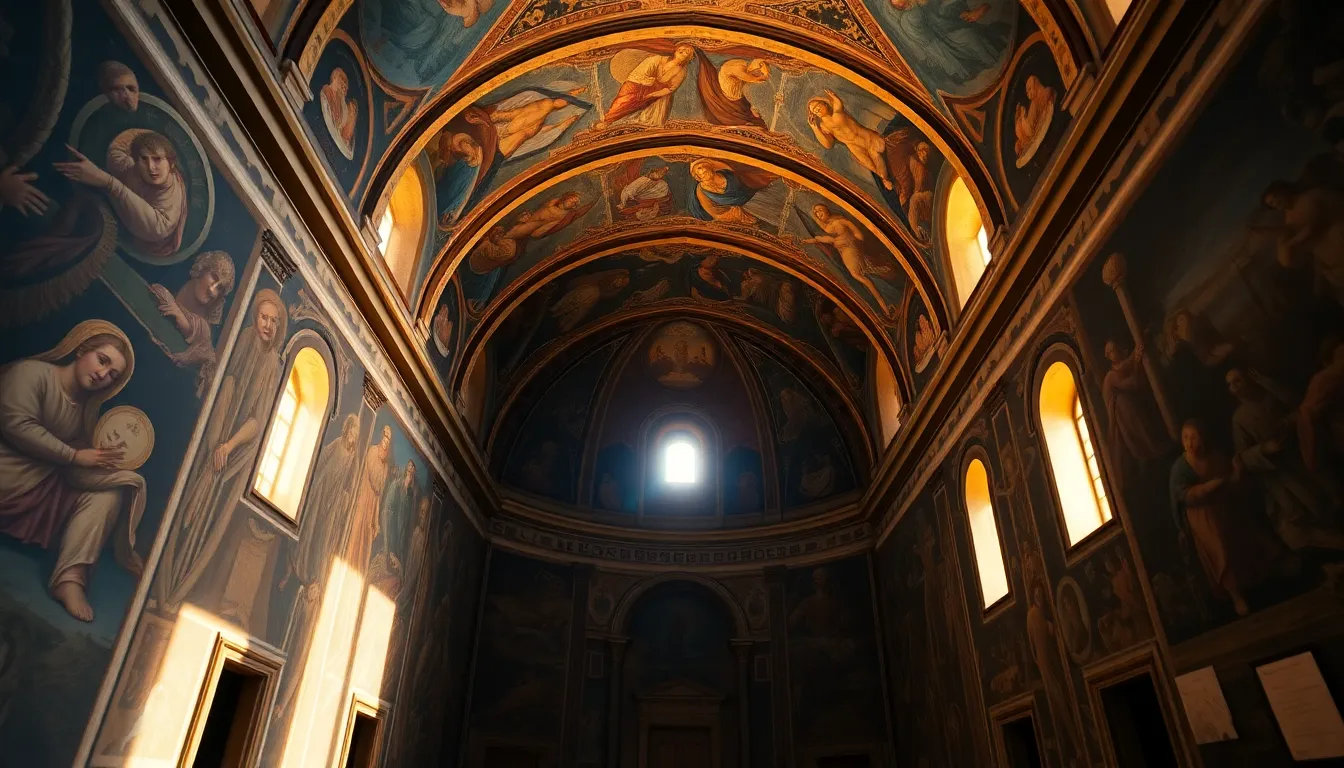
I keep Padua on my Italy itineraries for one room. The Scrovegni Chapel is not large, you could cross it in a few steps, and from the street it is a plain brick box. But when the door opens and a group steps inside, the reaction is almost always the same: a sharp intake of breath, and then silence. The walls and the deep blue vault overhead carry one of the most important works of art in the Western world, and more than that, they carry the entire Gospel, told in pictures, in a way a congregation can read like a book.
Most visitors to Italy never make it to Padua. For a faith-heritage group, that is a real loss, because there are few places where the life of Christ and Mary is laid out so completely and so movingly in one continuous space.
Why the Chapel Was Built
The story behind the chapel has a sharp moral edge that I always share with groups, because it shapes how you read the walls. The chapel was commissioned by Enrico Scrovegni, a wealthy Paduan whose father, Reginaldo, had made the family fortune through usury, the lending of money at interest, which the medieval church condemned as a grave sin. Dante placed Reginaldo Scrovegni among the usurers in the Inferno.
Enrico built the chapel in part as an act of atonement, a way to make amends for the family’s wealth and to plead for his father’s soul and his own. He attached it to his palace and dedicated it around 1305. So this is not a neutral commission. It is a building raised by a man worried about judgment, and that anxiety runs straight through the program of images, all the way to the great Last Judgment on the entrance wall. Knowing this, your group reads the chapel not as decoration but as one man’s prayer in paint.
Giotto and the Birth of a New Way of Seeing
The artist was Giotto di Bondone, and the work he did here, between roughly 1303 and 1305, marks a turning point in the history of Western art. Before Giotto, religious painting tended toward the flat, golden, otherworldly style inherited from Byzantium, figures that floated rather than stood. Giotto put weight back into the human body. His figures have bulk, they cast their gaze at one another, they grieve and embrace and recoil with real emotion. He painted holy events as things that happened to actual people in actual space.
This matters enormously for a faith group, because Giotto’s whole achievement is to make the Gospel human. When you stand in front of his painting of the lamentation over the dead Christ, you do not see a stylized icon. You see a mother bent over her son’s body, angels tearing across the sky in raw grief, figures huddled with their backs to you so that you feel you have walked into a real moment of loss. People who study art history call this the beginning of the Renaissance. People who come to pray simply find that the Gospel suddenly feels close.
Reading the Fresco Cycle
The chapel is designed to be read, and I teach groups to read it in order rather than just gazing around. The frescoes run in three horizontal bands around the walls, and they tell the story in sequence.
The cycle begins with the lives of Joachim and Anne, the parents of the Virgin Mary, drawn from tradition rather than the canonical Gospels. It moves into the life of Mary herself, her birth, her presentation in the temple, her marriage to Joseph. Then it turns to the life of Christ: the Annunciation, the Nativity, the adoration of the Magi, the flight into Egypt, the baptism, the miracles, the entry into Jerusalem, the Last Supper, the betrayal by Judas, the crucifixion, the lamentation, and the resurrection.
I tell groups to find a few scenes in particular. The kiss of Judas, where Giotto freezes the instant of betrayal with the two faces locked together, is one of the most psychologically charged images in all of medieval art. The lamentation, with its grieving angels, is the emotional center of the room. And on the entrance wall, covering the whole surface, is the Last Judgment, with the saved rising and the damned falling, and Enrico Scrovegni himself painted into the scene, kneeling and offering a model of this very chapel to the Virgin. That detail closes the loop: the man who built the room to plead for his soul put himself inside the painting, handing his chapel up as his prayer.
Above it all is the famous vault, a deep, saturated blue scattered with gold stars, with medallions of Christ, Mary, and the prophets. That blue is the first thing groups notice and the last thing they forget.
How a Faith Group Uses the Chapel
For a Christian group, the Scrovegni Chapel is close to ideal, because it is the entire Gospel in one room, in order, told with such humanity that it preaches on its own. I often suggest leaders pause their group in front of three or four key scenes and simply let the images carry the teaching. The lamentation in particular tends to do work that no lecture can.
For groups with a Marian focus, the cycle is unusually rich, because it gives the full arc of Mary’s life from her own parents through to her place in the Last Judgment. And for any group thinking about sin, atonement, and grace, the back-story of why the chapel exists, a man’s attempt to buy back his family’s soul, opens a conversation that goes far deeper than the paint.
This is a quieter, more reflective stop than the headline sites of Rome, and I treat it that way in planning. Padua sits conveniently between Venice and the cities to the west, so the chapel slots neatly into a northern Italy route. It reads well alongside Italy’s lesser-known sacred sites and complements the grander art of the Sistine Chapel, since both rooms wrap a congregation in a single, total vision of the faith from creation or birth through to final judgment.
Practical Access for Groups
Here is the part that requires real planning, because the Scrovegni Chapel is one of the most strictly managed sites in Italy. To protect the fragile six-hundred-year-old frescoes, entry is by timed slot only, and visitors first wait in a climate-controlled chamber for around fifteen minutes while humidity levels are stabilized before the inner door opens. The visit inside the chapel itself is then limited, typically to around fifteen to twenty minutes depending on the season and the booking type.
That short window is why preparation matters so much. As with the Sistine Chapel, the teaching has to happen before your group goes in. I brief groups outside on what they are about to see and which scenes to seek out, so that when the door opens they spend their minutes looking with purpose rather than getting their bearings.
Group numbers per slot are capped, so a larger congregation may need to be split across consecutive entries, and tickets must be reserved well in advance, often weeks ahead in high season. The chapel is part of a wider complex that includes the Musei Civici, and combined tickets are usual. The site is generally accessible, with the main concern being the timed, controlled nature of entry rather than the physical layout.
A guide who knows the cycle can prepare your group thoroughly in the holding room and outside, then leave them free to absorb the chapel in their precious quarter-hour. We handle the timed bookings, the group splits, and the briefing as part of building the day. You can see how Padua fits a wider northern Italy route on our Italy heritage destination page, and how the group leader experience works, including that group leaders travel free with fifteen or more participants.
FAQ: Visiting the Scrovegni Chapel
What is the Scrovegni Chapel famous for?
It holds Giotto’s fresco cycle, painted around 1303 to 1305, which tells the lives of the Virgin Mary and Jesus Christ in continuous bands around the walls, beneath a deep blue starred vault. The work marks a turning point in Western art, where painting became human and emotional, and for faith groups it presents the entire Gospel as a single readable sequence.
Why was the Scrovegni Chapel built?
Enrico Scrovegni commissioned it around 1305 partly as an act of atonement. His family’s fortune came from usury, condemned by the medieval church, and Dante placed his father among the usurers in the Inferno. Enrico built the chapel to plead for his father’s soul and his own, and he had himself painted into the Last Judgment offering a model of the chapel to the Virgin.
How long does a group spend inside the Scrovegni Chapel?
The visit is strictly timed to protect the frescoes. Groups first wait around fifteen minutes in a climate-controlled chamber while humidity stabilizes, then enter the chapel for roughly fifteen to twenty minutes. Because the window is short, I brief groups thoroughly beforehand so they look with purpose once inside.
Do you need to book the Scrovegni Chapel in advance?
Yes, always. Entry is by timed slot with a capped number of visitors, so reservations are essential and often need to be made weeks ahead in high season. Larger groups may be split across consecutive slots. Tickets typically combine with the wider Musei Civici complex.
Is the Scrovegni Chapel worth adding to an Italy heritage tour?
For faith groups, very much so. There are few places where the life of Christ and Mary is laid out so completely and so movingly in one room. It pairs well with a Venice and northern Italy route, and the human depth of Giotto’s images, especially the lamentation and the kiss of Judas, often moves congregations more than larger, more famous sites.
If your community wants to stand inside one room and read the whole Gospel in Giotto’s hand, Padua is worth the detour. We would be glad to handle the timed bookings and build the day around it. Contact us and tell us what matters most to your group.