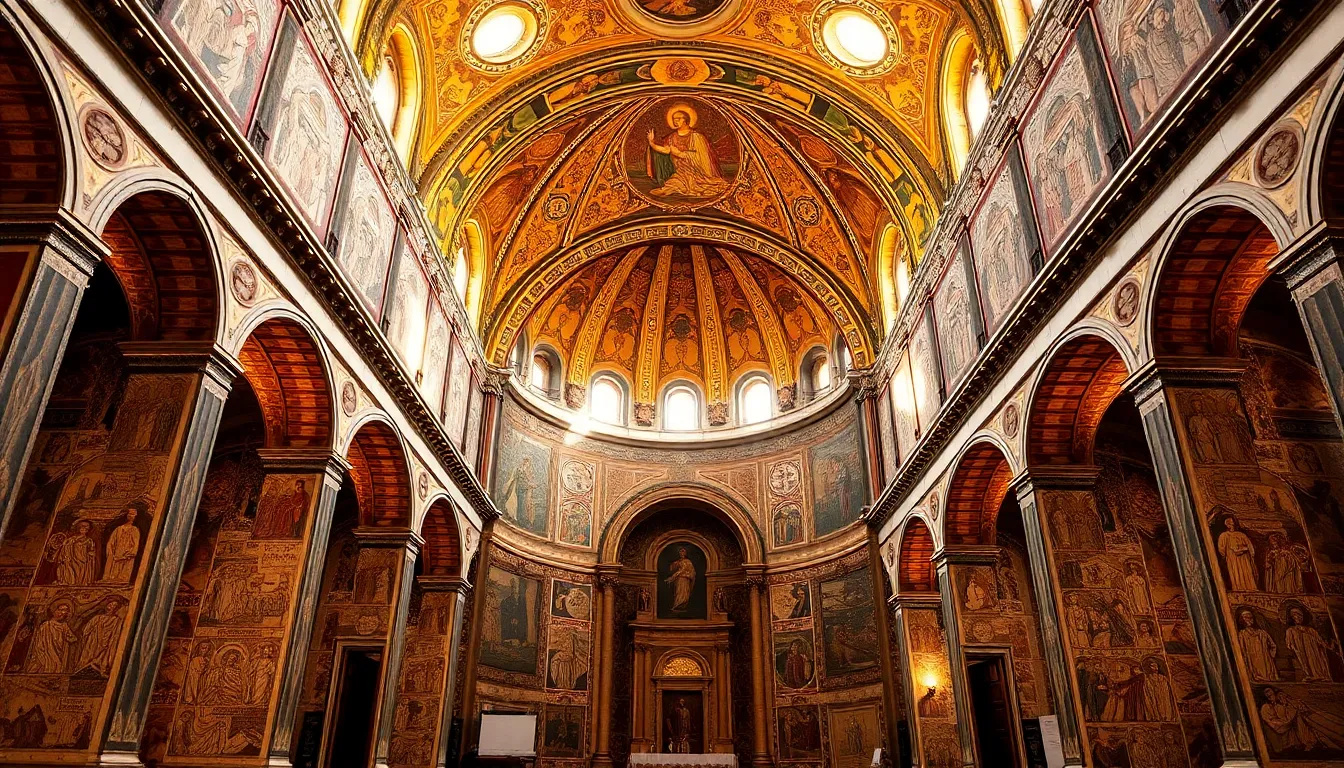
There is a moment that happens in Ravenna almost every time. A group walks into the Basilica of San Vitale, looks up at the apse, and goes quiet. Not the polite quiet of a museum. The real kind. Fifteen hundred years of gold and color pouring down from the curve of the ceiling, and a room full of pastors and educators who have seen a lot of churches simply stop talking. That silence is why I bring groups to Ravenna.
Ravenna is not on most Italy itineraries, which is exactly why it matters. It is a quiet city in the northeast, off the main tourist track, holding some of the most important Christian art that survives anywhere in the world. For a stretch of the fifth and sixth centuries, this was one of the most powerful cities in the Mediterranean, and the mosaics its rulers left behind have never been surpassed. Eight of its monuments are inscribed together on the UNESCO World Heritage list. For a faith group, half a day here changes the whole conversation about early Christianity.
Why Ravenna Holds These Treasures
To understand the mosaics, you have to understand the city’s strange history. In the year 402, as the Western Roman Empire crumbled, the emperor moved his capital from Rome to Ravenna, protected by marshes and close to the sea. For the next few centuries Ravenna was a capital three times over: capital of the Western Roman Empire, then of the Ostrogothic kingdom under Theodoric, and finally the seat of Byzantine rule in Italy under the emperor Justinian.
That last chapter is the key one. When Justinian reconquered Italy from Constantinople in the sixth century, Ravenna became the western showcase of the Byzantine Empire, and Byzantine artists poured their genius into its churches. They worked in mosaic, tiny cubes of colored glass and gold called tesserae, set into the walls and ceilings to catch and scatter light. The result is unlike anything in Rome. This is Eastern Christianity made visible in the West, the meeting point of two halves of the Christian world. Our guide to Italy’s spiritual sites places Ravenna in that wider story.
The Essential Mosaic Churches
A focused group visit centers on three or four sites, all close together in the compact old city.
The Basilica of San Vitale
San Vitale is the masterpiece. Consecrated in 547, its octagonal interior rises to an apse covered in shimmering mosaic. Christ sits enthroned on a blue globe, flanked by angels and saints. But the most famous panels face each other across the sanctuary: on one wall, the emperor Justinian with his court; on the other, the empress Theodora with hers, robed in purple, crowned, jewelled, gazing out across fifteen centuries. These two panels appear in every art history textbook on earth, and seeing them in person is a different experience entirely. The gold catches the light from the windows and shifts as you move. The builders intended that. They understood that divine light should not sit still.
The Mausoleum of Galla Placidia
A few steps from San Vitale stands a small, plain brick building that holds what many visitors remember most. Inside the Mausoleum of Galla Placidia, the ceiling becomes a deep blue night sky scattered with hundreds of golden stars, the oldest mosaics in Ravenna, from around 425. The room is small enough to hold perhaps fifteen people at a time, and the effect is overwhelming. I have watched groups fall silent here even more completely than in San Vitale. There is something about that starry vault, glowing in the dim light, that produces an involuntary stillness in nearly everyone who steps inside.
The Basilicas of Sant’Apollinare
Two great basilicas carry the name of Apollinaris, Ravenna’s first bishop. Sant’Apollinare Nuovo, in the city, is lined with two extraordinary processions in mosaic: a line of virgin martyrs and a line of male martyrs, moving in stately rhythm toward Christ and the Virgin along the upper walls of the nave. Sant’Apollinare in Classe, a short distance outside the city at the old port, holds a vast, luminous apse mosaic of the Transfiguration rendered as a green paradise, with Apollinaris standing among his sheep. Between them they show how Byzantine art told the story of salvation across an entire building.
Together with the Arian and Orthodox baptisteries and a few smaller sites, these make up the UNESCO ensemble. Groups visiting Saint Ambrose’s Milan often pair it with Ravenna, since the two cities together tell the story of how Christianity took root in northern Italy.
What the Mosaics Mean for a Faith Group
It is easy to treat Ravenna as an art stop. It is more than that. These mosaics are theology in glass and gold. They were made to teach a largely illiterate congregation the whole arc of the faith, Christ enthroned, the saints in procession, the martyrs crowned, the night sky of heaven, simply by looking up.
For a Christian group, Ravenna is a window into how the early church worshiped and what it believed, expressed not in words but in light. For groups interested in how Christianity moved between East and West, how Byzantine theology shaped Christian imagination, and how a small city in northern Italy became the bridge between two civilizations, there is no better place. It adds depth that the more famous Roman sites do not, precisely because it tells the Eastern side of a story most travelers only know from the West.
Planning Ravenna for a Group
Ravenna sits in the Emilia-Romagna region, reachable by train and road, often visited as a stop between Venice and the south or as a day trip from Bologna. The old city is compact and walkable, and the major sites cluster within easy distance of one another, which makes it manageable even for groups with mixed mobility.
A combined ticket covers the main monuments, and I strongly recommend booking group entry in advance, especially for the Mausoleum of Galla Placidia, where numbers inside are tightly limited and timed entry is required in busy periods. A focused visit to the essential sites takes about half a day. Bring a guide who can read the mosaics, because the difference between glancing at gold and understanding what each panel is saying is enormous.
For congregations weaving Ravenna into a fuller route, it connects naturally to the rest of the country on our Italy destination page, and our group tour structure makes it easy to add. One thing worth telling your community as you plan: with Heritage Tours, the group leader travels free with fifteen or more participants, which helps the numbers work when you propose the trip.
FAQ: The Ravenna Mosaics
Why does Ravenna have such important Byzantine mosaics?
Ravenna served as a capital three times in the fifth and sixth centuries, of the Western Roman Empire, the Ostrogothic kingdom, and Byzantine Italy under Justinian. When the Byzantines ruled from Constantinople, they made Ravenna their western showcase and filled its churches with mosaics created by Byzantine artists. That is why the city holds Eastern Christian art of a quality found almost nowhere else in the West.
What is the most famous mosaic in Ravenna?
The court panels of Justinian and Theodora in the Basilica of San Vitale are the most famous, reproduced in nearly every art history textbook. Many visitors are equally moved by the starry blue ceiling of the small Mausoleum of Galla Placidia, the oldest mosaics in the city, dating from around 425.
How many mosaic sites are there, and are they all UNESCO listed?
Eight early Christian monuments in Ravenna are inscribed together on the UNESCO World Heritage list, including San Vitale, the Mausoleum of Galla Placidia, the two basilicas of Sant’Apollinare, and the baptisteries. A focused group visit usually concentrates on three or four of the essential sites, which sit close together in the compact old city.
How long should a group spend in Ravenna?
Plan for about half a day to visit the essential mosaic churches without rushing. The old city is small and walkable, and the major sites cluster near one another, so a group can see San Vitale, Galla Placidia, and Sant’Apollinare Nuovo comfortably in a focused morning or afternoon.
Do groups need to book in advance?
Yes, advance group booking is strongly recommended. A combined ticket covers the main monuments, and entry to the Mausoleum of Galla Placidia is tightly limited, with timed entry required during busy periods. Booking ahead avoids long waits and ensures your whole group gets in together.
If Ravenna’s golden silence belongs in your community’s journey, I would love to help you build it in well. Reach out to us and we will map it into your itinerary.