There is a stretch of the book of Acts that almost everyone reads past quickly. It is the part near the very end, after the shipwreck, where the text lists a few place names along the road to Rome: Puteoli, the Forum of Appius, the Three Taverns. They sound like minor logistics, the kind of detail you skim to get to the destination. But I have learned to slow down right here when I am with a group, because these few miles of road hold one of the most quietly moving moments in all of Paul’s story.
Let me show you why this short stretch deserves a full chapter of your attention.
The Bay of Naples Landing
Paul’s ship reached Italy at Puteoli, the city we now call Pozzuoli, on the Bay of Naples. Acts 28:13 records the arrival plainly: they came to Rhegium on the toe of Italy, a south wind sprang up, and the next day they reached Puteoli.
To understand the weight of this landing, you have to understand what Puteoli was. It was not a small fishing village. It was one of the busiest ports in the entire Roman Empire, the main harbor where the great grain ships from Alexandria delivered the wheat that kept the city of Rome fed. Sailors, merchants, soldiers, and travelers from every corner of the Mediterranean passed through here. When Paul stepped off the ship, he stepped into one of the most connected commercial hubs of the ancient world.
Today, Pozzuoli still carries that history on the surface. You can see the remains of a large Roman amphitheater, one of the biggest in Italy, and the old port area where ships once docked. Standing there with a group, looking out at the same bay, you get a real sense of the doorway Paul walked through to enter Italy.
A Community Already Waiting
Here is the detail in Acts 28 that I never let a group miss. At Puteoli, Paul found brothers and sisters, fellow believers, and they invited him to stay seven days.
Think carefully about what that means. The gospel had already reached the Bay of Naples before Paul ever arrived. There was a functioning Christian community in this busy port city, and they welcomed a prisoner under guard into their homes for a week. The faith had traveled the trade routes ahead of the apostle.
I find that this single sentence reshapes how people picture the early church. It was not a fragile thing waiting for famous apostles to plant it city by city. It was already moving on its own, carried by ordinary believers along the same shipping lanes that carried grain. For a group standing in Pozzuoli, that realization lands hard and stays with them. Our broader guide to the spiritual sites of Italy for faith travelers builds on exactly this idea, that the faith was woven into the Roman world far more deeply than most people assume.
The Appian Way North
From Puteoli, the journey to Rome went overland, and the road was the Via Appia, the Appian Way. This was the queen of Roman roads, built starting in 312 BC, more than three centuries before Paul traveled it. It ran from the Bay of Naples region up to Rome and on toward the heel of Italy.
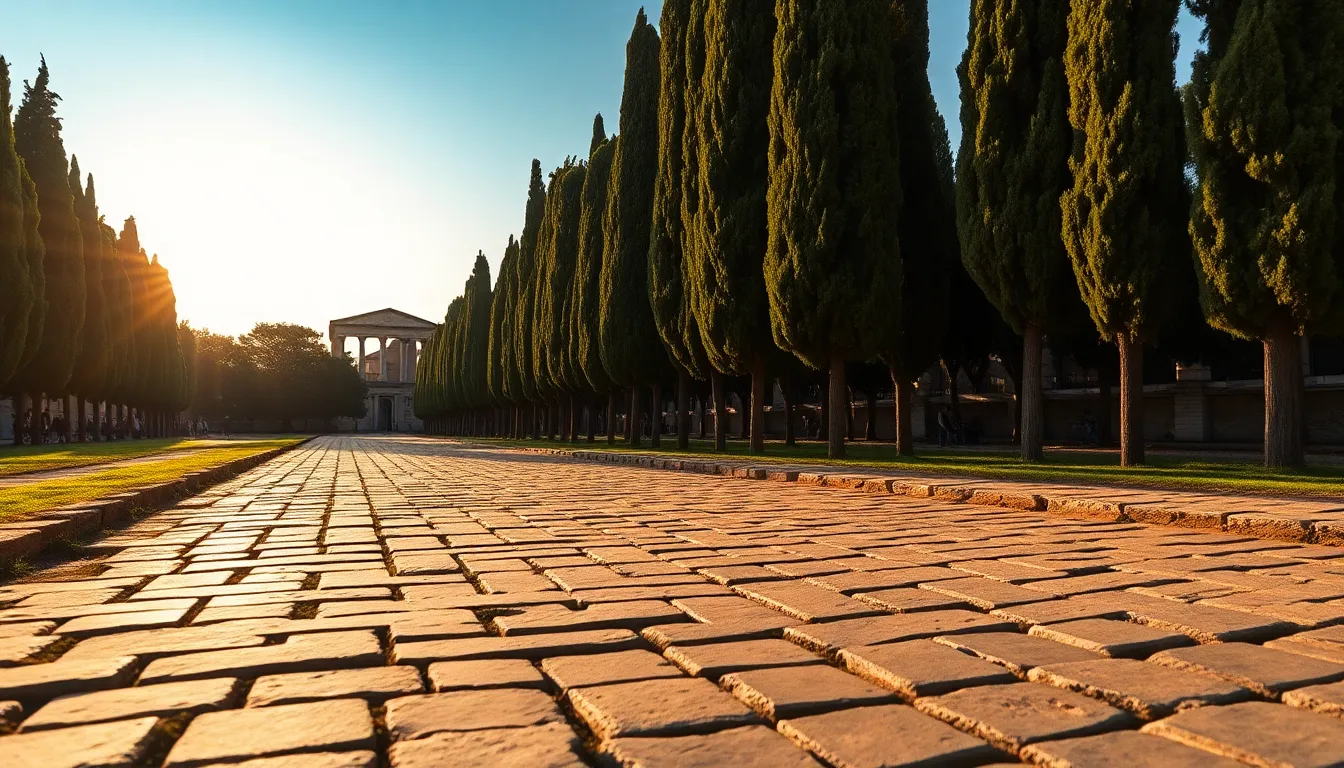
What makes this road so meaningful for a faith group is that it still exists. Outside Rome, long sections of the original Appian Way survive, paved with the same dark basalt stones, lined with ancient tombs and cypress trees, quiet in a way the modern city never is. Walking it is not a reconstruction or a reenactment. It is the actual surface that carried Paul toward the capital. For many of my travelers, an hour on foot here outweighs a full day of indoor museum visits. Our article on the footsteps of Paul in Italy traces the full journey from Malta to Rome if your group wants the complete arc.
The Forum of Appius and the Three Taverns
Now we reach the heart of it. As Paul moved up the Appian Way, word ran ahead that he was coming. Acts 28:15 tells us that the believers in Rome heard about it and came out to meet him. Some traveled all the way to the Forum of Appius, about forty-three miles from the city. Others met him a little closer, at the Three Taverns, roughly thirty-three miles out.
These were real waypoints on the road. The Forum of Appius was a market town and canal stop, and the Three Taverns, in Latin Tres Tabernae, was a posting station and rest point. They were ordinary places, the equivalent of highway service stops. But they became the setting for something extraordinary.
The text says that when Paul saw these believers, he thanked God and took courage.
I always pause on that line. Paul had survived a storm, a shipwreck, a snakebite, a long detention, and he was walking toward a trial before Caesar with no guarantee of the outcome. And what restored his spirit was not a change in his legal situation. It was the sight of fellow believers who had walked a day or more out from the city just to meet him on the road and walk the rest of the way with him.
They did not fix anything. They simply came. For a faith community, that is the whole lesson of these few miles. Showing up is its own ministry. I have watched groups absorb that on the Appian Way and carry it home into how they care for their own people.
And So We Came to Rome
The road that began at Puteoli ends with one of the most satisfying lines in Scripture: “And so we came to Rome.” Paul entered the capital not alone, but accompanied by friends who had come out to meet him. Whatever waited for him in the city, he arrived among his people.
For a group, ending this part of the journey in Rome itself, at the sites tied to Paul’s final years, closes the loop that started on the Bay of Naples. The traditional location of his tomb is marked by the Basilica of St. Paul Outside the Walls, which makes a fitting final stop after walking his road.
Building the Route Into a Trip
When I lead this section of an Italy itinerary, I try to follow the order Acts gives. We begin at Pozzuoli on the bay, talk through the landing and the seven days with the believers there, then move to the Appian Way to walk a stretch of the road and read Acts 28 aloud at the spot it describes. The reading on the road is simple, but it is the moment groups remember.
Because group leaders travel free with fifteen or more participants, a focused, Scripture-anchored route like this is well within reach for a church or study group to organize. You can see how the group structure works on our group heritage tours page, and our Italy destination page shows how this route fits into a wider trip.
FAQ: Puteoli and the Three Taverns
What was Puteoli in the Bible?
Puteoli was the Roman port on the Bay of Naples where Paul first landed on the Italian mainland, recorded in Acts 28:13. It was one of the busiest harbors in the empire, the main entry point for Egyptian grain ships supplying Rome. The city is now called Pozzuoli, and it still preserves a large Roman amphitheater and the remains of its ancient port.
What were the Three Taverns in Acts?
The Three Taverns, in Latin Tres Tabernae, was a rest station on the Appian Way about thirty-three miles south of Rome. In Acts 28:15, believers from the Roman church traveled out to this stop, and to the Forum of Appius further out, to meet Paul as he approached the city. When Paul saw them, the text says he thanked God and took courage.
How far did the Roman believers walk to meet Paul?
The Forum of Appius was roughly forty-three miles from Rome, and the Three Taverns about thirty-three miles. Believers came out from the city to both points, meaning some of them walked well over a day’s journey simply to greet Paul and accompany him on the final stretch of road into the capital.
Can groups walk the same road today?
Yes. Substantial sections of the original Appian Way survive just outside Rome, paved with the ancient basalt stones and lined with tombs and cypress trees. Walking a stretch of this road is one of the most meaningful stops for any group following Paul’s journey, and it can be combined with the Roman sites tied to his final years.
How does this fit into a larger Italy faith itinerary?
The Puteoli-to-Rome route pairs naturally with the Vatican, the catacombs, and other early Christian sites in Rome, plus a possible side to the Bay of Naples. Most groups give the Paul-focused portion two to three days inside a broader Italy heritage trip, following the Acts 28 sequence from the coast to the capital.
If your community wants to trace these few unforgettable miles on the ground, from the harbor at Pozzuoli to the road where friends met Paul, I would be glad to help you plan it. Contact us and let us start the conversation.