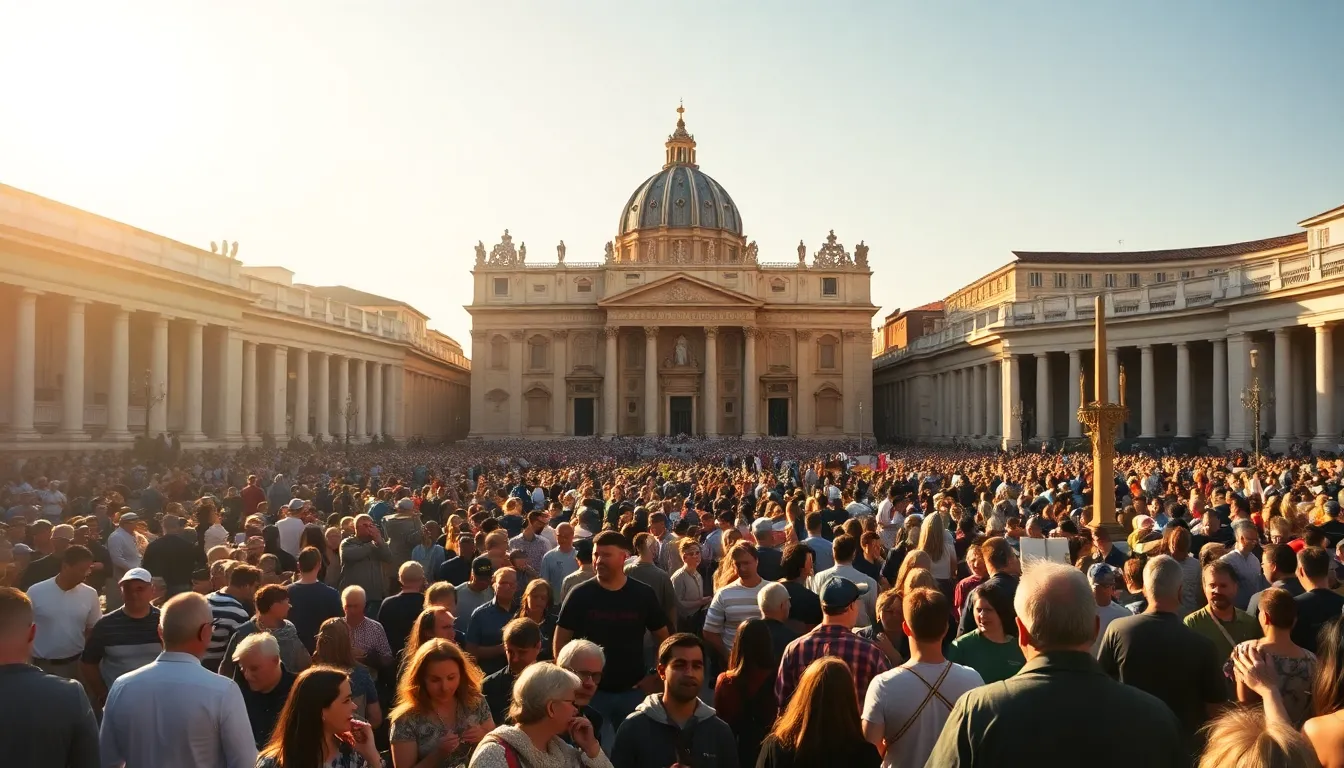
I have led a lot of groups to Rome over the past forty years, but the ones who travel for Holy Week are different when they come home. There is something about being physically present in the city during the days from Palm Sunday to Easter Sunday that changes people. They do not come back saying they saw the Vatican. They come back saying they were there for it. That distinction is the whole reason a group plans a trip around this week, and it is also the reason the planning has to be done carefully.
This is the week I get asked about more than any other for Italy, so I want to walk you through it honestly: what actually happens liturgically across those days, what the crowds are really like, and how a group leader plans so the experience lands instead of unraveling. If you are still weighing the season itself, our spring heritage guide and the broader best-time-to-visit overview put Easter in the context of the wider calendar.
What Holy Week in Rome Actually Looks Like
Holy Week is not one event. It is a sequence, and understanding the sequence is what lets you build a meaningful itinerary instead of just aiming everyone at Easter Sunday.
It begins on Palm Sunday, with a papal Mass in St. Peter’s Square. Palms and olive branches are blessed and carried, and the square fills early. This is the opening of the week and a strong, less saturated day to be present, since the largest crowds build later.
The center of the week falls on the Triduum, the three days from Holy Thursday through Easter Sunday. On Holy Thursday the focus turns to the Mass of the Lord’s Supper and the commemoration of the Last Supper. On Good Friday, the most moving evening for many of my groups is the Way of the Cross, the Via Crucis, held at night at the Colosseum. The stations are prayed by torchlight with the ancient amphitheater lit behind them, and the atmosphere is unlike anything else in the Christian year. Holy Saturday is quiet by day and culminates in the Easter Vigil in St. Peter’s after nightfall, a long, candlelit liturgy that moves from darkness into light.
Then comes Easter Sunday: the papal Mass in St. Peter’s Square, followed at midday by the Urbi et Orbi blessing, delivered to the city and the world from the central balcony of the basilica. This is the single largest gathering of the week, and the square and the surrounding streets are packed long before it begins.
The Crowds: Be Honest With Your Group
I am not going to soften this, because a group that is surprised by the crowds has a harder week than a group that expected them. Holy Week and Easter draw the largest crowds Rome sees all year. Hotels near the Vatican commit far in advance, lines at major sites stretch into hours, and the streets around St. Peter’s become genuinely dense in the final days.
The papal liturgies in St. Peter’s Square are free, but the seated and standing areas require tickets distributed in advance through the Prefecture of the Papal Household, and they are requested well ahead of time. Even with tickets, you arrive early and you stand for a long stretch. For Easter Sunday Mass and the Urbi et Orbi, “early” can mean hours before the start to get a usable position.
This matters most for the makeup of your group. If you are traveling with elderly members or anyone with mobility challenges, a full day of standing in a packed square is not realistic, and pretending otherwise sets people up to suffer. The answer is not to skip Holy Week. The answer is to plan a version of it that your actual people can sustain, which I will come to in a moment. Our guide to accessibility on Italy heritage tours goes deeper on the specifics of moving a mixed-mobility group through Rome.
How Groups Plan Around the Week
The leaders who get this right tend to share a few habits.
They start early. Twelve to eighteen months out is the right runway for an Easter group. Hotel blocks near the Vatican are the constraint, and the closer you start to the date, the worse your options. Papal liturgy tickets also need to be requested in advance.
They choose their anchor days. You cannot, and should not, try to attend every liturgy at full intensity. A group that goes hard at Palm Sunday, the Good Friday Via Crucis, and Easter Mass will be exhausted and will have rushed the rest. I usually help a leader pick two or three liturgical anchors that matter most to their congregation, and then build calmer heritage days around them: the catacombs, the major basilicas outside the Vatican, the Jewish Ghetto, a quieter morning at a site away from the crowds.
They plan for the standing. For groups that include members who cannot stand for hours, we build alternatives: watching a liturgy from a less dense vantage, attending a Mass at one of the other great basilicas rather than the packed square, or pairing the people who want the full Easter Sunday experience with a gentler parallel plan for those who do not. Nobody has to do the hardest version to have a real Holy Week.
They pad the logistics. Streets close around the Vatican during major liturgies. Hotel pickup and timed entry to sites are not luxuries during this week, they are what keeps your group from spending the week standing on corners and in lines. Heritage Tours arranges hotel pickup and dropoff and pre-arranged timed access precisely so that the time your group spends is spent inside the experience, not waiting on the edge of it.
Beyond the Vatican
One thing I always tell Christian groups: Holy Week in Rome is bigger than St. Peter’s Square. The major basilicas, San Giovanni in Laterano, Santa Maria Maggiore, San Paolo Fuori le Mura, all hold their own liturgies through the week, often with far more room and atmosphere than the packed center. Some of the most affecting moments my groups have had were not at the headline events but at a Holy Thursday evening service in a quieter basilica, where the congregation could actually be a congregation rather than part of a crowd of tens of thousands.
For groups that want the spiritual weight of Holy Week with a gentler footprint, building the itinerary around these basilicas, with one or two of the great papal moments as peaks, often delivers a richer week than trying to muscle through the densest events.
FAQ: Traveling to Italy for Holy Week and Easter
How far in advance should we book a Holy Week trip to Rome?
Twelve to eighteen months. Holy Week is the busiest week of the year in Rome, and hotel blocks near the Vatican fill far ahead. Tickets for the papal liturgies in St. Peter’s Square are requested in advance through the Prefecture of the Papal Household. Starting early also gives you the runway to build your group and present the trip properly to your congregation.
Do you need tickets for the papal Easter Mass?
The Masses in St. Peter’s Square are free to attend, but the seated and standing areas require tickets distributed in advance through the Prefecture of the Papal Household, requested well ahead of the date. Even with tickets you arrive early and stand for a long stretch. For Easter Sunday and the Urbi et Orbi blessing, expect to be in position hours before it begins.
What are the most important Holy Week liturgies for a group to attend?
Most groups anchor around two or three: Palm Sunday Mass, the Good Friday Way of the Cross at the Colosseum, the Easter Vigil on Holy Saturday night, and Easter Sunday Mass with the Urbi et Orbi blessing. Trying to attend all of them at full intensity exhausts a group. Pick the ones that matter most to your congregation and build calmer heritage days around them.
Is Holy Week in Rome realistic for a group with elderly members?
Yes, with the right plan. The packed square and hours of standing on Easter Sunday are not realistic for everyone, but Holy Week is far bigger than that single event. Liturgies at the other great basilicas offer the same spiritual depth with more room and seating, and a group can split between a full Easter Sunday plan and a gentler parallel one. The key is planning the version your actual people can sustain.
When does Easter fall in Italy each year?
Easter is a moveable feast and usually falls in late March or April, with the exact date varying year to year based on the lunar calendar. Holy Week is the week immediately before it, running from Palm Sunday through Holy Saturday. Because the date shifts, confirm the specific year’s calendar early, since it determines hotel availability and your entire planning timeline.
If Holy Week in Rome is the experience you want to give your congregation, the planning starts long before the trip does, and I would be glad to help you shape it. Explore our Italy heritage tours, see how our group journeys work, and contact us to begin building your Easter itinerary.