The hardest conversation I have with a group leader is rarely about money or dates. It is the one where a pastor lowers his voice and says, “I have a few people in the congregation who really want to come, but I am worried about the walking.” After forty years of leading heritage groups through Italy, I have come to believe that this conversation, handled honestly and early, is what separates a trip where everyone thrives from a trip where someone spends a week feeling like a burden.
So let me be direct about what Italy actually demands of a body, site by site. Italy is one of the most beautiful heritage destinations on earth and one of the least naturally accessible. The country was built across two thousand years on hills, over cobblestones, with stairs everywhere and elevators almost nowhere in its oldest buildings. That is the truth. The good news is that with planning, a mixed-mobility group can have a deep, full experience here. The bad news is that wishful thinking does not climb stairs. You have to plan it.
If you are pairing this with a Holy Week trip, read it alongside our Holy Week and Easter guide, because the Easter crowds add a layer of difficulty on top of everything below.
The Thing Nobody Warns You About: Cobblestones
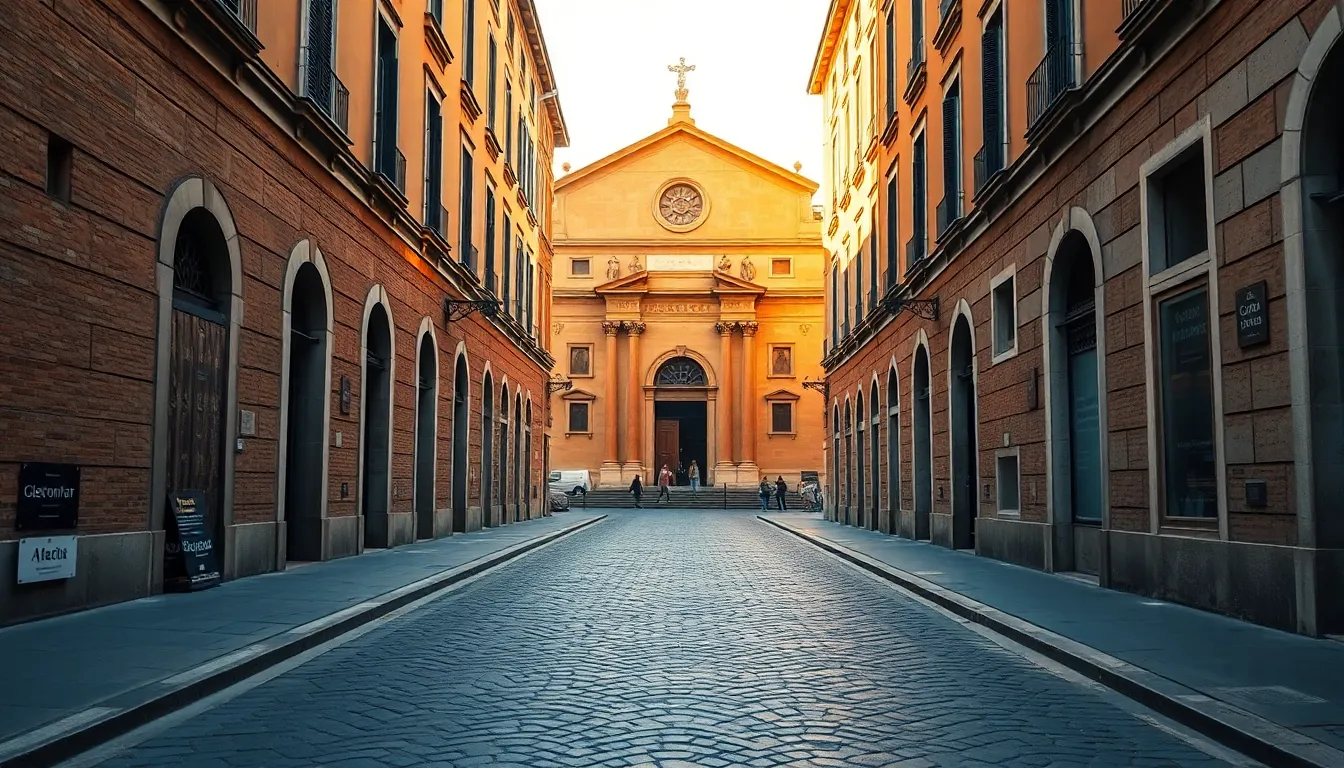
Before any specific site, understand the surface. Rome, Florence, Venice, and most of the historic centers your group will walk are paved in sampietrini, the small square cobblestones, or in uneven stone that has shifted over centuries. This is the single most underestimated accessibility challenge in Italy.
For someone using a wheelchair, cobblestones are jarring and slow. For someone with a cane or a recent hip or knee replacement, they are a constant trip hazard. Even fully able travelers feel cobblestones in their feet and ankles by the end of a long day. Footwear matters enormously, and so does pacing.
This is also why I am cautious about long unstructured walking blocks for mixed groups. A “free afternoon to wander” sounds generous, but for a member with mobility limits it can mean an afternoon of anxiety on bad footing with no place to sit. Building in regular seated rest stops, cafés, benches, the interior of a cool church, is not coddling. It is what makes the day work for everyone.
The Vatican: Better Than Most, With Caveats
The Vatican is one of the more accessible major sites in Italy, which surprises people. St. Peter’s Basilica has a step-free entrance available, and the vast interior is largely flat once you are inside. Wheelchairs are available to borrow. The Vatican Museums have elevators and an accessible route, and they loan wheelchairs as well, though the route is long and the galleries are immense, so even an accessible visit is a lot of distance.
The caveats are real. The dome climb at St. Peter’s involves hundreds of narrow, spiraling steps and is not accessible at all, full stop, even with the elevator that covers the first portion. Security and entry lines can be long, which means standing, so timed entry matters more for groups with mobility needs than for anyone else. And during Holy Week or peak season, the sheer density of the crowds becomes its own barrier regardless of the building’s features.
For a group with members who cannot manage long distances, the Vatican is doable, but it should be planned as a focused visit with a clear route and rest points, not an open-ended all-day march.
The Catacombs: Know Before You Commit
The catacombs along the Appian Way are among the most moving heritage sites in Rome for Christian and Jewish groups alike, but they are also among the least accessible. They are underground, reached by stairs, with uneven floors and low ceilings in narrow passages. There are no elevators in the historic burial galleries.
For a member who uses a wheelchair or cannot manage stairs, most of the catacombs are simply not navigable. This is not a planning failure you can engineer around; it is the nature of a second-century underground burial network. What you can do is plan honestly: if the catacombs are central to your itinerary, have a meaningful parallel plan for members who cannot descend, perhaps time at the basilica above or a nearby site, so that no one is left sitting in a parking lot. I would rather a leader know this a year out than discover it at the entrance.
Venice: Beautiful and Genuinely Difficult
Venice deserves its own honest paragraph, because it is the hardest major Italian city for limited mobility, and the difficulty is structural. The city is a network of islands connected by bridges, and most of those bridges are arched with steps. Getting from one part of Venice to another on foot almost always means going up and over stairs.
The vaporetto water buses are the great equalizer here, and they are accessible, with level boarding at many stops, which lets a group move across the city without the bridges. Some routes and stops are better than others. With careful routing built around the water buses and the more accessible stops, Venice is possible, including visits to the synagogues of the old Ghetto and to St. Mark’s area. But it requires a guide who knows which bridges have ramps, which do not, and how to sequence a day so it does not strand anyone. An improvised Venice day is where mixed-mobility groups get into trouble.
Hill Towns and Smaller Sites: Charm With a Cost
The smaller heritage sites are often the most affecting, the tufa town of Pitigliano, the old Jewish community in Ferrara, the hill towns of Tuscany. They are also frequently the least accessible, because their charm comes from exactly the medieval steep streets and stairs that limited mobility cannot manage.
This does not mean skipping them. It means choosing which ones, and planning the visit shape. Some have a viewpoint or a lower section that is reachable, even when the full town is not. The honest approach is to select the smaller sites with your group’s real abilities in mind rather than building a route that looks wonderful on paper and excludes half your people in practice.
How We Plan a Mixed-Mobility Group
The way I approach this with a leader is to start from the people, not the itinerary. Before I design a single day, I want to know who is coming and what they can sustain. From there a few practices carry most of the weight.
Hotel pickup and dropoff matters more for accessibility than almost anything else, because it removes the long walks to and from public transport that quietly exhaust people with limited mobility. Timed entry removes the standing-in-line problem at the major sites. Wheelchair-accessible transport can be arranged where it is needed. And throughout, the route is built with seated rest points and realistic distances rather than an ambitious wishlist.
Most of all, I plan for honest parallel options at the genuinely inaccessible sites, the catacombs, the dome climb, the steepest hill towns, so that the members who cannot do the hard version still have something meaningful to do, in dignity, rather than waiting outside. A heritage trip should not ask anyone to feel like the reason the group slowed down.
FAQ: Accessibility on Italy Heritage Tours
Is Italy accessible for travelers with limited mobility?
Partly. Italy’s historic centers were built on hills, over cobblestones, with stairs and few elevators, so it is one of the less naturally accessible heritage destinations. That said, with careful planning, a mixed-mobility group can have a full, meaningful experience. The key is honest site-by-site planning, accessible transport, timed entry, built-in rest points, and parallel options at the genuinely inaccessible sites.
Is the Vatican wheelchair accessible?
Largely, yes. St. Peter’s Basilica has a step-free entrance and a mostly flat interior, and both the basilica and the Vatican Museums loan wheelchairs and offer accessible routes with elevators. The dome climb is not accessible and involves hundreds of narrow steps. Distances are long even on the accessible route, so plan the Vatican as a focused visit with rest points rather than an open-ended day.
Can someone in a wheelchair visit the catacombs?
Generally no. The catacombs are underground burial galleries reached by stairs, with uneven floors and narrow passages and no elevators, so most are not navigable for wheelchair users or anyone who cannot manage stairs. If the catacombs are central to your trip, plan a meaningful parallel option, such as the basilica above or a nearby site, for members who cannot descend.
How difficult is Venice for someone with mobility issues?
Venice is the hardest major Italian city for limited mobility, because it is connected by arched, stepped bridges. The accessible water buses are the solution, with level boarding at many stops, letting a group cross the city without the bridges. With routing built around the more accessible stops and a guide who knows which bridges have ramps, Venice is possible, but it requires careful planning rather than improvisation.
How should a group leader plan for members with different mobility levels?
Start from the people, not the itinerary. Find out who is coming and what each person can sustain before designing the days. Then use hotel pickup and dropoff to cut long walks, timed entry to avoid standing in lines, accessible transport where needed, and built-in seated rest stops. Most importantly, build honest parallel options at the genuinely inaccessible sites so no one is left out or made to feel like a burden.
If you have members who want to come but you are worried about the walking, that worry is exactly what I want to hear about early, not at the airport. Explore our Italy heritage tours, see how our group journeys are built, and contact us so we can plan a trip your whole congregation can actually share.