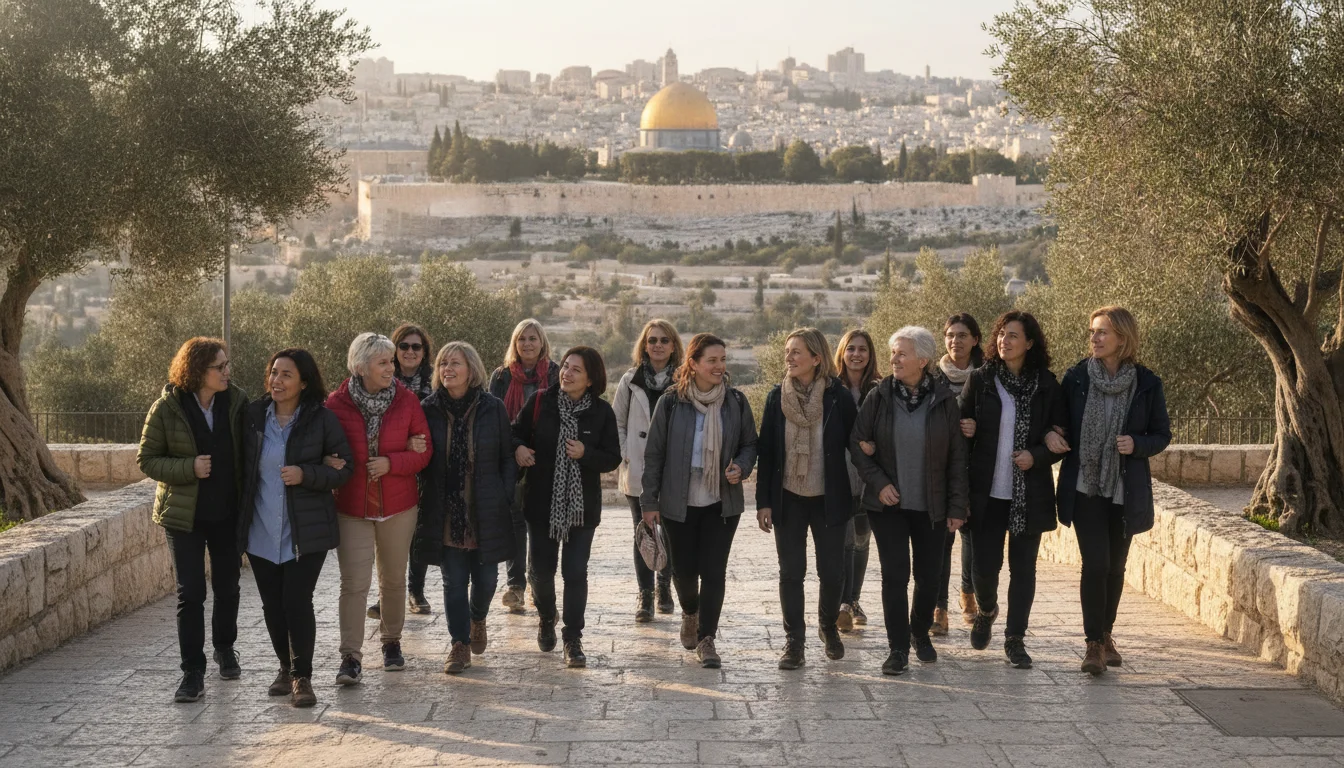
When a women’s ministry leader calls me about the Holy Land, she is rarely asking whether the women want to go. She already knows they do. Half her ladies have talked about walking where Jesus walked for years. What she is really asking is how she, one person with a full calendar and no travel-agency background, is supposed to turn that longing into a real trip with real dates that fifteen or thirty women actually board a plane for. That is a fair question, and it has a clear answer.
I have built heritage journeys for more than forty years, and a large share of them have been women’s ministry trips to Israel. So let me walk you through it the way I would if we were sitting across a table: how the money works, how you fill the group, how you shape the days so the women come home changed, and how to lead without carrying the whole thing on your back. This is written for you, the organizer, not for the woman in seat 14B. Your decisions are different from hers, and this guide is about your decisions.
Start With Why This Trip, Not Just Where
Before dates, before a budget, before a single flyer, get clear on what kind of women’s trip this is. It matters more than people expect, because it shapes who says yes.
A women’s ministry trip to the Holy Land usually falls into one of a few shapes. Some are built around a book of the Bible your women have been studying together, so the land brings the text to life. Some are simply a milestone journey, a group of women who have prayed together for years finally standing at the empty tomb. None of these is more valid than another. But naming yours gives you a message, and a clear message is what recruits.
I tell leaders this all the time: “a trip to Israel” is vague, and vague does not fill a plane. “Ten days walking the Gospels through Galilee and Jerusalem next March, the same ground we have been studying on Wednesday nights” is concrete, and concrete moves women from interested to committed. If you want a fuller framework for the whole process, our complete guide to planning a group pilgrimage lays out every stage from first idea to final payment.
The Money Question, and Why You Might Travel Free
Here is the part that stops most leaders before they start, so let me put it plainly. On our group heritage tours, the group leader travels free when the group reaches fifteen or more paying travelers.
Free means her full trip is covered: international flights, hotel accommodation, ground transportation, site entry fees, and the group meals built into the itinerary. It is not a partial discount. A group of fifteen paying women generates enough margin inside the trip’s costing to carry one additional traveler, and that traveler is you, the leader. You are the reason the group exists, so the model is built around your seat being the complimentary one.
Think about what that does to your decision. You are no longer asking your church to send you on an expensive trip out of the missions budget. You are organizing a journey your women pay into, and your own participation is simply part of how the trip is structured. That reframing takes the awkwardness out of it, and it takes the cost pressure off your family.
Two things worth knowing early:
- Below fifteen, the trip is still absolutely possible. We run groups of ten to fourteen women regularly. They just do not qualify for the free-leader benefit, because the economics that fund the complimentary seat start at fifteen. In that range the leader pays a participant’s price, or the group agrees to absorb a small premium to cover her seat.
- Above fifteen, the math gets friendlier. Larger groups, in the range of twenty-five or thirty, sometimes open room for a reduced or complimentary second seat, which many women’s leaders use for a co-leader, an assistant, or a spouse who helps run logistics. If that matters to you, raise it early so we can build toward it.
If the cost mechanics are the hurdle for your board or your women, our breakdown of what a church group trip to Israel actually costs and the piece on how many travelers you need for the leader to go free both go deeper on the numbers.
How to Recruit Fifteen Women Without Chasing Strangers
This is the fear I hear most: “I could never find fifteen.” You do not need to find fifteen strangers. You need to start with the women already leaning in and let them bring others.
Begin With Your Core
Every women’s trip I have run started with a small core of committed travelers, usually six to ten women who wanted to go before there were any details at all. Name them in your head right now. Those women are your foundation. Once they commit, the group grows through them, because women travel with the friends they already study, serve, and pray beside. A trip like this fills through relationships, not announcements.
Give a Real Date and a Real Itinerary
Open-ended interest evaporates. “We might do Israel someday” never converts. The moment you can say “we depart March 8th, here is the ten-day route, here is the price per woman, here is the deposit,” decisions get made. Put a real itinerary and real dates in front of your women and watch the maybes turn into yeses. I have watched groups cross from thirteen to nineteen in the final two months simply because the trip stopped being an idea and became a plan.
Plan Far Enough Ahead
Six to nine months is the sweet spot for a group of fifteen to thirty women. That gives your ladies time to budget, request time off work, and arrange childcare or family coverage, which matters enormously for women who hold their households together. Larger groups, or trips timed around Easter or a Jewish holiday season, want nine to twelve months. Early planning is not just logistics, it is recruiting runway. For more on filling a group, our guide to recruiting for a church trip covers the promotion side in detail.
Build the Trip Around a Women’s Bible Study
If your women already study together, the strongest women’s ministry trips are essentially your Bible study, taken to the ground where it happened. This is where a Holy Land journey becomes something no classroom can match.
Picture reading the account of the woman at the well while standing near Jacob’s well, or Ruth’s story with the fields of Bethlehem in view, or the resurrection narrative in a garden outside the Old City walls. When the text and the terrain meet, the women stop reading Scripture as history and start walking inside it. That is the heart of a Bible study trip to Israel, and it is why I encourage leaders to keep a devotional rhythm through the days, not just a sightseeing checklist.
Practically, that means building short readings and reflection moments into the itinerary at the sites that carry them. A good operator plans for this. You bring the spiritual leadership and the passages your women know; we make sure the bus stops long enough, the site is accessible, and there is a quiet place to gather. Your job is to open the Word at the right stone. Ours is to get you there and make everything else invisible. You can see how the land itself supports this on our Israel heritage page.
How to Plan a Couples Ministry Heritage Trip
Sometimes a women’s ministry leader tells me the interest has spilled over. The husbands want in, and now she is looking at a couples trip. This is common, and it is a wonderful problem to have, but it does change a few of your decisions.
Couples trips fill faster per household, since one yes brings two travelers, so your path to fifteen is often shorter. The recruiting message shifts, though. A couples heritage trip is framed around shared experience, walking the Gospels together, praying at the same sites side by side. Build a little more free time into the evenings than you would for a women-only group, because couples value unhurried moments together in a place like this.
The free-leader model works exactly the same way. Fifteen paying travelers, whether that is fifteen individuals or a mix of couples and singles, brings the leader’s seat to zero. For a couples trip, many leaders aim for the larger-group threshold specifically so the complimentary second seat can cover a spouse who co-leads. If you are weighing a couples version, our guide to organizing a church group trip to Israel walks through the logistics that apply to mixed groups.
How to Plan a Widows or Singles Ministry Trip
A trip for the widows and single women in your congregation is one of the most meaningful journeys a leader can build, and it deserves its own thought, because the practical concerns are real and specific.
Traveling companionship is the first one. Many widows and single women hesitate to travel alone, and a ministry group solves exactly that. You are not selling a tour, you are offering a community to walk with. Say that plainly in how you invite them. Rooming is the next practical piece. Some women will want a roommate to share costs and company, and some will want the privacy of a single room and are glad to pay the supplement for it. Ask early and pair thoughtfully. Pace and access matter too. A group that includes older widows wants an itinerary that builds in rest and keeps walking distances reasonable.
The good news is that the trip economics do not care whether your travelers are married or single. Fifteen paying women, however their households are shaped, is what unlocks your free seat. A widows or singles trip is often where the free-leader model matters most, because these women may be traveling on fixed incomes and every dollar of value in the trip counts. When you can tell them the leader travels free and the price reflects a well-run group, you remove one more reason to say “maybe next year.”
Your Real Job Once the Logistics Are Handled
Here is what I most want you to hear. When the free-leader model takes your personal cost off the table, and a good operator takes the buses, hotels, entries, and daily problem-solving off your plate, something important happens. You stop being the trip’s accountant and travel agent. You become its shepherd again.
That is the point of all of it. Your calling on this journey is to lead your women spiritually, to read the Word at the water’s edge, to pray with a widow at the Garden Tomb, to hold space when the moment at Golgotha overwhelms someone. You cannot do that if you are counting heads and chasing a bus schedule. The structure I have described, the free seat, the early planning, the operator who handles the invisible work, exists to protect your attention for the one thing only you can do. To see how the group experience keeps your focus there, look at our group heritage tours page.
FAQ: Planning a Women’s Ministry Trip to the Holy Land
How many women do I need for the group leader to travel free?
Fifteen. With fifteen or more paying travelers, the group leader’s full trip is covered, including international flights, hotel accommodation, ground transportation, and site entry fees. Below fifteen the trip is still possible, but the leader pays a participant’s price, since the economics that fund the free seat start at fifteen.
Can I bring a co-leader or assistant along for free too?
Not automatically at fifteen, but larger groups create room. Groups of around twenty-five or thirty can sometimes unlock a reduced or complimentary second seat, which many women’s leaders use for a co-leader, assistant, or spouse who helps run the trip. Raise it early so we can build toward it.
How do I turn our Wednesday-night Bible study into a Holy Land trip?
Anchor the itinerary to the passages your women already know, and keep a devotional rhythm through the days so the land and the text meet at the right sites. You bring the spiritual leadership and the readings, and the operator plans the stops, access, and quiet gathering places around them.
How far ahead should I start planning?
Six to nine months for a group of fifteen to thirty women, and nine to twelve months for larger groups or trips timed around Easter or a holiday season. Much of that lead time is recruiting your group and giving your women time to budget and arrange time off, not just booking logistics.
Is a trip realistic for our widows and single women on fixed incomes?
Yes, and it is often where a group trip matters most. The group setting gives traveling companionship, rooming can be arranged to share or reduce costs, and the free-leader model plus a well-run group keeps the per-person price honest. Building rest and reasonable walking into the itinerary makes it comfortable for every age.
If you are weighing whether a Holy Land trip is realistic for your women’s ministry, the free-leader math and a clear date are usually the two things that tip it from someday to March. Start with your core, give them a real journey to say yes to, and let the group grow from there.
Contact us and we will help you run the numbers for your group, pick your dates, and shape the days so your women come home carrying more than photos.