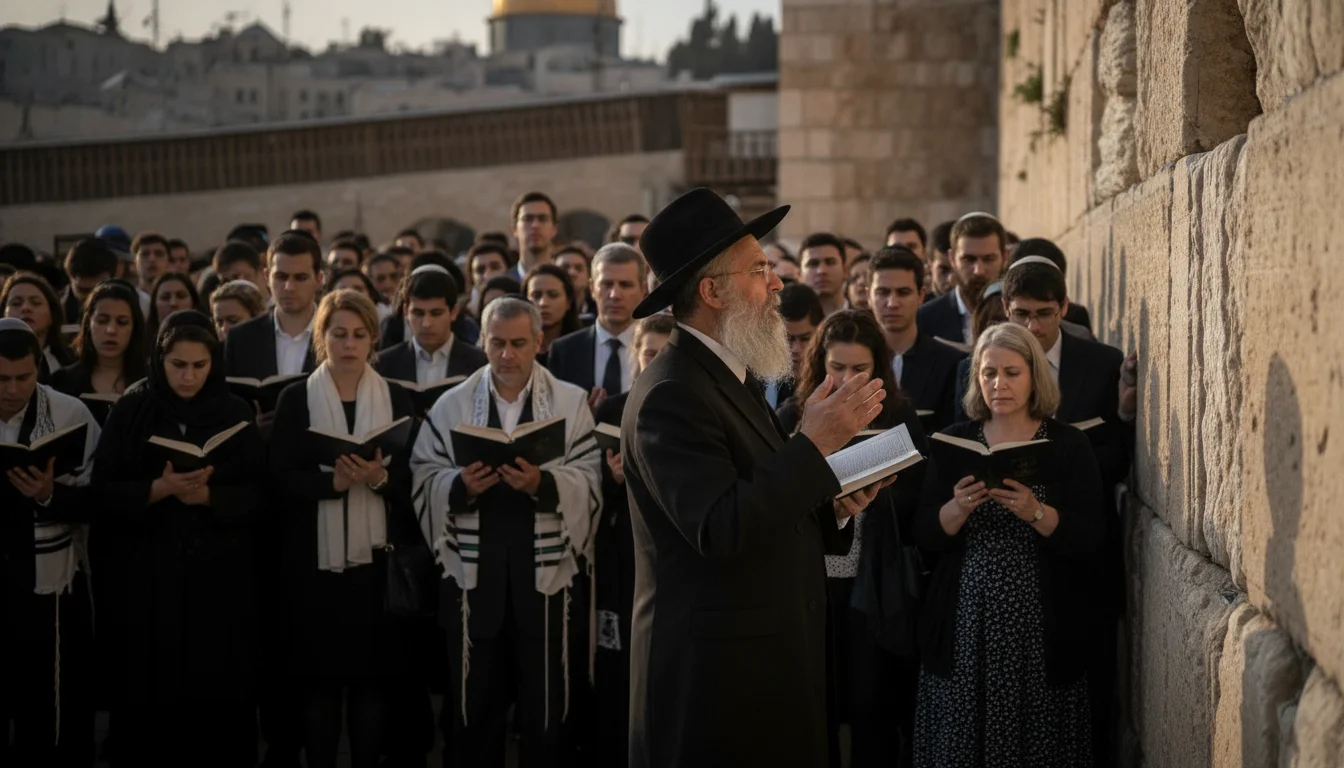
When a rabbi or a temple president calls me about taking the congregation to Israel, the conversation almost always starts the same way. They have wanted to lead this trip for years. What they do not have is a clear picture of how it actually gets built, who pays for what, and whether they will spend the next nine months as a travel agent instead of a spiritual leader. That is the part I can take off their plate.
I have built heritage journeys for more than forty years, for churches, for Jewish federations, for Reform and Conservative congregations, for day schools, and for sisterhood groups traveling on their own. Jewish heritage tours for synagogues have their own rhythm and their own sensitivities, and I want to walk you through the whole thing the way I would if we were sitting in your office with a calendar open. No vague promises. Just how the pieces fit.
Start With the Trip’s Purpose, Not the Itinerary
The first question I ask is not “where do you want to go.” It is “why now, and why this group.” A congregation trip works when it is tied to something your community is already living: a milestone anniversary for the synagogue, a class of b’nai mitzvah families ready to travel together, a federation campaign that wants a mission behind it, or simply a group of members who have talked about Israel for a decade and want to finally go.
The purpose shapes everything downstream. A Jewish federation heritage mission is built differently from a family-heavy b’nai mitzvah trip, which is built differently from a sisterhood journey. So before we ever talk hotels, tell me who is in the room and what this trip is supposed to mean to them. Once I know that, the itinerary designs itself.
If you want the full framework for how any faith group trip comes together from first idea to departure, our complete guide to planning a group pilgrimage lays out the entire arc. This article is the synagogue-specific version of that same path.
The Free Group-Leader Model, and Why It Changes the Math
Here is the piece that quietly decides whether many trips happen at all. When you gather fifteen or more paying travelers, the group leader travels free. That means your seat is covered: flights, hotel accommodation, ground transportation, site entries, and the group meals built into the itinerary. You are the reason the group exists, so the economics are structured around your seat being the complimentary one.
This matters for a congregation more than most people expect. You are no longer asking the board to fund the rabbi’s expensive trip on top of everyone else’s. You are organizing a journey your members pay into, and your participation is part of how the numbers work. For larger groups, around twenty-five or thirty, there is often room to extend a reduced or complimentary second seat to a co-leader, a cantor, or a spouse. If that matters to you, raise it early so we can build toward it.
I wrote a fuller breakdown of the thresholds in our guide on how many travelers you need for the leader to go free. The short version: fifteen is the line, and reaching it is far more doable than most first-time organizers assume.
How to Recruit a Synagogue Group That Reaches Fifteen
This is the part that keeps leaders up at night, so let me be practical.
You do not need to sign up fifteen strangers. You need to find the eight to ten members who already want to go, then let them bring others. Every congregation trip I have run started from a small committed core. Couples travel together. Friends bring friends. A Torah study group or a men’s club or a sisterhood chapter often travels as a unit. Fifteen becomes reachable when you build from the people leaning in, not the whole membership roll.
A few things that consistently move people from interested to committed:
- Give them real dates and a real itinerary. “We are going next April, eleven days, here is the route” converts. “We might do an Israel trip someday” never does.
- Announce it from the bimah and in print, more than once. One mention gets forgotten. A short recurring update in the bulletin and an information evening with dessert does the work.
- Tie it to something the community already cares about. A synagogue anniversary, a class of confirmands, a federation initiative, a scholar-in-residence weekend that ends with “and now let us go see it.”
- Make the money feel manageable. Most members do not balk at the total. They balk at paying it all at once. A group payment plan that spreads deposits over several months removes that wall almost entirely.
If your trip has a fundraising or subsidy component, whether the sisterhood is underwriting part of it or the federation is offering mission incentives, our guide on how to fundraise for a group trip covers the mechanics.
Reform, Conservative, and Reconstructionist: Building for Your Movement
A Jewish heritage tour for a Reform congregation is not the same trip as a Conservative synagogue mission, and neither should be handed a generic package. The differences are real and I take them seriously.
For a Reform group, I tend to build in more room for social justice sites, contemporary Israel, coexistence encounters, and pluralistic prayer experiences at the Kotel’s egalitarian section. Music and reflection often carry as much weight as the archaeology.
For a Conservative synagogue Israel mission, the itinerary usually leans into text and place together: reading the right passage in the right location, observing Shabbat as a group in Jerusalem, and pacing the trip so that halachic observance is respected without anyone feeling policed. I coordinate kashrut, Shabbat logistics, and davening times as part of the build, not as an afterthought.
For a Reconstructionist or unaffiliated group, the trip is often the most customized of all, blending peoplehood, history, and personal meaning. The point across all of these is simple. Tell me your movement and your community’s comfort level, and the trip is built to fit it rather than forcing your people into someone else’s template.
Planning a B’nai Mitzvah Trip for a Congregation
Some of the most meaningful trips I build are congregation b’nai mitzvah journeys, where a cohort of families travels together and the young people mark the milestone in Israel itself. If you are wondering how to plan a bar or bat mitzvah trip for a congregation rather than for a single family, the structure is more forgiving than you would think.
The families become your committed core, which often gets you to fifteen quickly. The itinerary carries a ceremony, usually at a site chosen to fit your movement, alongside experiences pitched to travel well across generations: masada at sunrise, floating in the Dead Sea, the tunnels beneath the Old City, a hands-on archaeology dig. Grandparents come. Younger siblings come. What starts as six b’nai mitzvah families frequently lands as a group of thirty, which not only covers your seat but opens room for that second complimentary spot.
The one thing I will press you on is lead time. Multi-generational groups with kids in school need to lock dates early. More on timing below.
Sisterhood and Day School Groups
A Jewish heritage tour for a temple sisterhood has a character of its own. These groups tend to be tightly bonded, decisive once they commit, and drawn to trips with depth: women’s history in Israel, artisan and culinary encounters, meaningful conversation, and time built in to actually reflect rather than sprint between sites. Because the group is already a community, recruiting to fifteen is often the easiest of any group I work with. The sisterhood chair essentially is the recruiter.
A Jewish day school heritage trip is a different animal again, and here the logistics deserve real attention. School groups mean parental consent, careful supervision ratios, age-appropriate pacing, security protocols, and often a curricular tie-in so the trip counts as more than a vacation. I coordinate all of that directly with your head of school and trip chaperones. The educational spine matters: the trip should reinforce what the students learn in the classroom, whether that is Tanakh, modern Israel, or the arc of Jewish history from the Second Temple through today.
Timing: How Far Ahead to Start
For a synagogue group of fifteen to thirty, six to nine months is the working sweet spot. That gives members time to budget, request time off, and commit, and it gives you the runway to build interest, which is the real labor. Larger groups, day school trips built around the academic calendar, or journeys timed around the Jewish holidays want nine to twelve months. If you are aiming to travel around Pesach, the High Holidays, or a specific yahrzeit or synagogue anniversary, earlier is better, because those windows fill and hotel space tightens.
Our guide on how far ahead to plan a group trip goes deeper, but the headline is this: the lead time is as much about recruiting your people as it is about booking flights. Start the conversation before you feel ready.
Your Real Job Once the Logistics Are Handled
Here is what I most want you to hear. When the trip’s economics and logistics are off your plate, your attention is freed for the thing only you can do. You are not the group’s accountant or its travel coordinator. You are its spiritual leader.
That is the whole point of the structure. Your role on a heritage journey is to lead the moment at the Kotel, to say the right words at Yad Vashem, to teach Torah where it happened, to be present for your community in the places that move them to tears. My job is to make everything else invisible: the coach that shows up on time, the guide who knows how to get your group meaningful access, the kosher meal that is simply there. The free seat and the handled logistics exist so your focus stays where it belongs.
FAQ: Synagogue Group Trip Planning
How many people do I need for the group leader to travel free?
Fifteen paying travelers. At that point the group leader’s full trip is covered, including flights, hotels, ground transportation, and site entries. Groups of around twenty-five or thirty can often unlock a reduced or complimentary second seat for a co-leader, cantor, or spouse.
How do I recruit enough congregants to reach fifteen?
Start with the eight to ten members who already want to go and let them bring others. Give the group real dates and a real itinerary, announce it more than once from the bimah and in print, and offer a payment plan so the cost feels manageable. Most trips reach fifteen from a small committed core, not from cold sign-ups.
Can you build a trip specifically for a Reform or Conservative congregation?
Yes, and I build them differently. Reform groups often get more social justice, contemporary Israel, and pluralistic prayer; Conservative missions lean into text, place, group Shabbat, and coordinated kashrut and observance. Tell me your movement and your community’s comfort level and the itinerary is built to fit it.
How do I plan a b’nai mitzvah trip for a whole congregation?
Gather a cohort of families ready to travel together and they become your committed core, which usually reaches fifteen fast. The itinerary carries a ceremony at a site matched to your movement, plus multi-generational experiences that work for grandparents and kids alike. Lock your dates early, since families with school-age children need the runway.
How far in advance should we start planning?
Six to nine months for a group of fifteen to thirty, and nine to twelve months for larger groups, day school trips tied to the school calendar, or journeys timed around the Jewish holidays. The lead time is mostly about recruiting your group and building interest, not just booking travel.
If you are weighing whether a synagogue trip to Israel is realistic for your community, the free-leader math and a handled itinerary are usually what tip it from idea to plan. You can see how the group experience works on our group heritage tours page, walk the full route on our Israel heritage page, or ask us for a custom group quote built to your dates and movement.
Contact us and we will help you run the numbers for your congregation and your calendar.