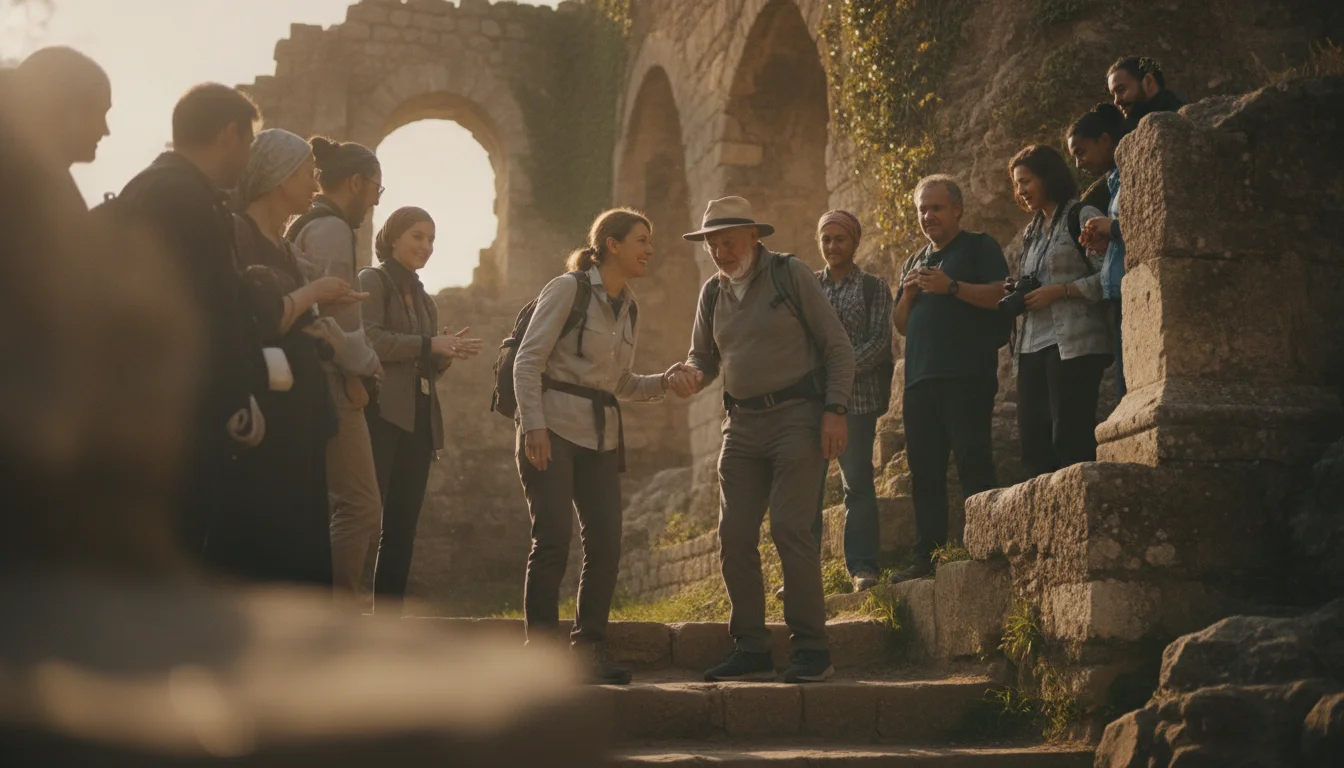
The question I get from pastors and rabbis planning their first group trip is almost never about theology or logistics. It is quieter than that, and it usually comes near the end of the call. “What happens if someone gets sick over there?” They are picturing a member of their congregation, often in their sixties or seventies, standing on a hillside in Greece or a stone path in Israel, and they are wondering whether they are equipped to handle a medical problem two continents from home.
I have built heritage journeys for more than forty years, and I want to answer that question the way I answer it on the phone: plainly, with a real plan, and without pretending nothing ever goes wrong. Things do go wrong. People pull a muscle, run their blood sugar low, forget a pill, catch a stomach bug, or have a bad reaction to the heat. What separates a trip that handles this well from one that panics is not luck. It is preparation you do months before departure, most of it while you are still at your desk.
This is a guide for the person organizing and leading the trip, not for the individual traveler. Your job is to build the system so that when something happens, you already know the next three steps.
Start With Health Information You Collect Before Departure
The single most useful thing you can do for medical readiness happens at the recruiting stage, long before anyone packs a bag. When people commit to the trip, you collect their health information. Not casually, and not verbally. In writing, on a form, kept confidential.
For every traveler, I ask leaders to gather:
- Current medications, with dosages, and what each one is for
- Known allergies, including food, medication, and environmental
- Chronic conditions the group should be aware of (heart, diabetes, mobility, respiratory)
- Emergency contact back home, with phone and relationship
- Blood type if known, and any device or implant that matters (pacemaker, insulin pump)
- Their physician’s name and number
This is not you playing doctor. It is you being able to answer a paramedic’s questions at two in the morning when the traveler cannot. A local emergency room in Thessaloniki or a clinic in Tiberias will move much faster when you can hand over a clear sheet instead of guessing. I have watched a well-kept health form turn a frightening night into a manageable one.
Keep this information secure and share it only on a need-to-know basis. You, your co-leader, and your tour operator should be able to reach it. Nobody else needs it.
Build the Medication Conversation Into Recruiting
Prescription medication is where most trouble hides, and it is entirely preventable. When you talk to travelers before the trip, make three requests standard:
Bring enough medication for the full trip plus one extra week, in case of delays. Keep it in the original labeled bottles, not a pill organizer, because customs and pharmacies abroad need to see the label. Carry it in the daypack, never in checked luggage, so a lost bag never becomes a lost prescription.
For anyone on something critical, insulin, heart medication, seizure medication, I ask them to carry a short note from their doctor listing the medication and the diagnosis. It clears customs questions and it helps a foreign pharmacist if a refill is ever needed. None of this is hard. It just has to be said out loud, by you, well before departure, because travelers will not think of it on their own.
Know Your Group’s Real Physical Range
Heritage sites are beautiful and they are rarely flat. Ancient agoras have uneven stone. Old cities have stairs and no elevators. The Sea of Galilee is warm and the summer sun in the Mediterranean is stronger than most Americans expect. Part of handling medical needs is preventing them, and that starts with honest planning about what your specific group can do.
When I help a leader design an itinerary, we talk about the group’s range early. If you have several travelers in their seventies or anyone with a mobility limitation, we build in a slower pace, more rest, shaded breaks, and options. A good operator will have a plan for the traveler who cannot climb to the top of a site: a comfortable place to wait, a guide who checks in, a route that does not leave anyone stranded. You should never be choosing between abandoning a site and abandoning a person. If your itinerary forces that choice, it was built wrong.
This is one of the questions I would put to any operator you are considering. Our guide on the questions to ask a tour operator covers how to press on this before you sign, and choosing well here matters more than almost anything else. If you want the wider view of how a group pilgrimage comes together end to end, our complete guide to planning a group pilgrimage is the place to start.
What to Do If a Traveler Gets Sick Abroad
This is the scenario every leader rehearses in their head. Let me give you the actual sequence, because in the moment you want steps, not adrenaline.
First, stay with the person and stay calm. Your group is watching you, and your composure sets the temperature for everyone. Delegate the group to your co-leader so you can focus.
Second, assess the level. A stomach bug, mild dehydration, or a twisted ankle is a slow problem. Chest pain, difficulty breathing, confusion, a fall with a possible fracture, or a severe allergic reaction is a fast problem. If it is fast, you call for emergency help immediately. Know the local emergency number before you land (112 works across Europe and Israel), and your tour operator or guide should be your first call in parallel, because they know the nearest hospital and can smooth the language and the paperwork.
Third, pull the traveler’s health form. Hand the medication list and allergy information to whoever is treating them. This is the moment all that pre-trip collection pays off.
Fourth, notify the emergency contact at home. Do this early, even for a moderate problem, because a family member who hears about it late feels shut out, and a family member who is looped in becomes an ally. Keep the message factual: what happened, where they are, who is with them, what is being done.
Fifth, document. Write down times, what happened, what was done, and any costs. You will need this for the insurance claim, and memories blur under stress.
A good tour operator carries a lot of this weight with you. On our trips, the local guide and ground team help arrange the clinic visit, translate with the doctor, and coordinate transport, so you are never navigating a foreign medical system alone. That support is one of the real reasons to travel with an operator built for group heritage journeys rather than piecing a trip together yourself. You can see how our group support is structured on the group heritage tours page.
Travel Insurance Is Not Optional, It Is Part of the Plan
I tell every leader the same thing: travel insurance with medical coverage and emergency evacuation is a requirement for every traveler, not a suggestion. A serious medical event abroad, and especially a medical evacuation, can cost more than the entire trip. Insurance is what stands between a health scare and a financial catastrophe for a family in your congregation.
Make it a condition of joining the group. Ask each traveler to send you proof of coverage before final payment, and keep the policy numbers and the insurer’s emergency phone line with your leader documents. When something happens, you want that 24-hour claims line in your pocket, not buried in someone’s email at home. We go deeper on coverage types and what to require in our guide on travel insurance for a church group, and it is worth reading before you set your group’s policy.
Build a Written Emergency Plan for the Group Tour
An emergency plan for a group tour is a one-page document you carry, and it is the difference between reacting and responding. You do not need anything elaborate. You need the right information in one place, printed, plus saved on your phone.
Your plan should include:
- The local emergency number for each country you visit
- Your tour operator’s 24-hour contact and your guide’s mobile number
- The nearest hospital to each hotel or major stop (your operator can supply this)
- Every traveler’s emergency contact at home
- Each traveler’s insurer name and 24-hour claims line
- The nearest embassy or consulate contact for your travelers’ home country
- A short chain of command: who leads the response, who manages the rest of the group, who calls families
Brief your co-leader on this before you leave, and walk the group through the basics on day one: where the plan lives, who to tell if they feel unwell, and the simple rule that nobody hides a health problem to avoid being a burden. That last point matters more than any form. Most medical situations get worse because someone stayed quiet. Set the tone early that telling you is exactly what they should do.
Keep a small group first-aid kit on the coach for the everyday things: bandages, pain relievers, antihistamines, anti-diarrheal medication, rehydration salts, blister care, and sunscreen. It handles most of what comes up, and keeps small problems from becoming lost afternoons. For everything else on your pre-departure list, our church group planning checklist keeps the medical items alongside the rest of your preparation.
Recruit With Health in Mind, Not Fear
None of this should scare you or your travelers away from the trip. I have led groups with travelers well into their eighties, with pacemakers, with diabetes, with mobility aids, and they had the journey of their lives. The point of all this preparation is not to keep fragile people home. It is to make the trip safe enough that more of your people can come.
When you recruit, be warm and be honest. Describe the pace truthfully. Tell people there is real walking on uneven ground, and also tell them there are rest options and a team that looks after them. Travelers who know what to expect prepare well and worry less. The ones who get into trouble are usually the ones who were told the trip was easier than it was. Set expectations straight and your group will be both healthier and happier.
The Leader’s Real Role When Health Is Handled
Here is what I most want you to take from this. When you have collected the health forms, required the insurance, built the emergency plan, and chosen an operator who carries the weight with you, something shifts. You stop being the person who lies awake worrying about worst cases. You become free to do the actual work you came to do: to lead your people through Scripture and history in the places where it happened, to be present with them at the water and the memorial and the empty tomb.
Good preparation is not the opposite of a spiritual trip. It is what makes the spiritual trip possible, because a leader who is calm and ready can shepherd. A leader who is improvising cannot. Do the work up front, and the trip itself becomes what it was always meant to be.
FAQ: Handling Medical Needs on a Group Pilgrimage
What health information should I collect from travelers before the trip?
For each traveler, collect current medications and dosages, allergies, chronic conditions, an emergency contact at home, their physician’s number, and any device or implant that matters. Keep it in writing, keep it confidential, and make sure you, your co-leader, and your operator can reach it in an emergency.
What should I do if a traveler gets sick abroad?
Stay with them and stay calm, assess whether it is a fast problem (chest pain, breathing trouble, a serious fall) or a slow one, call local emergency services and your operator for anything serious, hand over the traveler’s health form, notify the family at home early, and document times and costs for the insurance claim.
Is travel insurance really required for every traveler?
Yes. Require medical coverage and emergency evacuation for every person, and make proof of coverage a condition of final payment. A medical evacuation alone can cost more than the whole trip, and insurance is what protects a family from a financial catastrophe on top of a health scare.
How do I handle travelers with limited mobility or chronic conditions?
Plan the pace around your group’s real range, build in rest and shade, and choose an operator who has a genuine plan for the traveler who cannot reach every part of a site. I have led travelers in their eighties and with serious conditions who thrived, because the itinerary was built for them, not against them.
What goes in an emergency plan for a group tour?
A one-page document with local emergency numbers, your operator and guide’s 24-hour contacts, the nearest hospital to each stop, every traveler’s home emergency contact and insurer claims line, the relevant embassy contact, and a clear chain of command for who leads the response and who calls families. Carry it printed and on your phone.
If you are planning a heritage journey for your congregation and want a partner who carries the medical and logistical weight with you, that is exactly how we build our trips. Contact us and we will walk through your group, your travelers’ needs, and the plan that keeps everyone safe and cared for from the first step to the last.