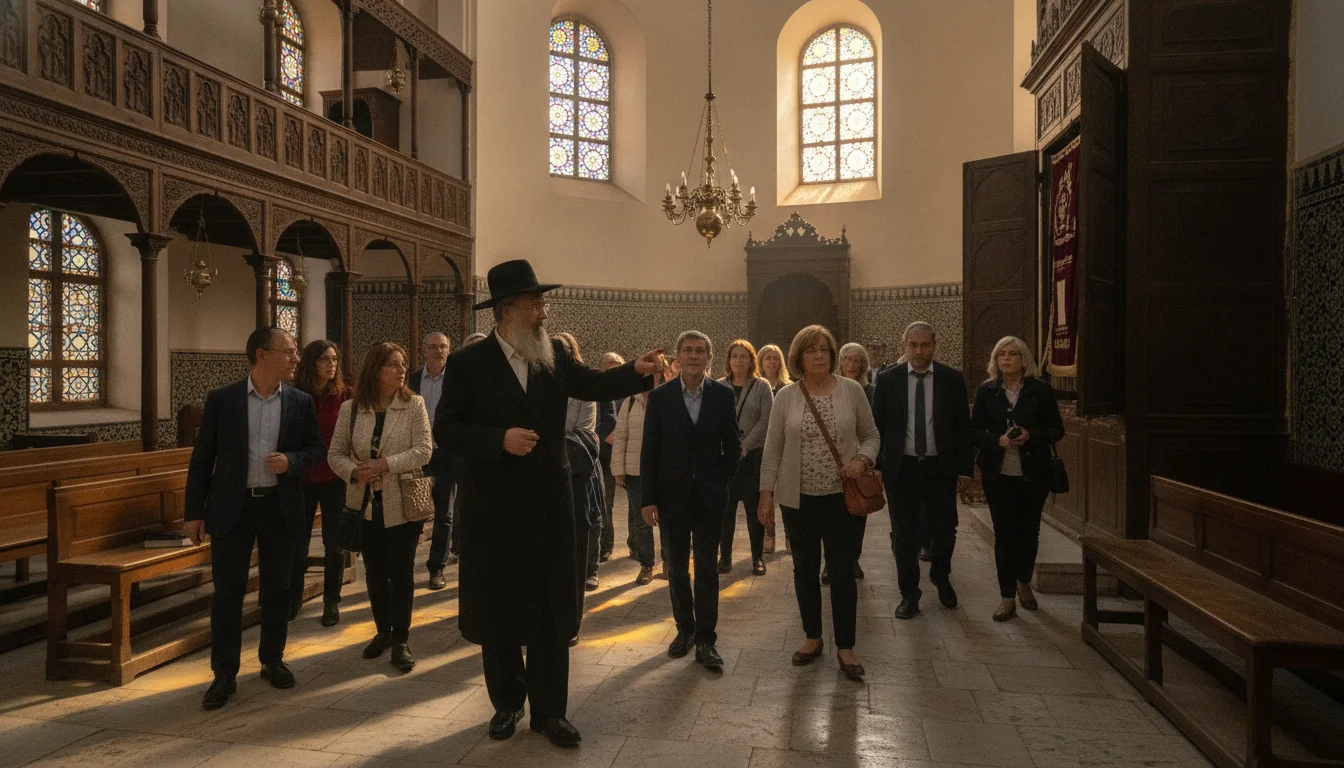
When a rabbi or a congregation president comes to me wanting to take their people somewhere that means something, the first thing I ask is not where. It is who you are traveling as. A men’s club and a Hebrew school family trip and a synagogue’s fiftieth anniversary group all want different journeys, even if they all say the words “Jewish heritage” out loud. My job is to turn that phrase into a route your people will still be talking about years later.
I have built heritage journeys for more than forty years, and I want to walk you through how a Jewish heritage itinerary for a congregation actually comes together. Not a brochure. The real decisions: what to include, how long it runs, what it costs to lead, and how to shape it around your community rather than a generic template. I will cover the Sephardic route through Spain and Portugal and a Psalms and Prophets journey as well, because those are the two requests I hear most often after the standard Israel trip.
Start With Why Your Congregation Is Going
Before I sketch a single day, I want to know the reason behind the trip. This is the organizer’s most important decision, and it shapes everything after it.
A congregation travels for a reason that a family or a couple does not. You are moving a community through a shared experience, and the itinerary has to hold people of different ages, different levels of observance, and different physical abilities together in one story. So I ask leaders three questions early:
- Is this a roots trip, a study trip, or a milestone celebration? Roots trips lean into memory and place. Study trips lean into text and teaching. Milestone trips need built-in moments for the whole group to mark something together.
- Who is coming? The age range and mobility of your group changes how many sites we can do in a day and how much walking is realistic.
- What is your congregation studying or observing this year? A trip tied to what your people are already learning lands deeper than a trip that stands alone.
Once I have those answers, the destinations almost pick themselves. If you want a fuller planning framework before we get into routes, our guide to planning a group pilgrimage lays out the whole sequence from first idea to departure.
The Sephardic Heritage Itinerary Through Spain and Portugal
This is the request I get most from congregations with Sephardic roots, and honestly from plenty without them, because the story of Sepharad belongs to the whole Jewish world. A Sephardic heritage itinerary for Spain and Portugal is not a synagogue tour. It is the story of a civilization: its golden age, its expulsion, and the traces it left in stone and street names.
Here is how I build the spine of it. We usually start in the south, in Andalusia, where Jewish life reached its height. Córdoba gives you the old Judería, the fourteenth-century synagogue, and the presence of Maimonides, who was born there. Seville and its Santa Cruz quarter carry the same weight. From there the route moves to Toledo, which is the heart of the trip for most groups. Toledo held one of the great Jewish communities of medieval Europe, and the Synagogue of El Tránsito and the Sinagoga de Santa María la Blanca still stand. Standing inside them with a group and reading about 1492 is a moment I have watched move even the least sentimental travelers.
Then we cross into Portugal. Lisbon carries the memory of the 1506 massacre and the forced conversions, and the memorial in the Largo de São Domingos is a quiet, honest place to gather your group. Further north, the town of Belmonte is the one that surprises people. A community of crypto-Jews kept their identity in secret for nearly five centuries and returned openly to Judaism only in recent generations. There is a working synagogue and a Jewish museum there now. For a congregation, Belmonte is the emotional close of the whole journey, because it is not a story about what was lost. It is a story about what survived.
A route like this runs well at eight to ten days. Any shorter and you are rushing the two things that matter most, which are time in Toledo and time in Belmonte. If your group is drawn to this route, our Spain heritage page and Portugal heritage page show how the ground operators and local guides come together to give a group real access rather than a bus window.
The Psalms and Prophets Itinerary for a Congregation
The second request I hear often is different in character. A Psalms and Prophets itinerary for a congregation is a text-driven journey, and it is usually rooted in Israel. This is for the congregation that wants to read the words in the places they were written and spoken.
The idea is simple and powerful. You stand where the words happened. You read Psalm 121 on the road going up to Jerusalem. You read the words of Amos in the Judean hills where he kept his flock. You sit above the Jezreel Valley and read the prophets who watched armies cross it. The itinerary is built around the text your congregation already knows, so every stop is a homecoming rather than an introduction.
For a group like this I build the route so the geography and the scripture reinforce each other:
- Jerusalem as the anchor, with the Old City, the Western Wall, and the City of David, read alongside the Psalms of ascent.
- The Judean wilderness and the Dead Sea region, where so much of the prophetic and psalmic imagery of dryness and water comes to life.
- The Galilee and the Jezreel Valley in the north, tied to the prophets who worked there.
- Optional time in the Negev, which reframes how your people read every desert verse for the rest of their lives.
This kind of trip works for both Jewish and Christian congregations, and I have built it for each. The text is shared, and the land is shared, so the itinerary translates cleanly. If you are weighing an Israel-based route, our Israel heritage page shows the range of what a group can reach in a single well-planned week, and our ten-day Holy Land guide walks through pacing in detail.
How Long a Congregation Trip Should Run
Length is a real decision, not a default. Here is how I think about it with leaders.
Seven days is the shortest I would build for a meaningful heritage trip, and it works best when the itinerary stays in one country and one region. Eight to ten days is the sweet spot for most congregations, because it gives you room for the deep stops without leaving people exhausted. Anything past twelve days starts to ask a lot of working adults and older travelers, and it narrows who in your congregation can actually come.
My honest advice: pick the length that lets the most of your people say yes. A slightly shorter trip that your whole community can join beats a longer one that only the retirees can afford in time off.
What It Costs You to Lead, and How the Free-Leader Model Works
This is the part leaders often hesitate to ask about, so let me answer it plainly. On our group trips, the group leader travels free with fifteen or more paying participants. That covers the leader’s full trip on the same terms as everyone else: flights, hotels, ground transportation, included site entries, and the group meals built into the itinerary.
For a congregation, this changes the shape of the whole decision. You are not asking your synagogue or church to fund an expensive trip for the rabbi or the leader. You are organizing a journey your people pay into, and your seat is built into how the economics work. The reason the number is fifteen is simple: at fifteen paying travelers, the fixed costs of a trip are shared widely enough that the structure can carry one complimentary seat without raising anyone’s price. Larger groups create even more room, and groups of around twenty-five or thirty can sometimes unlock a reduced or complimentary second seat for a co-leader or spouse.
If you want the full breakdown of the numbers, our explainer on how the pastor or leader travels free and the piece on how many people you need for a free leader seat walk through it step by step. The short version: once the leader’s cost comes off the table, the trip becomes feasible for a lot of congregations that had quietly assumed it was out of reach.
Building a Group That Reaches Fifteen
Filling the group is the work leaders worry about most, so let me be practical.
Start with your core, not your whole membership list. You do not need to recruit fifteen strangers. You need the eight to ten people in your community who already want to go, and then let them bring others. Couples travel together. Friends bring friends. Your adult education class or your board can become the spine of the group. Fifteen is reachable when you begin with the people already leaning in.
Give people a real date and a real route. Vague interest does not fill a trip. “We are walking the Sephardic route through Spain and Portugal next spring, nine days, here is what we will see” gives people something to decide about. “We might do a heritage trip someday” never converts anyone. Tie the journey to something your congregation is studying or marking and the interest sharpens fast.
Plan far enough ahead. Six to nine months is the right runway for a group of fifteen to thirty, because people need time to budget and request time off. Trips timed around the Jewish holidays or a congregation milestone want nine to twelve months. Our guide on how to recruit for a group trip goes deeper on the recruiting side if that is where you feel least sure.
The Leader’s Real Job Once the Logistics Are Handled
Here is what I most want organizers to hear. When the operator carries the logistics and the free-leader model takes your personal cost off the table, your attention is freed for the thing only you can do.
You are not the trip’s travel agent or its accountant. You are its spiritual leader. Your role is to read the Psalm aloud on the road to Jerusalem, to lead the moment of reflection inside the synagogue in Toledo, to gather your people in Belmonte and name what they are feeling. The operator’s job is to make everything else invisible so your focus stays where it belongs. That division of labor is the whole point of traveling with a group operator rather than piecing a trip together yourself.
FAQ: Building a Jewish Heritage Itinerary for a Congregation
What is the best Jewish heritage itinerary for a first-time congregation trip?
For most congregations traveling together for the first time, an Israel-based route is the natural start, because it holds the widest range of ages and interests in one story. A Psalms and Prophets itinerary or a classic Jewish heritage week in Israel gives your people the anchor sites while keeping the pace manageable. Sephardic routes through Spain and Portugal tend to be the second or third trip a community takes, once the group has traveled together before.
How long should a Sephardic heritage itinerary in Spain and Portugal be?
Eight to ten days. That length gives you real time in Toledo and Belmonte, which are the emotional centers of the route, without rushing the stops in Córdoba, Seville, and Lisbon. A shorter trip forces you to cut exactly the moments your group will remember most.
Can the same itinerary work for both Jewish and Christian congregations?
A Psalms and Prophets itinerary translates cleanly for both, because the text and the land are shared. The Sephardic route through Spain and Portugal is specifically a Jewish heritage journey, though I have built versions of it for interfaith groups who want to understand that history. The key is telling me who is traveling early so I shape the teaching and the stops accordingly.
Does the congregation leader really travel free?
Yes, with fifteen or more paying participants. The leader’s full trip is covered on the same terms as a participant, including flights, hotels, ground transportation, and included site entries. Below fifteen the trip is still possible, but the leader pays a participant’s price. Larger groups can sometimes cover a co-leader or spouse as well.
How far ahead should I start planning a congregation heritage trip?
Six to nine months for a group of fifteen to thirty, and nine to twelve months for larger groups or trips timed around the Jewish holidays or a synagogue milestone. Most of that runway is not booking. It is recruiting your group, which is the real work of reaching fifteen.
If you are weighing a Jewish heritage journey for your congregation, the first move is a conversation about who you are traveling as and where the story should lead. You can see how the group experience works on our group heritage tours page, and if the numbers are your main question, our guide on how to budget a group trip breaks it down.
Contact us and we will help you shape the route, run the free-leader math for your dates, and build a journey your community will carry home.