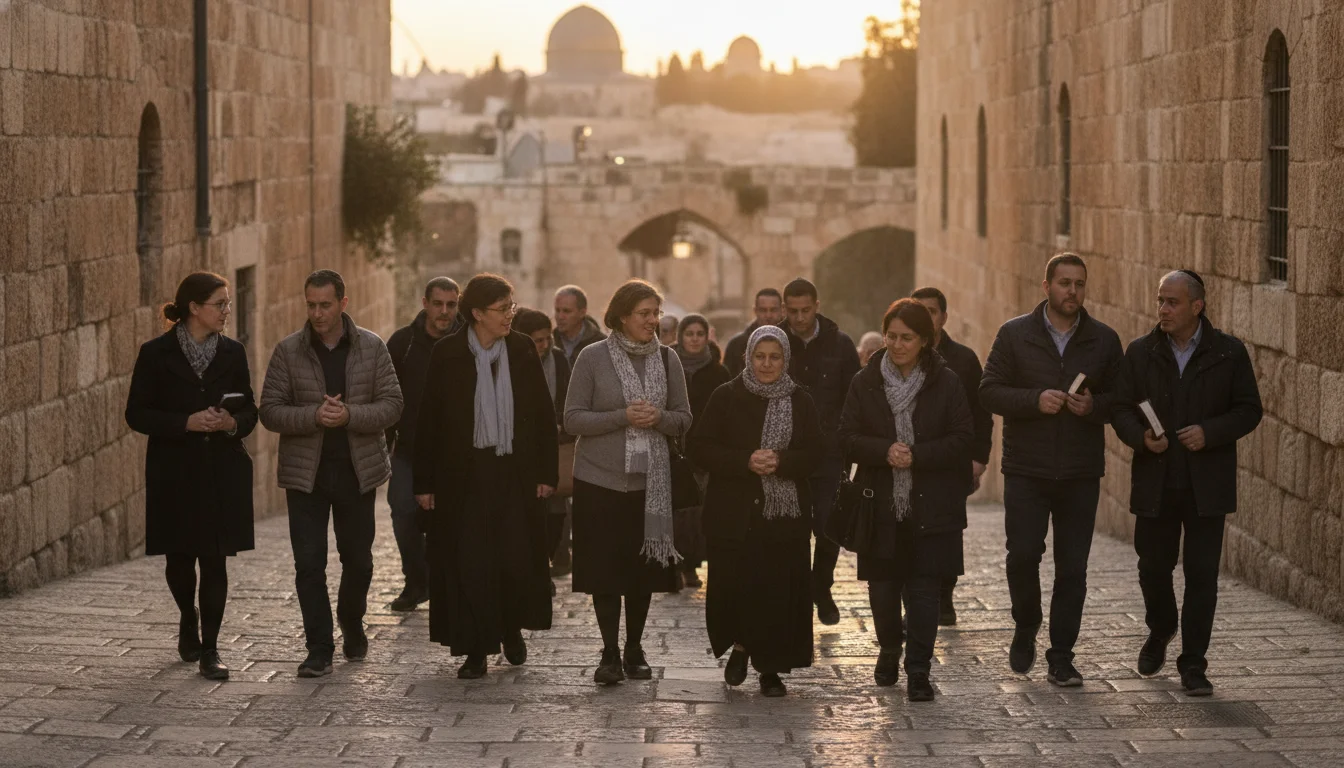
The question I get most often from a pastor or a rabbi planning a first group trip is not about the itinerary or the price. It is quieter than that. They lean in and ask how much walking is really involved, because they are picturing Miriam who is seventy-eight, or the Kellers who want to bring their three kids, or a deacon two years out from a knee replacement. They are not asking for themselves. They are asking on behalf of everyone they are about to invite.
I have built heritage journeys for more than forty years, and I want to answer that question honestly, because it is the difference between a group that comes home glowing and a group that comes home sore and quietly disappointed. When you are the one organizing and leading the trip, the walking is your problem to plan around, not each traveler’s problem to survive. So let me give you the real numbers, the terrain you will actually meet, and a plan for the two groups leaders worry about most: older travelers and children.
The Honest Answer: How Much Walking on a Holy Land Group Tour
A typical day on a well-built Holy Land itinerary involves somewhere between two and four miles of walking, spread across the day, not done all at once. In steps, most travelers log between eight thousand and thirteen thousand on a full touring day. That sounds like a lot written down. In practice it is a morning at one site, a coach ride, lunch, an afternoon at another site, and another coach ride back. The walking comes in stretches of twenty to sixty minutes, with the bus, meals, and time at each stop breaking it up.
Here is what matters for you as the organizer. The mileage is not the hard part. The terrain is. The Holy Land is ancient, which is the entire point, and ancient means uneven. You will meet worn stone streets in the Old City of Jerusalem, stepped paths at Masada and the Mount of Beatitudes, gravel at archaeological sites like Caesarea and Beit She’an, and the occasional steep climb. There is very little flat, smooth pavement of the kind your congregation walks on at home. A mile in the Old City is not the same as a mile around the church parking lot, and setting that expectation early is one of the most useful things you can do.
The good news is that difficulty is a dial, not a fixed setting. A serious operator builds the pace around your specific group. When you tell us who is coming, we adjust which sites go deep and which stay light, where the coach drops and collects, and how much free time cushions each day. The walking on your trip should be built for your people, which is why the planning conversation matters more than any brochure number.
A Realistic Day, Broken Down
Let me make this concrete, because “two to four miles” is abstract until you can picture it.
A morning in the Old City of Jerusalem might run ninety minutes on foot, moving from the Western Wall through the Jewish and Christian quarters along the Via Dolorosa. It is slow walking with frequent stops, but it is on old stone and includes some steps and gentle slope. That is the most demanding kind of morning on most itineraries.
Contrast that with a morning at the Sea of Galilee. You might visit Capernaum, Tabgha, and the Mount of Beatitudes, and the walking at each is short and mostly gentle, with benches, shade, and grass. A boat ride across the lake requires no walking at all. That is a light day by design, and good itineraries alternate the heavy and the light so nobody hits three demanding days in a row.
Masada sits at the harder end. The cable car removes the brutal climb, but the top of the fortress is a wide, exposed, uneven site with real walking under real desert sun. For some groups I route the whole Masada visit as optional, with an easier alternative for anyone who would rather sit it out. That is the kind of decision you and I make together before a single deposit is paid.
Once you can see the rhythm, heavy morning, light afternoon, a rest built into the third or fourth day, the total mileage stops being frightening. It is not a hike. It is a series of visits, and the coach is never far.
Planning for Older and Less Mobile Travelers
Most congregation groups skew older, and that is not a problem to hide. It is a group to design for. I have taken travelers in their eighties through the entire Holy Land, and the ones who thrive are the ones whose leader planned honestly instead of hoping.
Start by asking every registrant a plain question during signup: how far can you comfortably walk on uneven ground, and are there any mobility concerns I should know about? You are not screening people out. You are gathering the information you need to build the trip. A leader who knows two people use a cane and one is recovering from hip surgery can plan a completely different day than a leader who finds out at the airport.
From there, a few practical moves carry most of the load:
- Use the coach as a rest station. On a well-planned day the bus is parked close to each site, so anyone who wants to shorten a visit can head back early and wait in comfort. Nobody is stranded.
- Build in genuine rest. A midtrip afternoon at the Dead Sea or a lighter Galilee day lets tired travelers recover so they are ready for Jerusalem.
- Make the hardest sites optional. Masada, the Mount of Beatitudes climb, certain sections of the Old City. When these are framed as optional from day one, no one feels singled out for skipping them.
- Talk to your operator about equipment. Wheelchair-accessible coaches and site access vary, and some Holy Land sites accommodate limited mobility better than others. This is worth sorting months ahead, not on the ground.
The wider point is that pace is a leadership decision. If you set an unhurried tone, encourage good walking shoes, and normalize sitting out a site, your older travelers will not just survive the trip. They will be the ones tearing up at the Western Wall because they had the energy left to feel it.
How to Bring Children on a Church Group Trip
The other question leaders raise, usually a little nervously, is how to bring children on a church group trip without the kids being miserable and the trip being derailed. Families are the future of your congregation, and a shared pilgrimage can mark a child for life. So let me be encouraging and practical at the same time.
Children handle the walking better than almost anyone. The mileage is rarely the issue with kids. Attention and heat are. A ten-year-old can walk four miles without noticing, but a ninety-minute lecture at a fourth consecutive ruin will lose them entirely. So the fix is not less walking. It is a trip shaped so the sites land for young minds.
A few things I have watched work over the years:
- Lean into the sites that come alive. A boat on the Sea of Galilee, floating in the Dead Sea, walking through Hezekiah’s Tunnel with water at your ankles, the sound and scale of the Western Wall. These are physical, sensory places that children remember far longer than any museum case.
- Give kids a job. A simple trip journal, a photo mission for each day, a Bible passage to read aloud at the right spot. Ownership turns a passive child into an engaged one.
- Respect the heat and the schedule. Israel in summer is hot, and tired, overheated children fall apart fast. Water, hats, sunscreen, and an honest bedtime protect the whole day that follows.
- Cluster the families. When several children travel together, they entertain each other, the parents share the load, and the group develops a natural warmth. One family alone with fourteen retirees is harder than three families among a larger group.
As the organizer, your job is to recruit families in small clusters and set expectations with the parents before you go. Tell them plainly that some days are long, that a mid-afternoon meltdown is normal, and that the coach and hotel pool exist for exactly these moments. Parents who arrive prepared lead relaxed children, and relaxed children are a gift to the whole group.
What This Means for You as the Leader
Everything above comes back to a single idea. The walking on a Holy Land group tour is not a fixed hurdle your travelers either clear or fail. It is a variable you control, in partnership with your operator, long before departure.
That is genuinely freeing. You do not have to promise an easy trip or scare people with a hard one. You have to know your group, ask the right questions at signup, and build days that alternate effort with rest. Do that and the trip fits the seventy-eight-year-old and the ten-year-old alike, which is the whole point of traveling as a congregation rather than as a tour of strangers.
If you are early in this process, the broader mechanics of pacing, budgeting, recruiting, and timing all sit together in our guide to planning a group pilgrimage. And when you are ready to look at the destination itself, our Israel heritage page shows how the itinerary comes together across Jerusalem, the Galilee, and the desert.
FAQ: Walking, Mobility, and Kids on a Holy Land Group Tour
How much walking is there on a typical Holy Land touring day?
Most full days involve two to four miles of walking, or roughly eight thousand to thirteen thousand steps, broken into stretches of twenty to sixty minutes with coach rides, meals, and site time in between. The mileage is manageable for most travelers. The uneven ancient terrain is the part to prepare for, so good walking shoes matter more than raw fitness.
Can older or less mobile travelers handle a Holy Land group tour?
Yes, with planning. I have led travelers in their eighties through the whole country. The coach parks close to each site as a rest station, the hardest sites are made optional, and a midtrip rest day lets people recover. Ask every registrant about mobility at signup so the pace can be built around your actual group.
How do I bring children on a church group trip without it being a struggle?
Children handle the walking easily. The keys are engagement and heat management. Lean into sensory sites like the Galilee boat, the Dead Sea, and Hezekiah’s Tunnel, give each child a small job like a journal or a reading, and protect their water, shade, and sleep. Recruiting families in small clusters so kids travel together makes the whole trip smoother.
Can the itinerary be adjusted for different fitness levels in one group?
That is exactly how a good itinerary is built. We alternate demanding mornings with lighter afternoons, make the steepest sites optional, and position the coach so anyone can shorten a visit. When you tell us who is coming, we tune the pace to your group rather than running one fixed route for everyone.
What should I tell my group to bring for the walking?
Broken-in walking shoes with good grip, a refillable water bottle, a hat, and sunscreen. That short list solves most of the discomfort on ancient stone and in the desert sun. Send it to your travelers a month before departure so nobody arrives in brand-new shoes, which is the fastest way to blisters on day one.
If you are weighing whether a Holy Land trip fits the range of ages and abilities in your congregation, the answer is almost always yes, once the days are built around your people. You can see how the group experience works on our group heritage tours page.
Contact us and we will help you shape the pace, the terrain, and the daily plan around exactly who is coming with you.