The first time I brought a group inside the Kehila Kedosha Yashan synagogue in Ioannina, an older man in the group, a cantor, asked if he could sing. The custodian nodded. He chanted a few lines, and they did not sound like anything the group had heard in a synagogue before. The melody was older, stranger, Greek in a way Sephardic and Ashkenazi music is not. When he finished, nobody spoke for a while. That is the Romaniote tradition. It is Jewish, and it is unlike anything else in Jewish life, and most of the Jewish world has never heard it.
This is where the story of Jewish Greece goes deepest. The Romaniote Jews of Ioannina are not a branch of the Sephardic tree. Their presence in Greece predates the Spanish expulsion of 1492 by well over a thousand years. For a heritage group seeking to understand the full breadth of Jewish experience in the Diaspora, Ioannina is not optional. It is essential. Our wider Jewish heritage in Greece guide places it alongside Sephardic Thessaloniki and Rhodes; here we stay with the oldest tradition of the three.
Who the Romaniote Jews Are
The Romaniote Jews are Greek-speaking Jews whose ancestors lived in the eastern Mediterranean for some two thousand years. The name comes from Romania, the Greek term for the Byzantine, or Eastern Roman, Empire in which they lived. They are, by tradition, descendants of Jews who reached Greek lands in antiquity, some accounts tracing the arrival to the period after the destruction of the Second Temple.
What sets them apart is that their entire religious culture developed independently of the Sephardic world. Their liturgy, their melodies, their customs, even their pronunciation of Hebrew, followed a path of their own for over a millennium before Sephardic Jews ever arrived in Greece. When the exiles from Spain came after 1492, the Romaniote communities had already been established for well over a thousand years. The two traditions met, and in many cities the larger, wealthier Sephardic culture gradually absorbed the older one. Ioannina is the great exception, the place where the Romaniote tradition held on.
What Makes the Romaniote Tradition Distinct
It helps a group to know what to listen and look for, because the differences are real and specific.
The liturgy uses its own rite, with prayers and piyyutim found nowhere else. The synagogal melodies are an ancient musical tradition, closer in some ways to Byzantine chant than to anything in the Sephardic or Ashkenazi repertoire. The community kept its own customs around lifecycle events. One of the most beautiful is the Aleph, a hand-painted certificate given to a newborn boy, decorated with biblical scenes and protective verses, unique to Romaniote practice. The community prayed and often spoke in Greek, and their Bible translations into the Greek vernacular are part of a tradition stretching back to antiquity.
For a group used to thinking of Diaspora Judaism as essentially Sephardic and Ashkenazi, this is a revelation. It shows that Jewish life in Greece was not a single story imported from Spain. It was indigenous, ancient, and rooted in this particular place long before the more familiar traditions arrived.
The Kehila Kedosha Yashan Synagogue
At the heart of Jewish Ioannina stands the Kehila Kedosha Yashan synagogue, the “Old Holy Congregation,” built in 1829 on the site of older synagogues inside the town’s fortress walls. It is one of the oldest synagogues in Greece still standing, and it remains the spiritual anchor of the Romaniote story.
The interior follows the Romaniote arrangement, with the bimah and the Torah ark on opposite walls and the congregation seated along the sides, facing the center. The walls carry the names of community members lost in the Holocaust, inscribed as a permanent memorial. The synagogue is no longer in regular weekly use, given how few Jews remain, but it is opened for visitors and for services on special occasions when a community can gather. Walking in, knowing this room held a tradition that existed almost nowhere else, gives the space a weight that is hard to describe until you are standing in it.
Adjacent to the synagogue, the small Jewish museum tells the community’s story through objects, photographs, and the documentation of a population that numbered roughly 2,000 before the war.
March 1944: The Deportation
The history here ends the way it ends across Jewish Greece, and a group should hear it plainly. In March 1944, the German occupiers deported almost the entire Jewish community of Ioannina to Auschwitz. The community that numbered around 2,000 was emptied in a single operation. Fewer than 100 returned.
A tradition that had survived in this place for some two thousand years, through the Roman and Byzantine empires, through Ottoman rule, through every change of power around the lake, was destroyed in days. What survived is what you can still see: the synagogue, the museum, the inscribed names on the walls, and the oral histories collected by descendants scattered to New York, Israel, and beyond. For a congregation trying to grasp the breadth of what the Holocaust took, the loss of an entire ancient tradition, not only lives but a distinct way of being Jewish, lands with particular force in Ioannina.
Visiting Ioannina With a Group
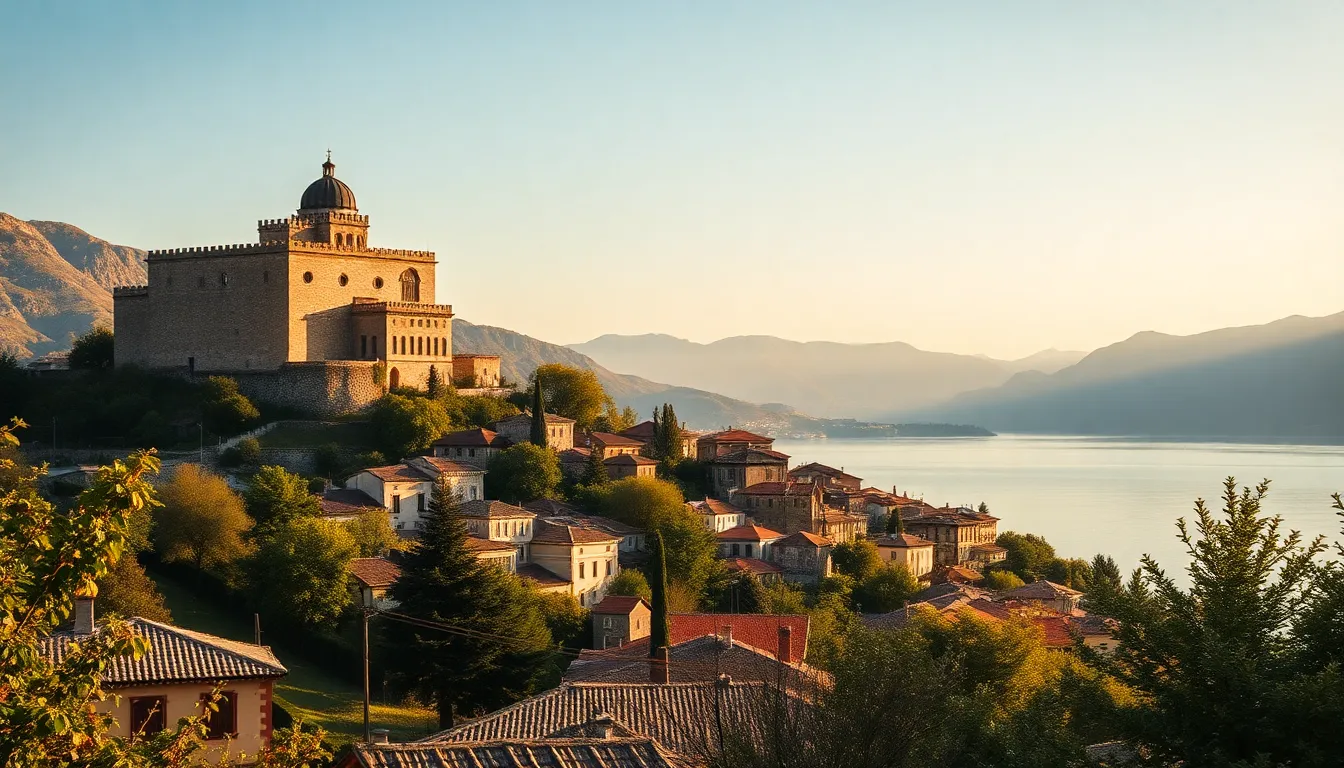
Ioannina sits on a lake in the mountains of northwestern Greece, a few hours west of Thessaloniki through some of the most beautiful country in the Balkans. The journey itself is part of the experience. The old town, ringed by Ottoman walls and crowned by a fortress, is compact and walkable, and the synagogue lies within it.
A focused day covers Ioannina well: the synagogue, the museum, the old Jewish quarter, and time by the lake to absorb it. The drive there and back means most groups give it a full day within a wider journey. Many pair it with Thessaloniki to the east, and some continue to Rhodes in the southeast, to take in all three of Greece’s distinct Jewish traditions, Sephardic, island Sephardic, and Romaniote, in one trip. A full Jewish heritage tour of Greece usually runs eight to ten days.
Group leaders travel free with fifteen or more participants. For many congregations, that is what makes a journey of this depth possible. If you are a rabbi or community leader drawn to the Romaniote story, we would be glad to help you build a trip that honors it.
FAQ: The Romaniote Jews of Ioannina
Who are the Romaniote Jews?
The Romaniote Jews are Greek-speaking Jews whose presence in Greece dates back some two thousand years, well over a thousand years before the Sephardic exiles arrived after 1492. Their name comes from Romania, the Greek word for the Byzantine Empire. Their liturgy, melodies, and customs developed entirely independently of the Sephardic world, making them one of the most ancient and distinct Jewish traditions anywhere.
What makes the Romaniote tradition different from Sephardic Judaism?
Everything from the prayer rite to the synagogue layout to the music. The Romaniote liturgy contains prayers found nowhere else, the melodies resemble Byzantine chant more than Sephardic song, and customs like the hand-painted Aleph certificate for a newborn boy are unique to the tradition. The community prayed and often spoke in Greek. Sephardic Judaism arrived in Greece much later, after the 1492 expulsion from Spain.
Can you visit the synagogue in Ioannina?
Yes. The Kehila Kedosha Yashan synagogue, built in 1829 within the old fortress town, is open to visitors, with services held on special occasions. The adjacent Jewish museum tells the community’s story. We coordinate access for groups as part of planning the visit.
What happened to the Jewish community of Ioannina?
In March 1944, the German occupiers deported almost the entire community, roughly 2,000 people, to Auschwitz. Fewer than 100 returned. A tradition that had endured in Ioannina for some two thousand years was destroyed in a single operation. The synagogue, museum, and inscribed memorial names are among the last living evidence of it.
How does Ioannina fit into a Jewish heritage tour of Greece?
Ioannina is the Romaniote chapter of a three-part Greek Jewish journey, alongside Sephardic Thessaloniki and the island Sephardic community of Rhodes. It sits in the northwestern mountains, a few hours from Thessaloniki, and usually takes a full day within a trip of eight to ten days. The drive through the mountains is part of the experience.
If the ancient Romaniote tradition is drawing you toward a journey for your community, I would be glad to help you shape it with the care it deserves. This is the oldest Jewish story in Greece, and standing inside that synagogue by the lake is the truest way to understand it. You can see how we structure these trips on our Greece heritage page or learn how the group experience works on our group heritage tours page.
Contact us whenever you are ready to start planning.