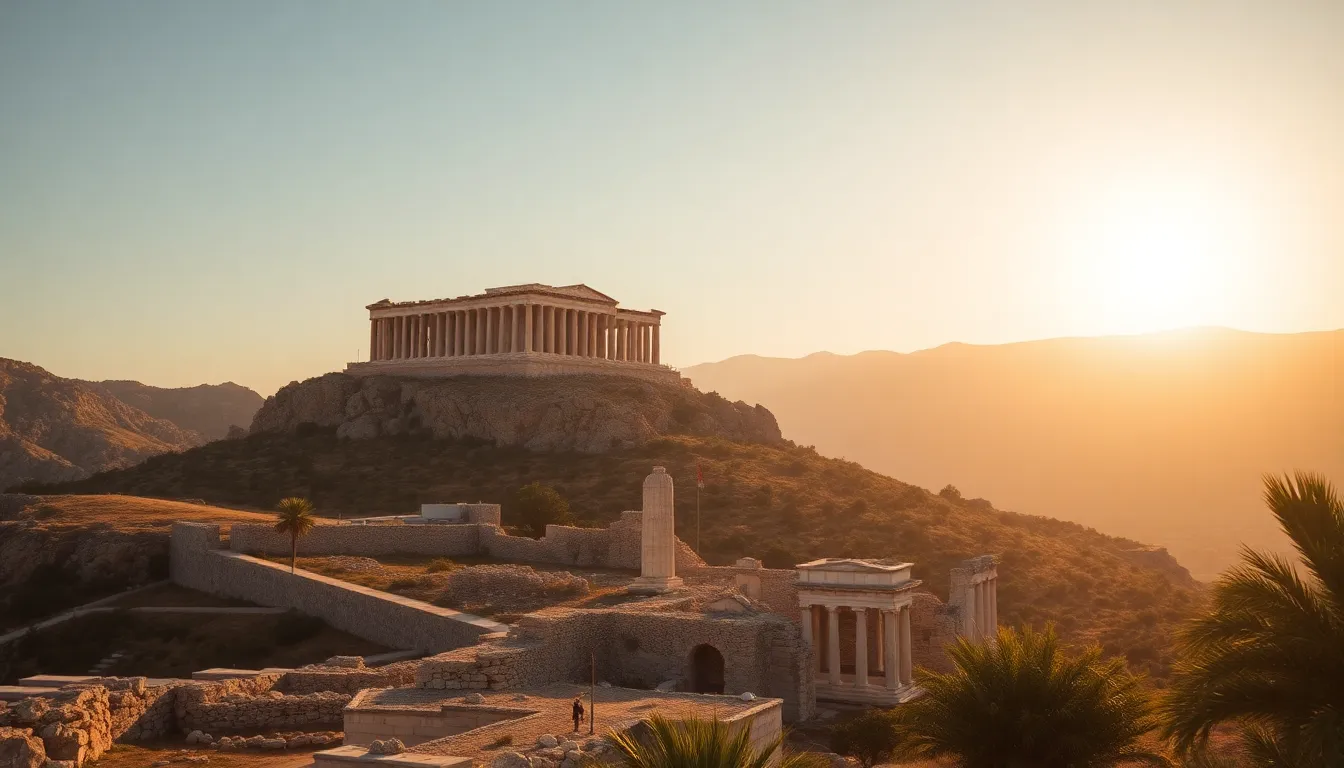
There is a stretch of Paul’s journey that I think is the most concentrated dose of the New Testament you can walk in a single region. It is the southern leg, the part of Greece the ancients called Achaia. Athens, Corinth, and the little port of Cenchreae sit within an easy drive of one another, and in those few miles you have one of the most famous sermons in scripture, the city where Paul stayed longer than anywhere else in Greece, and the harbor where he made a vow before sailing home. When I bring a group through this region, I watch the book of Acts turn into geography in front of them.
Let me walk you through the three of them the way they connect on the ground, because they really are one story.
Athens: Paul Among the Philosophers
Paul came to Athens almost by accident. He had been hustled out of Berea by believers protecting him from trouble, and he arrived in Athens to wait for Silas and Timothy to catch up. While he waited, Acts 17 says, his spirit was provoked within him as he saw the city full of idols. So he did what he always did. He reasoned, in the synagogue and in the marketplace, day by day.
That brought him to the Areopagus, Mars Hill, the rocky outcrop below the Acropolis where the Athenian council met. Standing there, Paul preached the sermon that still gets quoted from pulpits everywhere. He had seen an altar inscribed “to an unknown god,” and he used it as his opening. The God you worship without knowing, he told them, is the God who made the world and everything in it, who does not live in temples made by hands.
When your group stands on that rock, the genius of the sermon becomes physical. They are looking up at the Parthenon, surrounded by the temples Paul saw, in the intellectual capital of the ancient world. He was not preaching to simple folk. He was facing Stoics and Epicureans on their home ground, and he met them with their own poets and their own altar. The setting teaches the sermon better than any commentary.
A practical word for leaders. The marble of the Areopagus is worn smooth and gets slippery, especially after rain. There are metal stairs to the top, and for older members I steer everyone toward those rather than the polished rock. It is worth the few extra minutes.
Corinth: Where Paul Stayed and Wrote
From Athens it is a short journey west to Corinth, and this is the center of the Achaian leg. Paul came here after Athens and stayed eighteen months, longer than anywhere else in Greece. He worked as a tentmaker alongside Aquila and Priscilla, he preached, and he planted a church that would receive two of his most searching letters.
The site rewards a group enormously. You can see the bema, the raised public platform where Paul was hauled before the proconsul Gallio when the local Jewish community brought charges against him. That detail is a gift to anyone who cares about history, because Gallio’s term in office is independently dated, which anchors the whole New Testament timeline to a fixed point. You can stand where Paul stood as the case was dismissed.
Around you is the rest of the city. The temple of Apollo with its heavy Doric columns. The agora where the tentmakers worked. The fountain of Peirene. And above it all, the Acrocorinth, the towering fortified rock that dominates the skyline. Corinth was a wealthy, crowded, cosmopolitan port city with a reputation for vice, and when your group reads First Corinthians standing in the middle of it, the letter snaps into focus. Paul’s worries about a divided, distracted, status-obsessed church make complete sense once you see the kind of city those believers lived in.
I usually give the group time here to read from the Corinthian letters on site. Few things land like First Corinthians 13, the chapter on love, read aloud in the actual Corinth.
Cenchreae: The Port Most Groups Drive Past
Here is where most itineraries stop, and here is where I tell leaders not to. A short distance east of Corinth, on the Saronic Gulf, lies Cenchreae, the eastern harbor of the city. It is quiet now, a small bay with the remains of ancient moles still visible under the water. Almost no tour buses stop. And it belongs in the story.
Cenchreae shows up twice in scripture, and both times matter. In Acts 18:18, Paul sails from Cenchreae for Syria, and just before he goes, he has his hair cut off there because of a vow he had taken. It is one of those small, vivid, human details that make Paul real. He kept a Nazirite-style vow, and this little harbor is where he marked its end. Then in Romans 16, Paul commends Phoebe, “a servant of the church at Cenchreae,” who carried his letter to Rome. The church at this overlooked port had a deacon trusted enough to deliver the epistle to the Romans.
When I stand a group at the water’s edge here, after the grandeur of Athens and the scale of Corinth, something shifts. This is the small, real, working end of the apostolic world. A harbor church. A woman named Phoebe. A vow kept by the shore. It gives a group a sense of the texture of the early church that the great sites cannot. I have written more about this site on its own in our guide to Cenchreae, the forgotten port church, because it deserves it.
Why These Three Belong Together
The reason I treat Athens, Corinth, and Cenchreae as one unit is that they show you the full range of Paul’s work within a single afternoon’s geography. At Athens you see Paul the public intellectual, debating the philosophers on Mars Hill. At Corinth you see Paul the long-haul pastor, settling in for a year and a half to build and correct a difficult church. At Cenchreae you see Paul the ordinary traveler, getting his hair cut before a voyage, and the quiet, faithful community he left behind.
A group that walks all three in sequence comes away with a fuller Paul than they arrived with. Not a stained-glass figure. A man who argued, who stayed, who sailed, who kept a vow, who trusted a woman named Phoebe with his most important letter. That is the Paul of Achaia, and southern Greece holds him in a few short miles. For the whole northern-to-southern route, our hub on spiritual sites in Greece sets the full journey in order.
FAQ: Paul in Athens, Corinth, and Cenchreae
What did Paul do in Athens?
He arrived while waiting for his companions, was disturbed by the city’s idols, and reasoned in the synagogue and marketplace. That led to his famous sermon on the Areopagus, or Mars Hill, where he used an altar “to an unknown god” to point the philosophers toward the God who made the world. Your group can stand on the same rock below the Acropolis where he preached it.
Why did Paul stay so long in Corinth?
He stayed eighteen months, longer than anywhere else in Greece, working as a tentmaker with Aquila and Priscilla and building the church. The length let him plant something deep, which is why he later wrote First and Second Corinthians back to them. The bema where he was brought before Gallio also helps date the New Testament timeline, since Gallio’s office is independently fixed.
What is the significance of Cenchreae?
Cenchreae was Corinth’s eastern port. Paul sailed from here in Acts 18:18 after cutting his hair to complete a vow, and in Romans 16 he commends Phoebe, a deacon of the church at Cenchreae who carried his letter to Rome. It is a quiet, overlooked site that gives groups a sense of the ordinary, working life of the early church.
Can you visit all three sites in one trip?
Easily. Athens, Corinth, and Cenchreae sit within a short drive of each other in southern Greece, the region the ancients called Achaia. Most groups do Athens, then move to Corinth and add Cenchreae the same day, since the port is only a short distance east of the main ruins. Together they make the richest single stretch of the Pauline journey.
Is this part of the journey hard for older travelers?
The Areopagus rock and the climb to the Acrocorinth involve uneven ground and elevation, so we plan those carefully and use the stairs at Mars Hill. Corinth’s main site and Cenchreae’s shoreline are gentle and accessible. We pace the Achaian leg around the group you bring so everyone shares the meaningful moments.
If this concentrated stretch of Paul’s journey is the kind of thing you want your congregation to walk, I would love to help you build it into a full Greece itinerary. The sites are close, the story is rich, and it tells itself once your people are standing in it. You can see how we structure these trips on our Greece heritage page or learn how the group experience works on our group heritage tours page.
Contact us whenever you are ready to start planning.