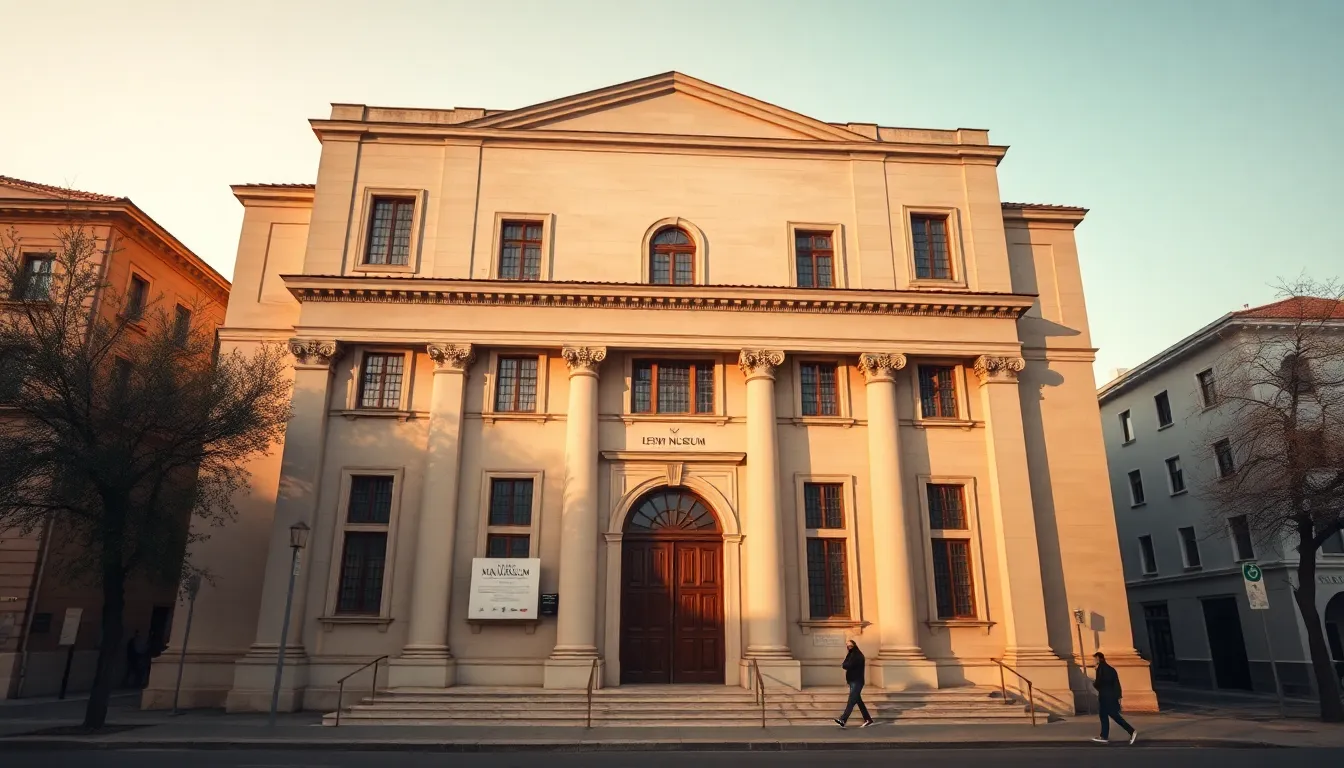
There is a carved stone in the courtyard of the Jewish Museum of Thessaloniki, a fragment of a tombstone, and I have watched more than one visitor stop in front of it without quite knowing why. Then they read the small card. It explains that the stone came from the old Jewish cemetery, the one that held hundreds of thousands of graves before it was destroyed. The whole tragedy of the city is in that one rescued fragment. That is what this museum does. It is small, and it holds the memory of a world that was very large.
Most people who come to Thessaloniki on a heritage journey know the outline of the story: a city that was once half Jewish, a community almost entirely destroyed in 1943. The Jewish Museum is where that outline gets filled in with faces, objects, and names. For a group, it is the place where the history becomes specific. This guide covers what the museum holds, how to visit it well with a group, and how it fits a wider journey. Our full Jewish heritage in Greece guide sets the museum in the national picture.
Why This Museum Exists
The Jewish Museum of Thessaloniki carries an unusual burden. In most cities, a Jewish museum sits alongside a living community, synagogues, neighborhoods, a continuity you can still see on the street. In Thessaloniki, the community it documents was almost entirely erased in a single spring. Nearly 50,000 Jews, the vast majority of the city’s Jewish population, were deported to Auschwitz beginning in March 1943. Fewer than 2,000 survived.
So the museum is not a supplement to a living world. For much of what it covers, it is the surviving evidence. It holds what was rescued, hidden, or returned after the war: religious objects, photographs, documents, personal items. The building itself is fitting. It occupies a restored structure from the early twentieth century, one of the few in the old commercial district to survive the great fire of 1917, the fire that had already begun reshaping the Jewish quarters before the war finished the job.
What the Collection Holds
The museum is laid out to walk you through the arc of the community, from its Sephardic founding to its destruction and the small community that endures.
The Sephardic Golden Age
The early sections tell the story of the Jews expelled from Spain in 1492 who came to Thessaloniki and built one of the great civilizations of the Diaspora. Here you find traces of the texture of that world: Ladino documents, the printing tradition that made the city a center of Hebrew and Judeo-Spanish publishing, the commercial life that ran the port, and the religious objects of dozens of distinct congregations. This is where a group begins to grasp that Thessaloniki was a Jewish city, not a city with Jews in it.
Stones From the Cemetery
One of the most affecting parts of the collection is the gathered fragments of tombstones from the old Jewish cemetery. That cemetery, once among the largest in Europe with several hundred thousand graves, was destroyed during the occupation, and its grounds now lie beneath the campus of Aristotle University. The museum holds rescued stones, each one a name, each one a small recovery of something that was meant to be erased entirely. I always slow a group down here. These fragments say more than any panel.
Photographs and Personal Memory
The photographic record is extensive: families, weddings, market scenes, schools, daily life in the prewar city. Then the photographs of the deportation, and the documents that recorded it with bureaucratic precision. The shift from one to the other, life to roundup, is the hardest passage in the museum and the most important. The personal objects, a prayer book, a child’s belonging, a letter, return the history to the scale of individual people.
How to Visit With a Group
A few things make the difference between a group walking through and a group truly receiving what is here.
Plan Enough Time and Quiet
The museum is not large, and it is tempting to budget thirty minutes. Don’t. Give a group at least ninety minutes, more if there is a guided element. The power of the place is cumulative, and rushing it from the cemetery stones to the deportation room undoes the experience. We build the schedule so the visit is unhurried and so the group has somewhere quiet to gather afterward.
Use a Guide Who Knows the Community’s Story
A guide who can speak to Sephardic and Ladino heritage, and to the specifics of Thessaloniki, transforms the visit. The objects need context to land. A good guide connects the museum to the sites outside it, the Monastir Synagogue, the deportation memorial, Eleftherias Square, so the group sees them as one story rather than separate stops.
Pair It With the Sites It Documents
The museum makes the most sense in sequence with the physical sites. We usually place the museum early in a Thessaloniki day, to frame what the group will then walk: the only surviving synagogue, the memorial near the old railway station, the square of the 1942 roundup, and the university campus that covers the cemetery. The museum supplies the faces; the sites supply the ground.
Practical Notes
Check current opening days before building the itinerary, as hours are limited and the museum is typically closed on some days of the week. Photography rules vary by section. Entry is straightforward for groups, but advance notice for larger groups is wise, and we handle that coordination as part of planning.
Fitting the Museum Into a Heritage Journey
The Jewish Museum is the anchor of a Jewish Thessaloniki day, and Thessaloniki is one of three cities at the heart of a full Greek Jewish heritage journey, alongside Rhodes and Ioannina. A dedicated tour usually runs eight to ten days across those three traditions: Sephardic Thessaloniki, the Sephardic island community of Rhodes, and the ancient Romaniote community of Ioannina.
Within Thessaloniki itself, plan at least two full days, with the museum framing the first morning. Group leaders travel free with fifteen or more participants, which for many congregations is what makes a dedicated Jewish heritage trip to Greece possible. If you are a rabbi or community leader weighing this journey, we would be glad to help you shape it.
FAQ: The Jewish Museum of Thessaloniki
What does the Jewish Museum of Thessaloniki contain?
The collection traces the community from the Sephardic golden age after 1492 through its destruction in 1943. It holds religious objects, Ladino documents, an extensive photographic record of prewar life, personal items, and rescued fragments of tombstones from the old Jewish cemetery that was destroyed during the occupation. The building itself is a rare survivor of the 1917 fire.
How long should a group spend at the museum?
Plan at least ninety minutes, and more with a guide. The museum is not large, but its impact is cumulative, and rushing it undoes the experience. We build the schedule so the visit is unhurried and the group has a quiet place to gather afterward.
Is the Jewish Museum of Thessaloniki open every day?
No. Opening days and hours are limited, and the museum is typically closed on certain days of the week. We confirm current hours when building the itinerary and coordinate advance notice for larger groups.
Why does the museum hold tombstone fragments?
The old Jewish cemetery of Thessaloniki, once one of the largest in Europe with several hundred thousand graves, was destroyed during the Nazi occupation, and its grounds now lie beneath Aristotle University. The museum preserves rescued fragments, each carrying a name, as a recovery of memory that was meant to be erased.
How does the museum fit with the rest of a Thessaloniki visit?
It works best early in a Jewish Thessaloniki day, framing the sites the group then walks: the Monastir Synagogue, the deportation memorial near the old railway station, Eleftherias Square, and the cemetery site. The museum supplies the faces and objects; the sites supply the ground. We connect them into a single, coherent day.
If you are considering a Jewish heritage journey through Thessaloniki for your community, I would be glad to help you build it with the care the story demands. The museum is the keeper of a vanished world, and seen well, in sequence with the sites around it, it gives a group something they carry home. You can see how we structure these trips on our Greece heritage page or learn how the group experience works on our group heritage tours page.
Contact us whenever you are ready to start planning.