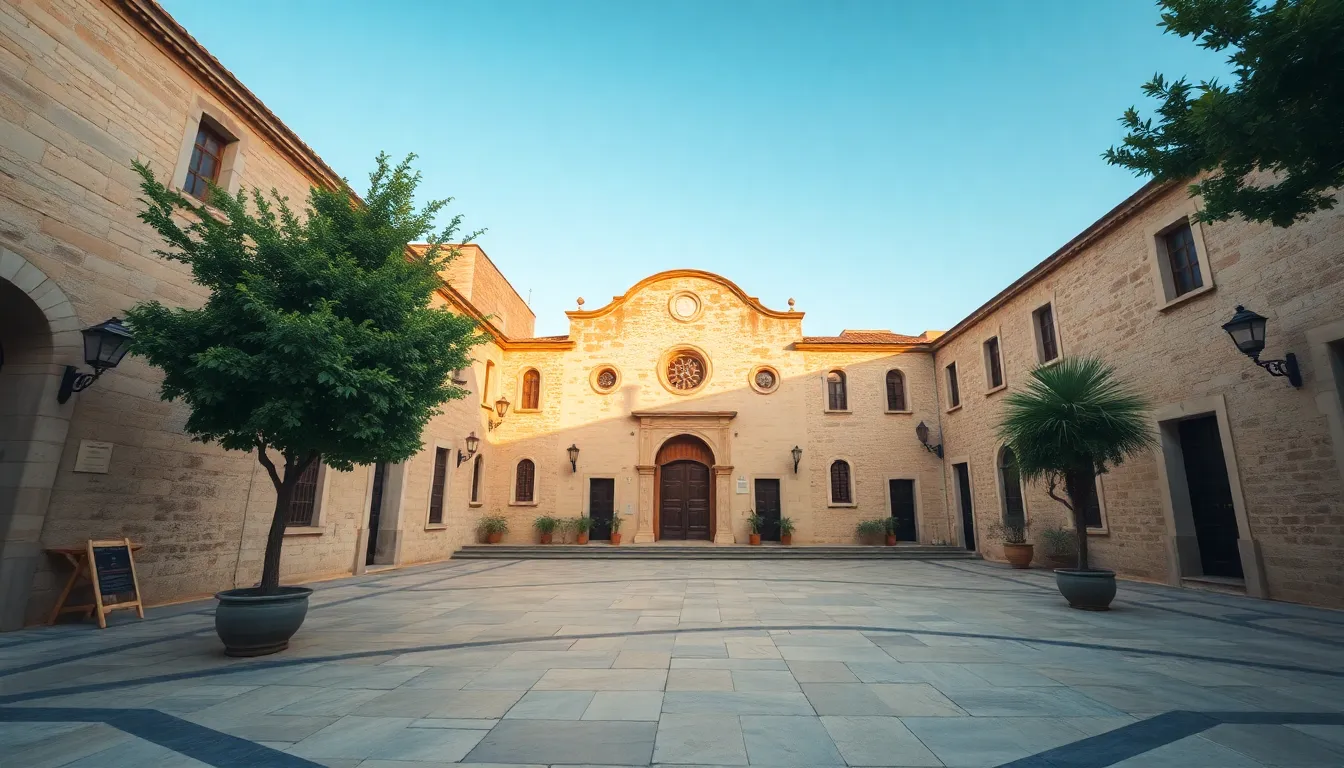
The Etz Hayyim synagogue in Chania is the quietest place I take groups in all of Greece. It sits down a narrow lane in the old Venetian harbor district, easy to walk past, and when you step into the courtyard the noise of the town falls away. There is a fountain, the sound of water, a small garden. People lower their voices without being asked. I have learned to give groups a long moment here before I say anything at all. Some places ask you to talk less and feel more. This is one of them.
This guide is for rabbis and community leaders considering Crete as part of a Jewish heritage journey through Greece. The Cretan story is small in numbers and immense in weight, and it asks to be handled with care. I will try to tell it that way.
A Jewish Presence That Stretched Back Two Thousand Years
Jews lived on Crete for a very long time, far longer than most visitors imagine. The presence on the island reaches back to antiquity, into the Romaniote world, the Greek-speaking Jewish tradition whose roots predate the Sephardic expulsion by well over a thousand years. Later, under Venetian and then Ottoman rule, Sephardic and other Jewish families joined the older Romaniote community, and the traditions blended over the centuries.
By the modern era, the heart of Cretan Jewish life was Chania, on the island’s northwestern coast. The community there was never large. By the time of the Second World War it numbered only around 300 people. But it was old, settled, and deeply woven into the life of the town. The Jews of Chania were merchants, craftsmen, neighbors. They had lived in the same quarter, around the same synagogue, for centuries.
That synagogue was Etz Hayyim, the Tree of Life.
The Etz Hayyim Synagogue
Etz Hayyim sits in the Evraiki, the old Jewish quarter of Chania, near the Venetian harbor. The building has a long history. It was originally a Venetian-era church that became a synagogue, and for generations it served as the spiritual center of the community. It is the only synagogue still standing on Crete.
What Happened to the Building
After the destruction of the community in 1944, the synagogue was abandoned. For decades it fell into ruin. The roof collapsed. The building was used as a store, then left to decay, and by the 1990s it was close to lost entirely, choked with rubble and weeds.
What saved it was a restoration led by Nikos Stavroulakis, a scholar of Greek Jewish history, with support from descendants, donors, and organizations committed to preserving what remained of Greek Jewry. The synagogue reopened in 1999. The work was careful and honest, preserving the layers of the building’s history rather than scrubbing them away.
Etz Hayyim Today
Today Etz Hayyim is more than a monument. It functions as a living synagogue and a place of remembrance, with services held and visitors welcomed throughout much of the year. The mikveh, fed by a spring, still sits within the complex. The courtyard holds the graves of the rabbis who once served the community and memorials to those who were lost.
For a visiting group, Etz Hayyim offers something rare: a place where the destruction is fully acknowledged and yet Jewish life has been deliberately rekindled, not as pretense but as a quiet act of continuity. Standing in the courtyard, you are standing in a place that was nearly erased and was brought back on purpose. That fact does its own work on people.
The Tanais: How the Community Was Lost
I tell this part slowly, and I ask leaders to prepare their groups for it, because the way the Jews of Crete died is unlike anything else on the heritage route.
In late May 1944, the German occupiers arrested the Jews of Chania, around 265 people, the whole community, along with several hundred Greek and Italian prisoners. They were held, then loaded onto a ship, the Tanais, to be transported toward the mainland and onward to the death camps.
The Tanais never reached its destination. On June 9, 1944, in the waters north of Crete, the ship was struck by torpedoes from a British submarine, the HMS Vivid, whose crew had no way of knowing who was aboard. The Tanais sank. Nearly everyone on board was lost, including almost the entire Jewish community of Chania.
The Jews of Crete have no graves. They were not murdered in a camp whose name we know and can stand before. They went down at sea, the victims first of deportation and then of a tragic accident of war. This absence, the lack of a place to mourn, is part of why Etz Hayyim matters so much. The synagogue and its courtyard became the place of remembrance that the sea denied them.
A memorial in the synagogue carries the names of the community. Reading them is the closest thing there is to standing at their graves. I encourage groups to do this slowly, and to leave room for silence after.
How to Approach Crete in a Group Itinerary
Crete is not on every Jewish heritage itinerary through Greece, and I want to be honest about that. The major route runs through Thessaloniki, Rhodes, and Ioannina, the three great centers covered in our guide to Jewish heritage in Greece. Crete is a different kind of stop, smaller and more intimate, and it suits groups that want to go deeper into the full breadth of the story rather than the headline sites alone.
If you do include Crete, plan it with care. Chania’s old town is walkable and beautiful, and Etz Hayyim sits within it. A half day allows the synagogue, the courtyard, and the memorial to receive proper attention, and I would not rush it. The Cretan story also connects to the wider Sephardic and Romaniote heritage of Greece and to the larger account of the Holocaust of Greek Jewry, and it deepens both.
At Heritage Tours, we build itineraries around the community traveling. A group seeking the fuller, quieter chapters of Greek Jewish history will want Crete included and given room. Others may choose to keep to the core route. Either is right, depending on who you bring.
The group leader travels free when you bring fifteen or more participants. If you are a rabbi weighing how deep to go into Greece’s Jewish story, we are glad to help you decide what belongs in your itinerary.
FAQ: Jewish Heritage on Crete
What is the Etz Hayyim synagogue?
Etz Hayyim, meaning Tree of Life, is the only surviving synagogue on Crete, located in the old Jewish quarter of Chania near the Venetian harbor. After the community was destroyed in 1944, the building fell into ruin and was restored and reopened in 1999. Today it functions as a living synagogue and a place of remembrance.
What happened to the Jews of Crete?
In late May 1944, the German occupiers arrested the entire Jewish community of Chania, around 265 people. They were placed aboard a ship called the Tanais, which was sunk by torpedoes from a British submarine on June 9, 1944. Nearly everyone aboard was lost, and almost the whole community died at sea.
Why do the Jews of Crete have no graves?
Because the community died at sea aboard the Tanais rather than in a known camp, there is no cemetery or marked site to stand before. The Etz Hayyim synagogue and its courtyard, with a memorial bearing the community’s names, became the place of remembrance that the sea denied them.
Can groups visit Etz Hayyim?
Yes. Etz Hayyim welcomes visitors through much of the year and holds services. We recommend at least a half day in Chania so the synagogue, the courtyard, the mikveh, and the memorial each receive unhurried, respectful attention.
Does a Jewish heritage tour of Greece usually include Crete?
The core route runs through Thessaloniki, Rhodes, and Ioannina. Crete is a smaller, more intimate addition suited to groups that want the fuller breadth of the story. We help congregations decide whether Crete belongs in their itinerary based on what they are seeking.
If this chapter speaks to your community, I would be glad to help you carry it well. Some places ask for quiet rather than commentary, and Crete is one of them. You can see how we structure these journeys on our Greece heritage page or learn how the group experience works on our group heritage tours page.
Contact us whenever you are ready to begin planning.