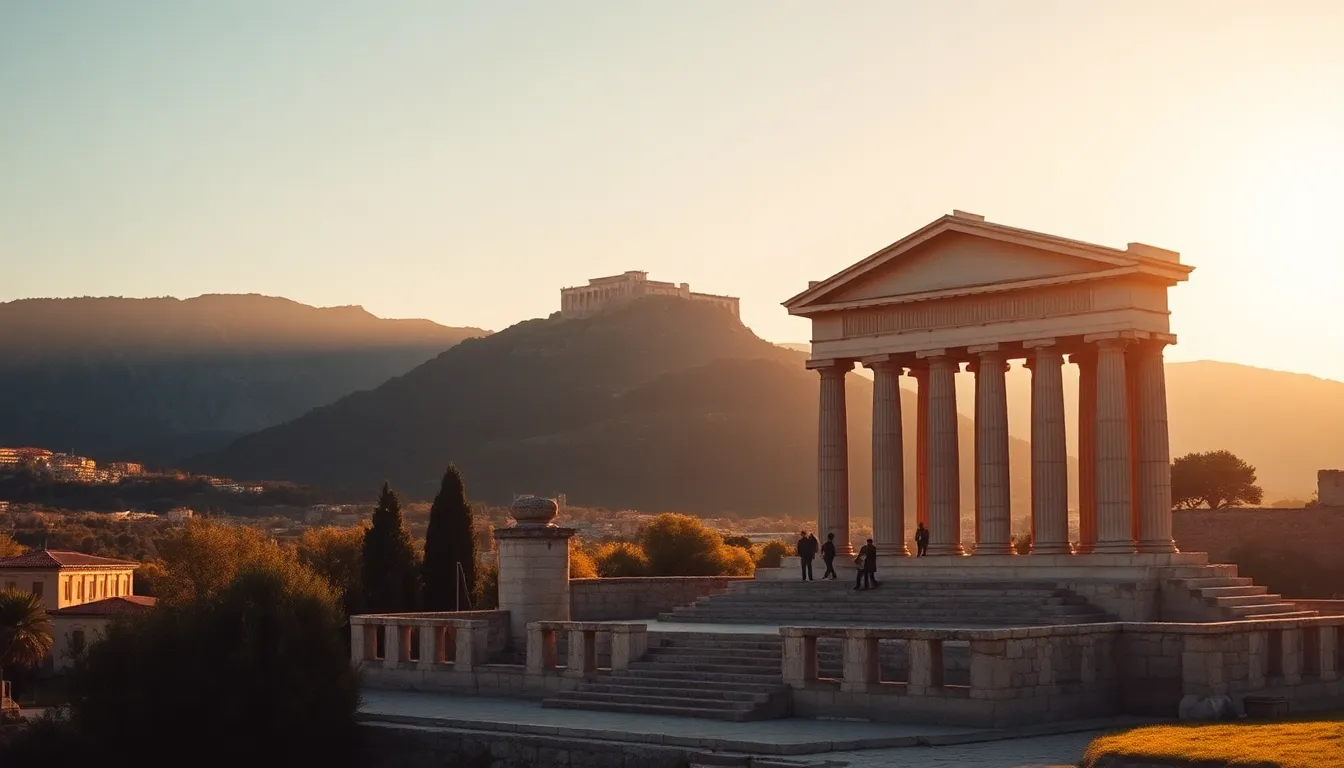
A pastor asked me this last winter over the phone, and I could hear the tension in it. He had budget for one trip, a congregation that had never traveled together, and a choice to make. Greece or Turkey. He had read enough to know both countries are full of New Testament ground, and he did not want to pick wrong. I told him what I tell everyone who asks. There is no wrong answer here, only a question of where you want your people to begin.
Both countries carry the apostle Paul. Both hold cities you can read about in Acts and then walk through the next morning. But they feel different on the ground, and they ask different things of a group. Let me lay it out the way I would if we were sitting across a table.
What Each Country Actually Covers in the New Testament
Turkey is where Paul started. He was born in Tarsus, in what is now southern Turkey. His first missionary journey ran through Antioch, Iconium, Lystra, and Derbe, all on Anatolian soil. The seven churches of Revelation, including Ephesus, Smyrna, and Pergamum, are in western Turkey. If you want the launch point of the early church, the ground where Christianity was first called by that name in Antioch, Turkey holds it.
Greece is where the gospel crossed into Europe. Paul’s second journey carried him over the Aegean to Philippi, Thessaloniki, Berea, Athens, and Corinth. That arc is tighter, more linear, and easier to follow in sequence. If you want the story of the faith entering the Western world, Greece is the clearer telling. I walk through that whole route in our guide to the footsteps of Paul in Greece.
So Turkey is broader and older in the story. Greece is more focused and, for most first-time groups, more legible.
Why Greece Tends to Be the Easier First Trip
I lean toward Greece for a congregation’s first heritage journey, and I want to be honest about why.
The route reads like a single story. You start at Philippi, the first church in Europe, and you end at Corinth, where Paul stayed eighteen months and wrote letters your people already know. North to south, in order, the way Acts unfolds. Your group lives the arc rather than hopping between disconnected sites. That coherence does something for a group that has never traveled together. It gives them a shared narrative spine.
Greece is also gentle on first-time international travelers. It is in the EU, the tourism infrastructure for faith groups is well worn, and Athens is a familiar arrival point. The cultural distance feels manageable for a congregation taking its first trip abroad together.
Athens Gives You an Anchor
Most groups fly into Athens, and that matters. You land in a city your people half-know already, with the Acropolis on the skyline and the Areopagus where Paul preached to the philosophers. It is an easy place to start and settle before the deeper sites begin. Turkey’s New Testament sites are more spread out, and Istanbul, while extraordinary, is not where Paul’s story centers, so the geography is less tidy.
Where Turkey Has the Stronger Case
I will not undersell Turkey, because for some groups it is the better choice.
If your congregation has already done a Holy Land trip, or even a first Greece trip, Turkey is the natural next step. The seven churches of Revelation are a powerful itinerary in their own right, and Ephesus alone, with its preserved streets, the great theater where the silversmiths rioted, and the traditional house of Mary, ranks among the most complete ancient cities you can walk. Groups that want the early church before it reached Europe, the world of the first journey and the Revelation letters, belong in Turkey.
Turkey also tends to cost less on the ground, and the sites are often less crowded than Greece’s headline locations in peak season. For a group focused on depth over familiarity, that is real.
The One Caution I Give
Turkey asks a bit more of a group. The driving distances between sites are longer, the country feels further from home for first-time travelers, and the logistics reward a congregation that already has a trip or two under its belt. None of this is a barrier. It is just a reason I usually suggest Turkey as a second heritage trip rather than a first, unless the group is seasoned.
Why So Many Groups End Up Doing Both
Here is the thing I most want you to hear. Greece and Turkey are not really competitors. They are two halves of the same story, and the Aegean that separates them is the same water Paul crossed.
A great many groups I have led start with Greece, fall in love with heritage travel, and come back two or three years later for Turkey. Others, once they have a seasoned group, combine the two into a single longer journey, sailing or flying across the Aegean the way Paul did. Ephesus in Turkey and Corinth in Greece sit across the same sea, and connecting them in one trip lets your people feel the geography of the whole mission.
If you are choosing a first trip, Greece. If you are building a second, Turkey. If your group is experienced and your timeline is generous, consider the pairing. There is no version of this that goes wrong.
A Practical Word on Logistics and Cost
Since most leaders are weighing money and effort alongside meaning, let me be plain about the practical side.
Greece runs on euros, sits inside the EU, and has a faith-tourism infrastructure that has been refined over decades. Flights from North America into Athens are frequent, the road network between the Pauline cities is good, and the hotels in Thessaloniki, Athens, and the Corinth area are used to handling groups. That predictability is part of why I steer first-timers here. Fewer surprises means a leader can focus on the spiritual experience rather than firefighting logistics.
Turkey often comes in lower on ground costs, hotels and meals included, and the sites can be quieter outside peak weeks. The trade-off is distance. The drives between Cappadocia, the seven churches, and Tarsus are longer, and a group feels those hours. A Turkey trip rewards a tighter regional focus, say the western coast and Ephesus, rather than trying to cover the whole country in one journey.
For a first trip where you want the budget and the effort to feel manageable, Greece is the safer bet. For a group that has traveled before and wants depth at a lower ground cost, Turkey’s math can be very attractive.
FAQ: Greece or Turkey First
Should a first-time faith group choose Greece or Turkey?
For most first-time groups, Greece. The Pauline route runs north to south in a single coherent line, the country is easy on first-time international travelers, and Athens gives you a familiar anchor. Turkey is broader and a touch more demanding logistically, which makes it a stronger second trip once your group has traveled together.
Which country has more New Testament sites?
Turkey covers more of the story in raw geography. Paul’s birthplace, his first journey, and the seven churches of Revelation are all there. Greece is more focused but tells the European chapter of the faith with unmatched clarity. It depends on whether you want breadth or a single clear arc.
Can you visit both Greece and Turkey in one trip?
Yes, and many seasoned groups do. The two countries face each other across the Aegean, the same sea Paul crossed. A combined itinerary, often ten to fourteen days, links sites like Ephesus and Corinth and lets your group feel the full sweep of the mission. We build these for groups that already have travel experience together.
Is Turkey safe and practical for a church group?
Yes, with good planning. The main heritage regions are well used to faith tourism, and we structure routes, pacing, and accommodations around the group you bring. The longer driving distances are the main thing to plan for, which is why we often suggest Turkey for groups that have a trip or two behind them.
Does the free group leader benefit apply to both countries?
It does. When your group reaches fifteen paying participants, the group leader travels free on either a Greece or a Turkey itinerary, covering flights, hotels, meals, and ground transportation. That holds across all our heritage destinations.
If you are weighing these two, I am glad to talk through where your group is and which makes the better first step. You can see how we build Greece trips on our Greece heritage page or how the group format works on our group heritage tours page.
Contact us whenever you are ready to start planning.