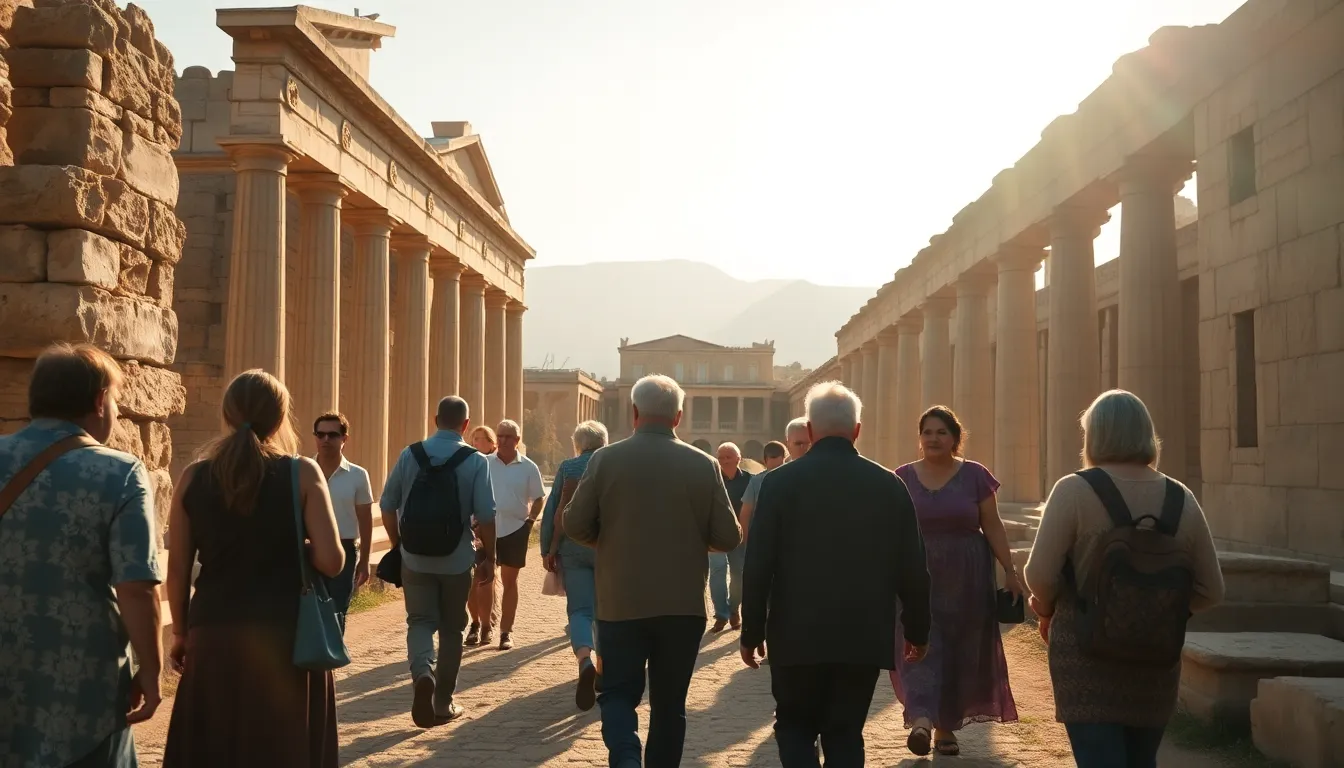
Group size is the question pastors and rabbis tend to underthink, and it shapes the trip more than almost any other decision they make. I have led groups of eight and I have led groups of forty-five, and I can tell you they are not the same trip with different headcounts. They are different experiences. The eight-person group has an intimacy you cannot manufacture. The forty-five-person group has an energy and an affordability the small one cannot reach. Neither is wrong. But the right size for your congregation depends on what you are actually trying to give your people, and on some economics that nobody explains up front.
So let me explain them. I want you to walk into the planning conversation with your committee knowing exactly how size affects both the cost and the feel of the journey, because once you understand the trade-offs, the right number for your group usually becomes obvious.
The Economics: Why Bigger Is Cheaper Per Person
Let us start with money, because it drives a lot of these decisions whether leaders admit it or not. A heritage tour has fixed costs that do not change much with group size. A guide costs roughly the same whether they are leading twelve people or thirty. A coach has a fixed daily rate. Site entry permissions and certain logistics are arranged once. When you spread those fixed costs across more people, the per-person price drops.
This is why a larger group almost always means a lower price per traveler. It is also why very small groups, say under ten, often carry a higher per-person cost or require a price supplement, because there simply are not enough people to absorb the fixed costs comfortably. If keeping the price accessible for your congregation matters, and for most faith communities it does, size is one of your strongest levers.
The Free Leader Threshold: Why Fifteen Matters
Here is the number that changes the math for most group leaders, and it is the one I make sure every pastor and rabbi understands early: with Heritage Tours, the group leader travels free when you bring fifteen or more participants.
That threshold is not arbitrary. Once your group reaches fifteen paying travelers, the economics support covering the leader’s place, and it transforms the planning conversation. Suddenly the pastor or rabbi organizing the trip is not asking their family to pay their own way to lead the congregation, the trip itself carries that cost. I have watched this single fact tip a “maybe someday” trip into a real, booked journey, because it removes a real financial barrier for the very person doing all the organizing.
Fifteen is also, not coincidentally, right around where a heritage group starts to feel like a proper group rather than a handful of travelers. So the threshold tends to align with the size that works well anyway. If you are anywhere near fifteen, getting over that line should be a real goal, both for the leader’s benefit and for the group economics underneath it.
The Experience: What Each Size Range Feels Like
Money is only half the story. Size also shapes how the trip feels on the ground, and that matters just as much for a faith community.
Small Groups (Roughly 8 to 14)
A small group is intimate. Everyone hears the guide easily, conversations at dinner include the whole table, and the leader can give individual attention. You move quickly and flexibly, and quiet moments at a site, reading scripture together, feel close and personal. The trade-offs are the higher per-person cost, the leader’s place usually not yet covered, and a thinner margin if a few people drop out. Lovely if your congregation is small or you want maximum intimacy and can absorb the cost.
Mid-Sized Groups (Roughly 15 to 25)
This is the range I recommend most often, and I think of it as the sweet spot. You are over the fifteen-person threshold, so the leader travels free and the per-person price is reasonable. The group is large enough for real energy and shared momentum, but still small enough that everyone can hear the guide, fit comfortably at sites, and feel like one community rather than a crowd. One coach handles the group cleanly. For most congregations, this range gives you the best balance of affordability, intimacy, and manageability.
Large Groups (Roughly 26 to 45)
A large group brings the lowest per-person cost and a wonderful collective energy, the sense of a whole community on the move together. But it changes the logistics. You may need audio headsets so everyone can hear the guide, you move more slowly through sites and meals, and the intimate moments take more effort to create. Large groups work beautifully for established congregations that travel together regularly and have the leadership to manage the scale. They are also where I sometimes suggest a co-leader to share the shepherding.
The Hidden Factor: Who Is Actually Coming
Numbers are not the whole picture. The makeup of your group matters as much as its size. A group of twenty fit adults moves very differently than a group of twenty that includes several members in their late seventies, a couple of children, and someone using a cane. The second group needs a gentler pace and more rest regardless of headcount, which I get into in our accessibility guide for Greece tours.
So when you think about size, think about composition too. A mixed-age, mixed-ability group of any size benefits from staying at the smaller end of whatever range you are considering, because the pace and the attention each person needs go up. Our broader heritage travel tips for Greece cover how to pace a mixed group well.
How to Actually Build to Your Number
Here is the practical advice I give group leaders aiming for that fifteen-plus sweet spot. Start earlier than you think you need to. Filling a group takes time, and the most common reason trips end up too small is that the leader started promoting it too late. Present the trip to your congregation clearly, make the dates and price concrete, and give people months to decide and save. A trip announced a year out fills far more reliably than one announced four months out.
Lean on the free-leader threshold in your messaging too. When your congregation understands that reaching fifteen travelers means their pastor or rabbi goes free, it gives the whole community a shared, tangible goal to rally around, and it tends to pull the numbers up.
FAQ: Greece Heritage Group Size
How many people make a good heritage tour group?
For most faith congregations, fifteen to twenty-five is the sweet spot. That range puts you over the threshold where the group leader travels free, keeps the per-person cost reasonable, and is large enough for real energy while staying small enough that everyone can hear the guide and feel like one community. Smaller groups offer more intimacy at a higher cost, and larger groups offer the lowest price with more complex logistics.
At what group size does the leader travel free with Heritage Tours?
The group leader travels free when you bring fifteen or more participants. That threshold removes a real financial barrier for the pastor or rabbi doing the organizing, since the trip itself covers their place rather than asking them to pay their own way to lead. It is also right around where a heritage group starts to feel like a proper group, so the number works on both fronts.
Is a bigger group cheaper per person?
Generally yes. A heritage tour has fixed costs, the guide, the coach, certain logistics, that do not change much with headcount. Spreading those costs across more travelers lowers the price per person. This is also why very small groups, under ten, often carry a higher per-person cost. If keeping the trip affordable for your congregation matters, group size is one of your strongest levers.
What is the downside of a large heritage group?
Scale changes the experience. A large group of twenty-six to forty-five moves more slowly through sites and meals, may need audio headsets so everyone can hear the guide, and makes the quiet, intimate moments harder to create. Large groups work well for established congregations that travel together regularly and have the leadership to manage the size, sometimes with a co-leader. They trade intimacy for energy and the lowest per-person price.
How do I make sure my group reaches fifteen people?
Start promoting the trip early, a year out is not too soon. Make the dates and price concrete, and give your congregation months to decide and save. Lean on the free-leader threshold in your messaging, since a community that knows reaching fifteen travelers means their leader goes free has a shared goal to rally around. The most common reason groups end up too small is simply starting to recruit too late.
Group size is one of the first things I talk through with a new group leader, because getting it right shapes both the budget and the feeling of the whole trip. If you are trying to figure out the right number for your congregation, and how to build toward that free-leader threshold, I would love to help you think it through. See how the group experience works on our group heritage tours page or our Greece heritage page.
Contact us whenever you are ready to start planning.