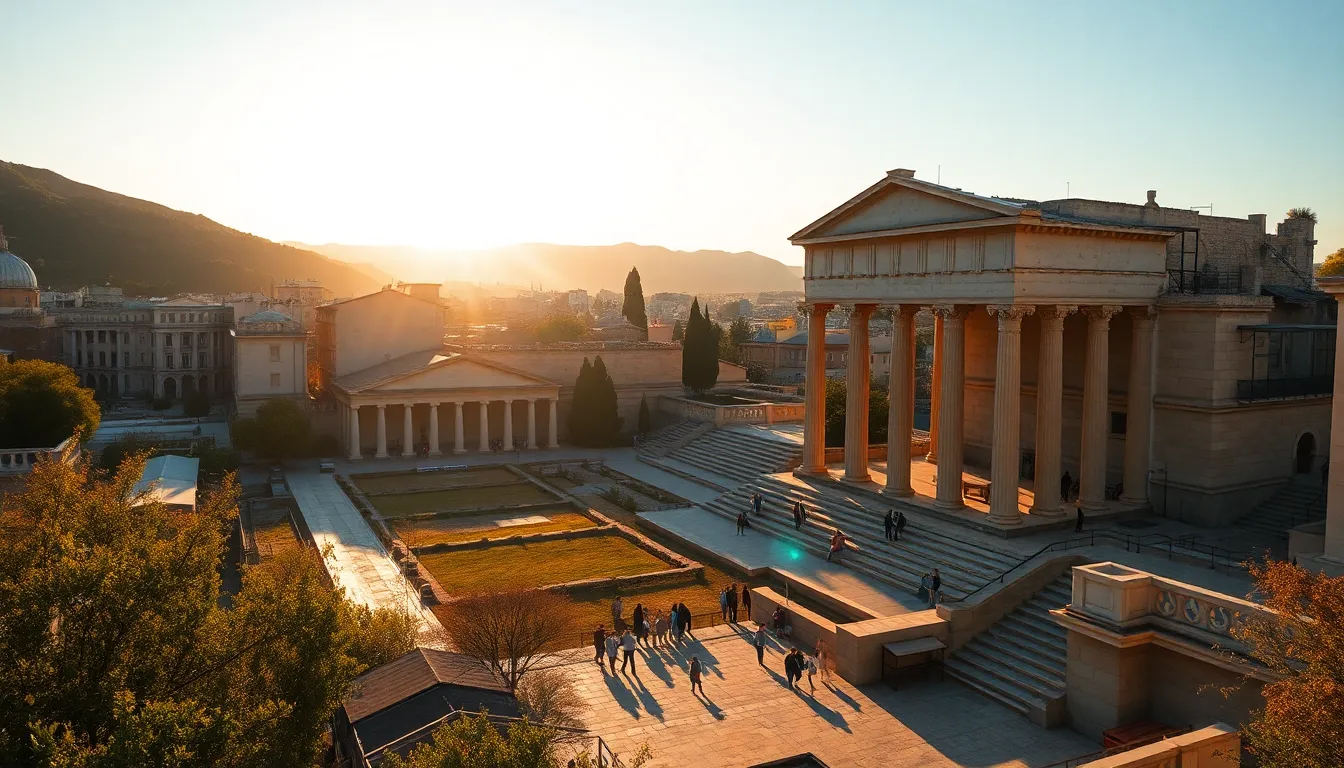
There is a moment that happens almost every autumn trip I lead in Greece. We are standing at ancient Corinth in early October, late afternoon, and the light goes gold across the columns. The summer crowds are gone. The heat has broken. There is a hush at the site that you simply cannot get in July. And I watch the group settle into it, because finally there is room to be present. That hush is the case for autumn in a sentence.
September and October are my quiet favorite for heritage groups, and I say “quiet” deliberately, because autumn gets less attention than spring even though it delivers many of the same advantages. The weather is mild, the crowds have thinned, and the sea is still warm enough for an island extension. Let me walk you through the autumn window the way I talk it through with group leaders.
Why Autumn Suits Heritage Groups
Autumn in Greece is the mirror image of spring, with one extra gift: the Aegean is warmer in the fall than in the spring because the sea has spent all summer absorbing heat. So if your itinerary includes an island day or a swim, autumn often beats spring for water temperature.
But the core reasons are the same ones that make spring work. The brutal summer heat has passed. The peak-season crowds at the Acropolis, Delphi, and the famous island ports have cleared out as families return to school schedules. And the sites are still fully open and running their normal hours, unlike the winter slowdown that comes later.
For a faith group, this combination is close to ideal. Comfortable weather keeps your whole congregation, including older members, walking the sites together. Thinner crowds mean you can actually gather your group in a meaningful spot, read scripture aloud, and have the quiet to take it in. That quiet is the thing autumn does better than any season.
September: Warm, Bright, and Settling Down
September is the transition month, and early September still carries real summer warmth. Athens commonly runs 28 to 31°C (82 to 88°F) in the first half of the month, easing as October approaches. The days are long and bright, the skies are reliably clear, and rain is still rare.
What changes in September is the crowd. Once the European school year restarts in early September, the family tourism that packs Greece in August drops off sharply. By mid-September you have warm weather without the August crush, which is a genuinely good combination. The famous sites breathe again.
For groups that want warmth and long daylight but not the peak-season crowds, September is the answer. I plan it much like a late-spring trip: outdoor sites in the morning and late afternoon, a rest in the midday heat of early September, and lighter evenings. By late September the heat has eased enough that the day plans relax.
October: The Mild, Uncrowded Heart of Autumn
If September is warm, October is comfortable, and for many heritage groups comfortable is exactly right. Athens settles to around 22 to 26°C (72 to 79°F) for most of the month, with cooler evenings that finally call for a light layer. The north, around Thessaloniki, Philippi, and Berea, runs a few degrees cooler still, so groups doing a Pauline route should pack for cooler mornings up there.
October is the month I steer most autumn groups toward. The walking weather is excellent at every site. Meteora, which can be punishing in summer heat with its rock-cut stairs, becomes a genuine pleasure in October. The Areopagus and the Acropolis are comfortable. And the crowds have thinned further than September, so the sites have that hush I described.
Two things to know about October. First, the back half of the month starts to bring the occasional rain shower, especially in the north, so a light rain layer earns its place in the bag. Second, daylight is shortening, so you have fewer usable hours and want a tighter daily plan. Neither is a problem with good scheduling. Our seasonal overview in when to visit Greece lays out the full year if you want to compare windows.
The After-High-Holidays Window
For groups that follow the Jewish calendar, autumn carries an extra logic. The High Holiday season, from Rosh Hashanah through Sukkot, keeps congregations close to home through most of September and into early October. But once the holidays clear, there is often a collective readiness for something meaningful, and the calendar opens up.
Late October is a natural landing spot for that energy, and the weather cooperates beautifully. For interfaith or combined groups exploring both Christian and Jewish heritage, Thessaloniki, once known as the Jerusalem of the Balkans, sits right on the northern route. A thoughtful autumn itinerary can honor both stories. I cover that kind of planning in our heritage travel tips for Greece.
How Autumn Compares to Spring
Group leaders often ask me to choose between spring and autumn, and the honest answer is that they are close. Here is how I break the tie:
- Want green landscapes and wildflowers among the ruins? Spring wins. Autumn is drier and more golden than green.
- Want a warm sea for an island swim? Autumn wins, because the Aegean is warmest in September and early October.
- Want the absolute quietest sites? Autumn edges it, especially mid-to-late October after the families have gone home.
- Tied to the Jewish calendar? Late October fits the post-High-Holidays window naturally.
- Tied to Orthodox Easter? Spring, since Easter falls there.
There is no wrong choice between the two. Both keep your group comfortable and present, which is the whole point.
One Planning Note Worth Knowing
As you set your autumn dates, it is worth factoring in how the group economics work. With Heritage Tours, the group leader travels free when you bring fifteen or more participants. Autumn trips tend to have good availability compared to the spring rush, which gives you more runway to build your numbers and confirm your dates. The earlier you lock the window, the easier it is to reach that fifteen-person threshold and present a clear plan to your congregation.
FAQ: Greece Heritage Travel in Autumn
Is autumn a good time to visit Greece?
Yes, it is one of the best windows of the year for heritage groups. September and October give you mild-to-warm weather, sites that have cleared of summer crowds, and an Aegean that is still warm from the long summer. The comfortable temperatures and thinner crowds make it easy to keep your whole group together and present at each site.
What is the weather like in Greece in October?
October is comfortable. Athens averages around 22 to 26°C (72 to 79°F) with cooler evenings, and the north around Thessaloniki and Philippi runs a few degrees cooler. The back half of the month brings occasional rain, especially in the north, so pack a light rain layer. It is excellent walking weather for outdoor archaeological sites.
Is September too hot for a Greece heritage tour?
Early September still carries real summer warmth, with Athens often in the high twenties to low thirties Celsius, but it eases through the month. Plan early September like a warm-weather trip with morning sites and a midday rest. By late September the heat has dropped noticeably and the day plans relax. The crowds, importantly, thin out sharply once the European school year restarts.
Should I choose spring or autumn for a Greece heritage trip?
Both are excellent and close to a tie. Spring gives you green landscapes and wildflowers, plus Orthodox Easter. Autumn gives you a warmer sea, the quietest sites of the year in mid-to-late October, and a natural fit with the post-High-Holidays window for Jewish groups. Choose based on which of those advantages matters most to your congregation.
Is the sea warm enough to swim in Greece in autumn?
Often yes, especially in September and early October. The Aegean spends all summer absorbing heat, so it is generally warmer in early autumn than in spring. If your itinerary includes an island extension or a swim, autumn is the better season for water temperature.
Autumn is the season I quietly recommend to group leaders who want comfort and calm over the spring buzz. The light is gorgeous, the sites are open and quiet, and your group has room to take it in. If you are weighing September against October for your congregation, or comparing autumn to spring, I would love to help you decide. See how we build these journeys on our Greece heritage page or our group heritage tours page.
Contact us whenever you are ready to start planning.