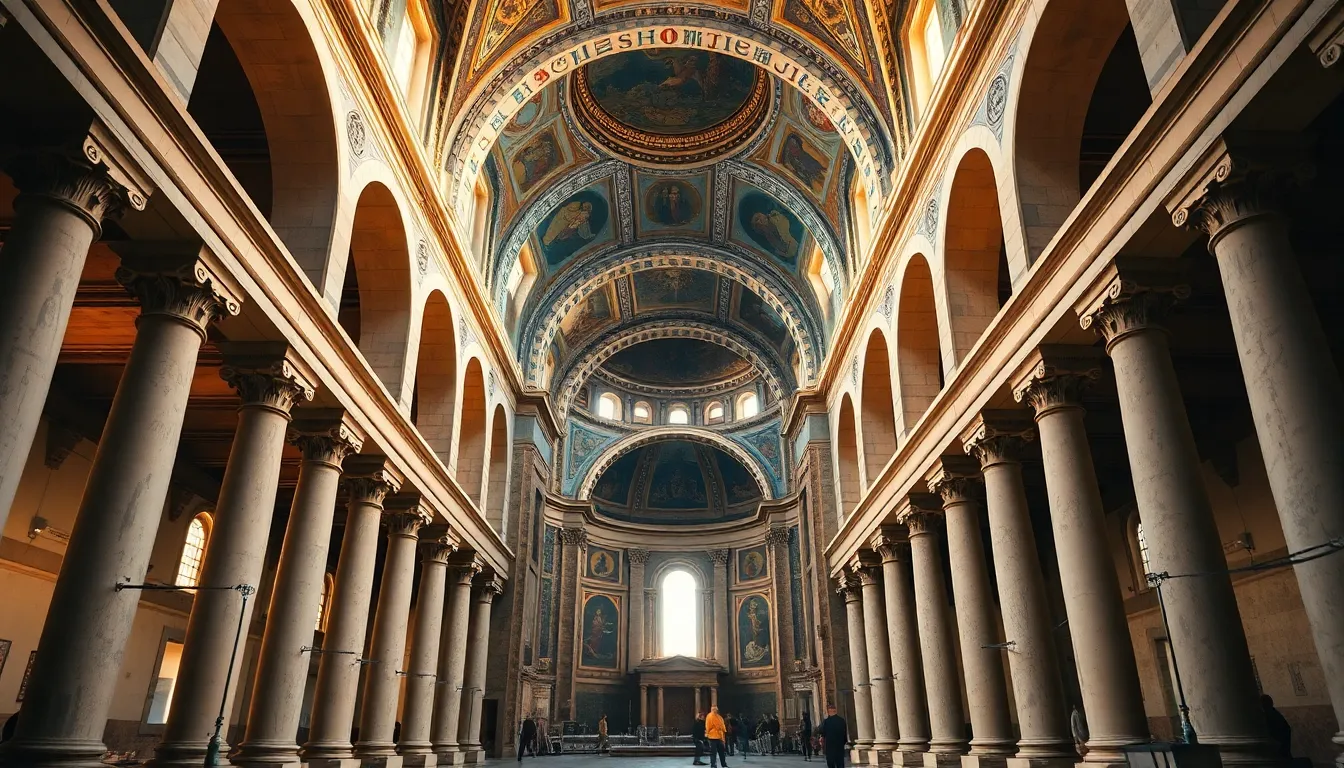
I remember the first time I brought a group into the crypt beneath Hagios Demetrios. Up in the basilica it is all light and marble and gold-flecked mosaic. Then you go down a few steps into the crypt, where the floor is older and the air is cooler, and you are standing at the spot tradition holds is where Demetrius was martyred. One of the women in the group put her hand flat on the old stone and just stood there. Nobody rushed her. That is what the Byzantine churches of Thessaloniki do to people. They are not exhibits. They are still holding their saints.
Most groups come to Thessaloniki for Paul, and rightly so. But the city has a second Christian story that runs for a thousand years after Paul, and it is written in stone and mosaic across the old town. Thessaloniki holds one of the richest collections of Byzantine churches anywhere in the world, fifteen of them grouped together as a UNESCO World Heritage site. For a faith group, walking these churches is a way to see how the early gospel grew into the great Eastern Christian tradition.
Let me walk you through the byzantine churches of Thessaloniki the way I would on the ground, starting with the one that gives the city its patron saint.
Why Thessaloniki Became a Byzantine Capital
To understand the churches, you need to know why they are here. Thessaloniki sat on the Via Egnatia, the great Roman road linking the Adriatic to Constantinople. That made it the second city of the Byzantine Empire for centuries, after the capital itself. Wealth, imperial attention, and theological energy all flowed through it.
The result is a city where you can trace the development of church architecture across a thousand years without leaving the old town. You can see an early Christian rotunda, fifth-century basilicas, the cross-in-square churches of the middle Byzantine period, and the elaborate brickwork of the final flowering before the Ottoman conquest in 1430. For a group interested in how Christian worship took physical shape, there is no better classroom. Our overview of the spiritual sites of Greece sets this in the wider national picture.
Hagios Demetrios: The Basilica of the Patron Saint
Start where the city’s heart is. Hagios Demetrios is the largest church in Greece and the spiritual center of Thessaloniki. It honors Demetrius, a Roman officer martyred for his faith in the early fourth century, who became the city’s protector. For Greek Christians, he is a major figure, and his feast day fills this basilica.
The church you walk into is a five-aisled basilica, rebuilt after a devastating fire in 1917 but carefully restored to its early Christian form. The surviving mosaics, some from the fifth and seventh centuries, are among the treasures of early Byzantine art. They show Demetrius with the children and the donors who built and rebuilt his church, faces looking back at you across fifteen hundred years.
Then there is the crypt. This is the part I make sure no group misses. Beneath the basilica lies the older structure, including the spot venerated as the site of the saint’s martyrdom and the Roman bath where he was held. It is quiet, it is dim, and it carries the weight of the story in a way the bright basilica above cannot. I always give groups time here, unhurried.
The Rotunda: From Roman Mausoleum to Church
A short walk away stands the Rotunda, one of the oldest and most surprising buildings in the city. It was built around 306 AD, probably as a mausoleum or temple for the emperor Galerius, the same emperor who persecuted Christians. Within a century it had been converted into a Christian church.
What survives inside is extraordinary: some of the earliest Christian mosaics anywhere, set into the dome, showing saints standing before elaborate golden architecture. For a group, the Rotunda tells a story in a single building. A monument raised by a persecutor of the church becomes a house of Christian worship within a few generations. That reversal is the whole arc of the early church, in one round room.
Hagia Sophia of Thessaloniki and the Middle Byzantine Churches
The city’s own Hagia Sophia, named for the same Holy Wisdom as the great church in Constantinople, dates to the eighth century. It marks the transition from the early basilica plan to the domed, cross-in-square design that would define Byzantine architecture. The mosaic of the Ascension in its dome is worth standing under in silence for a few minutes.
From the middle Byzantine period come several smaller jewels. The Panagia Chalkeon, the “Copper-smiths’ Church,” built in 1028, is a perfect example of the elegant brick architecture of its age. The Church of the Holy Apostles, from the early fourteenth century, shows the final, ornate flowering of Byzantine church building, its exterior brickwork patterned almost like embroidery. These smaller churches reward a group that slows down. They are human in scale and easy to feel close to.
A Practical Note on Visiting Multiple Churches
A word for group leaders. These churches are working Orthodox churches, not just monuments. That means modest dress, covered shoulders, and quiet voices. It also means a service may be underway when you arrive, which is its own gift if your group is open to witnessing Orthodox worship. We build the visiting order around service times so your group sees the interiors without intruding.
The Walls and the Upper Town
Above the lower city rises the Ano Poli, the Upper Town, the old quarter that survived the great fire of 1917. Here the Byzantine and Ottoman walls still stand, and small churches are tucked into the lanes. From the Trigonion Tower the whole city falls away below you to the gulf. I like to end a Byzantine day up here, with the churches behind us and the sea in front, because it lets the group hold the whole sweep of the city’s Christian history in a single view.
How to Fit Byzantine Thessaloniki Into a Greece Itinerary
For most groups, Thessaloniki is the northern base of a wider Greece journey, and the Byzantine churches deserve a focused half-day to full day within it. Here is a shape that works:
- Morning: Hagios Demetrios and its crypt, then the Rotunda.
- Midday: Hagia Sophia of Thessaloniki and a Greek lunch in the old town.
- Afternoon: Panagia Chalkeon, the Church of the Holy Apostles, and the Upper Town walls.
Pair this with Philippi and Berea to the north and you have a strong northern Greece segment that holds both the Pauline story and the Byzantine one. Our guide to following the Apostle Paul in Greece covers the New Testament half of the city, and the two fit together naturally.
One detail worth planning around early: with Heritage Tours, the group leader travels free when you bring fifteen or more participants. For a pastor or educator building a congregation trip, that is worth factoring in from the start.
FAQ: Byzantine Churches of Thessaloniki
What is the most important Byzantine church in Thessaloniki?
Hagios Demetrios, the basilica of Saint Demetrius, is the city’s spiritual center and the largest church in Greece. It honors the city’s patron saint, a Roman officer martyred in the early fourth century, and its crypt marks the traditional site of his martyrdom. Its early mosaics are among the finest examples of Byzantine art.
Are the Byzantine monuments of Thessaloniki a UNESCO site?
Yes. Fifteen of Thessaloniki’s early Christian and Byzantine monuments are inscribed together as a single UNESCO World Heritage site. The group includes Hagios Demetrios, the Rotunda, Hagia Sophia of Thessaloniki, Panagia Chalkeon, and the city walls, among others.
Can groups attend services in the Thessaloniki churches?
Most of these churches are active Orthodox parishes, so services happen regularly. Groups are welcome to observe Orthodox worship respectfully. We schedule the visiting order around service times so your group can see the interiors and, where it fits, witness a service without intruding.
How much time do you need for the Byzantine churches of Thessaloniki?
A focused half-day covers the major monuments at a reasonable pace. A full day lets you include the smaller middle Byzantine churches and the Upper Town walls without rushing. We tailor the depth to your group’s interest in church history and architecture.
Is there a dress code for visiting the churches?
Yes. As working Orthodox churches, they expect modest dress: covered shoulders and knees, and quiet voices inside. It is a simple courtesy, and we brief every group before the first visit so no one is caught out.
If the Christian history of Thessaloniki is drawing you, I would be glad to help you build a journey that honors it. The churches are real, the saints are still venerated there, and the thousand-year story comes alive once your group is standing inside it. You can see how we structure these trips on our Greece heritage page or learn how the group experience works on our group heritage tours page.
Contact us whenever you are ready to start planning.