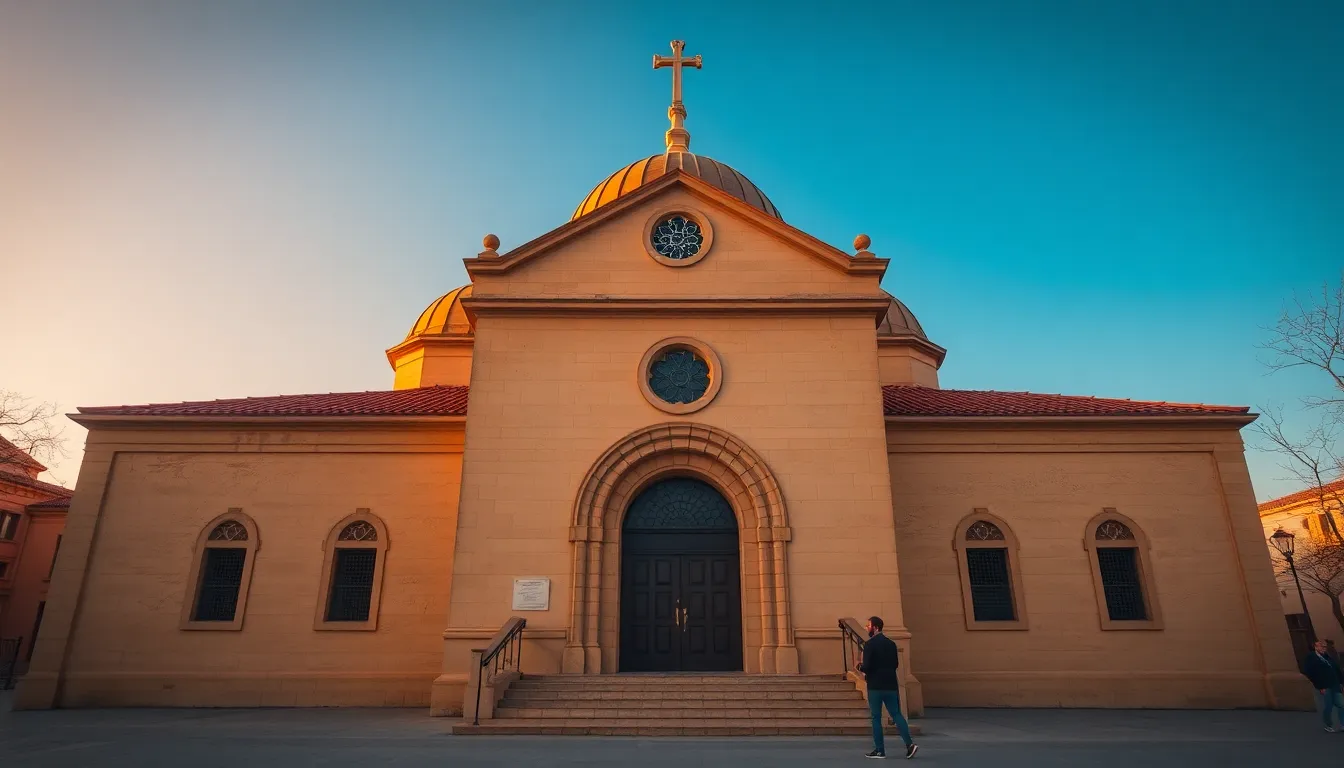
There is a moment on every Jewish heritage trip to Greece when the room goes quiet, and I have learned to plan the week around it. It happens at the Jewish Museum of Thessaloniki, in the deportation hall, when the group understands that a community of fifty thousand people, the heart of Sephardic life for five centuries, was erased in eighteen months. I do not rush that moment, and I do not let it be the only thing the trip is about. Greece holds one of the oldest Jewish stories in Europe, older than Christianity here, and a good itinerary honors the whole of it: the depth, the loss, and the threads that survive.
This eight-day route is built for rabbis, Jewish educators, and congregational groups. It moves from Athens and its ancient Romaniote roots, north to Thessaloniki and the Sephardic world, and west to Ioannina, where one of the oldest Jewish communities in Europe still holds on. It is not a Holocaust tour, though it does not look away from the Shoah. It is a journey through 2,300 years of Jewish presence in this land.
Here is how I would walk you through the week.
Day 1: Arrive in Athens
Day one is for landing and settling. Athens has the best international connections, so most groups start here. I keep the first evening light: a walk through the Plaka, a first look up at the Acropolis, dinner together to set the tone. The heritage work begins tomorrow, and people travel better when they are not pushed on the first night.
If your group has energy and an early arrival, a slow walk through the Monastiraki and Thissio area gives a sense of the ancient city without committing to a full site. But rest is the priority. The week ahead asks a lot emotionally, and a settled start pays off.
Day 2: Jewish Athens and the Ancient City
Athens holds one of the oldest continuous Jewish presences in Europe, with records reaching back more than 2,300 years, long before the Romaniote and Sephardic distinctions took shape.
In the morning, visit the Jewish Museum of Greece, a thoughtful collection that traces the full sweep of Jewish life across the country, from antiquity through the Romaniote communities to the Sephardic arrivals and the modern era. It is the right grounding for everything that follows. Then walk to Etz Hayyim and Beth Shalom, the two synagogues of Athens facing each other on the same street, Romaniote and Sephardic traditions side by side.
In the afternoon, give your group the ancient context: the Acropolis and the Agora. This is the world the earliest Jewish community in Athens lived alongside, and seeing it makes the longevity of that presence real. It also sets up the encounter at the Areopagus for any interfaith members traveling with you.
Day 3: Travel North, Berea and Veria
Today you move toward Thessaloniki, and there is a meaningful Jewish stop on the way.
Veria, ancient Berea, had a Jewish quarter known as Barbouta, tucked along the river, and you can still walk its narrow lanes and see the old synagogue. It is a small, atmospheric place that most tour itineraries skip, and that is exactly why I include it. Standing in a quiet medieval Jewish quarter, away from the larger memorials, gives your group a sense of the texture of everyday Jewish life in the Greek towns, not just the scale of what was lost.
From Veria it is a short drive to Thessaloniki, where you settle for the heart of the week.
Days 4 and 5: Thessaloniki, the Jerusalem of the Balkans
Thessaloniki is the emotional center of this itinerary, and it earns two full days. This was home to the largest Sephardic community in the world. At its peak, Jews made up more than half the city’s population, the port closed on Shabbat, and the nickname Jerusalem of the Balkans was literal, not poetic.
On the first day, give your group a full morning at the Jewish Museum of Thessaloniki. The collection tells the story of a community that thrived for five hundred years and was destroyed in eighteen months. The deportation section documents the transport of nearly fifty thousand Jews to Auschwitz-Birkenau in 1943. This is hard material. I always tell group leaders to speak with their congregation before arriving, not to soften it, but to give people permission to feel it. In the afternoon, the Monastir Synagogue, the only one of dozens to survive the war, and the Holocaust memorial at Liberty Square, where the men of the community were gathered in 1942.
On the second day, go wider. The old railway station and the memorial there mark where the deportations left from. The new Jewish quarter, the cemetery, and the sites of the great lost synagogues fill in a city that was once shaped entirely by Jewish life. I also build in time that is not heavy: the markets, the waterfront, a meal that lets the group breathe. A trip about a living people cannot be only about death.
Day 6: Travel to Ioannina
Today you cross the country west, into the mountains of Epirus, to Ioannina. The drive is part of the experience, climbing through the Pindus range, and it earns its place because Ioannina is unlike anywhere else on the trip.
You settle in Ioannina by the lake in the late afternoon. The old town, inside the Kastro walls, is where the Jewish community lived for centuries. I keep the evening gentle after the long drive, a first walk through the fortress and dinner by the water, and save the heritage sites for a clear morning.
Day 7: Romaniote Ioannina
Ioannina is the home of the Romaniote Jews, one of the oldest Jewish communities in Europe, Greek-speaking, predating the Sephardic arrival by more than a thousand years. Their liturgy, their customs, and their Judeo-Greek language are their own, distinct from anything Ashkenazi or Sephardic.
The Kehila Kedosha Yashan synagogue, inside the old fortress, dates to the early nineteenth century on far older foundations and is one of the largest surviving synagogues in Greece. It still opens for the community’s services. Before the war, around two thousand Jews lived here. Almost the entire community was deported in March 1944. A handful returned, and a small Romaniote presence remains, which is what makes Ioannina feel less like a memorial and more like a thread that was never fully cut. Spend the day here unhurried. This is the day that distinguishes your trip from every standard Greece tour.
Day 8: Return and Departure
Most groups fly home from Athens or Thessaloniki, so day eight is a travel day. Depending on flights, we either drive back across to Thessaloniki for a midday departure or route through to Athens. I use whatever margin the schedule allows for a quiet closing moment, a chance for the group to name what they are carrying home before the airport pulls everyone back into logistics.
For groups with more time, this route extends naturally. Add Rhodes and the Kahal Shalom Synagogue, the oldest in Greece, or pair the Jewish thread with the Christian sites for an interfaith trip. Our 10-day heritage itinerary for Greece shows how those pieces combine.
FAQ: An 8-Day Jewish Heritage Itinerary in Greece
Is this trip only about the Holocaust?
No, and that matters to me. The Shoah is central and the itinerary does not look away from it, but Greece holds 2,300 years of Jewish life, from the ancient Romaniote communities to the Sephardic golden age in Thessaloniki. We build the week to honor the living story, not only the loss, with time for markets, food, and the texture of everyday Jewish life alongside the memorials.
What is the difference between Romaniote and Sephardic heritage in Greece?
The Romaniote Jews are the older community, Greek-speaking, present in places like Ioannina and Athens for over two thousand years, with their own liturgy and customs. The Sephardim arrived after the expulsion from Spain in 1492 and made Thessaloniki the largest Sephardic city in the world. This itinerary lets your group experience both, which most Greece trips never do.
Why include Ioannina when it is so far from the others?
Because Ioannina is the heart of the Romaniote story and nowhere else delivers it the same way. The synagogue inside the old fortress still serves a small surviving community, so it feels like a living thread rather than a closed chapter. The mountain drive is long, but groups consistently tell me Ioannina was the stop that set this trip apart.
Is the deportation material appropriate for a congregational group?
It is, with preparation. The deportation hall in Thessaloniki is intense, and I always ask group leaders to speak with their people beforehand, not to soften it but to give them permission to feel it. We also pace the week so the heavy moments are surrounded by lighter ones. With Heritage Tours, the group leader travels free when you bring fifteen or more, which helps rabbis and educators bring a full congregation.
When is the best time of year for this itinerary?
Late spring, May to June, and early fall, September to October, are ideal. The walking is comfortable and the mountain drive to Ioannina is clear and beautiful. Our guide to the best time to visit Greece breaks the seasons down in detail.
If this route speaks to what your community came to find, I would be glad to help you shape it. The story is deep, the sites are real, and the week holds both the loss and the life. See how we structure these trips on our Greece heritage page, or learn how the group experience works on our group heritage tours page.
Contact us whenever you are ready to start planning.