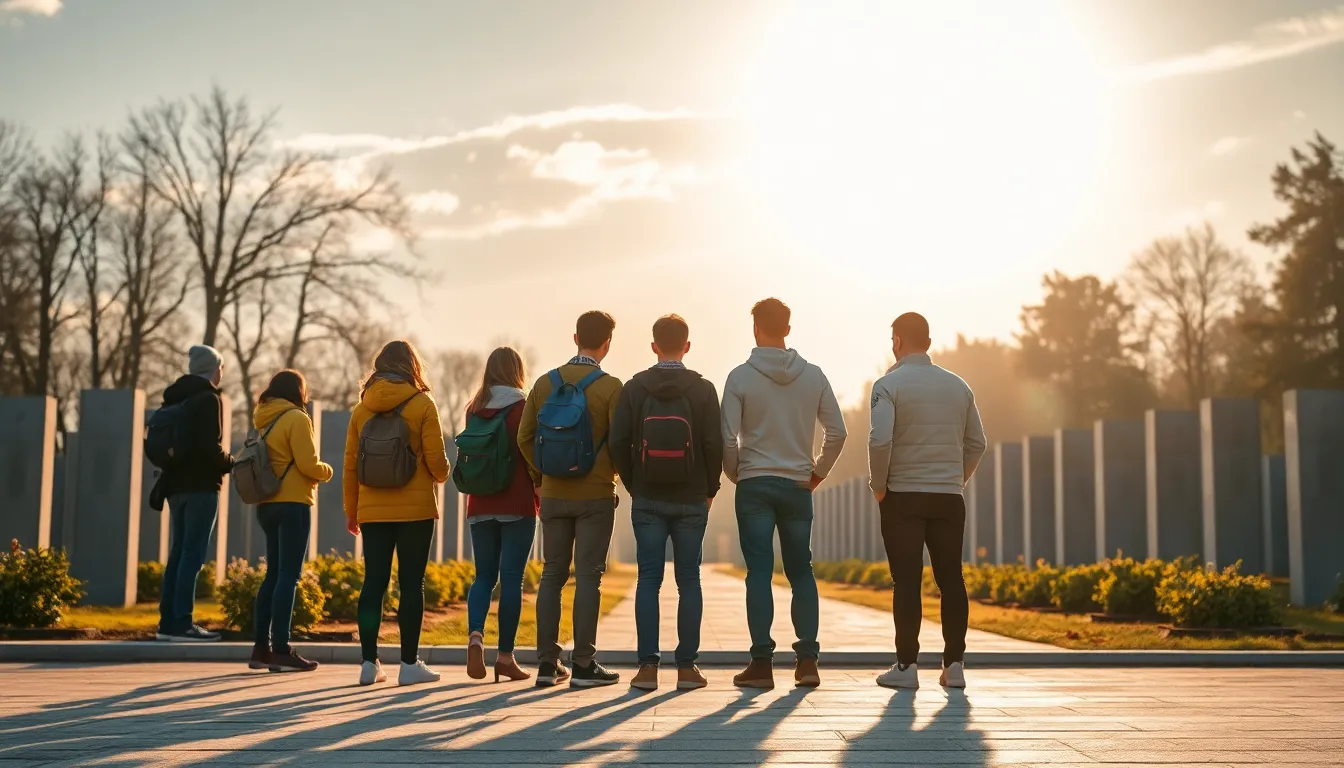
I will tell you the moment I stopped underestimating teenagers on heritage trips. We were at Dachau, and I had braced myself for distraction, for phones, for the restlessness that fifteen-year-olds bring everywhere. Instead the group went completely silent. One boy, the one I had pegged as the class clown, stood at the crematorium for ten minutes without moving. On the bus afterward he said, “I didn’t know it was real until I was standing in it.” That sentence is the whole reason to bring young people to Germany.
Youth groups are not adult groups that move faster. They have their own rhythm. They can walk all day, but they cannot sit through a long lecture. They want to feel something, not be told what to feel. They respond to story, to standing in the actual place, to being trusted with hard truth instead of having it softened. After twenty years of these trips, I have learned to build for that. Give them movement, give them real history without flinching, and give them space to process out loud with each other.
This itinerary is paced for energy and built around encounter. It moves faster than my family route and leans into the active, physical, all-day capacity that teenagers and young adults bring. If you want the slower, mixed-age version, see our multigenerational Germany itinerary. This one is for the youth group that can handle the full weight of the history, and deserves to be trusted with it.
Days 1 and 2: Frankfurt, Landing and Looking
International flights land in Frankfurt, so we start there. With a youth group, I do not waste the arrival afternoon on rest the way I would with older travelers. A walk through the reconstructed Old Town and an early evening exploring Romerberg Square burns off the travel energy and gets everyone sleeping on local time.
Day two is the Judengasse Museum, on the site of one of Europe’s oldest Jewish ghettos. For young people, the power here is the scale of time. Families lived in this narrow lane for three centuries. I ask the group to imagine being born, growing up, growing old, and dying without ever leaving these few streets. That reframe lands hard with teenagers, who think in terms of their own freedom of movement. It opens the conversation the whole trip will build on.
Days 3 and 4: The Rhine Valley, Roots They Did Not Know They Had
The ShUM cities of Worms, Speyer, and Mainz are recognized by UNESCO as the cradle of Ashkenazi Jewish life. This is the part most tour operators skip, and for a Jewish youth group it is the part that often matters most.
Day three is Worms, with its 11th-century synagogue and the Rashi Chapel beside it, where one of Judaism’s greatest scholars taught. For young Jewish travelers, standing in that synagogue is a direct line to their own roots, older than anything they have seen at home. I encourage leaders to let the group sit in the space quietly before any explanation. Let them feel the age of it first. The old Jewish cemetery nearby, with its weathered medieval stones, gives young people something tactile and real that no classroom delivers.
Day four is Speyer and its medieval mikveh, one of the oldest surviving ritual baths in Europe, then a Rhine Valley drive to Mainz. The drive is good for a youth group too. It is where the conversations actually happen, peer to peer, once the adults stop talking. Some of the best processing on these trips happens on the bus, and I plan for it.
Day 5: Nuremberg, How It Happened
Nuremberg is the day to confront the mechanism. The Nazi Documentation Center, built into the unfinished Party Rally Grounds, is one of the best-curated exhibitions in Germany, and it answers the question young people always ask: how did ordinary people let this happen?
This is where I trust teenagers with the full account. The Nuremberg Laws, the rallies, the propaganda machine, and eventually the war crimes trials all happened in this one city. Young people are quick to think they would have resisted, that they would have seen it coming. Standing in the rally grounds complicates that certainty in a healthy way. I build in real time for discussion afterward, because this is the site that generates the hardest and best questions. The medieval old town in the morning, walkable and lively, gives the group energy before the heavier afternoon.
Days 6 and 7: Munich and Dachau, the Center of the Trip
Munich is warm and walkable, and young people enjoy a morning around Marienplatz. But Dachau, the first concentration camp, opened in 1933 and twenty minutes from the city, is the heart of a youth heritage trip.
Plan three to four hours at the memorial, and do not schedule anything after it. This is the day my class-clown story comes from, and I have seen it repeat a hundred times. Young people who you think will not engage are often the ones most changed by Dachau. The mistake leaders make is talking too much. Let the place do the work. Walk the group through, give them quiet time alone in the grounds, and then gather them somewhere calm afterward to talk.
The post-Dachau conversation is, in my experience, the single most important hour of a youth heritage trip. Schedule it deliberately. A circle in a quiet room, a walk along the Isar, anything that lets young people say out loud what they felt. For pastors, rabbis, and educators, this is your moment. You are not there to explain the Holocaust. You are there to hold the space while young people meet it.
Day 8: Wittenberg, Faith and Hard Questions
For Christian youth groups, Lutherstadt Wittenberg is where Martin Luther posted the 95 Theses on the Castle Church door in 1517 and changed the course of Christianity. The town is compact and easy to walk. The Lutherhaus, the Town Church where Luther preached, and the Castle Church are all close together.
For young people, Wittenberg is a chance to connect their own faith to a specific door and a specific act of courage. But I never leave out the harder part. The Judensau relief on the Town Church is a medieval antisemitic carving the city has chosen to keep, with an explanatory memorial at its base. With a youth group, this is a teaching moment worth having. Luther was both a reformer and, later in life, the author of vicious antisemitic writing. Young people can handle that complexity, and they grow when you trust them with it instead of presenting a clean story.
Days 9 and 10: Berlin, Where Young People Find Their Voice
Berlin is the city where everything converges, and it suits a youth group’s energy. The Memorial to the Murdered Jews of Europe is a field of 2,711 concrete pillars near the Brandenburg Gate, and young people move through it in their own way, sometimes playing, sometimes going still. The underground Information Center beneath it makes the abstraction personal.
The New Synagogue on Oranienburger Strasse shows Jewish life continuing in Berlin today, which matters for young travelers who need to see that this is not only a story of destruction. The Jewish Museum Berlin, designed by Daniel Libeskind, is a full-body experience that holds teenage attention completely. For the final afternoon, the Topography of Terror, on the site of the former Gestapo headquarters, gives young people a clear account of how state terror was built. End the trip with one more group conversation. After ten days, young people have a great deal to say, and they have earned the chance to say it.
FAQ: Planning a Youth Group Heritage Trip to Germany
What is the right age for a youth heritage trip to Germany?
I find this itinerary works best for groups aged roughly thirteen and up. The Holocaust sites, especially Dachau, carry real emotional weight, and younger children often need a gentler frame. For confirmation classes, youth groups, and young-adult ministries in the teen-through-twenties range, this route is well matched. If your group includes younger children or older relatives, our multigenerational itinerary is the better fit.
How do you handle the emotional weight of memorial sites with teenagers?
By trusting them with the truth and then giving them room to respond. Young people sense when adults are managing or softening difficult history, and it makes them disengage. We present the real account, let the place speak without over-narrating, and then build in deliberate processing time after the heaviest sites. The post-Dachau conversation is the most important hour of the trip, and we schedule it on purpose.
Are young people actually engaged by heritage travel?
More than almost any other group, in my experience. Teenagers who seem distracted in a museum at home are transformed by standing in the actual place. The encounter is physical and undeniable in a way a textbook never is. The students who surprise their leaders the most are usually the ones nobody expected to be moved.
Is the pace too demanding, or not demanding enough, for a youth group?
This route is built for the energy young people bring. The days are active, the walking is real, and there is little of the slow seated time that older groups need. If anything, teenagers want more, not less. We keep them moving, keep the history vivid, and use the bus rides and evenings for the conversations that matter.
Do you handle the logistics and bookings for a youth group?
Yes. Every day includes hotel pickup and dropoff, so leaders are never herding a youth group through a train station with their luggage. We handle the advance group bookings at the Dachau Memorial and the Jewish Museum Berlin. Youth leaders have enough to manage with the group itself. We take the logistics off your plate.
Bringing young people to Germany is one of the most formative things a faith community can do for its next generation. The history is heavy, but young people can carry it, and they come home changed by having stood in the real places instead of only reading about them.
You can learn how we structure these journeys on our Germany heritage destination page, or read about the group leader experience. Group leaders travel free with fifteen or more participants, which helps when you are building a youth trip on a tight budget.
When you are ready to plan your group’s journey, contact us and we will shape it around your young people.