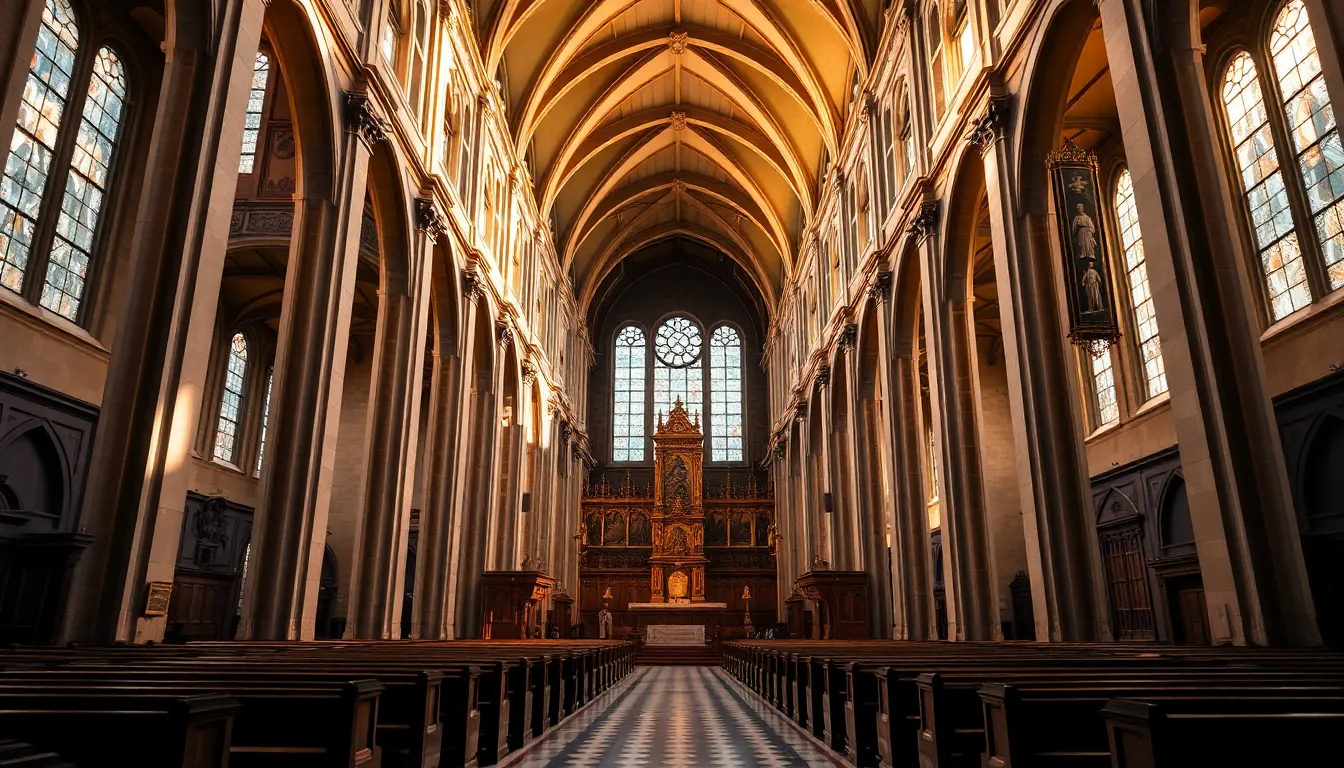
The first time I brought a church choir to St. Thomas in Leipzig, they did not want to leave. They had sung Bach their whole lives, in their own sanctuary, in their own town, and now they were standing in the church where he wrote it, a few feet from where he is buried. One of the altos asked if they could sing something. The verger said yes. Twenty voices filled the space Bach filled three hundred years ago, and there was not a dry eye among them. That is what this trip does.
The Reformation did not only change theology. It changed how the church sounds. When Luther put scripture into German, he also put song into the mouths of ordinary worshippers, writing hymns the whole congregation could sing. Two centuries later, Johann Sebastian Bach took that tradition and gave it the cantatas, the Passions, and the Mass that still shape sacred music today. For a congregation or a choir that lives by this music, walking its geography is a profound thing.
This itinerary follows the cantata and hymn heritage through the towns where it was born: Eisenach, where Bach was born and Luther translated the Bible, Wittenberg, where Reformation singing began, and Leipzig, the center of Bach’s working life. It is a companion to our Reformation anniversary itinerary, and it shares roots with our 10-day Germany heritage itinerary. But this route is for the people who sing the Reformation, not only study it.
Day 1: Arrival in Frankfurt
Flights land in Frankfurt, and the first day is for settling. A walk through the reconstructed Old Town and an early dinner so the group can rest. For a choir, I am especially careful about arrival-day rest, because tired voices on day two are not happy voices. We keep the first evening gentle and let everyone sleep on local time.
Day 2: Eisenach, Where Two Stories Meet
Eisenach is one of the most remarkable towns in Germany for a music heritage group, because two of our streams begin here. This is the birthplace of Johann Sebastian Bach, and it sits below the Wartburg castle where Luther translated the New Testament into German.
We visit the Bach House, a museum devoted to the composer’s life and family, where historical instruments are played for visitors, so your group hears the sounds Bach grew up with. Then we climb to the Wartburg, where Luther, in hiding, gave Germany its Bible. The connection is not incidental. Luther’s German scripture and German hymns created the soil that Bach’s music grew from two hundred years later. For a choir, standing in Eisenach is standing at the source of both the words and the song.
If your group has musicians among them, the Georgenkirche in Eisenach, where Bach was baptized and where Luther once sang as a boy, is a place I encourage groups to sing.
Day 3: Wittenberg, the Birth of Congregational Song
Lutherstadt Wittenberg is where Luther posted the 95 Theses in 1517, but for a music group its importance is different and just as deep. This is where Luther wrote and championed the German hymn, the chorale, giving the congregation a voice in worship for the first time. Hymns like “A Mighty Fortress Is Our God” came out of this movement, and they are the direct ancestors of the chorale melodies Bach would later harmonize in his cantatas and Passions.
In the Town Church, where Luther preached, I encourage groups to sing a chorale together. To stand in the room where congregational singing was born and to sing a hymn that descends from it is a connection most choir members have never made before, and it changes how they hear their own repertoire. I also raise, as I do on every Wittenberg visit, the Judensau relief on the Town Church, a medieval antisemitic carving the city has kept with an explanatory memorial. An honest trip holds the beauty and the shadow together.
Day 4: Leipzig, the Heart of Bach’s World
Leipzig is the center of this trip. Bach served as cantor of St. Thomas Church for twenty-seven years, from 1723 until his death in 1750, and it was here that he composed most of the cantatas, the St. Matthew Passion, and the St. John Passion. He is buried in St. Thomas, and the church remains a living center of Bach’s music, with the famous Thomanerchor, the boys’ choir Bach once directed, still singing today.
I plan a full, unhurried day here. We visit St. Thomas, stand at Bach’s grave, and visit the Bach Museum across the square, which holds manuscripts and instruments from his world. If your timing allows, attending a motet service at St. Thomas, where the Thomanerchor sings, is the single most moving experience I can offer a music group. We also visit St. Nicholas Church, where many of Bach’s works were first performed and where, centuries later, the peaceful protests began that helped bring down the Berlin Wall.
For visiting choirs, Leipzig is also the place where, with advance arrangement, your own group may have the chance to sing. There is nothing I have seen move a choir more.
Day 5: Leipzig Deeper, and the Music Quarter
Leipzig rewards a second day. Beyond Bach, the city was home to Felix Mendelssohn, who revived Bach’s St. Matthew Passion in 1829 and rescued the composer from near-obscurity, and to Robert and Clara Schumann. The Mendelssohn House, the only surviving residence of the composer, is preserved as a museum and is a quiet highlight for music lovers.
This second Leipzig day is also when I build in time for the group to simply absorb the city that nurtured so much of the music they love. For a choir, I try to arrange a workshop or a rehearsal space, so the trip is not only listening and visiting but singing. A heritage music trip should make sound, not only hear it.
Day 6: Berlin, the Larger Story
We travel to Berlin to close the trip, both for the airport and for the fuller arc of German history. Berlin’s churches and concert halls carry the legacy of this music into the modern era, and the city also holds the harder history of the twentieth century. A group that has spent a week with the glory of German sacred music does well to also sit with the Topography of Terror, on the site of the former Gestapo headquarters, and to remember that the country that produced Bach also produced catastrophe. Holding both is part of an honest heritage journey.
Day 7: Departure from Berlin
The final morning is open before flights home. After a week of churches, manuscripts, and song, most groups want a little quiet time together to let it settle. For a choir, this is often when they sing one last time, informally, somewhere that lets them carry the trip home in the way they know best.
FAQ: Planning a Bach and Reformation Music Heritage Trip
Can our choir actually sing in these historic churches?
In many cases, yes, with advance arrangement. Churches like St. Thomas in Leipzig and the Town Church in Wittenberg can sometimes accommodate visiting choirs, and singing in these spaces is consistently the most moving moment of the trip for the groups I lead. It requires booking well ahead and coordinating with each church, which we handle as part of the planning. Tell us early that you are a singing group so we can build the opportunities in.
What is the connection between Luther and Bach?
Luther gave the church congregational song, writing German hymns, called chorales, so ordinary worshippers could sing in their own language. Two hundred years later, Bach built his cantatas and Passions on those very chorale melodies. The trip follows that lineage directly: Wittenberg, where congregational singing began, and Leipzig, where Bach brought it to its fullest expression. For a music group, seeing that thread is the heart of the journey.
Is this trip only for choirs and musicians?
No. It rewards anyone who loves sacred music or the Reformation, whether they sing or not. That said, it leans into music heritage more than our general Germany route, so if your group’s connection is more to the broader Jewish and Christian story, our 10-day Germany itinerary may suit you better. For congregations whose worship life is built around music, this route is made for you.
When is the best time to go for live performances?
The Thomanerchor sings regular motet services at St. Thomas in Leipzig during much of the year, and Leipzig hosts a major Bach festival in early summer. If experiencing live performance is central to your group, we plan the trip around the concert and service calendar so your visit coincides with the music. Tell us what matters most and we time the itinerary to it.
How far in advance should a choir book this trip?
For a singing group, I recommend more lead time than usual, ideally ten to twelve months, because arranging for your choir to perform in these churches takes coordination, and festival dates fill early. For a group of fifteen or more without performance plans, eight to ten months is comfortable. We handle the church arrangements, hotel blocks, and festival timing as part of the planning.
For a congregation or a choir that lives by this music, walking from Bach’s grave in Leipzig to the room in Wittenberg where congregational singing began is a once-in-a-lifetime journey. It is one thing to sing Bach at home. It is another to sing it where he wrote it.
You can see how we structure these journeys on our Germany heritage destination page, or read about the group leader experience. Group leaders travel free with fifteen or more participants, which helps a choir reach the numbers that make the trip work.
When you are ready to plan your music heritage journey, contact us and we will compose it around your group.