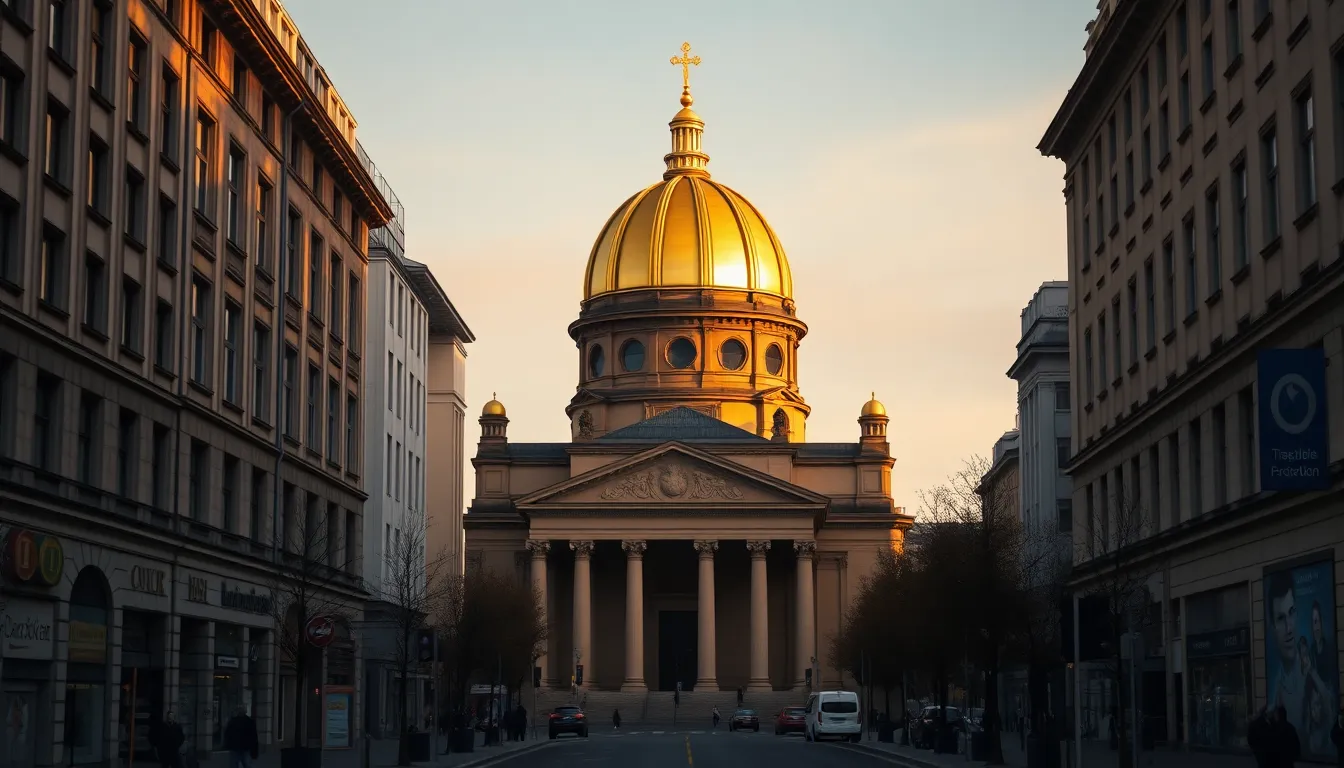
The first time I brought a congregation into the old Jewish quarter of Berlin, an older man in the group stopped walking. He had read about this neighborhood his whole life. Now he was standing in it. He told me later that he had not expected the streets to feel so ordinary, so alive, with cafes and bookshops and people going about their day. That ordinariness was the thing that moved him most. Jewish life had been here. It had been torn out. And here it was again, breathing.
Berlin is where Germany’s three Jewish chapters meet in a single city. The centuries of community, the destruction, and the revival are all within walking distance of each other. For a rabbi or an educator planning a heritage trip, that compression is a gift. You can show your people the full arc of the story without ever boarding a bus.
This is a guide to walking Jewish Berlin with intention. Not as sightseeing, but as remembrance and encounter.
The Scheunenviertel: The Heart of Old Jewish Berlin
The Scheunenviertel, the “barn quarter,” is where you should begin. This neighborhood in the Mitte district was the center of Jewish Berlin for generations. In the late nineteenth and early twentieth centuries, it filled with Jewish immigrants arriving from Eastern Europe, many of them Yiddish-speaking, many of them poor, building a dense and devout community in these blocks.
Walk along Grosse Hamburger Strasse and you walk through layers. This street holds the site of Berlin’s oldest Jewish cemetery, established in 1672. The Nazis destroyed it in 1943 and used the grounds as a deportation assembly point. Today it is a quiet memorial space. A single restored tombstone for Moses Mendelssohn, the philosopher who helped open German Jewish life to the wider world, stands as a marker for everything that was here.
Nearby was a Jewish boys’ school, a Jewish home for the aged, and the threads of a complete community. When you stand in the Scheunenviertel, you are standing in the place where Jewish Berlin lived its daily life. The bakeries, the prayer houses, the arguments and the celebrations. Brief your group before you walk it. The streets look calm. What happened here was not.
The Synagogues of Berlin
The New Synagogue on Oranienburger Strasse
You cannot miss it. The golden dome of the New Synagogue rises above Oranienburger Strasse and pulls the eye from blocks away. Completed in 1866 in a Moorish-revival style, it was the grandest synagogue in Germany when it opened, seating more than three thousand people.
On the night of Kristallnacht in November 1938, a local police officer named Wilhelm Krützfeld stood his ground and prevented the building from being burned. The synagogue survived that night. It was later gutted by Allied bombing in the war. After German reunification, the facade and the entrance halls were restored, and today the building houses the Centrum Judaicum, a museum of Berlin’s Jewish history. For a deeper look at this building and its restoration, see our guide to the New Synagogue on Oranienburger Strasse.
Rykestrasse and the Living Congregations
The Rykestrasse Synagogue, in the Prenzlauer Berg district, is the largest functioning synagogue in Germany today. Dedicated in 1904, it survived Kristallnacht because of its position inside a residential courtyard, where setting it alight would have endangered the surrounding buildings. It serves an active congregation now. Hearing a service there, in a building that came through the worst of the century intact, lands differently after a week of memorials.
Berlin’s Memorial Landscape
The Memorial to the Murdered Jews of Europe
Near the Brandenburg Gate stretches a field of 2,711 concrete blocks of varying heights. The Memorial to the Murdered Jews of Europe, designed by Peter Eisenman, has no signs, no names on the surface, and no single correct path. You walk in, and the ground dips, and the blocks rise around you until you lose sight of the street and the people you came with. The disorientation is the point.
Beneath the field is an information center that returns names and faces to the abstraction above. The Room of Names reads aloud the biographies of murdered individuals, one after another. To read every name would take years. Build time into your itinerary for silence here. This is not a place to move through quickly.
The Track 17 Memorial at Grunewald Station
At the Grunewald railway station, on the edge of the city, is Track 17. From this platform, more than fifty thousand Berlin Jews were deported to ghettos and killing centers in the East. The memorial lines the edge of the platform with cast iron plates, each marked with a date, the number of people deported that day, and the destination. You walk the length of the platform and read them in order. The dates run from 1941 into 1945. The last deportations left from here in the final weeks of the war.
Standing on the platform where families were loaded onto trains, reading the count of the dead by the day, is among the most sobering experiences in the city. It receives far fewer visitors than the central memorial. For a group prepared to face the deportations directly, it is essential.
The Jewish Museum Berlin
Daniel Libeskind’s Jewish Museum is a building that argues with you before you read a single panel. Its zinc-clad zigzag form, its voids cutting through the floors, its sharp angles and dead ends are all designed so that absence and rupture register in your body. The Holocaust Tower, a tall, cold, near-dark concrete shaft with one slit of light far above, is one of the most affecting memorial spaces I have ever brought a group into.
The permanent exhibition traces two thousand years of Jewish life in German-speaking lands. It refuses to let the Holocaust be the only story. It shows the philosophers, the merchants, the soldiers, the families. For an educator, this is the building that holds the whole picture together. For a fuller treatment of how the Stolpersteine memorials extend this remembrance into the streets themselves, see our guide to reading Germany’s stumbling stones.
The Living Community of Today
Here is the chapter that reframes the rest. Berlin is now home to one of the fastest-growing Jewish communities in Europe. Israelis, families from the former Soviet Union, and Jews from across the world have built lives here. There are kosher restaurants, Jewish schools, cultural centers, and active congregations across several streams of practice.
This is not a museum exhibit. This is Berlin today. When a group that has spent days in memorials sits down to a Shabbat meal in a working Jewish community in this city, something shifts. The loss does not disappear. It cannot. But the people see with their own eyes that Jewish life in Berlin did not end. It returned. That fact, encountered in person rather than read about, does more for a congregation’s understanding of resilience than any lecture I could give.
Building a Jewish Berlin Itinerary
I usually suggest at least two full days for Jewish Berlin, three if your group wants depth. One day for the old quarter and the synagogues, one for the memorial landscape, and time held open for the living community at the end. Berlin works as the closing movement of a wider Germany trip, after the medieval Rhine Valley and the camp memorials, because it carries the revival that the rest of the journey has been building toward. You can see how this fits the larger arc on our Jewish heritage in Germany hub.
Heritage Tours builds each Berlin itinerary around the readiness of the specific group. Some congregations want a full day at the memorials. Others need more time with the living community. The plan should fit your people, not a template. You can see the full picture on our Germany destination page, and our group heritage tours explain how we structure these journeys. Group leaders travel free with fifteen or more participants, which makes a dedicated trip reachable for a congregation of almost any size.
FAQ: Jewish Berlin Heritage
What is the best neighborhood to explore Jewish heritage in Berlin?
The Scheunenviertel in the Mitte district is the heart of old Jewish Berlin. It holds the New Synagogue on Oranienburger Strasse, the oldest Jewish cemetery on Grosse Hamburger Strasse, and the streets where the immigrant community lived. It is walkable and dense with history, which makes it the natural starting point.
How many days do I need for Jewish Berlin?
Two full days cover the essentials: one for the old quarter and synagogues, one for the memorial landscape. A third day lets you include the Jewish Museum properly and spend unhurried time with the living community. For a congregation that wants depth, three days is the right number.
Is the New Synagogue in Berlin still an active place of worship?
The main historic sanctuary was destroyed and is not rebuilt, but the restored building houses the Centrum Judaicum museum, and a small active congregation prays there. Berlin’s largest functioning synagogue is on Rykestrasse in Prenzlauer Berg, which serves a regular congregation today.
What is the Track 17 memorial?
Track 17 is a deportation memorial at Grunewald station, where more than fifty thousand Berlin Jews were deported to ghettos and killing centers. The platform is lined with iron plates recording each deportation by date, number of people, and destination. It is one of the most direct and sobering memorial sites in the city.
Can a Jewish group experience living Jewish life in Berlin today?
Yes. Berlin has one of the fastest-growing Jewish communities in Europe, with active congregations, kosher dining, schools, and cultural centers. We can arrange a Shabbat experience or a meeting with the community, which many groups describe as the emotional turning point of their trip.
If a journey through Jewish Berlin is something you have been carrying for your community, I would be glad to talk it through with you. Every congregation comes with a different history and a different readiness, and the right itinerary is the one that honors yours. Contact us whenever you are ready to begin.