What Most Heritage Tours Miss About England
Every group that visits England sees Westminster Abbey. Most make it to Canterbury. A few reach York Minster. These are significant places, and they deserve the attention they receive. But they are not the whole story, and for the leader who wants to bring something more to their community, England’s quieter heritage sites are where the real depth lies.
I have spent years building itineraries in England, and I have learned that the moments people remember most are rarely at the famous sites. They are in a narrow medieval street in Lincoln, standing before a house that once belonged to the wealthiest man in 12th-century England, a Jewish financier. They are on a tidal island in Northumberland, crossing a causeway that only appears at low tide, walking where monks first carried Christianity into northern Britain. They are in an Oxford reading room, looking at a Hebrew manuscript that survived an expulsion meant to erase everything.
These are the sites that turn a heritage trip into something your group carries home. For the broader picture of England’s heritage, start with our full guide.
Lincoln: Aaron’s House, Jew’s Court, and the Medieval Jewish Quarter
Aaron of Lincoln was, by most historical accounts, the wealthiest man in 12th-century England. He was a Jewish financier whose wealth rivaled the king’s treasury. His house still stands in Lincoln, and it is one of the oldest domestic buildings in England.
What makes Lincoln extraordinary for a heritage group is the concentration of medieval Jewish history in a small area. Jew’s Court, just steps from Lincoln Cathedral, was the heart of the Jewish quarter before the 1290 expulsion. The building has survived the better part of a millennium. When you bring a group here, you are not looking at a reconstruction or a memorial. You are standing in the actual space where Jewish life once thrived.
Lincoln Cathedral itself is one of England’s greatest Gothic structures, and the proximity of the cathedral to the Jewish quarter tells its own story about how closely these communities lived, and how suddenly that proximity ended.
For most heritage groups, Lincoln is a half-day stop between London and York. It deserves more. The story of Aaron of Lincoln alone, a Jewish man whose financial network funded cathedrals and castles across England, is enough to anchor a full morning of reflection and conversation. Read more about Jewish heritage in England.
Lindisfarne: The Holy Island That Built British Christianity
Lindisfarne is not easy to reach, and that is part of the point. The Holy Island sits off the Northumberland coast, connected to the mainland by a tidal causeway that is only passable at low tide. You must plan your crossing around the tide schedule. If you miss the window, you wait.
That constraint is not an inconvenience. It is the experience. The physical act of crossing to an island that has been a place of prayer and contemplation since the 7th century, knowing that the sea will close behind you, puts your group in a different frame of mind than any cathedral in London.
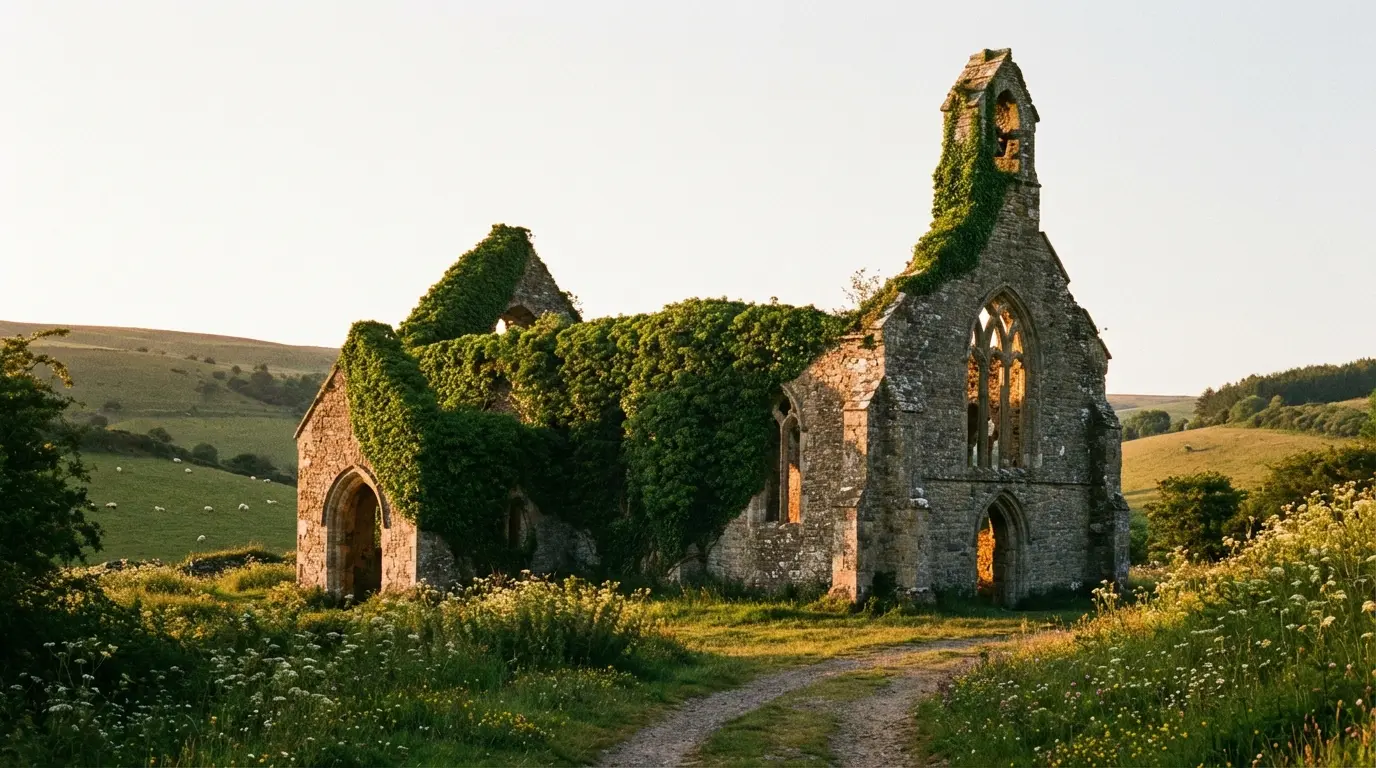
It was here that the Lindisfarne Gospels were created, one of the most important illuminated manuscripts in the Western world. It was here that Aidan of Lindisfarne established the monastery that brought Christianity to the north of England. The ruins of the medieval priory still stand, and the island’s small population and absence of commercial tourism give it a quality of stillness that is increasingly rare.
For a Christian heritage group, Lindisfarne is one of the most powerful sites in England. For a mixed-faith group, it offers something universal: a place where isolation and devotion shaped history.
Glastonbury: Faith, Legend, and the West Country’s Spiritual Landscape
Glastonbury requires honest handling. It is a place of genuine Christian heritage, and it is also a place where legend, mythology, and modern spiritual movements have layered themselves on top of one another.
The Christian heritage is real. Glastonbury Abbey is one of the oldest Christian sites in England, with traditions connecting it to Joseph of Arimathea and the earliest spread of Christianity to Britain. The ruins of the abbey are beautiful and somber. For a Christian heritage group, this is a site with deep roots.
But Glastonbury today is also associated with New Age spirituality, the Glastonbury Tor, and a commercial mysticism industry that may not sit comfortably with every faith group. As a leader, it is worth knowing this in advance. The abbey itself remains a place of genuine contemplation. The town around it has a different character.
I mention this because honesty about a site is more valuable than enthusiasm. Glastonbury is worth including, particularly for groups interested in how Christianity first arrived in Britain. But the leader who visits first, or who asks Heritage Tours about the experience, will be better prepared than the one who relies on a guidebook alone.
The Oxford Bodleian: Hebrew Manuscripts and the 1290 Expulsion Story
The Bodleian Library at Oxford University holds one of the most important collections of Hebrew manuscripts in the world. Many of these date to the medieval period, before the 1290 expulsion of Jews from England. They survived because they were in a university library, not in a community that was being dismantled.
For a Jewish heritage group, seeing these manuscripts is a way of encountering what survived. The community was expelled. The synagogues were converted or destroyed. But these texts endured. There is something powerful in that.
For a Christian heritage group, the Bodleian also holds early English Bibles, Reformation-era documents, and theological manuscripts that trace the development of English Christianity. The library itself, one of the oldest in Europe, is worth the visit for its architecture and atmosphere alone.
Oxford requires advance arrangements for group visits to the Bodleian, and Heritage Tours coordinates this as part of any England itinerary that includes the city. This is not a drop-in visit. It needs planning.
York’s Hidden Christian Heritage (Beyond the Minster)
Everyone who visits York goes to the Minster, and rightly so. It is the largest medieval Gothic cathedral in northern Europe, and it is breathtaking. But York’s Christian heritage extends well beyond the Minster’s walls.
The city walls themselves, among the most complete medieval walls in England, were walked by pilgrims and soldiers alike. The Shambles, a medieval street that has barely changed in centuries, gives a sense of what daily life was like in a city shaped by faith and trade. Holy Trinity Church on Goodramgate is one of the most atmospheric small churches in England, with box pews that have been in use for hundreds of years.
For a group leader, building in time for York beyond the Minster is worth it. A walk along the walls, a quiet moment in Holy Trinity, a conversation in the Shambles about what medieval life required of faith communities. These are the moments that give a heritage trip texture.
How to Build These Hidden Sites Into a Group Itinerary
The challenge with lesser-known sites is not finding them. It is fitting them into a schedule that already includes the major stops. A 10-day England itinerary can include Lincoln, Lindisfarne, and the Bodleian without rushing, if the routing is planned with these sites in mind from the start rather than added as afterthoughts.
Heritage Tours builds these sites into the core of the itinerary, not as optional side trips. When Lincoln anchors a full morning, when Lindisfarne gets the time it deserves including the tidal crossing, when the Bodleian visit is pre-arranged and guided, these places carry the weight they should. See our full 10-day England heritage itinerary.
FAQ: Off-the-Beaten-Path Heritage Travel in England
Who was Aaron of Lincoln and why does his house matter? Aaron of Lincoln was a Jewish financier in the 12th century, widely considered the wealthiest man in England at the time. His financial network funded the construction of cathedrals, abbeys, and castles across the country. His house in Lincoln still stands and is one of the oldest domestic buildings in England. It is a tangible link to the period when Jewish communities were an integral part of English life, before the 1290 expulsion.
What is Jew’s Court in Lincoln and can you visit it? Jew’s Court is a medieval building in Lincoln that was part of the city’s Jewish quarter before 1290. It sits near the base of Lincoln Cathedral. The building has been used for various purposes over the centuries and is generally accessible, though group visits benefit from advance coordination to ensure a guide is available who can explain the site’s significance.
Is Lindisfarne accessible for a group visit? Yes, but it requires planning around the tide schedule. The island is connected to the mainland by a causeway that is only passable at low tide, roughly twice a day. Crossing times change daily and must be checked in advance. Heritage Tours schedules Lindisfarne visits with the tide table built into the itinerary. Missing the window is not an option when you are responsible for 20 people.
What makes Glastonbury significant for Christian heritage travelers? Glastonbury Abbey is one of the oldest Christian sites in England, with traditions dating the arrival of Christianity in Britain to the 1st century through Joseph of Arimathea. The abbey ruins are impressive and contemplative. The town of Glastonbury has a broader spiritual culture that includes New Age elements, which is worth knowing in advance as a group leader.
What Hebrew manuscripts are held at the Bodleian Library in Oxford? The Bodleian holds one of the most significant collections of medieval Hebrew manuscripts in the world, including legal documents, religious texts, and community records from before the 1290 expulsion. These manuscripts are among the few surviving artifacts of English Jewish life before the community was expelled. Group visits require advance booking through the library.
If you are building an England itinerary and want to include the sites that most groups never see, we would be glad to help you plan something with real depth. Explore Heritage Tours’ England programs.