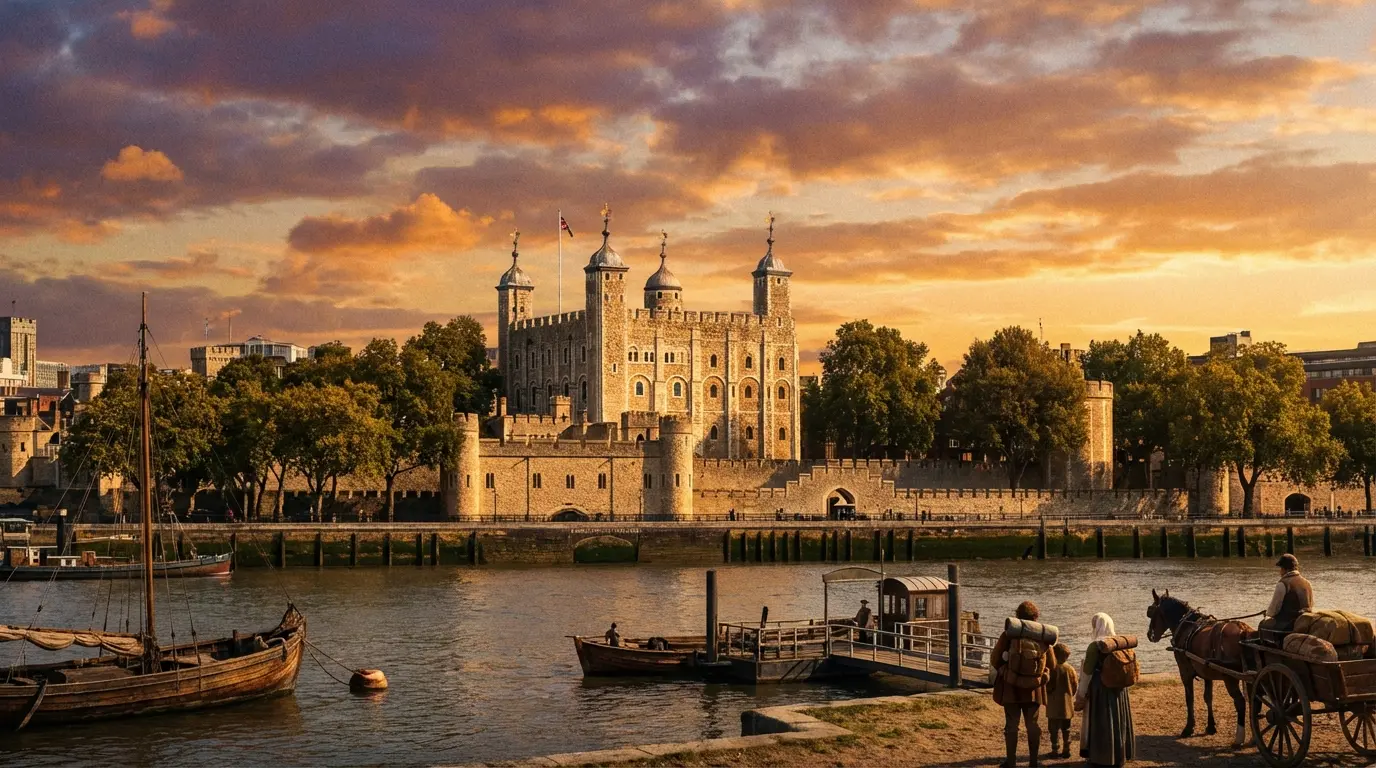
What Makes England Different From Other Heritage Destinations
If your community has traveled to Israel, you know what heritage travel feels like when it is centered on one faith tradition and one continuous story. England is different. The heritage here is layered, contested, and sometimes uncomfortable. Jewish and Christian histories are tangled together. The cathedrals that inspire your congregation were built in the same cities where Jewish communities were expelled or worse.
England also moves at a different pace. The country is smaller than most American visitors expect, but the distances between heritage sites are real. London to York is three hours. York to Lindisfarne is another two to three hours. Canterbury is southeast of London while everything else is north. A first-time leader who underestimates travel time will overpack the schedule and exhaust the group.
What makes England rewarding for a first heritage trip is this: it asks your group to hold multiple truths at once. Beauty and violence. Devotion and expulsion. Continuity and absence. That complexity is what gives the trip its depth.
The Mistake First-Time Leaders Make in England (and How to Avoid It)
The most common mistake I see from first-time leaders is scheduling too many sites per day. England’s heritage sites are not quick stops. Canterbury Cathedral is not a 45-minute visit. Clifford’s Tower is not a photo opportunity. Bevis Marks Synagogue deserves a full morning, not a slot between two other appointments.
When you try to fit four major heritage sites into a single day, you reduce each one to a box to check. Your group rushes through Westminster to make it to the Tower of London by lunch, and neither experience lands.
The better approach is to plan two main experiences per day, with breathing room between them. Give your group time to absorb what they have seen. Give yourself time to answer questions, to share context, to let a conversation develop. The moments between the scheduled stops are often where the real learning happens.
Heritage Tours builds itineraries with this pacing in mind. We have seen what happens when groups are over-scheduled, and we have seen what happens when the right amount of space is built in. The difference is significant.
What to Tell Your Congregation Before You Go
Your participants need two kinds of preparation: practical and spiritual.
On the practical side, tell them about walking. England’s heritage sites involve significant walking, often on uneven surfaces. Cathedral floors, medieval streets, the grassy mound at Clifford’s Tower, the causeway to Lindisfarne. Comfortable shoes are not a suggestion. They are a requirement. Tell them to pack layers. English weather changes quickly, and rain is possible in any season.
On the spiritual side, prepare them for the weight of what they will encounter. If you are visiting Clifford’s Tower, let them know in advance what happened there. Do not let it be a surprise. If you are a Jewish group, the story of the 1290 expulsion and the 366-year absence is something your participants should know before they stand at Bevis Marks. If you are a Christian group, the story of Becket’s murder and what it meant for Canterbury should be part of their preparation.
One thing I always recommend: ask your group to read one thing before the trip. A short article about Bevis Marks. A chapter about Lindisfarne. The Canterbury Tales prologue. Even a few pages of context transforms the way a person experiences a site. A group that arrives prepared carries the trip differently than a group that arrives uninformed.
Five Sites Every First-Timer Needs to Include
Bevis Marks Synagogue, London. The oldest synagogue in the UK, in continuous use since 1701. For a Jewish group, this is where the return story becomes real. For a mixed-faith group, it is a window into a heritage tradition that most Christian travelers have never encountered.
Canterbury Cathedral. Nine hundred years of pilgrimage. The site of Becket’s martyrdom. For a Christian group, this is the heart of the trip. For any group, it is a place where the intersection of faith and political power is viscerally present.
Clifford’s Tower, York. Where approximately 150 Jews were massacred in 1190. This is the most challenging site on the itinerary and the most important. Do not skip it because it feels difficult. Your group needs this moment.
York Minster. The largest medieval Gothic cathedral in northern Europe. The stained glass alone could hold a group’s attention for hours. This is one of the most physically impressive spiritual sites in England.
Lindisfarne (Holy Island). Where Christianity came to northern Britain. The tidal crossing, the ruins, the silence. For a Christian group, it is sacred ground. For any group, it is a place that changes the way you think about devotion and isolation.
For more on each of these sites, see our full England heritage guide.
Practical Preparation: Travel Distances, Health, and Group Dynamics
Travel between major heritage sites in England is measured in hours, not minutes. Plan for London to Canterbury at 90 minutes, London to Oxford at 90 minutes, Oxford to Lincoln at two and a half hours, Lincoln to York at one hour, and York to Lindisfarne at two to three hours. Heritage Tours manages all ground transportation with hotel pickup and dropoff, but the leader should communicate to participants that travel days involve time on the coach.
Health preparation is straightforward. England has excellent medical infrastructure. No vaccinations are required. The main health concern for heritage groups is fatigue, particularly in the first few days when jet lag overlaps with full-day site visits. Build lighter programming on day one and two.
Group dynamics deserve a word. Twenty people who travel together for a week will have moments of friction. This is normal. The leader who acknowledges it, who builds in some free time for individuals to wander or rest, who does not force togetherness at every moment, will have a happier group. Heritage Tours can advise on where free time works best in the itinerary. For seasonal timing and scheduling, see our best-time guide.
What Working With Heritage Tours Looks Like for a First-Timer
If this is your first time leading a heritage group trip, Heritage Tours is designed for you. We have worked with first-time leaders for decades, and the pattern is consistent: the leader who has a partner handling the trip coordination leads a better trip.
Here is what the partnership looks like. You define the spiritual purpose and recruit your group. Heritage Tours builds the itinerary, manages all site bookings, arranges ground transportation and hotels, and coordinates with local guides who understand the heritage context. Before the trip, we brief you on what to expect at each site, including the emotionally challenging ones.
On the ground, you are the leader. Your role is pastoral, educational, spiritual. When a member of your group is moved at Clifford’s Tower, you are there. When someone has questions at Canterbury, you lead the conversation. Heritage Tours makes sure you never have to interrupt that moment to sort out a bus schedule or a hotel problem.
Group leaders travel free when they bring 15 or more participants. See our full group leader guide for details. For insider tips on what to expect, read our practical England guide.
FAQ: First-Time Heritage Group Travel to England
What are the most important heritage sites for a first-time visit to England? For a first visit, include Bevis Marks Synagogue and the East End in London, Canterbury Cathedral, Clifford’s Tower and York Minster in York, and Lindisfarne if time permits. These five sites cover the essential arc of England’s Jewish and Christian heritage.
How do I prepare my congregation for a heritage trip to England? Two ways. Practically: advise comfortable walking shoes, layered clothing, and readiness for group travel days. Spiritually: share background on the key sites in advance. A brief reading on Bevis Marks, Becket’s story, or the 1190 massacre at York will transform how participants experience those sites.
Is England a good first destination for a faith-based group tour? Yes. England has strong infrastructure for group travel, English-speaking guides, manageable distances between heritage sites, and a depth of Jewish and Christian heritage that provides meaningful content for any community. The travel is comfortable and the heritage is significant.
What should a first-time group leader know before traveling to England? The most important thing is pacing. Do not overschedule. Two major heritage sites per day, with time between them, produces a much better experience than three or four rushed stops. Also, prepare for the emotional weight of sites like Clifford’s Tower. Your group will look to you for guidance at those moments.
How does Heritage Tours support first-time group leaders? Heritage Tours handles all trip coordination, including site bookings, hotels, ground transportation, and local guides. Before the trip, we brief leaders on what to expect at each site, including guidance on the more emotionally challenging locations. On the ground, the leader focuses on the spiritual and pastoral experience while Heritage Tours manages everything else.
If you are thinking about leading your first heritage trip to England, we would welcome the chance to help you plan it. Explore Heritage Tours’ England programs.