Why England? The Case for a Heritage Journey
When people think of heritage travel, they often picture Israel, Rome, or Istanbul. England rarely comes to mind first. But it should. This is a country where Jewish and Christian history run deeper than most travelers realize, where the sacred and the political have been tangled together for over a thousand years, and where the sites themselves still carry the weight of what happened in them.
I have been bringing groups to England for decades, and I can tell you that the reaction is almost always the same. People arrive expecting castles and countryside. They leave having stood at the spot where 150 Jews chose death over conversion, having walked through the oldest operating synagogue in the UK, having sat in the silence of a cathedral where pilgrims have come for 900 years. England changes the way your group thinks about faith and memory.
For the rabbi or pastor reading this, England is not an obvious choice, and that is exactly why it works. Your congregation has likely been to Israel, perhaps to Rome. England offers something different: a heritage story that surprises, that challenges, and that has not been worn smooth by a million tour buses.
Jewish Heritage in England: From Bevis Marks to York’s Clifford’s Tower
England holds one of the most dramatic Jewish histories in all of Europe. It was the first country to formally expel its entire Jewish community, in 1290 under Edward I. For 366 years, there were essentially no Jews in England. Then, in 1656, Oliver Cromwell quietly permitted their return.
That return produced Bevis Marks Synagogue in London, built in 1701 by the Sephardic community. It has been in continuous use ever since. No alterations since its construction. When you step inside, you stand in a space that has not changed in over three centuries. For a Jewish group, that continuity is extraordinary.
But the story runs deeper than London. In York, Clifford’s Tower marks the site of the 1190 massacre, where approximately 150 Jews were killed or took their own lives rather than face forced conversion. In Lincoln, the medieval Jewish quarter, including Jew’s Court and Aaron of Lincoln’s house, tells the story of a community that thrived before everything was taken away. In Oxford, the Bodleian Library holds Hebrew manuscripts that survived the expulsion.
For rabbis considering England, this arc of arrival, destruction, absence, and return is not background reading. It is the journey itself. Read our full guide to Jewish heritage in England.
Christian Heritage in England: Cathedrals, Abbeys & Holy Islands
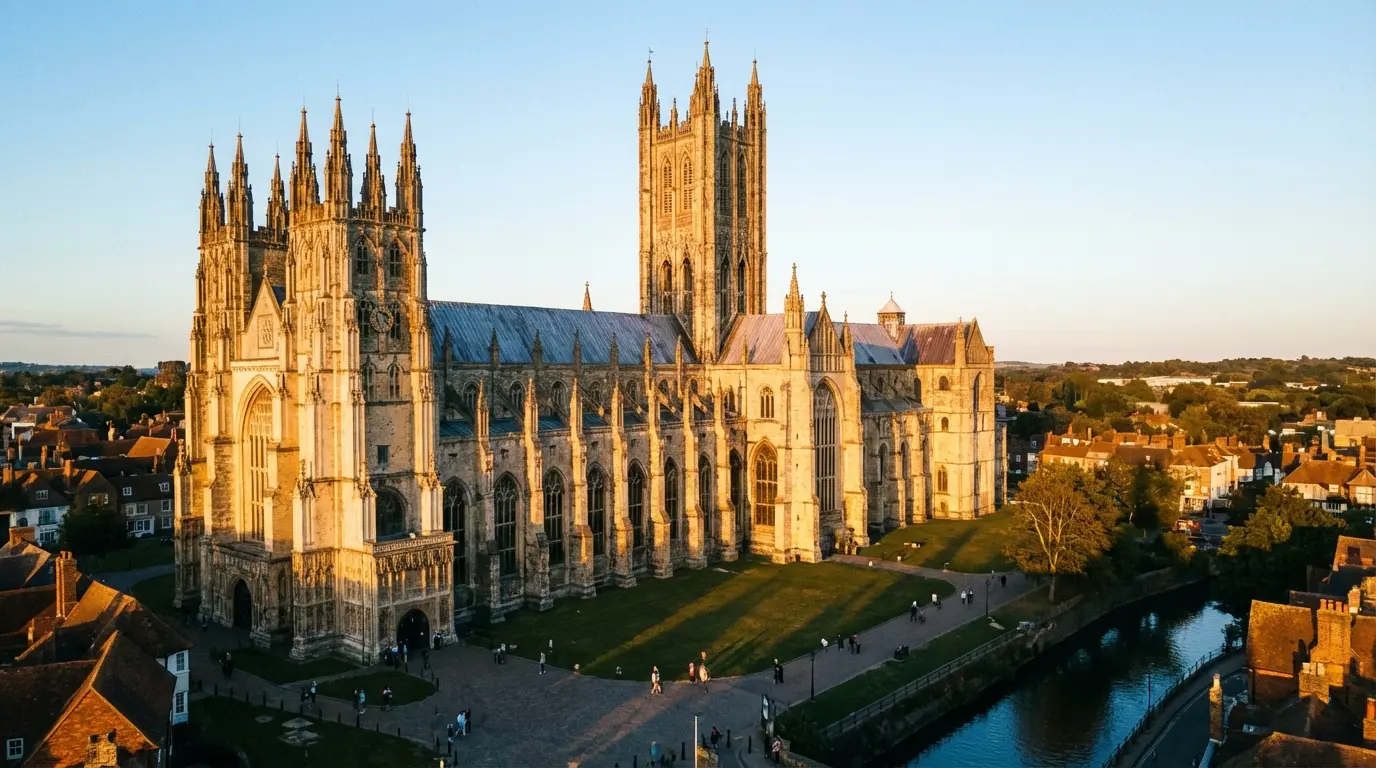
England shaped Christianity in the British Isles, and through missionaries, much of the world. The story begins on the edges, at Lindisfarne, the tidal island in Northumberland where monks brought the Gospel to northern Britain in the 7th century. It runs through Canterbury, where Thomas Becket was murdered in his own cathedral in 1170, sparking a pilgrimage tradition that has endured for more than 800 years. It fills Westminster Abbey, where a thousand years of faith, monarchy, and national memory sit side by side.
What makes England’s Christian heritage different from France or Italy is its character. The cathedrals are medieval and literary. Chaucer wrote about the Canterbury pilgrimage in the 14th century, and people still walk that road today. York Minster is the largest medieval cathedral in northern Europe. Glastonbury Abbey sits among layers of legend, from Joseph of Arimathea to King Arthur.
For pastors, these are not museum pieces. Canterbury is an active cathedral with regular worship. Westminster holds services daily. Lindisfarne is a place of silence and wind and solitude. These sites invite your congregation into something that is still alive. Explore our guide to spiritual sites in England.
Regions to Know
London is the starting point for most heritage groups. Bevis Marks Synagogue, Westminster Abbey, the Tower of London, and the East End’s immigrant story are all within reach. London is also where you will find the strongest kosher dining options and the most accessible infrastructure for groups.
East Anglia and Oxford hold the scholarly side of England’s heritage. The Bodleian Library in Oxford houses Hebrew manuscripts and early English Bibles. Cambridge has its own medieval Jewish connections. These are quieter visits, but they add intellectual depth to any itinerary.
Yorkshire is where the heritage story gets heavier. York’s Clifford’s Tower and the Minster. Lincoln’s Jewish quarter and its towering cathedral. These northern sites require travel time from London, but they are essential. A heritage trip that stays in the south misses the heart of the story.
The West Country includes Glastonbury and Bath, where legend and Roman history create a different kind of heritage experience. Glastonbury is particularly layered, with both Christian and pre-Christian significance.
Planning a Group Heritage Trip to England: What Leaders Need to Know
Organizing a heritage group trip to England requires more lead time than many leaders expect. Major sites like Westminster Abbey, Canterbury Cathedral, and Bevis Marks all require advance group bookings. England’s school holidays (particularly late July and August) affect crowd levels dramatically.
Heritage Tours manages the site coordination, hotel arrangements, and ground transportation so that you can focus on what your group experiences rather than how they get there. Group leaders travel free when they bring 15 or more participants.
The most important planning decision is not which sites to visit. It is defining the spiritual purpose of your trip before you begin. A Jewish heritage journey focused on the expulsion and return looks very different from a Christian pilgrimage centered on Canterbury and Lindisfarne, and both look different from a mixed-faith itinerary that honors both traditions. Start with what your community needs, and the itinerary follows. See our planning guide for pastors and rabbis.
For a detailed day-by-day route, read our 10-day England heritage itinerary.
FAQ: England Heritage Travel
What are the most important Jewish heritage sites in England? Bevis Marks Synagogue in London (in continuous use since 1701), Clifford’s Tower in York (site of the 1190 massacre), the medieval Jewish quarter in Lincoln including Jew’s Court and Aaron of Lincoln’s house, and the Bodleian Library in Oxford, which holds Hebrew manuscripts that survived the 1290 expulsion.
Is England a good destination for Christian pilgrimage groups? Yes. Canterbury Cathedral has been an active pilgrimage site for over 800 years. Westminster Abbey holds daily services and a thousand years of history. Lindisfarne, the Holy Island in Northumberland, is where Christianity first took root in northern Britain. York Minster is the largest medieval cathedral in northern Europe. These are living places of worship, not museums.
How does the Jewish history of England compare to other European countries? England’s Jewish history has a uniquely dramatic arc. It was the first European country to formally expel its Jewish population, in 1290. Jews were not readmitted until 1656, a gap of 366 years. That makes the sites of medieval Jewish life in England, and the synagogues built after the return, particularly significant. The story of absence is as important as the story of presence.
What is the best region in England for heritage travel? It depends on your group’s focus. London is essential for both Jewish and Christian heritage. Yorkshire (York and Lincoln) carries the weightiest Jewish history. Canterbury and the southeast are the heart of English Christian pilgrimage. The most complete heritage experience moves through all three regions over 7 to 10 days.
How far in advance should a group leader book an England heritage tour? Six to nine months is a good window. Major heritage sites in England require advance group booking, and the best hotel options near heritage sites book early, especially in spring and early autumn. Heritage Tours helps navigate the booking calendar so the leader does not have to manage it alone.
If England has been on your mind as a destination for your community, we would welcome the chance to talk about what a heritage journey there could look like. Learn more about Heritage Tours’ England programs.