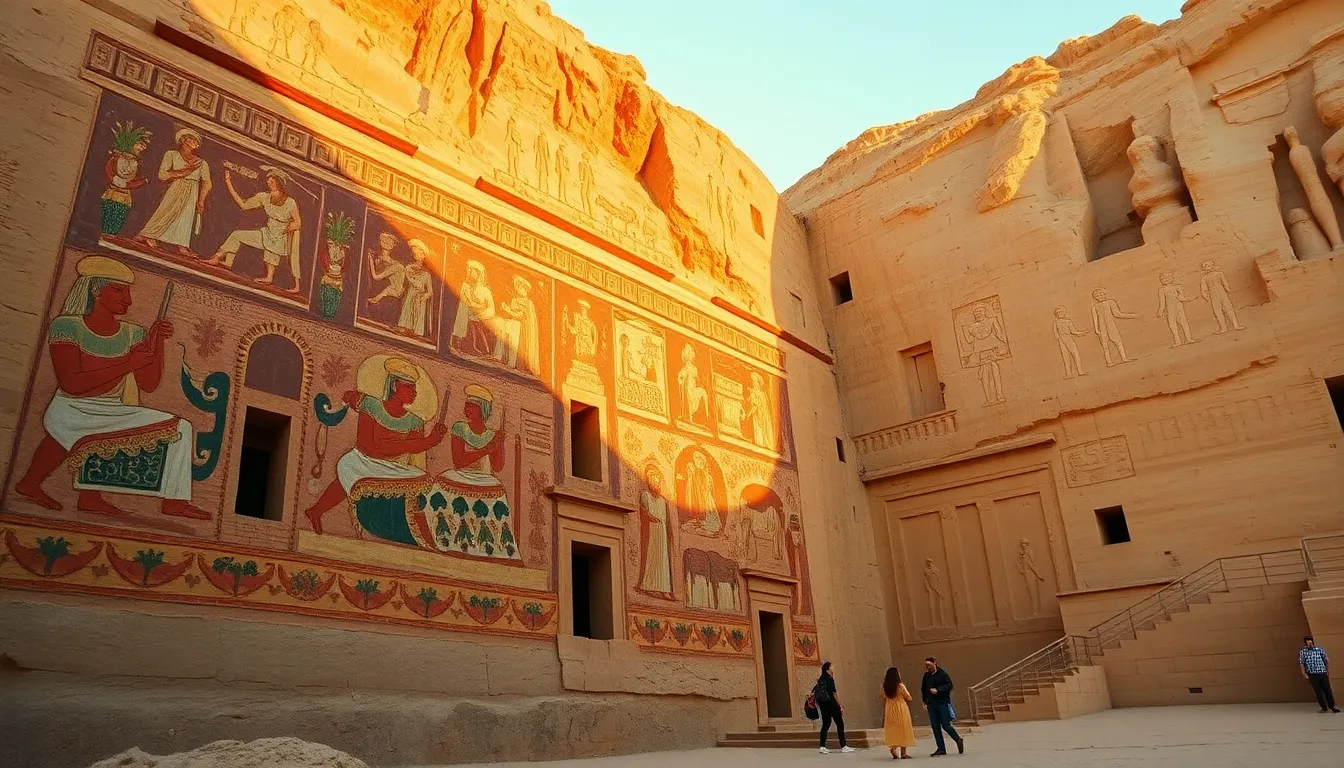
Everyone in the group wanted the Valley of the Kings. That is the famous one, the one with Tutankhamun, the name people recognize. So when I told a group we were spending the back half of the morning in the Valley of the Queens instead of cramming in one more royal tomb, there was a little disappointment in the air. Then we walked into the tomb of Nefertari. The disappointment did not last. A woman near me put her hand over her mouth. The color on those walls, painted more than three thousand years ago and still glowing, does something that a lecture cannot do. By the time we walked out, nobody was thinking about what we had skipped.
The Valley of the Queens is the companion to the more famous valley across the Theban hills, and on a heritage day in Luxor it earns its place. Let me tell you what it is and why I bring groups here.
What the Valley of the Queens Is
The Valley of the Queens lies on the west bank of the Nile at Luxor, ancient Thebes, in a desert wadi tucked into the cliffs south of the Valley of the Kings. The ancient Egyptians called it Ta-Set-Neferu, which is usually translated as “the place of beauty” or “the place of the children of the pharaoh.” That name tells you who was buried here: not the pharaohs themselves, but their queens, their princes and princesses, and certain high officials, mostly during the New Kingdom, roughly the thirteenth and twelfth centuries BCE.
Archaeologists have identified more than ninety tombs in the valley. Many belong to royal children who died young, which gives the place a tenderness the Valley of the Kings does not have. These are family graves. The grandest of them all belongs to a queen.
The Tomb of Nefertari
Nefertari was the great royal wife of Ramesses II, the pharaoh many scholars associate with the Exodus narrative. Her tomb, discovered in 1904, is widely regarded as one of the most beautiful painted tombs in all of Egypt. The walls are covered, floor to ceiling, with vivid scenes of the queen in the presence of the gods, her journey through the afterlife, passages from the funerary texts, all in colors that have survived with astonishing freshness because the tomb was sealed and protected for so long.
The tomb underwent a major conservation effort in the 1980s and 1990s and is now open under strict controls. Access is limited, visit times are short, and there is a separate, higher-priced ticket. I will be honest with you: it is worth every bit of the cost and the limitation. I have watched the tomb of Nefertari move people more than almost anything else in Upper Egypt.
Why It Belongs on a Faith Heritage Journey
I want to be careful here, because the Valley of the Queens is not a biblical site and I never present it as one. There is no scriptural event tied to this ground. What it offers a faith group is something different, and I think more honest: context.
The World of the Exodus
Nefertari was the wife of Ramesses II. If you hold, as many do, that Ramesses was the pharaoh of the Exodus, then this valley belongs to the very court the book of Exodus describes. The Israelites are said to have labored under this dynasty. The store city of Ramesses bears this pharaoh’s name. When a group stands in the tomb of his queen, surrounded by the wealth and the religious imagination of his court, the Exodus story gains a backdrop that no map can supply. You understand, suddenly, the power the Israelites were up against, and the scale of what the Exodus narrative claims God did.
The Egyptian View of Death and the Afterlife
There is a second reason I bring faith groups here. The tombs of the Valley of the Queens are saturated with the Egyptian theology of death, the weighing of the heart, the journey through the underworld, the gods who govern the afterlife. Standing inside that vision is one of the clearest ways to grasp what the biblical authors were responding to, and at times rejecting. The contrast between the Egyptian cult of the dead and the very different faith the Israelites carried out of Egypt becomes vivid when you have actually stood inside the Egyptian version. For a teaching group, that contrast is gold.
How Groups Visit the Valley
The Valley of the Queens is part of a west bank Luxor day, and it sits naturally alongside the other Theban sites. A west bank morning often runs like this: the Colossi of Memnon as you cross the plain, then a mortuary temple such as the Ramesseum or Hatshepsut’s temple at Deir el-Bahari, then the Valley of the Kings, then the Valley of the Queens. I sometimes flip the order to reach Nefertari’s tomb before the heat and the crowds peak.
The general admission ticket to the Valley of the Queens includes entry to a rotating set of open tombs, typically a few of the princes’ tombs and others. The tomb of Nefertari requires its own separate ticket and is sold in limited numbers, so it needs to be arranged in advance for a group rather than left to chance at the gate.
Practical Notes for Group Leaders
- Arrange the Nefertari tickets ahead. Numbers are capped and visit times inside are short, often around ten minutes. For a group, this has to be coordinated in advance. My team handles it.
- Photography rules vary and sometimes require an extra photo permit, and inside Nefertari’s tomb photography is generally restricted. I brief groups so no one is surprised or scrambling at the entrance.
- Heat is the real factor. This is open desert with little shade, and the tombs themselves can be warm and close. West bank visits are best early in the day, and our season-by-season guide explains which months keep this comfortable.
- Mobility matters. Tombs involve sloping ramps and steps. For groups with less mobile members, I select tombs that are easier to enter and plan rest in the shade between them.
This careful sequencing and ticketing is exactly what my team manages so the group leader can stay focused on the people. You can see how a Luxor day fits the wider trip on our Egypt heritage destination page.
Where It Fits in the Trip
The Valley of the Queens is one piece of a rich west bank day at Luxor, and it pairs naturally with the Colossi of Memnon, which stand on the plain you cross to reach the valleys. For groups whose hearts are in the biblical narrative, our guide to hidden heritage sites in Egypt reaches the sacred sites most tours skip, from the land of Goshen to the desert monasteries. And because Luxor in the wrong month can be punishing, the best time to visit guide is worth reading before you set your dates.
I will not pretend the Valley of the Queens is a holy site. It is not. But it is the court of the Exodus, painted in colors that have outlasted three thousand years, and for a faith group trying to feel the weight of the world their Scriptures came out of, it is one of the most quietly powerful stops in all of Upper Egypt.
FAQ: The Valley of the Queens
What is the difference between the Valley of the Kings and the Valley of the Queens?
The Valley of the Kings holds the tombs of the New Kingdom pharaohs themselves, including Tutankhamun. The Valley of the Queens, a separate wadi to the south, holds the tombs of royal wives, princes, princesses, and certain officials. The Egyptians called it “the place of beauty.” Its crown is the tomb of Nefertari, widely regarded as the most beautifully painted tomb in Egypt.
Is the tomb of Nefertari worth the extra ticket?
In my experience, yes. The tomb of Nefertari requires a separate, higher-priced ticket sold in limited numbers, with short visit times inside. The painted walls have survived with extraordinary color and detail, and the effect on visitors is profound. For a group, the tickets need to be arranged in advance rather than left to chance at the gate.
Why visit the Valley of the Queens on a faith heritage trip?
It is not a biblical site, but it offers context that deepens the biblical story. Nefertari was the wife of Ramesses II, the pharaoh many associate with the Exodus, so this valley belongs to the very court the book of Exodus describes. The tombs are also filled with the Egyptian theology of death, which lets a group grasp what the Israelite faith was responding to and rejecting.
How long do groups spend at the Valley of the Queens?
Most groups spend about an hour to ninety minutes, including the general admission tombs and, if arranged, the separate visit to Nefertari’s tomb. It is one stop in a fuller west bank day at Luxor that often includes the Colossi of Memnon, a mortuary temple, and the Valley of the Kings.
When is the best time of day to visit?
Early morning is best. The west bank is open desert with little shade, and both the climb between tombs and the warm air inside them are easier in the cool of the morning. Visiting before the midday heat and the peak crowds makes the experience far more comfortable, especially for mixed-age groups.
If a meaningful day at Luxor is part of the journey you are shaping for your community, I would be glad to help you build it, tickets and timing included. With fifteen or more participants, the group leader travels free, and my team manages every arrangement on the ground. Contact us whenever you are ready to talk it through.