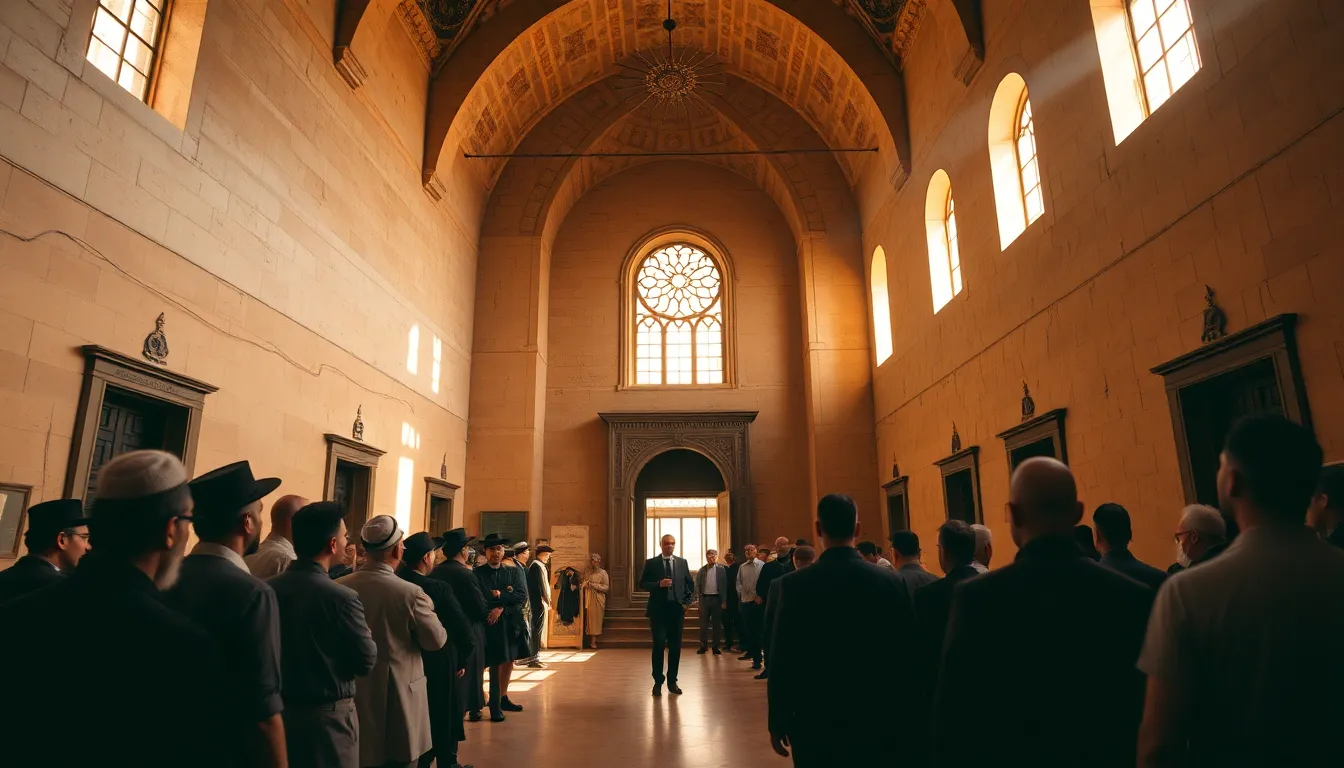
Every spring, your congregation says the same words. “We were slaves in Egypt.” “In every generation a person is obligated to see themselves as if they personally went out of Egypt.” You have led that seder for years. You have taught that we are commanded not just to remember the Exodus but to relive it. And then a thought arrives, usually somewhere around the second cup, that you cannot quite shake. What if we did not just say it at the table. What if we stood in Mitzrayim itself.
That is the journey a rabbi builds. Not a sightseeing trip with Jewish stops bolted on. A journey that takes the central story of our people and puts your congregation’s feet on the ground where it happened. I have helped many rabbis build exactly this, and I want to walk you through how it is done, because building it well is different from building a vacation.
Start With the Spine of the Story
A rabbi’s Egypt journey has a spine, and the spine is the Exodus. Everything else hangs off it. Before you think about hotels or dates, decide what arc you want your congregation to travel.
The classic arc moves from bondage to the edge of liberation. You begin in Cairo with the deep Jewish history of the place, you move through the world of Pharaonic Egypt, the civilization that held an entire people in slavery and that the Exodus narrative judges and overturns, and you carry the group toward the Red Sea coast and the threshold of deliverance. Standing among the temples of Upper Egypt, your congregation does not see a distraction from the Jewish story. They see the empire the Israelites were enslaved within, the scale of the power that God broke. The pyramids are not a detour. They are the antagonist of the Haggadah, made of stone.
When you build the journey around this spine, every site has a place in the story. That is what separates a heritage journey from a tour. Our complete group heritage tour guide lays out the full case for Egypt as the foundational Jewish journey, and it is worth reading before you start sketching.
The Sites That Carry Jewish History in Egypt
Jewish Egypt is far deeper than most congregations realize, and a rabbi who knows the sites can build a journey of remarkable richness.
Ben Ezra Synagogue and the Cairo Geniza
In the Coptic Quarter of Old Cairo stands Ben Ezra Synagogue, and in its attic was found the Cairo Geniza, the single greatest cache of medieval Jewish documents ever discovered. Nearly a thousand years of letters, contracts, prayers, and fragments, the daily life of a Jewish community preserved because Jewish law forbids us from discarding texts that bear God’s name. To stand in that building and understand what was held above it is to feel the unbroken thread of Jewish presence in Egypt across centuries. Access requires advance coordination, which we handle.
Elephantine and the Ancient Jewish Colony
Far south at Aswan, on the island of Elephantine, stood a Jewish military colony with its own temple in the fifth century before the common era, documented in Aramaic papyri. This is Jewish history older than the Mishnah, a community on the Nile in the time of the Persian empire. For a congregation, it expands the story. Jews have been in Egypt not for centuries but for millennia.
The Modern Jewish Cairo
Cairo’s more recent Jewish history is its own chapter, from the grand Sha’ar Hashamayim synagogue downtown to the Bassatine cemetery, one of the oldest Jewish cemeteries in the world. A rabbi can choose how much of this twentieth-century thread to weave in, the story of a community that flourished and then largely departed. For many congregations it lands hard, because it is recent and it is human.
For the depth of all of this, point your congregation toward our resource on Jewish heritage in Egypt as part of their preparation. The history rewards the groups who arrive ready for it.
Building the Itinerary: A Rabbi’s Framework
Here is how I help rabbis structure the actual days.
Length and Flow
An Exodus-focused journey runs eight to ten days well. You begin in Cairo, the deep Jewish sites and the Pharaonic monuments at Giza, then move south into Upper Egypt for Luxor, Karnak, the Valley of the Kings, and Aswan with Elephantine. The flow from Cairo to Upper Egypt mirrors the movement of the story and gives the trip a sense of journey rather than a checklist.
Where to Build in Torah and Tefillah
This is the rabbi’s craft, and it is where you make the trip yours. Decide in advance where the group will daven, where you will read from the Torah, where you will stop and learn. Standing at a site associated with the bondage and reading the opening of Shemot aloud is a different act than reading it from the bimah at home. Plan these moments. They are the heartbeats of the journey, and they belong to you, not to the guide.
A Shabbat in Egypt
Many rabbis build a Shabbat into the journey, and it becomes something congregants talk about for years. A Shabbat in Cairo, with Kabbalat Shabbat in a place that has held Jewish prayer for a thousand years, reframes the whole trip. We help arrange the logistics so you can lead the spiritual content.
Kashrut: Honest Planning, Not False Promises
I will be direct with you, because you owe your congregation honesty and so do I. Cairo is not Tel Aviv. There is no established kosher restaurant infrastructure. What is available, and what we arrange, is kosher-style travel built on fresh fruits and vegetables, fish, eggs, and sealed kosher products brought from home or sourced from the limited kosher options in Cairo.
For congregations where strict kashrut observance is essential to every member, we have detailed planning conversations well in advance and build the food dimension of the trip carefully. We have done this successfully for many synagogue groups. It takes flexibility and good humor, and in twenty years it has never once stopped a group from having a meaningful journey. What it does require is that you set expectations with your congregation honestly before departure, so nobody arrives surprised. Tell them plainly what the food will look like. Honesty up front prevents disappointment on the ground.
The Logistics You Hand to Us
A rabbi building a journey should be spending their energy on the spine of the story, the divrei Torah, the moments of tefillah, the pastoral care of the group. Not on visas and hotel blocks. So here is what we carry for you.
We handle visa guidance for every traveler, including the specific situations of dual nationals and Israeli passport holders, which require careful navigation under current conditions. Raise that early if it applies to your members. We book and manage all hotels and the pickups so your group never navigates Cairo independently. We arrange all site access, including the advance permissions that Ben Ezra Synagogue and other Jewish sites require. We manage ground transport across the country, entrance fees, and guides who understand the Jewish dimension of what they are showing you. Our group heritage tours are built around this exact division.
The Leader Policy and the Congregation’s Budget
There is a practical reality that shapes the planning conversation with your board. When you bring 15 or more participants, you as the rabbi travel free. Your flights, hotels, guides, and entrance fees are covered. This matters because a congregation organizing an Egypt journey does not need to find separate funds to send its rabbi. The community’s investment carries the group, and your presence, which is what makes this a heritage journey and not a tour, is built into the partnership. For groups of 20 or more there is room to discuss additional arrangements. Bring it to us.
Preparing the Congregation
A congregation that arrives prepared travels deeper. Build a pre-trip learning series, three sessions or six weeks, your call. Teach the Exodus narrative, the history of Jewish Egypt, the Geniza, Elephantine. By the time the group lands, the words of the Haggadah should already be alive in them, so that when they stand in Mitzrayim, the table and the place speak to each other. We provide content for these sessions and will join one to handle the practical questions.
If timing matters to your congregation, and for an Exodus journey it almost always does, our season-by-season timing guide walks through the Passover question in detail. A journey in the weeks around Pesach puts the physical Exodus in direct conversation with the spiritual one, and your people feel it.
FAQ: Building an Egypt Heritage Journey as a Rabbi
What is the best Egypt itinerary for a synagogue group?
For most congregations, an eight to ten day journey works beautifully. It begins in Cairo with Ben Ezra Synagogue and the Coptic Quarter, includes the Pharaonic sites at Giza, and travels south to Luxor and Aswan, where the Elephantine Jewish colony deepens the story. Many rabbis add a Shabbat in Cairo and time at Sha’ar Hashamayim or the Bassatine cemetery. The exact design follows your congregation’s priorities, and we build it in conversation with you rather than handing you a fixed package.
Can my congregation keep kosher in Egypt?
Yes, with honest planning. Egypt does not have kosher restaurant infrastructure, so what we arrange is kosher-style travel built on fresh produce, fish, eggs, and sealed kosher products brought from home or sourced locally. For groups requiring strict kashrut, we plan the food dimension carefully and in detail before departure. We have managed this for many synagogue groups successfully. The key is setting expectations with your members honestly up front, which prevents any surprise on the ground.
Should we travel to Egypt around Passover?
Many rabbis find the resonance powerful. Traveling in the weeks surrounding Pesach puts your congregation in Egypt while the Exodus story is fresh, which creates an anticipatory energy that is hard to manufacture at other times. There are practical notes: Passover trips book up early, eighteen months out is not too soon, and some groups prefer the two weeks before the holiday to avoid the kashrut and travel complexity of the holiday itself. We can think through all three options with you.
Do rabbis travel free on Heritage Tours Egypt trips?
Yes. When you bring 15 or more participants, you travel free, covering flights, hotels, guides, entrance fees, and ground arrangements in the package. Personal spending like souvenirs is the only exception. This policy exists because a rabbi’s presence is essential to a meaningful Jewish journey, and we did not want any congregation to have to find separate budget to send its own spiritual leader. For groups of 20 or more, additional arrangements are open to discussion.
How do you handle Israeli passport holders and dual nationals in the group?
Carefully and individually. Israeli passport holders face different entry requirements under current conditions, and dual nationals have their own considerations. This is something we navigate with specific guidance for each person’s situation, and it is exactly why we ask rabbis to raise it early in the planning conversation. The earlier we know who in your congregation this affects, the more cleanly we can prepare their entry so that nobody faces uncertainty at the airport.
The seder asks us every year to see ourselves as if we ourselves came out of Egypt. A journey there is the closest your congregation will come to fulfilling that commandment with their own feet. If you have been carrying this idea, even quietly, let me help you shape it. Tell me what your congregation is like and what arc you want them to travel, and we will build the spine of the journey together. Explore our Egypt heritage destination page to see the shape of it, and when you are ready, reach out and we will begin.