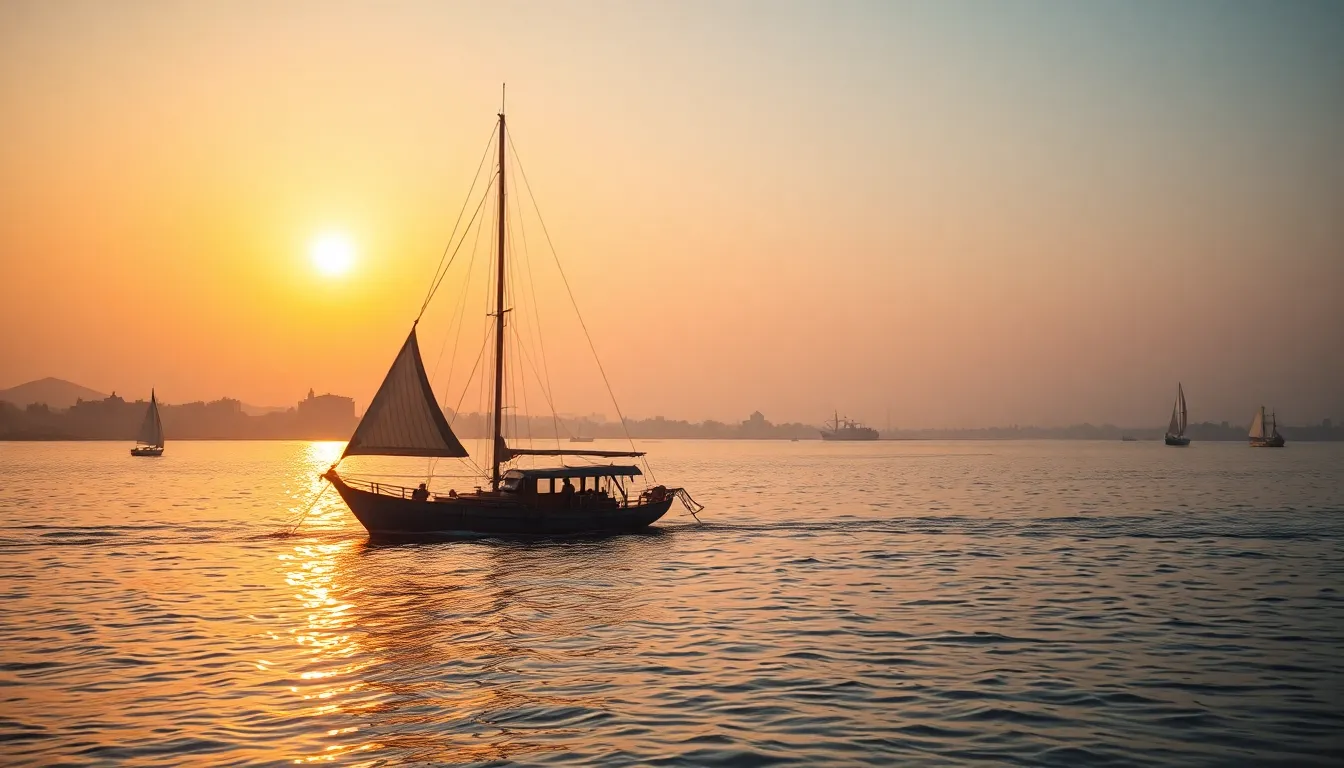
A group leader once told me, three days into a trip, that the Nile cruise had surprised her. “I thought it would feel like a vacation in the middle of a pilgrimage,” she said. “But the evenings on deck turned into the most honest conversations our group had all week.”
That comment stuck with me, because the cruise-versus-land question is usually framed wrong. People ask it as a comfort question, river hotel versus city hotel. For a faith group, it is really a question about rhythm, community, and how your people will process what they are seeing.
I have run Egypt heritage tours both ways many times. Both work. They shape the experience differently, and the right choice depends on what your group needs from the journey.
What Each Format Actually Is
A Nile cruise heritage tour anchors the southern portion of your trip on a river vessel that moves between Luxor and Aswan. Your group sleeps on the boat, the boat carries you between the great temple sites of Upper Egypt, and you wake up in a new place without packing a bag. The cruise is a moving base.
A land-based heritage tour keeps your group in hotels and moves between sites by road and short flights. You see the same temples, but you reach them from fixed bases, returning each night to a city hotel rather than a moving vessel.
Both formats can include the full heritage arc: Cairo and its Jewish and Coptic sites, the Pyramids, the southern temples, and Sinai. The difference is concentrated in how you experience Upper Egypt and how your group lives together day to day.
The Case for the Nile Cruise
The cruise has real advantages for a faith community, and they go beyond comfort.
The first is the unpacking question. On a cruise, your group settles in once and stays settled. For older travelers or large groups, not hauling luggage between hotels every two days removes a genuine source of fatigue. That conserved energy goes straight into the experience at the sites.
The second is the river itself. The Nile is not scenery on a heritage trip. It is the artery the whole story flows along, the river Moses was drawn out of, the river that fed the civilization the Israelites labored under. Spending days on it gives a group a felt sense of the land that no bus ride delivers. Watching the green fringe of the riverbank give way to desert, the same view for thousands of years, does something to a group that is hard to put into words.
The third, and the one that surprised that group leader, is community. A cruise creates a contained shared space. Evenings on deck, meals together, the slow drift between sites, these become the connective tissue of the journey. Conversations happen on a boat that do not happen when everyone scatters to hotel rooms in a city. For a congregation traveling to grow closer, the cruise is a quiet engine for that.
Where the Cruise Has Limits
The cruise covers the southern stretch beautifully, but it is geographically narrow. It does not bring you to Cairo’s Jewish and Coptic heritage, and it does not bring you to Sinai. Those still require land travel, so a cruise is always one component of a fuller itinerary rather than the whole trip.
The cruise also sets the pace for you. The boat’s schedule is the schedule. For a group that wants to linger longer at a particular site or adjust timing around a spiritual moment, the fixed itinerary of a vessel offers less flexibility than land travel.
And cruises book in fixed cabin blocks. For a group that wants total control over timing and grouping, the structure of a sailing can feel constraining.
The Case for the Land-Based Tour
Land-based travel trades the cruise’s ease for control and breadth.
The clearest advantage is flexibility. On land, your itinerary can flex. If a Torah reading at a particular site runs long because the moment calls for it, the day can absorb that. If your group wants an extra hour somewhere, the schedule can give it. For a group leader who wants to shape the spiritual rhythm in real time, land travel is the more responsive format.
Land travel also covers everything without compromise. Cairo’s Jewish heritage at Ben Ezra Synagogue, the Geniza story, the Coptic churches of Old Cairo, the Pyramids, the southern temples, and Sinai all sit naturally within a land itinerary. Nothing is geographically out of reach.
And land bases give a group room to breathe differently. A city hotel offers space to retreat, to rest, to gather in a meeting room for an evening study session in a way a boat’s common areas do not always allow.
Where the Land Tour Costs You
The trade-off is fatigue and packing. Land tours involve more hotel changes, more time in transit, and more luggage handling. For a mixed-age group, that adds up over a week. The land format also loses the river immersion that gives the cruise its distinctive sense of place. You see the Nile from its banks rather than living on it.
How I Actually Help a Group Decide
In practice, this is rarely a pure either-or. Most of my Egypt heritage itineraries combine both: land travel for Cairo, the Jewish and Coptic sites, and Sinai, with a cruise segment for the southern temple stretch. That combination gives a group the best of each, the ease and community of the river where it serves the experience, and the flexibility and breadth of land travel where that matters more.
When a group leans fully one way, it usually comes down to three things.
If your group skews older, values comfort, and is traveling to deepen community, the cruise segment becomes the heart of the trip. The unpacking relief and the evening togetherness are worth a great deal.
If your group wants maximum flexibility, a leader-shaped spiritual rhythm, and the full breadth of heritage sites with no compromise, a primarily land-based itinerary fits better.
If your group’s heart is in Cairo’s Jewish and Coptic heritage rather than the southern temples, the cruise matters less, and a land-based trip centered on Cairo and Sinai may be the right shape. Our Cairo-only vs full-country guide is the right next read in that case.
For the format and pricing dimension, our private tour vs group tour guide covers how the cruise-versus-land choice interacts with whether you travel privately or as a community group. And our Egypt vs Jordan comparison helps if you are still deciding on Egypt at all.
FAQ: Nile Cruise vs Land-Based Egypt Tour
Is a Nile cruise worth it for a faith heritage group?
For many groups, yes, especially as part of a combined itinerary. A cruise removes the fatigue of constant packing, gives the group a felt connection to the Nile that anchors the biblical story, and creates a contained shared space where community deepens. It works best as the southern segment of a fuller trip rather than the whole journey.
Can a Nile cruise cover all of Egypt’s heritage sites?
No. A cruise covers the southern temple region between Luxor and Aswan, but it does not reach Cairo’s Jewish heritage at Ben Ezra Synagogue, the Coptic churches of Old Cairo, or Sinai. Those require land travel. A cruise is one component of a complete Egypt heritage itinerary, not a replacement for it.
Which format is better for older travelers?
The cruise is generally gentler for older groups. Settling into one cabin and letting the boat carry you between sites removes the repeated luggage handling and hotel changes that tire a mixed-age group. Land travel offers more flexibility but more physical wear. Many itineraries pair a cruise segment with land travel to balance both.
Does a land-based tour offer more flexibility?
Yes. Land travel lets a group leader flex the daily rhythm, linger longer at meaningful sites, and adjust timing around spiritual moments in a way a fixed cruise schedule cannot. For leaders who want to shape the experience in real time, land-based travel is the more responsive format.
Should our group do both a cruise and land travel?
For most Egypt heritage groups, combining the two is the strongest option. Land travel handles Cairo, the Jewish and Coptic sites, and Sinai, while a cruise segment carries the southern temple stretch. This gives a group the river immersion and community of the cruise alongside the breadth and flexibility of land travel.
If you are weighing how to structure your group’s days in Egypt and want help thinking through the cruise-and-land balance, I am glad to walk through it with you. The right rhythm is the one that lets your community be fully present. Explore our Egypt heritage destination page or our group heritage tours, and reach out any time when you are ready.