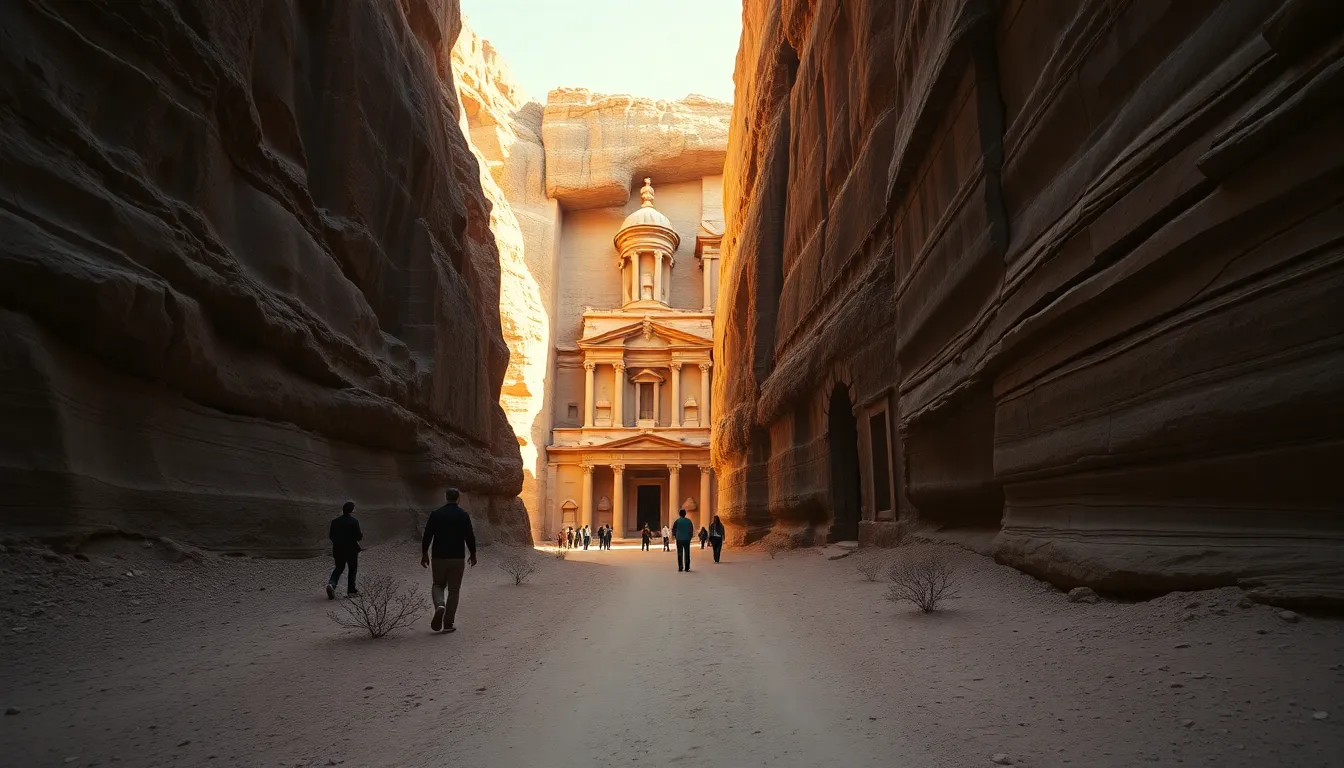
A rabbi asked me a sharp question over coffee last year. “Everyone talks about Egypt and Israel,” she said. “But what about Jordan? Isn’t that where Moses actually saw the land? Shouldn’t we be going there?”
She was right that Jordan gets overlooked, and she was right that it holds biblical ground that few groups think about. Mount Nebo, where Moses looked across into a land he would not enter. The wilderness of Moab. The traditional baptism site at the Jordan River. Petra, which many connect to the Edomites. Jordan is real biblical territory.
So when a faith group is choosing a first heritage destination beyond Israel, Egypt and Jordan are a genuine comparison. I have led groups to both. Here is how they actually differ for a faith community.
Two Different Chapters of the Same Wilderness
Both Egypt and Jordan sit inside the Exodus and wilderness narrative, but they hold opposite ends of it.
Egypt is the beginning. It is the land of bondage, the Nile Delta where the story of slavery and deliverance starts, the Red Sea coast, and Sinai where the law was given. Egypt is also the land of the Holy Family’s refuge and the cradle of Coptic Christianity. It carries the weight of departure.
Jordan is closer to the end of the wilderness. It is the land east of the Jordan River where the Israelites wandered their final years, where Moses ascended Nebo to see the promise from a distance, where the generation that left Egypt completed its journey without crossing over. For Christian groups, Jordan also holds Bethany beyond the Jordan, a traditional site of Jesus’s baptism.
So the comparison is not really Egypt versus Jordan. It is the start of the wilderness versus its threshold. Where do you want your community to stand?
The Case for Egypt
Egypt’s claim on a faith group is the depth and breadth of its story.
For Jewish communities, Egypt is the Exodus itself, not a stop along the way but the foundational event. Standing in the land of Goshen, tracing the route toward the sea, climbing Sinai at dawn, these are encounters with the central narrative of Jewish peoplehood. Egypt also holds a thousand years of Jewish life in Cairo, at Ben Ezra Synagogue and through the extraordinary story of the Cairo Geniza. That layer of living Jewish heritage has no equivalent in Jordan.
For Christian groups, Egypt offers the flight of the Holy Family and one of the oldest continuous Christian communities on earth. The Coptic churches of Old Cairo were ancient when European Christianity was still young. Walking that quarter is a conversation with the very earliest expressions of the faith.
Egypt is also a fuller trip. There is simply more biblical and spiritual ground to cover, which makes it well suited to a week or more of immersive travel.
Where Egypt Asks More of a Group
Egypt is logistically heavier. The Sinai ascent is physically demanding and involves a pre-dawn climb. Distances are longer, the heat is real outside the spring and fall windows, and certain sites require advance access coordination. For a mixed-age congregation, Egypt requires more preparation and more stamina than Jordan does.
The Case for Jordan
Jordan’s strengths are real, and I do not want to undersell them.
Jordan is compact and approachable. The distances between major sites are manageable, the tourism infrastructure is straightforward, and the country is welcoming to faith groups. For a congregation that wants meaningful biblical ground without Egypt’s logistical weight, Jordan is gentler.
Mount Nebo is genuinely moving. Standing where Moses stood and looking across the valley toward the land he would not enter is one of the quietest, most contemplative moments in all of biblical travel. It does something to a group that few sites do. The baptism site at Bethany beyond the Jordan carries similar weight for Christian communities.
And Petra, while not strictly a biblical site in the way Nebo is, gives a group an unforgettable encounter with the ancient Near Eastern world that surrounded the biblical story. Many connect it to the Edomites, the descendants of Esau.
Where Jordan Falls Short
Jordan’s biblical narrative is thinner than Egypt’s. The sites are powerful but fewer, and several are contemplative single moments rather than immersive multi-day arcs. For a group seeking a full week anchored entirely in a deep scriptural story, Jordan can feel like it runs out of central biblical ground before the trip is over. Groups often pair Jordan with Israel rather than treating it as a standalone heritage journey.
Jordan also lacks the living-heritage dimension that makes Egypt distinctive. There is no equivalent to Ben Ezra Synagogue, the Geniza, or the continuous Coptic church. Jordan’s biblical sites are largely about looking at the land, while Egypt’s are about encountering a story that is still being lived.
Which One Fits Which Group
After many trips to both, here is the pattern I see.
Egypt is the stronger choice for a group whose center is the Exodus, whose community wants depth and immersion, and whose members are ready for a more demanding journey. It is also the clear winner for any group seeking living Jewish or Coptic Christian heritage rather than archaeological sites alone.
Jordan is the stronger choice for a group that wants meaningful biblical ground with lighter logistics, that is drawn to the contemplative threshold moments of Nebo and the baptism site, or that is planning to pair the trip with Israel. Jordan is also excellent for a congregation taking a gentler first step into heritage travel beyond Israel.
If you are torn, I usually ask: does your community want to stand at the beginning of the wilderness, or at its end looking into the promise? That question often answers itself.
For groups weighing how to structure either trip, our private tour vs group tour guide lays out the format decision. If you are also comparing Egypt against the more familiar option, our Egypt vs Israel guide covers that pairing, and our Nile cruise vs land-based guide helps once you have settled on Egypt.
FAQ: Egypt vs Jordan for Biblical Heritage
Is Egypt or Jordan better for a first biblical heritage trip?
It depends on your community’s focus. Egypt offers a deeper, fuller biblical narrative centered on the Exodus, plus living Jewish and Coptic heritage, but with heavier logistics. Jordan offers powerful contemplative sites like Mount Nebo with lighter travel, but a thinner overall biblical arc. Egypt suits groups wanting immersion; Jordan suits groups wanting meaningful ground with less complexity.
What biblical sites does Jordan have?
Jordan holds Mount Nebo, where Moses viewed the promised land; the wilderness of Moab where the Israelites wandered their final years; and Bethany beyond the Jordan, a traditional baptism site of Jesus. Petra, while not strictly biblical, connects many travelers to the Edomite world that surrounded the biblical narrative.
Can you combine Egypt and Jordan in one trip?
It is possible but ambitious, since the two sit at opposite ends of the wilderness story and involve significant travel between them. More commonly, groups pair Jordan with Israel, since they border each other and share the arrival-into-the-promise narrative. Egypt is often treated as its own dedicated journey or paired with Israel via the Exodus arc.
Which is easier for a mixed-age congregation?
Jordan is generally easier. The distances are shorter, the infrastructure is straightforward, and there is no equivalent to Egypt’s demanding pre-dawn Sinai ascent. Egypt rewards a group willing to prepare and exert more, especially for Sinai. For groups with members who struggle with heat or physical demands, Jordan is the gentler journey.
Does Egypt have living religious heritage that Jordan lacks?
Yes. Egypt holds Ben Ezra Synagogue and the Cairo Geniza, representing a thousand years of continuous Jewish life, and the ancient Coptic Christian community of Old Cairo. Jordan’s biblical sites are largely about viewing historic ground rather than encountering living communities of faith. This living-heritage dimension is one of Egypt’s clearest distinctions.
If you are weighing these two and want to talk through what fits your congregation’s story and stamina, I am glad to help you think it through. Both hold real biblical ground, and the right one is the one that meets your community where it is. Explore our Egypt heritage destination page or our group heritage tours, and reach out any time to start the conversation.