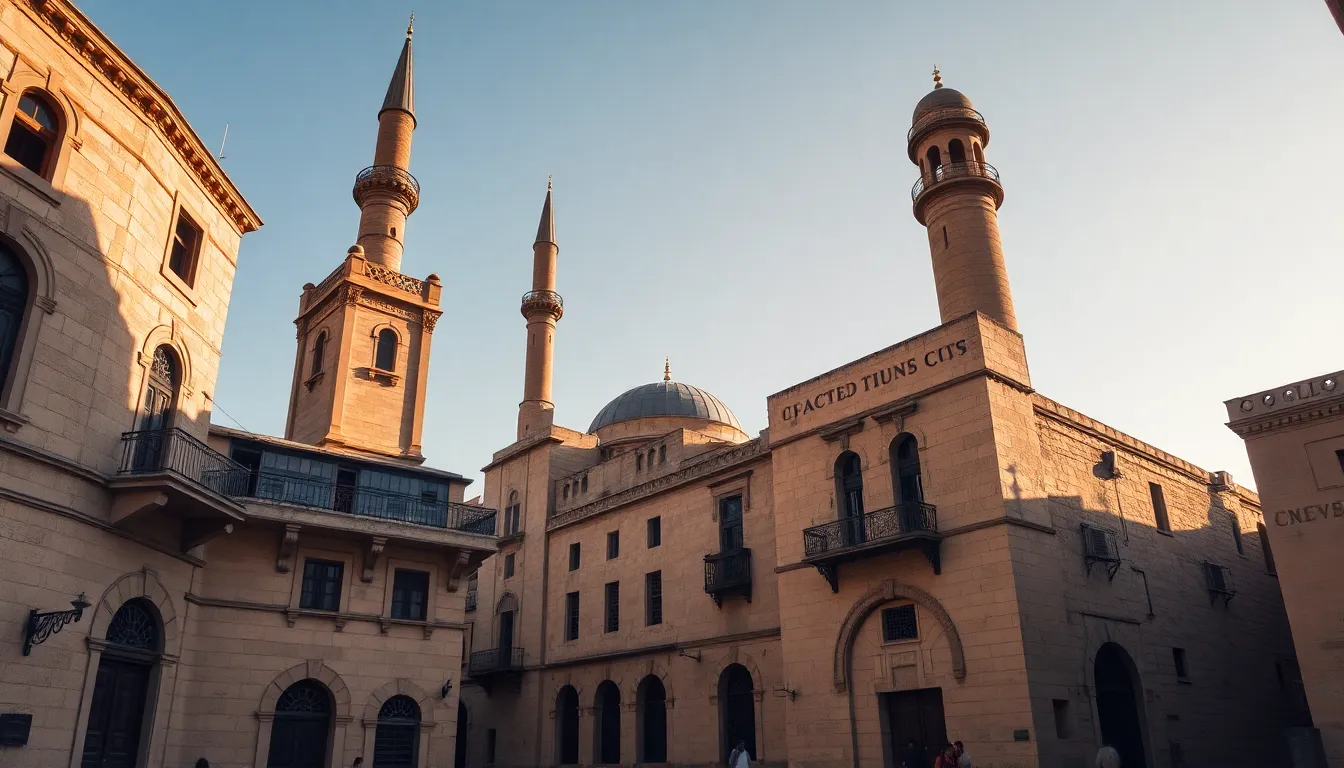
Not every congregation has ten days to give. A pastor told me once, with real frustration, “My people want Egypt, but realistically I can get them away for four days, maybe five. Is that even worth doing? Or am I better off waiting until we can do it right?”
That is one of the most practical questions a group leader brings me, and the answer is more encouraging than people expect. A short Cairo-focused trip is not a consolation prize. For certain groups and certain purposes, it is exactly the right trip. For others, it leaves the heart of the journey untouched.
Here is how I help a leader tell which is which.
What Each Trip Actually Covers
A Cairo-only heritage trip concentrates on the capital and its immediate surroundings. That sounds modest until you list what sits there: Ben Ezra Synagogue and the Cairo Geniza story, the ancient Coptic churches of Old Cairo connected to the Holy Family’s flight into Egypt, the Pyramids and Sphinx at Giza, and the Egyptian Museum. A focused group can experience all of that in four or five days. It is a remarkably dense concentration of Jewish and Christian heritage in one place.
A full-country heritage trip adds the rest of the story. The southern temples between Luxor and Aswan. The land of Goshen and the Nile Delta. The Red Sea coast. And Sinai, with its pre-dawn ascent that many of my groups describe as the emotional peak of the entire journey. A full trip typically runs eight to twelve days and follows the broader sweep of the biblical narrative.
The difference is not quality. It is scope.
The Case for a Cairo-Only Trip
I want to be clear that a short Cairo trip can be genuinely complete on its own terms.
For groups whose spiritual focus is Jewish heritage in Egypt, Cairo holds the core. Ben Ezra Synagogue, where Jews have prayed for a thousand years, and the Geniza story, with its extraordinary trove of manuscripts and letters and contracts, are both in Cairo. A group centered on this thread can have a profound, contemplative experience without ever leaving the capital. The Sinai and the southern temples, while powerful, are a different story from the one this group came to encounter.
The same is true for Christian groups drawn to the Holy Family narrative and the roots of Coptic Christianity. The relevant sites cluster in and around Cairo. A focused Coptic heritage trip does not require the full country.
A Cairo trip also fits real constraints honestly. Congregations with limited vacation time, tighter budgets, or members who cannot manage a physically demanding ten-day itinerary can still travel together meaningfully. A four-day Cairo journey is achievable in a long weekend with travel days, which opens heritage travel to people who could never commit to a full expedition.
And Cairo works as a first taste. Some groups do Cairo as an introductory journey, then return for the full country once the appetite is established. The short trip seeds the longer one.
Where Cairo-Only Falls Short
The honest limitation is that Cairo-only leaves out Sinai, and for many faith groups Sinai is the destination. Receiving the law in the desert at dawn, standing where Moses stood, is the spiritual summit of an Egypt journey for groups whose center is the Exodus. A Cairo trip cannot deliver that. It also omits the southern temples and the Nile, which give a group the full scale of the ancient world the biblical story unfolded against.
For a group whose heart is the Exodus arc from bondage through wilderness to the law, Cairo alone tells the first chapter and skips the climax.
The Case for the Full-Country Trip
The full trip earns its length by completing the story.
The strongest argument is Sinai. There is a reason I consider the pre-dawn Mount Sinai ascent the emotional peak of an Egypt heritage itinerary. Arriving at the summit as the light breaks over the peninsula, with your congregation around you, is a communal spiritual experience that nothing in Cairo replicates. For groups built around the Exodus narrative, skipping Sinai means skipping the point.
The full trip also gives a group the complete geography of the story. Goshen and the Delta where the bondage narrative begins. The Red Sea coast. The southern temples that reveal the civilization the Israelites labored under. Standing in these places in sequence lets a congregation feel the Exodus as a journey rather than a set of disconnected sites.
And the full trip changes the economics in the group’s favor. With fifteen or more participants, group pricing applies across accommodation, transport, and access, and the group leader travels free. Over a longer itinerary, that per-person value is more pronounced. A pastor or rabbi who might otherwise fund their own attendance separately travels at no cost when the group reaches fifteen.
Where the Full Trip Demands More
The full country asks for more time, more budget, and more physical stamina. The Sinai ascent is demanding. The distances are longer. A ten-day commitment is harder to fill in a congregation than a four-day one. For some communities, the full trip is the right journey for the wrong year, and a Cairo trip now is better than a full trip that never happens.
How I Help a Leader Choose
When a group leader is genuinely unsure, I ask what the trip is for.
If the purpose is Jewish heritage depth at Ben Ezra and the Geniza, or the Coptic and Holy Family story, Cairo holds the core and a short trip can be complete. If the purpose is the Exodus arc and Sinai is the emotional goal, the full country is the trip, and a Cairo-only version will leave the group feeling they saw the prologue and went home.
Then I ask about constraints. How many days can your people realistically give? What can the group afford? Can your members manage a physically demanding itinerary? Honest answers here often make the decision clear. A meaningful four-day Cairo trip that actually happens beats an ambitious ten-day trip the congregation cannot fill.
Many groups land on a sequence: Cairo first as an accessible introduction, then a full-country journey later. Others go straight to the full trip because Sinai is non-negotiable for their community.
If you are leaning toward the full country, our Nile cruise vs land-based guide will help you structure the longer itinerary, and our spring vs fall guide covers the best season for a demanding Sinai ascent. The private tour vs group tour guide covers how trip length interacts with the group leader free-travel policy.
FAQ: Cairo-Only vs Full Egypt Trip
Is a short Cairo-only trip enough for a heritage group?
For some groups, yes. If your spiritual focus is Jewish heritage at Ben Ezra Synagogue and the Cairo Geniza, or the Holy Family and Coptic Christian story, Cairo holds the core sites and a four-to-five-day trip can be complete. If your focus is the Exodus and Sinai, a Cairo-only trip leaves out the emotional climax, and the full country is the better fit.
What can you see in Cairo in four or five days?
A focused Cairo trip can cover Ben Ezra Synagogue and the Geniza story, the ancient Coptic churches of Old Cairo tied to the Holy Family’s flight into Egypt, the Pyramids and Sphinx at Giza, and the Egyptian Museum. It is a dense concentration of Jewish and Christian heritage in one accessible location.
Does a Cairo-only trip include Mount Sinai?
No. Sinai is in the peninsula, well outside Cairo, and reaching it requires a longer itinerary with land travel and a pre-dawn ascent. For groups whose journey centers on the Exodus and receiving the law, Sinai is essential, which means a full-country trip rather than Cairo alone.
When does the full-country trip make more sense?
The full country is the right choice when Sinai is the spiritual goal, when your community wants the complete Exodus geography from Goshen through the Red Sea to the law, and when your group can give eight to twelve days. With fifteen or more participants the group pricing and free leader travel also make the longer trip more economical per person.
Can a group do Cairo first and the full country later?
Yes, and many do. A short Cairo trip works as an accessible first journey that builds appetite and confidence, followed by a full-country trip once the congregation is ready for the longer commitment. The two are not redundant; the first seeds the second.
If you are working with real constraints and want help figuring out whether a focused Cairo trip serves your community or whether your people need the full country, I am glad to think it through with you. A meaningful short trip is far better than an ideal trip that never leaves the ground. Explore our Egypt heritage destination page or our group heritage tours, and reach out any time to start planning.