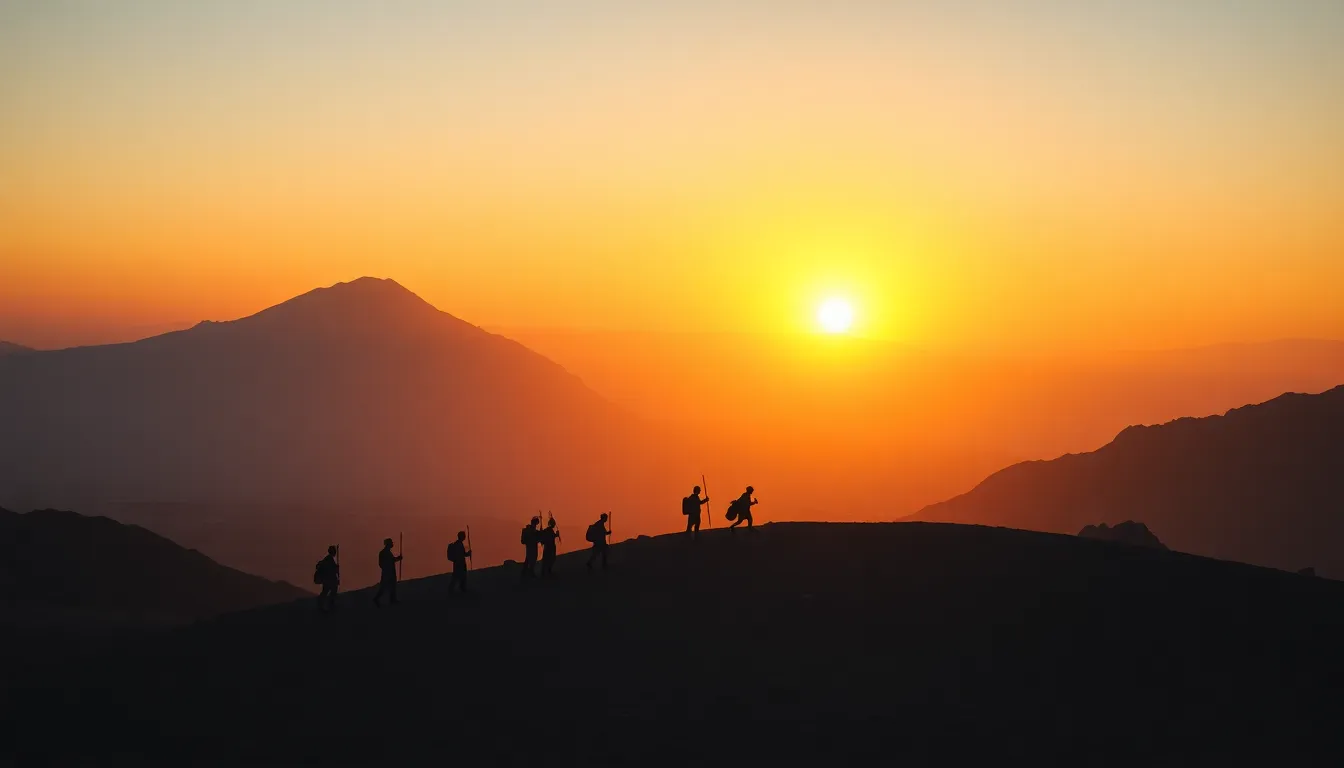
I have stood on the summit of Mount Sinai at sunrise with more groups than I can count, and there is a moment that repeats almost every time. The light comes up over the peaks of the Sinai, spilling down into the valleys, and the whole group, who have been climbing in the cold and the dark for hours, goes completely silent. Nobody tells them to. They just stop talking. I have watched pastors from Texas, rabbis from New York, and teachers from quiet country towns all do the same thing. The mountain does it to people.
The climb of Mount Sinai is, for many of the groups I lead, the emotional peak of the entire Egypt journey. It is also genuinely demanding, and I owe every group an honest account of what it involves before they decide. This is that account: the route, the experience, the spiritual weight, and exactly how a faith group prepares.
Why This Mountain Matters
For Jewish travelers, Sinai is the site of the most direct divine encounter in the entire Torah. God descended onto this mountain and gave the Ten Commandments. Moses went up and came down with the tablets. The whole covenant at the heart of the Hebrew Bible was forged here. Elijah, later, fled to this same mountain, exhausted and broken, and heard the still small voice.
For Christian travelers, Sinai carries equal weight. Paul writes of the Sinai covenant in Galatians. The early church treated this as holy ground, which is why the monastery at its base has drawn pilgrims for fifteen centuries. To climb the mountain where God spoke the Law, and to read those words at the top as the sun rises, joins the story to the body in a way no sermon quite can.
I lay this out for groups beforehand because the climb is hard, and knowing why you are doing it carries you up the dark sections.
The Two Routes Up
There are two ways to the summit, and the choice matters.
The Camel Path
The longer, gentler route is the camel path, a winding trail that climbs steadily over roughly seven and a half kilometers. It is walkable for most reasonably fit adults, and for part of the way it is possible to ride a camel, which some groups arrange for members who want the experience or who need to conserve energy. This is the route most heritage groups take on the way up in the dark.
The Steps of Repentance
The other route is the Steps of Repentance, around three thousand stone steps cut by monks directly up the mountainside. It is steeper, harder, and more direct. Many groups descend by these steps in the daylight after sunrise, when you can actually see them, rather than climbing them in the dark. The name is fitting. They are not easy, and people tend to come down them quietly.
The final stretch to the summit, shared by both routes, is the last several hundred steps, the steepest part of the whole climb. I always tell groups: this is the hard bit, it is short, and the top is right there.
What the Climb Is Actually Like
Let me be honest about the physical reality. The traditional ascent begins around two in the morning to reach the summit for sunrise. You climb in the dark, by flashlight and starlight, in the cold. At the summit’s altitude the air is thin and, especially in winter, genuinely cold, sometimes below freezing before dawn. The trail is rocky and uneven. It takes most groups two and a half to three hours up.
It is not easy. I will not pretend it is. But in twenty years, the groups I have brought up this mountain are nearly unanimous, and almost no one tells me afterward they wish they had stayed at the hotel. The difficulty is part of what makes the summit land the way it does. You arrive having given something.
There are simple rest stops along the camel path where Bedouin vendors sell tea and blankets, and we build in pauses. Nobody races. We go at the pace of the group, and we keep the group together.
The Summit at Sunrise
What happens at the top is the thing I cannot fully put into a blog post. As the sun rises over the Sinai Peninsula and the light moves across the granite peaks and down into the valleys, groups do remarkable things.
I have stood on that summit while a group recited the Shema. I have heard the Ten Commandments read aloud up there, and the Beatitudes. I have watched groups stand in complete silence for ten or fifteen minutes with no one prompting them. People have told me afterward that they prayed on that summit in a way they had not prayed in years.
We build each group’s time at the top around what their community needs. A Torah reading. A Gospel reading. A prayer. A hymn sung quietly into the cold air. A stretch of silence to simply watch the light come. The mountain holds all of it. I plan this part deliberately with each leader beforehand, because the summit is not the moment to improvise.
How a Group Prepares
This is where good planning makes the difference between a hard memory and a holy one.
Fitness, honestly assessed. The climb suits most reasonably fit adults, but it is real exertion at altitude in the cold. I talk through the group’s makeup with the leader in advance. Members who cannot do the full climb can often go partway by camel, and some choose to stay at the monastery village and meet the group after, which is a completely fine choice.
Layers and light. It is cold going up in the dark and warm coming down in the sun. Layers are essential. So is a headlamp or flashlight, sturdy shoes with grip, water, and a light snack. We give every group a clear packing brief.
Timing the season. The ascent is far kinder in cooler months. Doing it in spring or autumn, or even on a clear winter night with proper warm gear, is a better experience than the summer heat. Our guide to the best time to visit Egypt walks through the seasonal trade-offs in detail.
Pacing and guides. We use experienced local guides who know the trail in the dark, and we keep the group together with a deliberate, unhurried pace. The goal is for everyone to arrive at the top with something left to give to the moment.
The climb pairs naturally with a visit to Saint Catherine’s Monastery at the mountain’s base, usually later the same morning, and it sits within the wider arc of the spiritual sites of Egypt. You can see how it fits the full journey on our Egypt heritage destination page, and how the group leader experience works on our group heritage tours page.
FAQ: Climbing Mount Sinai
How hard is the climb up Mount Sinai?
It is moderately strenuous. The camel path is around seven and a half kilometers, climbing steadily, with a steep final stretch of several hundred steps to the summit. It takes most groups two and a half to three hours, done in the cold and dark to reach the top by sunrise. Most reasonably fit adults manage it, and part of the way can be done by camel for those who need it.
Why do groups climb Mount Sinai at night?
To reach the summit in time for sunrise, which is the spiritual high point of the experience. The traditional ascent begins around two in the morning. Climbing in the dark also means doing the hardest work in the cool of the night and arriving as the light breaks over the peaks. It is demanding but, for nearly every group I have led, deeply worth it.
Can older travelers make the climb?
Many do, with honest preparation and a sensible pace. The camel path is gentler than the Steps of Repentance, and camels are available for part of the route to conserve energy. For those who would rather not attempt it, staying in the monastery village and joining the group afterward is a perfectly good option. We assess this individually with each group leader.
What should we bring for the Mount Sinai climb?
Warm layers, because it is cold going up in the dark and warm coming down in the sun. A headlamp or flashlight, sturdy shoes with good grip, water, and a small snack. The summit can drop below freezing before dawn in winter, so do not underestimate the cold. We give every group a full packing brief before the climb.
Can our group hold a service at the summit?
Yes, and we plan it deliberately. At the top, groups hold Torah or Gospel readings, recite prayers in any language, sing, observe silence, or simply watch the sunrise together. We work out the shape of your summit time with you in advance so it feels prepared rather than improvised, which matters because the moment passes quickly once the sun is up.
The climb of Mount Sinai asks something of a group, and it gives back more. They go up tired and cold in the dark, and they come down changed, with a memory they will carry for the rest of their lives. I would be glad to help you prepare your group for this ascent, honestly and well. When you are ready, reach out to our team and we will start with your community’s story.