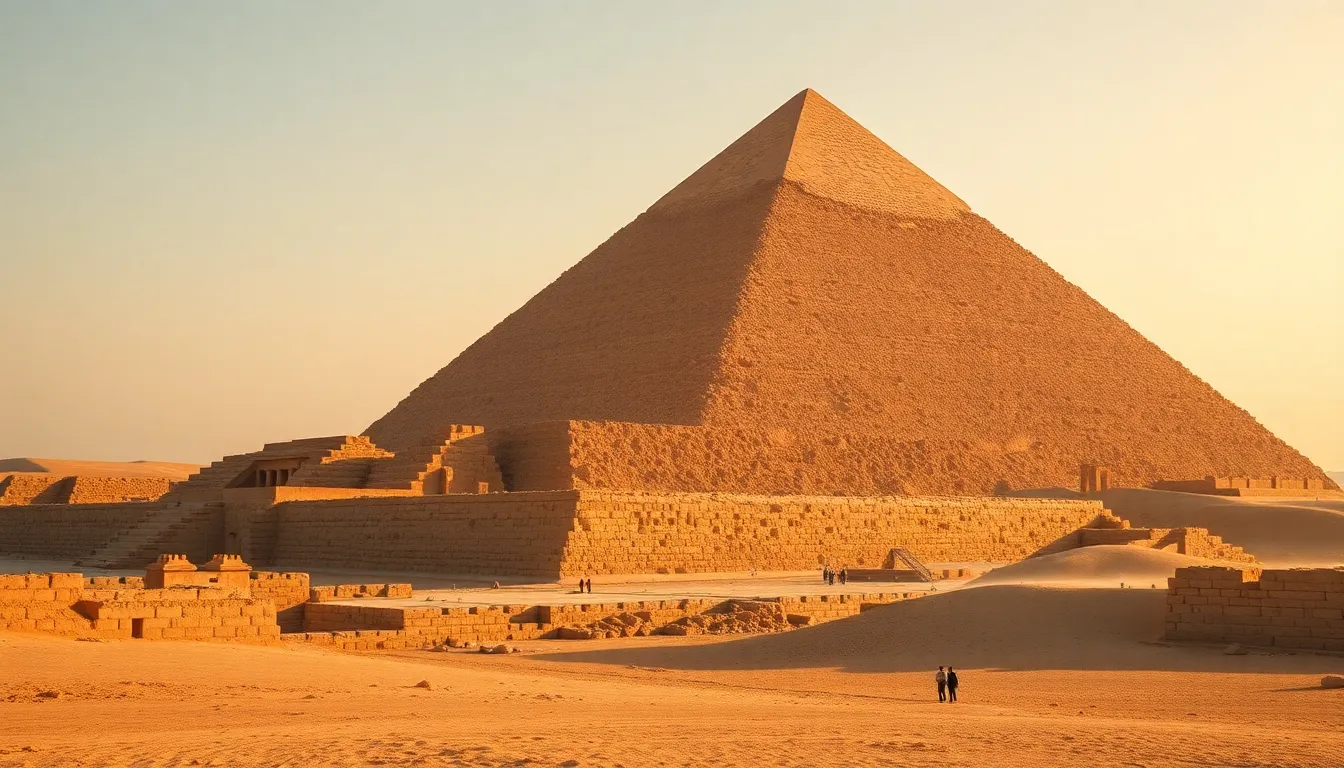
Most groups race straight from the airport to Giza and never give Memphis or Saqqara a second thought. I understand the pull of the Great Pyramid. But I have learned over the years that the groups who give a morning to Memphis and Saqqara come away understanding Egypt in a way the Giza-only travelers never quite reach. Here, at the first capital of a united Egypt and at the oldest stone pyramid in the world, you see where the whole civilization began. And for a faith group, that matters, because the prophets of Israel named this city by name.
Memphis and Saqqara sit just south of Cairo, an easy pairing with Giza for a full day of pharaonic heritage. This guide orients a faith group to both: the city the Bible calls Noph, the step pyramid that started it all, and how to read this ground through a heritage lens rather than a generic tourist one.
Why Memphis and Saqqara Matter for Faith Groups
Memphis was the first great capital of ancient Egypt, founded at the dawn of the unified kingdom near the point where the Nile valley opens into the Delta. For much of Egyptian history it was the administrative and religious heart of the country, a city of palaces and temples that ruled the land for millennia. Saqqara was its vast cemetery, the necropolis where Memphis buried its kings and nobles for thousands of years.
For a heritage group, two things make this ground significant. First, it is where pharaonic civilization took shape. The Step Pyramid of Saqqara is the world’s first monumental stone building and the ancestor of the pyramids at Giza. To stand here is to stand at the beginning of the empire whose power the Exodus narrative confronts. Second, and more directly, Memphis is named in the Hebrew Bible. The prophets called it Noph, and they spoke oracles against it. That gives Memphis a direct line into Scripture that Giza does not have.
Memphis in the Bible: The City Called Noph
The prophets Isaiah, Jeremiah, and Ezekiel all name Memphis, calling it Noph. They spoke of it in their oracles concerning Egypt, declaring that the idols and the princes of Noph would be brought low. For a faith group reading the prophetic books, this is a rare and direct anchor: a great Egyptian city named explicitly in Scripture, whose ruins you can actually stand among. When I read those passages to a group standing in the remains of Memphis, the prophetic word stops being abstract. The city the prophets warned about is right here, fallen exactly as the texts foretold, its temples reduced to scattered stone and a fallen colossus in a field.
That is the heritage framing I bring to Memphis. It is not just an old capital. It is a city the Bible knew, named, and spoke judgment over, and the visit lets a group encounter the prophetic literature on its own ground.
What You See at Saqqara
Saqqara is one of the richest archaeological sites in all of Egypt, spread across miles of desert plateau. Here is how I orient a group.
The Step Pyramid of Djoser
The centerpiece is the Step Pyramid, built for the pharaoh Djoser and designed by the architect Imhotep, who was so revered that later Egyptians worshipped him as a god. This is the oldest large stone structure in the world. Before Djoser, Egyptian kings were buried under low, flat-roofed mud-brick tombs. Imhotep stacked stone platforms one on top of another, each smaller than the last, and created the first pyramid: six great steps rising out of the desert. Everything at Giza descends from this idea.
Standing before the Step Pyramid, I tell groups they are looking at the moment a civilization decided to build for eternity in stone. The complex around it, with its courts and shrines and the surrounding wall, is the first monumental architecture in human history. For a heritage traveler, this is the genesis of the world that the Bible’s Egypt belongs to.
The Tombs and Their Painted Walls
Saqqara is more than the Step Pyramid. The plateau is honeycombed with tombs of nobles and officials, many with extraordinary wall carvings showing daily life in ancient Egypt: farming, fishing, baking, herding, music, family scenes. These reliefs are some of the best windows we have into how Egyptians actually lived. For a faith group, they bring the world of Joseph and Moses to life. This is the texture of the civilization the Israelites lived within: its food, its work, its households, its gods. I always spend time in at least one of these decorated tombs, because the painted walls do more to make the biblical Egypt real than any pyramid can.
The Serapeum and the Later Necropolis
Saqqara remained a sacred burial ground for thousands of years, long past the age of the pyramids. The Serapeum, a series of underground galleries where the sacred Apis bulls were entombed in enormous stone sarcophagi, dates to the later periods and shows how long this ground stayed holy to the Egyptians. The scale of the engineering is startling. For a group, it underlines how deep and how long Egyptian religion ran, the religious world the Exodus story confronts when it declares the God of Israel greater than the gods of Egypt.
What You See at Memphis
The ancient city of Memphis has largely vanished. Its mud-brick buildings dissolved over the centuries, its stone was carried off, and the shifting Nile buried much of what remained. What survives today is an open-air museum at the village of Mit Rahina, where the most important finds have been gathered.
The highlight is a colossal fallen statue of Ramesses II, lying on its back inside a shelter, so finely carved that you can study the face of the pharaoh up close. Nearby stands a great alabaster sphinx and a scatter of statuary, columns, and temple fragments. It is a modest site compared to the temples of the south, and that modesty is part of its lesson. This was once the mightiest city in Egypt, the Noph of the prophets, and now it is a quiet garden of broken stone. I read the prophetic oracles here, and the contrast between the city’s ancient glory and its present silence lands with real force. The heritage framing writes itself.
Reading Memphis and Saqqara as a Heritage Group
What I want a group to carry away is the arc. Memphis and Saqqara are where pharaonic Egypt began and where the prophets watched it end. The Step Pyramid is the first stone statement of an empire that believed itself eternal. The painted tombs show the daily world the Israelites lived in. The fallen colossus at Memphis embodies the prophetic word: the proud city of Noph brought low.
This is why I pair Memphis and Saqqara with Giza on the same day or across two days. Giza shows the empire at its height. Saqqara shows where it started. Memphis shows where the prophets said it would end. Together they give a faith group the full sweep of pharaonic power, which is exactly the power the Exodus story stands against. Our Giza and the Pyramids heritage guide frames the Giza half of that pairing, and our Nile Delta heritage guide connects this pharaonic world to the land of Goshen where the Israelites actually lived.
Practical Orientation for Memphis and Saqqara
A few honest practicalities for a group leader.
Memphis and Saqqara sit just south of Cairo and Giza, roughly forty minutes to an hour by road, which makes them an easy pairing with the pyramids. I usually combine all three into a full day of pharaonic heritage, or split Giza and Saqqara across two mornings if the group wants more time. The sites are close enough that the driving is light.
Saqqara is open desert. It is hot, exposed, and the ground is sandy and uneven, with some climbing in and out of tombs and underground galleries. Closed shoes, sun protection, and water are essential, and anyone with mobility concerns should know that some tombs involve stairs and low passages. Memphis is a flatter, shadier garden site and is gentler on tired legs.
Timing makes a real difference at these open sites. Spring, fall, and winter are far more comfortable than the summer heat. Our season-by-season guide to visiting Egypt walks through the windows, and I steer pharaonic-heavy days toward the cooler, clearer months whenever a group has the flexibility.
Our team handles the transport, the entry, the tomb access, and the pacing, and a good guide is what turns Saqqara from a sandy walk past old stones into a heritage encounter. For group leaders: with 15 or more participants, the group leader travels free, which makes adding this depth to an itinerary an easy decision.
FAQ: Memphis and Saqqara Heritage Travel
Is Memphis mentioned in the Bible?
Yes. The prophets Isaiah, Jeremiah, and Ezekiel name Memphis, calling it Noph, in their oracles concerning Egypt. They declared that the idols and princes of Noph would be brought low. This makes Memphis one of the Egyptian cities named directly in Scripture, and standing among its ruins lets a faith group encounter the prophetic word on the very ground it addressed.
What is the Step Pyramid of Saqqara?
The Step Pyramid, built for the pharaoh Djoser and designed by the architect Imhotep, is the oldest large stone structure in the world. It is six great stone steps rising from the desert and is the direct ancestor of the pyramids at Giza. For a heritage group, it marks the beginning of the monumental pharaonic civilization whose power the Exodus narrative confronts.
How are Memphis and Saqqara different?
Memphis was the ancient capital city, the Noph of the prophets, now mostly vanished and preserved as an open-air museum with a famous fallen colossus of Ramesses II. Saqqara was the city’s vast desert cemetery, home to the Step Pyramid and thousands of tombs with vivid wall carvings of daily life. Together they show where Egyptian civilization began and the world the Israelites lived within.
Can you visit Memphis and Saqqara with Giza?
Yes, easily. Both sit just south of Cairo and Giza, about forty minutes to an hour away, and they pair naturally with the pyramids for a full day of pharaonic heritage. We often combine all three, or split them across two mornings if a group wants more time. The driving between the sites is light.
Why visit Saqqara on a faith heritage trip?
Saqqara shows where pharaonic Egypt began, and its painted tombs bring the daily world of Joseph and Moses to life: the farming, fishing, food, and households of the civilization the Israelites lived within. Paired with Giza and Memphis, it gives a faith group the full arc of Egyptian power, from its first stone monument to the prophetic word of judgment over its great city.
Memphis and Saqqara reward the group that slows down. The Step Pyramid where it all began, the painted tombs that bring the biblical world to life, and the fallen city the prophets named: this is heritage ground that the rush to Giza too often skips.
You can see how it fits a complete heritage journey on our Egypt heritage destination page, or learn how we structure group travel on our group heritage tours page. When you are ready to start planning, reach out through our contact page and I will help you build the itinerary around your community.