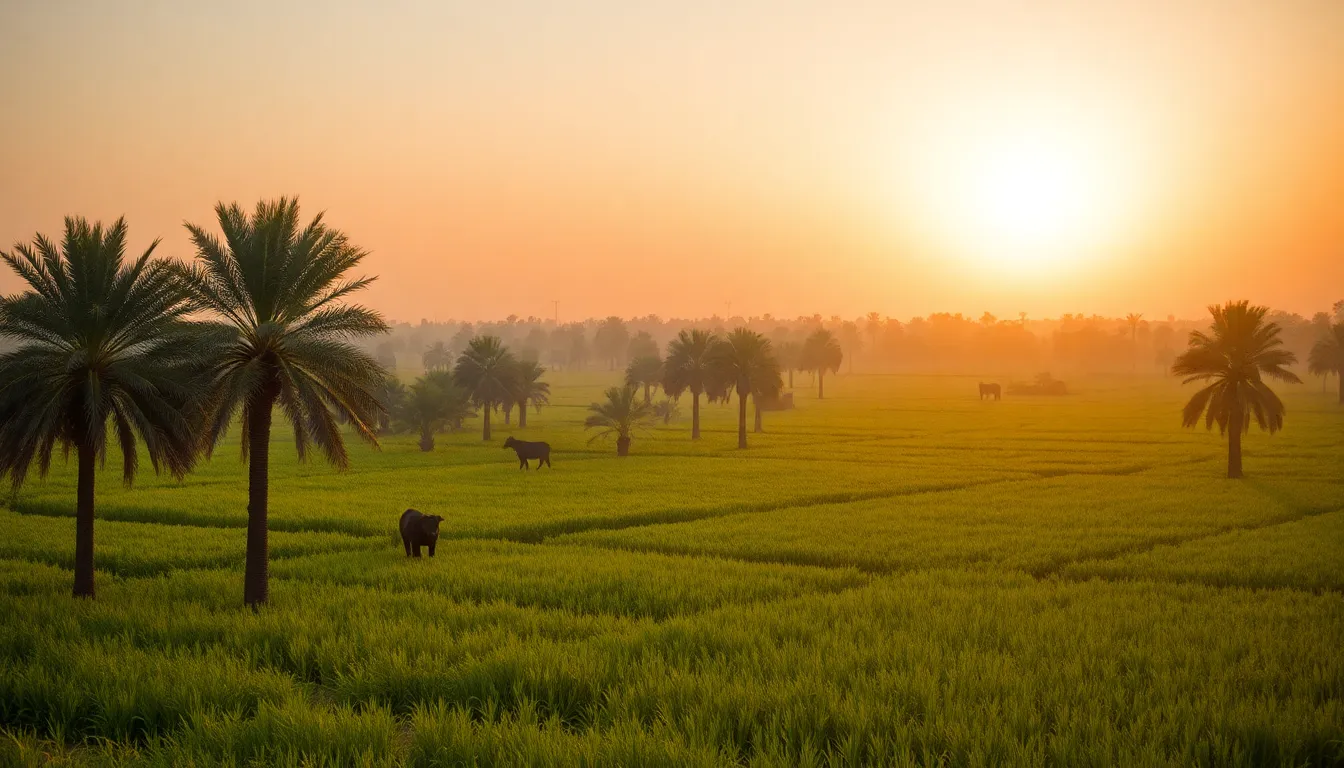
Most groups I bring to Egypt arrive thinking the trip is about the pyramids and the Nile cruise. Then we drive north into the Delta, and something shifts. The desert gives way to green. Canals, palm groves, water buffalo in the fields, villages that look much as they have for centuries. And I watch the rabbi or pastor in the front seat go quiet, because they realize where we are. This flat, green, watered country is the land of Goshen. This is where the family of Jacob settled. This is where the Israelites lived for four hundred years. This is where the Exodus begins.
The Nile Delta does not get the attention it deserves from heritage travelers, and I understand why. There is no single dramatic monument here that competes with Giza or Karnak. But for a faith group, the Delta is foundational ground. This guide is how I orient a group to the biblical north, so the story comes off the page and into the soil.
Why the Nile Delta Matters to Faith Travelers
The Delta is the fan of fertile land where the Nile splits into branches before it reaches the Mediterranean. In the biblical narrative, this is the part of Egypt where the Israelites lived. When Joseph rose to power and brought his father and brothers down from Canaan during the famine, Pharaoh settled them “in the best of the land, in the land of Rameses,” which the Bible also calls Goshen. They were shepherds, and the eastern Delta was good grazing country, set somewhat apart from the Egyptian heartland.
So everything that follows in the Exodus story has its roots here. The growth of the Israelites into a great people. The new pharaoh who did not know Joseph. The forced labor, the store-cities, the bricks and straw. The birth of Moses. The plagues. The night of Passover. All of it is set in this northern country, not in the temple cities of the south. When I tell a group that the Exodus did not happen at the pyramids, that it happened up here in the green Delta, it reframes the whole journey for them.
Goshen: The Land Where Israel Lived
Goshen is not a single site you can stand on with a sign that says “you are here.” It is a region, the eastern Delta, generally placed in what is today the Sharqia Governorate. The biblical text links it to the city of Rameses (also spelled Ramesses), a royal store-city the Israelites are said to have built. Scholars connect that city to the area around modern Qantir and Tell el-Dab’a, where excavations have uncovered a major settlement with a long and layered history.
What I want a group to understand is the texture of the place. This was not desert. The Israelites in Goshen were not wandering yet. They were settled, farming and herding, living in a fertile border zone between Egypt and the Sinai. When you stand in a Delta field at the edge of a village, you are standing in the kind of landscape the Bible describes. The story has a setting, and you are in it.
Tell el-Dab’a and Avaris: The Semitic City in the Delta
The most significant archaeological site for an Exodus-minded group is Tell el-Dab’a, identified by many scholars as ancient Avaris. For centuries this was the capital of the Hyksos, a people of Semitic origin who ruled northern Egypt before being driven out. The excavations here have revealed a culture that was distinctly not native Egyptian. Houses built on a Levantine plan. Burial customs with Canaanite features. Material culture that points to a population from the lands east of Egypt, the same region the patriarchs came from.
I am always honest with my groups about what this does and does not prove. Tell el-Dab’a is not a signed-and-sealed Israelite city. But it is hard physical evidence that Semitic peoples lived in exactly this part of the Delta, exactly where the Bible places the Israelites, building cities and burying their dead in their own way. Standing at Avaris, you are looking at the world of the patriarchs and the early Israelites with your own eyes. For a faith group, that is enough to make the ground feel holy.
The Heritage Sites of the Delta
The Delta rewards a group that knows what it is looking at. Here is how I orient people to the main stops.
Tanis (Zoan): The Royal Capital of the North
Tanis, called Zoan in the Hebrew Bible, is the great ruin of the Delta. For a stretch of Egyptian history it was the capital, and the kings who ruled from here filled it with temples, obelisks, and colossal statues. Much of that stone was reused from older cities, including Pi-Ramesses, which means the very blocks at Tanis carry the names of the pharaohs of the Ramesside age. The Bible names Zoan several times, including in the Psalms, which speak of God’s wonders done “in the field of Zoan.” For a group walking the Exodus story, that is a direct biblical anchor.
Tanis is a field of fallen giants. Toppled obelisks, broken colossi, and temple foundations spread across the site. It is less polished than the southern temples, and that rawness is part of its power. I give Tanis its own dedicated guide because it deserves the depth, and I always recommend groups read up on it before we arrive.
Bubastis (Pi-Beseth): The City Named by the Prophets
Bubastis, called Pi-Beseth in the book of Ezekiel, sits near modern Zagazig in the heart of the Delta. It was the center of worship for the cat-goddess Bastet, and in its prime it drew enormous festival crowds. The prophet Ezekiel names this city directly in his oracles against Egypt, which makes it one of the few Delta sites mentioned by name in Scripture. The ruins today are quieter than Tanis, but the connection to the prophetic word gives the visit weight for groups who care about the biblical text.
Where the Store-Cities Once Stood
The Bible says the Israelites built the store-cities of Pithom and Rameses. Pi-Ramesses, the grand capital of Ramesses II, has been located in the Qantir area near Tell el-Dab’a. There is not much standing here for a casual visitor, because the city was largely dismantled and its stone carried off to Tanis. But this is the heart of the labor narrative. When you orient a group to this region and explain that the great city the Israelites are said to have built was taken apart and moved north, you are giving them the physical mechanics of the story. The stones did not vanish. They were relocated, and you can see them at Tanis.
The Delta in the Christian Story
The Delta is not only a Jewish heritage landscape. For Christian groups, it is part of the Holy Family route. When Mary, Joseph, and the infant Jesus fled into Egypt to escape Herod, Coptic tradition traces their path from the northern Sinai coast across the Delta before continuing south. Several towns in the Delta hold local traditions of the Holy Family passing through, resting, or finding water. The Coptic Orthodox Church marks many sites along this route, and a handful sit in the northern country.
For a Christian group, this layers a second story on top of the Exodus. The land that received the children of Israel fleeing famine later received the Holy Family fleeing a king. The Delta becomes a place of refuge twice over in the biblical imagination. I find that connection moves Christian travelers deeply, and I weave it into the orientation whenever the group’s focus calls for it.
Practical Orientation for a Delta Visit
Let me be practical, because the Delta is different from the polished tourist sites and a group leader should know what to expect.
The Delta is agricultural country, not a tourist district. The sites are spread out, the roads run between villages and fields, and you will not find the visitor infrastructure you get at Giza. That is exactly why a good guide and solid ground arrangements matter here. Our team handles the driving, the timing, and the site access so your group can focus on the experience rather than the logistics.
Most Delta heritage visits work best as a focused day trip or two out of Cairo, which is well under two hours from much of the eastern Delta. Tanis sits farther out and deserves the better part of a day on its own. I usually pair the Delta with the Jewish and Coptic heritage of Old Cairo, so a group gets the full northern picture: where the Israelites lived, where they labored, and where the later Jewish and Christian communities took root.
Dress for the field. There is little shade at the open archaeological sites, the ground is uneven, and water buffalo and irrigation canals are part of the scenery. Closed shoes, sun protection, and water are the basics. Spring and fall are the most comfortable seasons, and our season-by-season guide to visiting Egypt walks through the timing in detail.
A note for group leaders: with 15 or more participants, the group leader travels free. The Delta is the kind of meaningful, off-the-standard-circuit experience that makes a heritage itinerary feel personal rather than packaged, and it costs very little to add.
FAQ: Nile Delta Heritage Travel
Where is the land of Goshen in Egypt?
Goshen is the region of the eastern Nile Delta where the Bible says the Israelites settled, generally placed in today’s Sharqia Governorate in northeastern Egypt. It is not a single marked site but a fertile area linked in Scripture to the city of Rameses. The archaeological sites of Tell el-Dab’a and Qantir sit in this region and connect to the Exodus narrative.
What biblical sites can you visit in the Nile Delta?
The main heritage sites are Tanis, called Zoan in the Bible and named in the Psalms; Bubastis, called Pi-Beseth in Ezekiel; and the Tell el-Dab’a and Qantir area associated with Avaris and the store-city of Pi-Ramesses. These connect to the Israelite sojourn, the Exodus labor narrative, and the prophetic oracles against Egypt. Several Delta towns also hold Coptic traditions of the Holy Family’s flight into Egypt.
Is the Nile Delta worth visiting on a heritage tour?
For a faith group, yes. The Delta is where the Exodus story is set, not the southern temple cities most tours focus on. It is agricultural country without polished tourist infrastructure, which is part of its honesty. With a knowledgeable guide who can connect the sites to the biblical text, the Delta gives a group the physical setting of one of the foundational stories of their faith.
How do you get to the Nile Delta from Cairo?
Much of the eastern Delta is under two hours from Cairo by road, which makes it a comfortable day trip. Tanis sits farther north and deserves most of a day on its own. We handle all transport and site access, and we often pair a Delta visit with the Jewish and Coptic heritage of Old Cairo for a complete picture of the biblical north.
Are the Delta sites connected to the Exodus?
Directly. The Bible places the Israelites in Goshen in the eastern Delta, names the store-cities they built, and sets the entire labor and Passover narrative in this northern country. Tanis (Zoan) appears in the Psalms, and the Semitic settlement at Tell el-Dab’a (Avaris) shows that peoples from the lands east of Egypt lived in exactly this region. The Delta is the geographic starting point of the Exodus.
If the Exodus story matters to your community, the Nile Delta is ground worth standing on. It rarely makes the standard tour brochure, which is exactly why it feels like a discovery when a group gets there. We have been building heritage itineraries through Egypt for over twenty years, and the Delta is one of the stops people remember most.
You can see how Egypt fits a full heritage journey on our Egypt heritage destination page, or start the conversation directly through our contact page. I would be glad to help you bring your group to the land of Goshen.