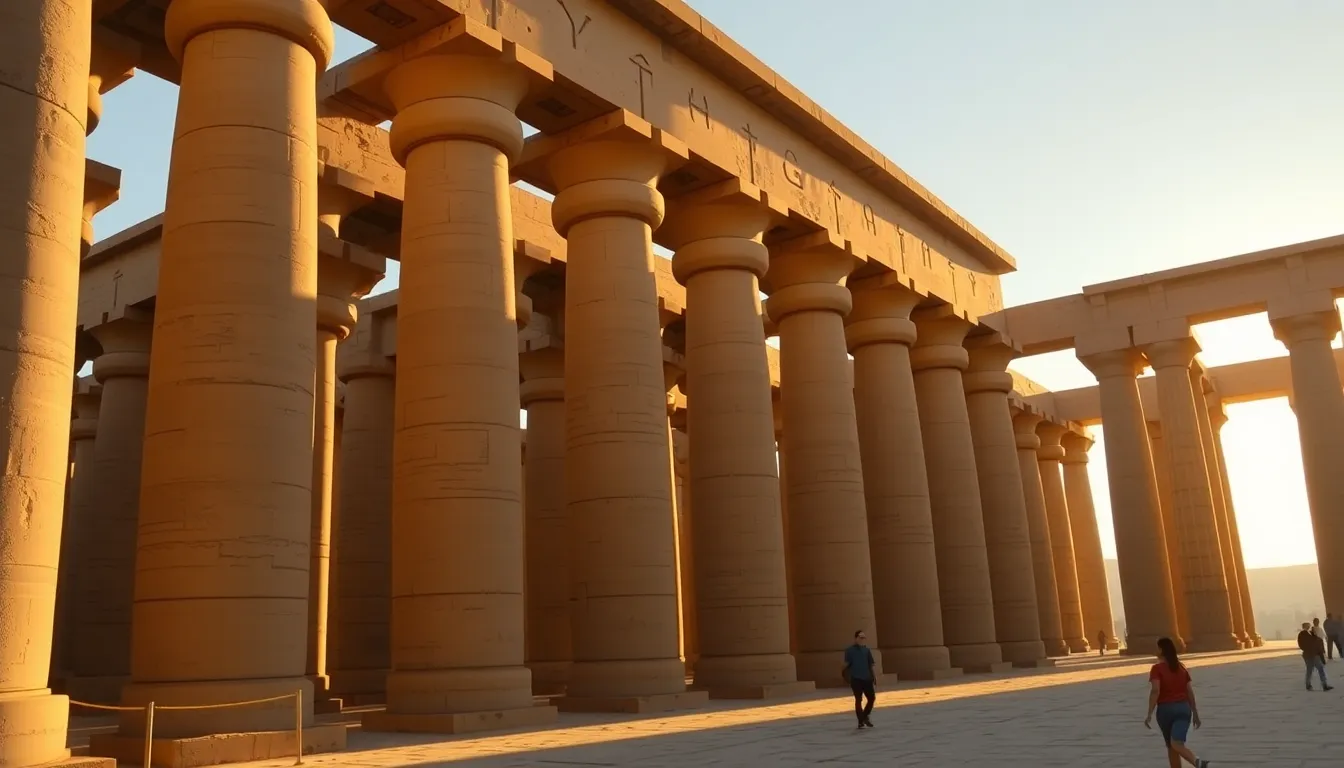
The first time most of my groups walk into the great hypostyle hall at Karnak, they go silent. There are columns there sixty-nine feet tall, more than a hundred of them, packed so densely that you feel small in a way that is hard to describe. And almost every time, after a minute, someone says some version of the same thing: “So this is what they were up against.” That is exactly the reaction I hope for. Luxor is where the power of pharaonic Egypt stops being a Bible-study abstraction and becomes something you stand inside.
Luxor was ancient Thebes, the capital of Egypt at the height of its empire, the world of the New Kingdom pharaohs. For faith travelers this is not a detour into Egyptology. It is the backdrop of the Exodus story, the seat of the power that the Bible says God humbled. This guide is how I help a group read Luxor through that lens, so the monuments mean something rather than blur into one more temple.
Why Luxor Matters to Faith Travelers
Luxor sits on the Nile in Upper Egypt, about an hour’s flight south of Cairo. In the time of the New Kingdom, roughly the period most scholars associate with the Exodus narrative, Thebes was the religious and political heart of the most powerful empire on earth. The pharaohs the Bible traditions point to, Ramesses II and the rulers of that era, built here on a scale meant to last forever.
For a faith group, that is the whole point. The Bible presents the Exodus as God overturning the greatest power of the age. When you have only read about it, that power is just a word. When you have stood in Karnak, walked the Valley of the Kings, and seen the colossal statues of Ramesses, the scale becomes real, and the audacity of the Exodus story lands with new force. I always tell groups: this is the world Moses walked away from.
Luxor also holds the layer of early Christian heritage that surprises people, which I will come to. But its primary gift to a faith traveler is context, the physical reality of the empire at the center of the biblical drama.
Karnak: The Heart of Pharaonic Power
Karnak is not a single temple. It is a vast complex built and added to over two thousand years, the largest religious building site of the ancient world. Generations of pharaohs each left their mark, which is part of what makes it so overwhelming.
The Great Hypostyle Hall
The hypostyle hall is the moment that stops a group cold. A forest of massive columns, carved top to bottom with reliefs and inscriptions, built to make a human being feel the might of the gods and the king. I let groups simply stand in it before I say anything. This is the architecture of absolute power, and it speaks for itself.
For faith travelers, I draw the connection out loud. The pharaoh who ruled from a place like this considered himself a god. The Bible tells a story in which the God of a band of slaves confronts that god-king and wins. Standing in Karnak, the sheer nerve of that claim becomes vivid. The empire was not a paper tiger. It was this.
Reading the Temple as Context
I encourage educators in particular to let Karnak teach the religious world the Israelites lived inside, the gods, the priesthood, the absolute fusion of religion and state power. Understanding that world makes the distinctiveness of the biblical message clearer. The Exodus story is, among other things, a confrontation between this entire system and a radically different idea of God. You feel that contrast more sharply when you have walked through the system itself.
Luxor Temple and the Avenue of Sphinxes
In the heart of the modern town sits Luxor Temple, connected to Karnak by the recently restored Avenue of Sphinxes, a long ceremonial road once lined with hundreds of sphinx statues. Walking even part of that avenue gives a group a feel for the processions of the ancient capital.
Luxor Temple is more intimate than Karnak and especially striking in the evening when it is lit. It carries its own layers of history, including a small mosque built atop part of it and, importantly for Christian travelers, evidence of an early Christian church. The temple was used by Coptic Christians in the early centuries of the church, and traces of Christian frescoes were found over the pharaonic carvings. It is a quiet reminder that Christianity reached deep into Upper Egypt very early. For the broader Coptic story, our Cairo heritage guide traces the church’s roots in the north.
The Theban Necropolis: West Bank of the Nile
Across the river, the West Bank of Luxor is the land of the dead, the vast necropolis where the pharaohs and nobles of the New Kingdom were buried. This is where a faith group sees pharaonic Egypt’s obsession with the afterlife up close.
The Valley of the Kings
The Valley of the Kings holds the tombs of the New Kingdom pharaohs, cut deep into the rock and painted with vivid scenes meant to guide the king into the next life. The tomb of Tutankhamun is here, though its famous treasures are now in Cairo. Walking down into these tombs, with the colors still bright after more than three thousand years, is unforgettable.
For faith travelers, I frame the Valley as a window into how this civilization understood death, power, and the divine. The contrast with the biblical view of God and humanity is striking, and it gives clergy and educators a natural opening for reflection with their groups.
Hatshepsut, the Colossi, and the Ramesseum
The mortuary temple of Hatshepsut, terraced dramatically against the cliffs, is one of the most photographed sites in Egypt and a remarkable monument to one of the few female pharaohs. The Colossi of Memnon, two enormous seated statues, have guarded the plain for over three thousand years. The Ramesseum, the mortuary temple of Ramesses II, includes the fallen colossus that inspired the poem “Ozymandias,” a fitting meditation on the limits of even the greatest earthly power. For a faith group, that theme, the fall of mighty empires, resonates directly with the biblical message.
The Nile and the Heritage Cruise
Luxor is also the natural hub for a Nile cruise, and for many groups this is one of the most loved parts of an Egypt journey. A cruise between Luxor and Aswan turns travel time into part of the experience, with temples like Edfu and Kom Ombo along the way and the timeless rhythm of the river itself.
The Nile is not incidental to the biblical story. It was the lifeline of Egypt, the river of the plagues, the water where the infant Moses was placed. Sailing it gives a group a felt sense of the geography that Scripture takes for granted. For groups continuing south, our Aswan heritage guide picks up where the cruise lands.
Practical Orientation for Faith Groups in Luxor
A few things I always tell group leaders planning Luxor.
Heat is the main consideration. Luxor in summer regularly exceeds 40°C, and even spring afternoons are hot. We start early, build in rest, and pace the West Bank carefully, since it involves walking and climbing in and out of tombs. For a mixed-age congregation, timing the trip for the cooler months makes a real difference, which our best time to visit Egypt guide covers in detail.
Getting to Luxor from Cairo is a short flight, which we build into the itinerary so the group is not spending days in transit. A Nile cruise can be added for groups who want it.
Sun protection, water, and good footwear matter more here than almost anywhere else in Egypt. We brief every group in advance.
And with 15 or more participants, the group leader travels free, which makes the math easier when you are building a trip for your community.
FAQ: Luxor Heritage Travel
What is the biblical significance of Luxor?
Luxor was ancient Thebes, the capital of Egypt during the New Kingdom, the era most scholars link to the Exodus narrative. While Luxor itself is not named as a specific biblical event site, it is the seat of the pharaonic power that the Bible describes God confronting. Standing in Karnak and the Valley of the Kings gives faith travelers a vivid sense of the empire at the center of the Exodus story.
What are the must-see sites in Luxor for a faith group?
Karnak and Luxor Temple on the East Bank, and the Valley of the Kings, the temple of Hatshepsut, and the Colossi of Memnon on the West Bank, are the core. The Avenue of Sphinxes connecting Karnak and Luxor Temple is a highlight. For Christian travelers, the early church evidence at Luxor Temple is a meaningful note. Most groups need two full days to cover Luxor well.
Is there Christian heritage in Luxor?
Yes. Christianity reached Upper Egypt early. Luxor Temple was used by Coptic Christians in the early centuries of the church, and traces of Christian frescoes were found painted over the ancient carvings. It is a reminder that the Coptic Church spread far beyond Cairo and Alexandria into the deep south of Egypt within the first few centuries.
Should we add a Nile cruise to a Luxor visit?
For many groups, a Nile cruise between Luxor and Aswan is a highlight. It turns travel into part of the experience, passes temples like Edfu and Kom Ombo, and gives a felt sense of the river that runs through the biblical story. We can structure the itinerary with or without a cruise depending on your group’s time and preferences.
When is the best time to visit Luxor?
The cooler months, roughly October through April, are far more comfortable than the summer, when Luxor regularly exceeds 40°C. For mixed-age faith groups doing significant walking among the temples and tombs, the cooler season removes much of the physical strain. We help every group time the trip around both weather and their own faith calendar.
If Luxor is calling your group, whether for the scale of Karnak, the tombs of the kings, or the chance to stand where the Exodus drama was set, I would love to help you plan it. Start at our Egypt heritage destination page or our group heritage tours page to see how we build these journeys.
When you are ready, contact us and we will shape the itinerary around your community.