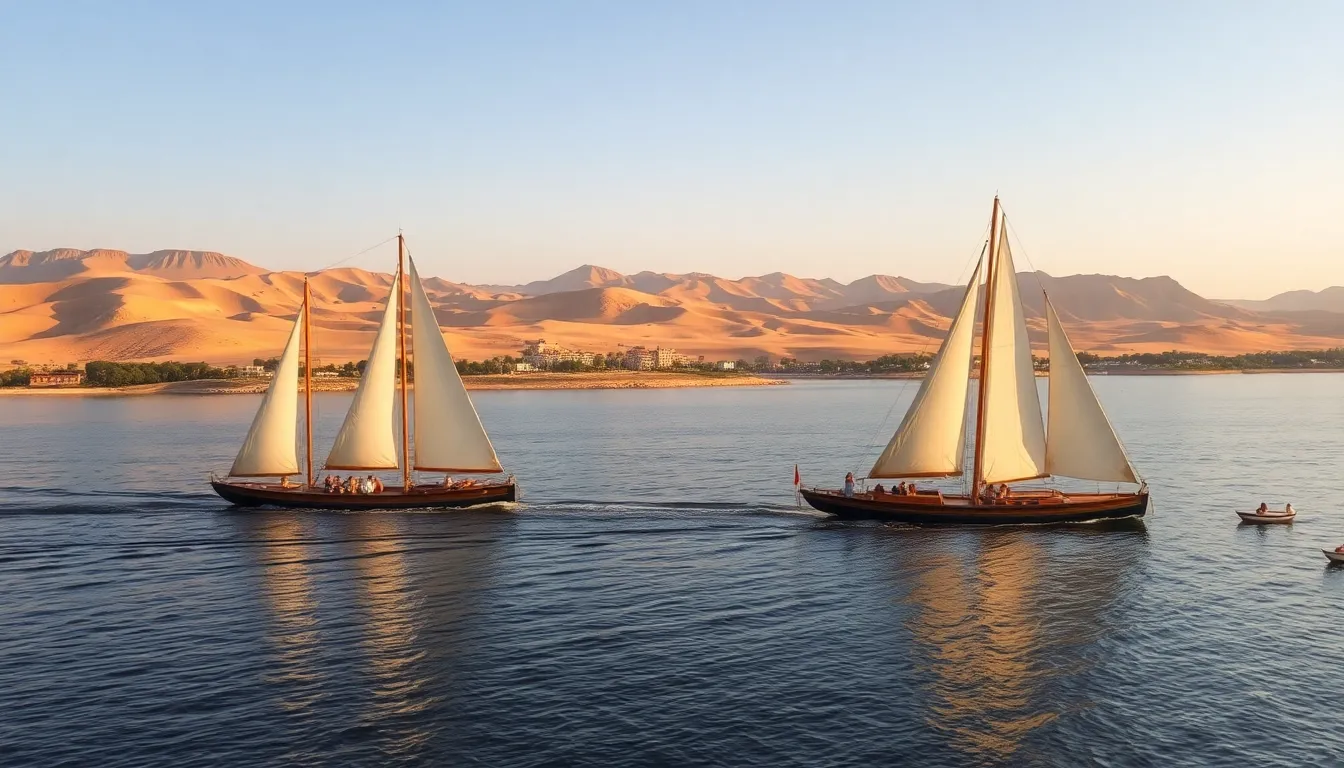
Aswan is the place where my groups finally exhale. After Cairo’s intensity and Luxor’s overwhelming scale, the far south of Egypt feels different, slower, softer, the Nile widening between granite boulders and palm islands. And then I tell them something that usually surprises them. On a small island right in front of us, there was once a Jewish community with its own temple, six hundred years before the Common Era, and we have their actual letters. Aswan is quiet on the surface and astonishing underneath.
For a rabbi, pastor, or educator, Aswan is the gateway to a layer of heritage most travelers never learn about, the Jewish presence on Elephantine Island, the early Christian south, and the meeting point between Egypt and the older world of Nubia. This guide is how I orient a group to the heritage of the Nubian south so the visit means more than a relaxing end to the trip.
Why Aswan Matters to Faith Travelers
Aswan sits at Egypt’s traditional southern frontier, where the Nile narrows at the First Cataract and the land of the pharaohs met the kingdom of Nubia. For most of Egyptian history this was the edge of the known world, a trading crossroads and a border garrison.
For faith travelers, Aswan offers three layers worth understanding. The first is the Jewish heritage of Elephantine Island, one of the oldest documented Jewish communities outside the land of Israel. The second is the early Christian and Coptic presence that reached even this far south. The third is the temple of Philae and the Nubian world, which give a group the broader context of the civilization on Egypt’s southern border. It is also the staging point for Abu Simbel, the colossal monument of Ramesses II deep in the south.
I tell groups not to treat Aswan as merely the easy end of the journey. It holds one of the most remarkable Jewish stories in all of Egypt.
Jewish Heritage: Elephantine Island
Elephantine Island sits in the Nile right at Aswan, and it is the heritage headline that almost no one expects.
The Jewish Community and Its Temple
In the fifth century BC, and likely earlier, a community of Jewish soldiers and their families lived on Elephantine, serving in the Persian-era garrison that guarded Egypt’s southern border. Remarkably, they had their own temple to the God of Israel on the island, a striking fact, since it stood outside Jerusalem at a time when the Jerusalem Temple was central to Jewish worship.
We know about this community in extraordinary detail because of the Elephantine Papyri, a collection of documents written in Aramaic and discovered on the island. They include letters, legal contracts, and even correspondence with authorities in Jerusalem and Samaria. For historians of Judaism, this is gold. It gives us a window into how Jews lived, worshipped, and organized themselves in the diaspora more than 2,400 years ago.
Standing on Elephantine
When I bring a Jewish group to Elephantine, I want them to feel the depth of what they are standing on. This is not a community from the medieval period or even the Roman one. This is a Jewish community contemporary with the prophets of the Hebrew Bible, living and praying at the very edge of the Egyptian world. The temple is gone and the remains are archaeological, but the story is solid, documented, and deeply moving. It connects to the wider arc of Jewish Egypt that our Cairo heritage guide traces through Ben Ezra Synagogue and the Geniza.
For educators, Elephantine is a teaching gift. It complicates the simple picture, shows the reach of Jewish life in the ancient world, and rewards a group willing to slow down and absorb it.
Christian and Coptic Heritage in the South
Christianity reached the far south of Egypt early, and Aswan carries that layer too.
The deserts and hills around Aswan became home to monasteries in the early centuries of the church, part of the monastic movement that was born in the Egyptian desert and spread to the entire Christian world. The Monastery of St. Simeon, on the West Bank near Aswan, is one of the most evocative, a large ruined desert monastery that once housed monks at the southern reach of Coptic Christianity. Walking its remains, a Christian group can feel how far and how early the faith traveled, all the way to the Nubian frontier.
This continuity matters. The same monastic tradition that shaped Christianity in Europe and beyond has roots in places like this, the Egyptian desert south. For pastors and educators, Aswan rounds out the picture of just how deeply Christianity was planted in Egypt from the start.
Philae, the Nubian World, and Abu Simbel
The most famous monument at Aswan is the Temple of Philae, dedicated to the goddess Isis, set on an island and approached by boat. Philae was one of the last places where the ancient Egyptian religion was actively practiced, surviving into the Christian era before the temple was eventually converted and the old worship ended. Early Christians left their marks here too, carving crosses into the ancient walls. It is a vivid picture of one religious world giving way to another on the same stones.
Philae was famously moved, stone by stone, to higher ground when the Aswan High Dam was built and the rising waters of Lake Nasser threatened it. That rescue is a story worth telling a group, because the same effort saved Abu Simbel.
Abu Simbel lies far to the south, near the Sudanese border, and is reached from Aswan by a short flight or a long desert drive. The two colossal temples of Ramesses II, with their four giant seated statues, are among the most awe-inspiring monuments on earth. For faith travelers, Abu Simbel is the ultimate expression of pharaonic self-glorification, the god-king carving himself into the mountain at the empire’s farthest edge. Seeing it deepens the same theme that runs through all of heritage Egypt, the might of the empire the Bible says God overturned. Many groups reach this region by Nile cruise, which our Luxor heritage guide describes.
The Nubian Culture of the South
Aswan is also the heart of Nubian culture, and I always make room for it. The Nubian villages along the Nile, with their brightly painted houses and warm hospitality, give a group a human connection to the living culture of the south. A felucca sail on the Nile at sunset, the white sails against the granite and the desert light, is one of the gentlest and most loved moments of any Egypt journey.
For a faith group that has spent days absorbing heavy history, this human, restful side of Aswan is not a distraction. It is part of the gift. It lets people process what they have seen.
Practical Orientation for Faith Groups in Aswan
A few practical notes for group leaders.
Aswan is reached by a short flight from Cairo or Luxor, or by Nile cruise. We build the transfers into the itinerary so the group travels comfortably. Aswan is often the southern turning point of an Egypt trip.
Heat is significant here, even more than Luxor, since this is the deep south. We pace site visits for early morning and evening, and we plan the cooler months when possible. Our best time to visit Egypt guide goes through the seasons in detail.
Abu Simbel requires its own outing, either an early flight or a long escorted drive. We plan it carefully and make the call with each group based on time and energy.
Visiting Elephantine and the island temples involves short boat transfers, which our team arranges so the group moves together easily.
And with 15 or more participants, the group leader travels free. To see how the full journey comes together, our Egypt heritage destination page lays it out.
FAQ: Aswan Heritage Travel
What is the Jewish significance of Aswan?
Aswan’s Elephantine Island was home to one of the oldest documented Jewish communities outside the land of Israel, dating to the fifth century BC and likely earlier. This community even had its own temple to the God of Israel. The Elephantine Papyri, discovered on the island, preserve their letters and legal documents, giving an extraordinary window into Jewish life in the ancient diaspora, contemporary with the biblical prophets.
What is there to see in Aswan for a faith group?
The core sites are Elephantine Island for Jewish heritage, the Temple of Philae and its early Christian carvings, and the Monastery of St. Simeon for Coptic heritage. Many groups also visit Nubian villages and take a felucca sail on the Nile. Abu Simbel, the great temple of Ramesses II in the deep south, is a major excursion reached from Aswan.
Is Abu Simbel worth the trip from Aswan?
For most groups, yes. Abu Simbel’s colossal temples of Ramesses II are among the most awe-inspiring monuments in the world, and they powerfully convey the scale of pharaonic ambition that frames the biblical story. It requires a dedicated outing, either an early flight or an escorted desert drive, which we plan as part of the itinerary based on your group’s time and energy.
How does Aswan fit into an Egypt heritage tour?
Aswan is usually the southern turning point of an Egypt journey, reached by short flight or Nile cruise from Luxor. It offers a gentler pace after the intensity of Cairo and Luxor, while still holding remarkable heritage in Elephantine, Philae, and the desert monasteries. Many groups treat Aswan as both a heritage stop and a chance to rest and reflect near the end of the trip.
When is the best time to visit Aswan?
The cooler months, roughly November through March, are strongly preferable, since Aswan is the hottest part of Egypt in summer. For mixed-age faith groups, the cooler season makes site visits and the Abu Simbel excursion far more comfortable. We help time every trip around both weather and the group’s own faith calendar.
If the far south is calling your group, whether for the ancient Jewish community of Elephantine, the early Christian desert, or the grandeur of Abu Simbel, I would love to help you plan it. Start at our group heritage tours page to see how the group leader experience works.
When you are ready, contact us and we will build the journey around your community.