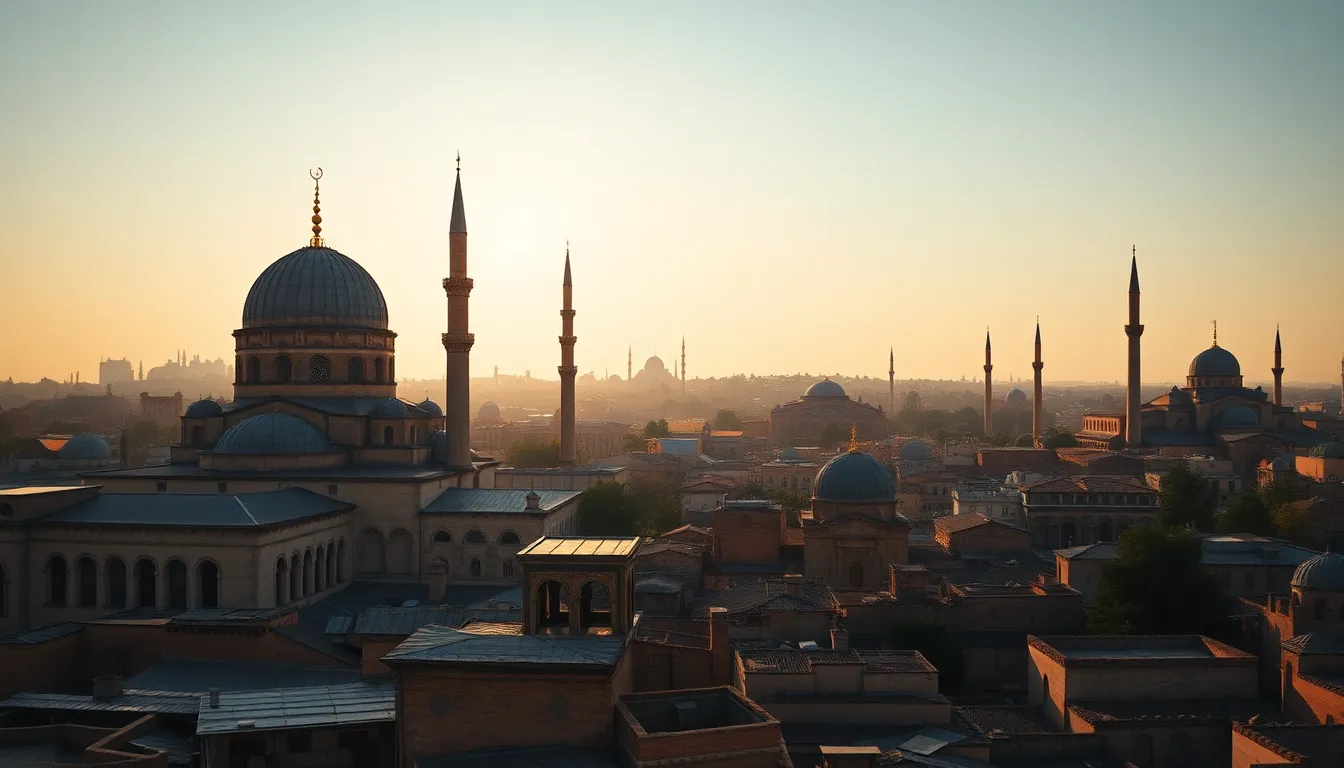
The first time I brought a group into Old Cairo, one of the pastors stopped me on a narrow stone street between a church and a synagogue and asked, “How is this all in one place?” That is the right question. Cairo is not a single heritage site. It is a stack of them, layered on top of each other, sometimes within a few hundred steps. Pharaonic, Jewish, Coptic Christian, Roman, Islamic, all of it pressed into the same city.
For a rabbi, pastor, or educator bringing a community here, that density is the gift and the challenge. You can stand in a synagogue that holds twelve centuries of Jewish life, walk five minutes, and pray in a church built over a cave where Coptic tradition says the Holy Family sheltered. This guide is how I help groups make sense of Cairo before they arrive, so the visit lands with the weight it deserves instead of blurring into a list of stops.
Understanding Cairo’s Heritage Layers
Cairo is really several cities that grew into one. To orient a faith group, I find it helps to think in layers rather than neighborhoods.
The oldest layer is the ground itself. Just across the river and a short drive from the modern center sit the Pyramids of Giza, three thousand years older than the city around them. They belong to the pharaonic world the Hebrew Bible describes, the world of the Exodus, and I always have groups see them with that frame in mind rather than as a postcard.
The second layer is Roman. The fortress of Babylon, built by the Romans to guard the river, is the foundation that Old Cairo grew up around. Walk into the Coptic quarter and you are walking inside the footprint of a Roman garrison.
The third layer is the religious one, and it is where faith groups spend most of their time. Inside and around that old fortress sit the most important Jewish and Christian heritage sites in Egypt, sitting almost on top of each other. The fourth layer, Islamic Cairo, with its medieval mosques and the Citadel, came later and gives the city its skyline of minarets.
Once a group understands these layers, the city stops feeling chaotic. Each stop has a place in the stack.
Jewish Heritage in Cairo
Most visitors, even Jewish ones, arrive without knowing how deep the Jewish story runs here. Cairo was home to one of the most important Jewish communities in the world for well over a thousand years. This was not a community on the margins. It produced scholarship that shaped Judaism everywhere.
Ben Ezra Synagogue
Ben Ezra Synagogue, in the heart of the Coptic quarter, is the anchor of any Jewish heritage visit to Cairo. The current building dates to the ninth century, built on land that the Coptic Christian community sold to the Jewish community, a detail I never skip because it says something about how these communities lived alongside each other. Jewish tradition holds the site held a synagogue even earlier.
Ben Ezra is famous worldwide for one discovery. In 1896, the Cairo Geniza was found in a storage chamber here, more than 300,000 manuscript fragments, the largest collection of medieval Jewish documents ever found. Merchant letters, legal rulings, poetry, prayer books, even fragments in the hand of Maimonides. One room held almost a thousand years of Jewish life. When I stand a group inside this building, I want them to feel that they are inside an archive of their own story. We never rush this stop.
Maimonides and the Jewish Quarter
Moses Maimonides, the Rambam, lived and worked in Cairo in the twelfth century, serving as a physician and as the spiritual leader of the community. For Jewish groups, walking the area where he lived adds a human dimension to a name they have studied their whole lives.
The old Jewish quarter, Haret el-Yahud, is a quieter and more bittersweet stop. At its peak in the mid-twentieth century, Cairo held around 80,000 Jews. Today only a handful remain in the entire country. Walking these streets is an act of remembrance. We are making sure a community that shaped the world is not forgotten. For more on the wider biblical and Exodus geography that surrounds the city, our Egypt heritage travel guide lays out the full picture.
Christian and Coptic Heritage in Cairo
Old Cairo is one of the most important places on earth for Christian heritage, and most groups underestimate it until they are standing inside it. The Coptic Orthodox Church traces its founding to the Evangelist Mark in the first century. Christianity has been practiced here, without interruption, longer than almost anywhere outside the Holy Land itself.
The Hanging Church
The Hanging Church, El Muallaqa, is the most famous Coptic church in Egypt. It was built over the gatehouse of the Roman fortress of Babylon, with its nave suspended above the old gate passages, which is how it earned its name. It has been in active use since at least the seventh century, with Coptic tradition reaching back further. Standing inside, you are standing on top of Roman stone, inside a living church that has prayed continuously for more than thirteen centuries.
The Church of St. Sergius and the Holy Family
A short walk away is the Church of St. Sergius and Bacchus, known as Abu Serga, built over a cave where Coptic tradition holds the Holy Family sheltered during their flight into Egypt. Standing in that crypt is one of those moments where the distance between today and the New Testament narrative simply collapses. I have watched pastors go quiet in that space for a long time and not want to leave.
Egypt’s Coptic Church recognizes more than 25 sites along the Holy Family’s route through the country. You cannot reach all of them from Cairo, but the city is the natural starting point for a Holy Family focused journey. If that is your group’s heart, we can build the itinerary around it.
The Coptic Museum
For educators especially, the Coptic Museum gives the whole story shape. It holds the richest collection of Coptic art and artifacts in the world, textiles, manuscripts, carved stone, and it connects the ancient Egyptian world to the early Christian one in a way that a single church visit cannot. I use it to help a group understand that Coptic Christianity is not a side branch. It is one of the oldest trunks of the tree.
Islamic Cairo and the Wider City
Faith heritage groups are not in Cairo to study Islamic architecture, but skipping Islamic Cairo entirely means missing part of what the city is. The Citadel of Saladin, the great medieval mosques, the call to prayer rolling across the rooftops, all of it is part of understanding the place where these communities have coexisted for centuries.
I usually include the Citadel for its views and its history, and I let groups feel the texture of the medieval city. It also gives helpful context. The same streets where Maimonides walked, where Coptic monks prayed, where Jewish merchants wrote the letters now in the Geniza, became a great center of the Islamic world too. Cairo has always been a city of many faiths living in the same walls.
The Egyptian Museum and the Pharaonic World
No Cairo orientation is complete without the pharaonic layer, and for faith travelers it carries a specific meaning. The Egyptian Museum, and the newer Grand Egyptian Museum near the Pyramids, hold the artifacts of the civilization the Hebrew slaves lived inside. The treasures of Tutankhamun. The statues of Ramesses. The scale of pharaonic power, made of gold and granite.
I tell my groups that this is the world Moses grew up in, the palace culture he walked away from. Seeing the sheer might of ancient Egypt up close does something important. It makes the audacity of the Exodus story land harder. The empire that the Bible says God humbled is right there in front of you, enormous and real.
Practical Orientation for Faith Groups in Cairo
A few things I tell every group leader before a Cairo trip.
Cairo is large, and traffic is real. We structure days so the group moves together efficiently and is not worn down by transfers. Our team handles all ground logistics, hotel pickups, and site entries, so your people can focus on the experience and not the logistics.
The major heritage sites cluster well. Coptic Cairo, including Ben Ezra and the churches, can be walked in a focused half day with the right guide. The Egyptian Museum and the Pyramids are separate outings. We pace these so the group is not standing in the heat all day.
Modest dress matters at religious sites, both Christian and Jewish. We brief every group in advance so no one is caught off guard at a church door.
And on the question I always get: with 15 or more participants, the group leader travels free. That changes the math for a synagogue or church planning a trip, and it is worth knowing early. To see how the group leader experience works in practice, look at our group heritage tours page.
FAQ: Cairo Heritage Travel
What are the most important heritage sites in Cairo for faith groups?
For Jewish groups, Ben Ezra Synagogue and the old Jewish quarter are essential. For Christian groups, the Hanging Church, the Church of St. Sergius (Abu Serga), and the Coptic Museum anchor the visit. For both, the Egyptian Museum or Grand Egyptian Museum and the Pyramids of Giza connect the city to the pharaonic world of the biblical narrative. Most groups cover these across three to four well-paced days.
How much time should a faith group spend in Cairo?
I recommend at least three full days for Cairo itself. That gives you a focused day in Coptic and Jewish Old Cairo, a day for the Egyptian Museum and the Pyramids, and a day with margin for the Citadel, Islamic Cairo, or a deeper return to a site that moved your group. If Cairo is the base for a wider Egypt itinerary, plan accordingly.
Is Ben Ezra Synagogue open to visitors?
Yes. Ben Ezra Synagogue welcomes visitors as a heritage site within the Coptic quarter of Old Cairo. Active congregational life there has largely ended, since the Jewish community is almost gone, but the building is preserved and open. We prepare groups beforehand so the visit carries its full meaning rather than passing as a quick photo stop.
Can we follow the Holy Family route from Cairo?
Cairo is the natural starting point for a Holy Family journey. The Church of St. Sergius marks one of the most significant sheltering sites, and the Coptic Church recognizes more than 25 sites across Egypt along the route. We can build a Holy Family focused itinerary that begins in Cairo and follows as much of the path as your time allows.
Is Cairo safe and comfortable for a mixed-age faith group?
Cairo welcomes millions of international visitors a year and has strong hotel and tour infrastructure. We have run faith group tours here for over two decades. We handle all ground transport so your group moves together, we pace days to manage heat and walking, and we stay current on conditions. For a mixed-age congregation, the main considerations are pacing and comfort, both of which we plan around.
If you are thinking about bringing your congregation to Cairo, I would be glad to talk it through. The city rewards a group that arrives prepared, and that preparation is most of what we do. You can start at our Egypt heritage destination page, or read our season-by-season look at the best time to visit Egypt so the timing fits your community’s calendar.
When you are ready, contact us and we will begin building the journey around what matters most to your people.