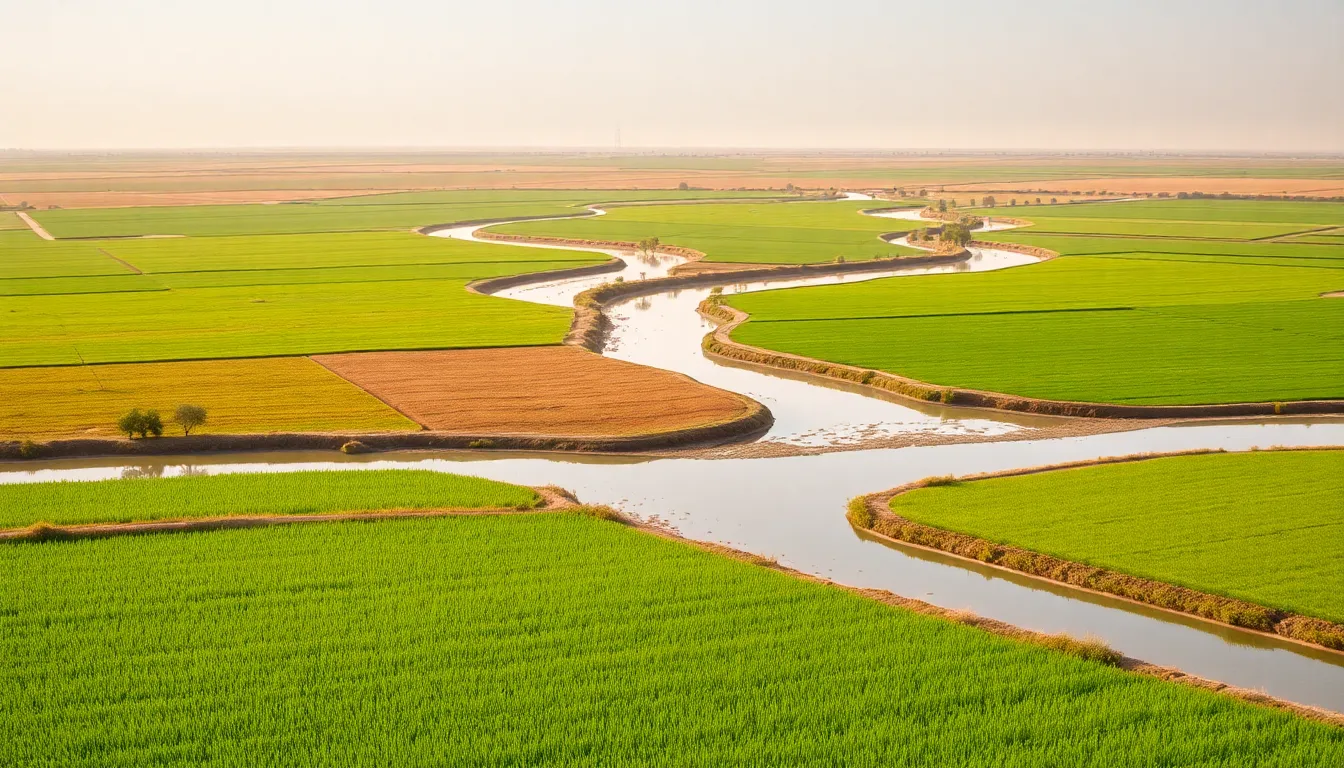
The first time I took a group to the eastern Nile Delta, one of the rabbis traveling with us stopped in the middle of a field, looked around at the flat green farmland stretching to the horizon, and said quietly, “So this is where it all started.” He had read the book of Genesis hundreds of times. He had taught it. But he had never stood in it. That moment changed how I think about Goshen.
I have been bringing Jewish groups to Egypt for more than twenty years, and the land of Goshen is one of the stops I have to explain most carefully before we go. There is no ticketed monument here. No grand temple with your name on a tour map. What there is, instead, is the actual region where the book of Genesis says Jacob’s family settled, where a small clan grew into a nation, and where the story of the Exodus began. For the right group, prepared the right way, it is one of the most moving days of the whole trip.
Where Was the Land of Goshen?
The Bible places Goshen in the eastern Nile Delta, in the fertile lowlands near the Pelusiac branch of the Nile, in the northeastern corner of Egypt closest to Canaan. When Joseph brought his father Jacob and the rest of the family down from famine-stricken Canaan, Pharaoh granted them this land. Genesis tells us it was good pastureland, well suited to a family of shepherds, and set somewhat apart from the Egyptian heartland.
That geographic detail matters more than it first appears. Goshen sat on the route between Egypt and Canaan, which is why it made sense for a Semitic herding family arriving from the east to settle there. It was also distinct enough from the centers of Egyptian religious life that the Israelites could keep their own customs, including animal husbandry that Egyptians found objectionable. The family grew there, in relative separation, for generations.
The Region in the Bible
Goshen appears at the hinge of the whole Israelite story. It is where Jacob’s seventy descendants settled. It is where, over the centuries the text describes, they multiplied into a people large enough to alarm a new Pharaoh. And it is where the enslavement began, with the forced labor on the store cities the book of Exodus names as Pithom and Rameses.
So Goshen is not a minor backdrop. It is the cradle and the prison at once. The same land that received Jacob’s family as honored guests became the place where their descendants were broken under forced labor. Standing in the region, you hold both of those truths together, and that is part of what makes it powerful rather than merely informative.
What Survives in the Delta Today
Let me be honest about what you will and will not see. The Nile Delta has been continuously farmed, flooded, and rebuilt for more than three thousand years. Ancient mudbrick does not survive that kind of use the way stone temples in the dry south do. So Goshen is not a place of standing ruins. It is a landscape, an archaeological zone, and a region you read with informed eyes.
Qantir and Pi-Ramesses
The most significant site in the Goshen story is Qantir, near the modern town of Faqus, which most scholars identify with the ancient city of Pi-Ramesses, the capital built by Ramesses II. Many connect this to the biblical store city of Rameses where the Israelites labored. Excavations at Qantir have uncovered the remains of one of the largest cities of the ancient world: foundations, workshops, evidence of bronze production on an industrial scale, and traces of Semitic populations in the region during the New Kingdom period.
You will not find a preserved city to walk through. What you find is the soil and the scholarship. When our guides stand a group at Qantir and explain what lies under the fields, what the excavations have found, and how it connects to the text, the flat ordinary-looking landscape becomes something else entirely. People go quiet. I have seen it many times.
Tell el-Daba and the Hyksos Connection
Nearby is Tell el-Daba, identified with Avaris, the earlier Hyksos capital. The Hyksos were Semitic peoples who settled in and eventually ruled part of the eastern Delta in the second millennium BCE. While scholars debate the precise relationship between the Hyksos and the biblical narrative, the archaeology here is real evidence of substantial Semitic settlement in exactly the region the Bible calls Goshen, in roughly the period the story describes. For a thoughtful group, that is not proof of any single reading, and we do not pretend it is. It is context that makes the biblical account feel grounded in a real place and a real population movement.
How a Heritage Visit to Goshen Actually Works
A Goshen day is not a day of monuments. It is a day of meaning, and it needs to be framed properly or it falls flat. Here is how we approach it.
Framing the Day Before You Arrive
I always ask the group leader to prepare their people. The night before, or on the drive out, we read the relevant passages together. Genesis 46 and 47, where the family settles. Exodus 1, where the oppression begins. When people arrive at Qantir having just heard those words, the land speaks. When they arrive cold, expecting a tourist site, they are disappointed. The difference is entirely in the preparation, and that is something both the group leader and our guides share responsibility for.
What the Day Includes
A typical Goshen-focused day from Cairo covers the drive into the eastern Delta, time at the Qantir and Pi-Ramesses zone with full historical and biblical interpretation, and often a stop to simply stand in the agricultural landscape and absorb where you are. Some groups pair it with reflection, a short teaching, or prayer led by their rabbi. The land does not entertain you. It holds you.
For groups who want the fuller arc, Goshen connects naturally to the rest of the Exodus geography. The eastern Delta is where the journey out began, heading toward the Red Sea coast and eventually the Sinai. We plan that larger route separately, since Sinai access has its own coordination today, but it helps to understand Goshen as the starting point of a road that runs through the whole trip.
Why Goshen Belongs on a Serious Heritage Itinerary
Some itineraries skip Goshen because it lacks the photographic drama of the pyramids or the temples of Luxor. I understand the temptation, and for certain groups it may be the right call. But for a community that wants to encounter the Exodus story where it actually happened, rather than only the monuments of the civilization that enslaved them, Goshen is essential.
There is a particular emotional logic to it. You visit the great Egyptian sites and feel the weight and power of the empire. Then you stand in Goshen, in the unremarkable Delta farmland, and you realize this is where the people were. Not in the palaces. Here, in the mud and the fields and the forced labor. The contrast between the grandeur of Pharaonic Egypt and the humble reality of where the Israelites actually lived is itself a teaching, and you can only feel it by standing in both.
This is also a day where having the right people on the ground matters enormously. Because there is so little signage and so much that depends on interpretation, the guide and the framing make or break the experience. A group that wanders Qantir without context sees an empty field. A group that arrives prepared, with a guide who knows the archaeology and the text, stands on holy ground. You can read more about the full sweep of the story in our guide to Jewish heritage in Egypt, and about timing your trip in our guide to the best time to visit Egypt.
For groups building their itinerary around the Passover narrative, a Goshen day takes on even more weight. We cover that in our guide to a Passover heritage trip to Egypt. And for the practical structure of moving a group through these sites, see our Egypt heritage destination page and our group heritage tours.
FAQ: Visiting the Land of Goshen
Where is the land of Goshen located today?
Goshen was in the eastern Nile Delta of Egypt, in the fertile northeastern region closest to Canaan. Today this corresponds roughly to the area around the modern towns of Faqus and Qantir, in the Sharqia governorate. The most significant archaeological site in the region is Qantir, identified with the ancient city of Pi-Ramesses, capital of Ramesses II, which many scholars connect to the biblical store city of Rameses. The landscape today is intensively farmed agricultural land rather than a preserved monument zone.
Is there anything to actually see in Goshen?
There are no standing ruins to walk through in the way you would tour a temple. Ancient mudbrick does not survive in the wet, continuously farmed Delta the way stone survives in the dry south. What you visit is the archaeological zone at Qantir and Tell el-Daba, where excavations have uncovered evidence of a major ancient city and substantial Semitic settlement, along with the agricultural landscape itself. The power of a Goshen visit comes from informed interpretation and from standing in the actual region of the biblical story, not from monumental ruins.
Why is the land of Goshen important in the Bible?
Goshen is where Joseph settled his father Jacob and the family of Israel when they came down from Canaan during the famine, as described in Genesis. The family grew there into a nation over generations. It is also where the enslavement began, with the forced labor on the store cities named in Exodus. So Goshen is both the cradle of the Israelite people and the place of their bondage, which makes it one of the most significant regions in the entire biblical narrative.
Can faith groups visit Goshen on a heritage tour?
Yes. Heritage Tours regularly includes a Goshen-focused day for groups whose interest centers on the Exodus story. It works best as a prepared, framed experience: reading the relevant passages, traveling to the Qantir and Pi-Ramesses zone with a knowledgeable guide, and taking time in the landscape. Because the region depends so heavily on interpretation rather than signage, the quality of the guide and the framing is what makes the day meaningful. We handle all transport, coordination, and guiding from Cairo.
How does Goshen fit into a larger Egypt itinerary?
Goshen is the natural starting point of the Exodus geography. From the eastern Delta, the biblical journey moves toward the Red Sea coast and into the Sinai. Many groups pair a Goshen day with the great Egyptian sites in Cairo, which creates a meaningful contrast between the grandeur of the empire and the humble reality of where the Israelites lived. For groups going deeper, Goshen connects to a fuller route that we plan separately, since Sinai access requires its own coordination today.
If you are a rabbi, educator, or community leader thinking about an Egypt journey that takes the Exodus story seriously, I would like to talk with you about how to build a Goshen day that lands the way it should. It takes preparation to do well, and that is exactly the kind of thing we are here for. Reach out and let’s start the conversation.