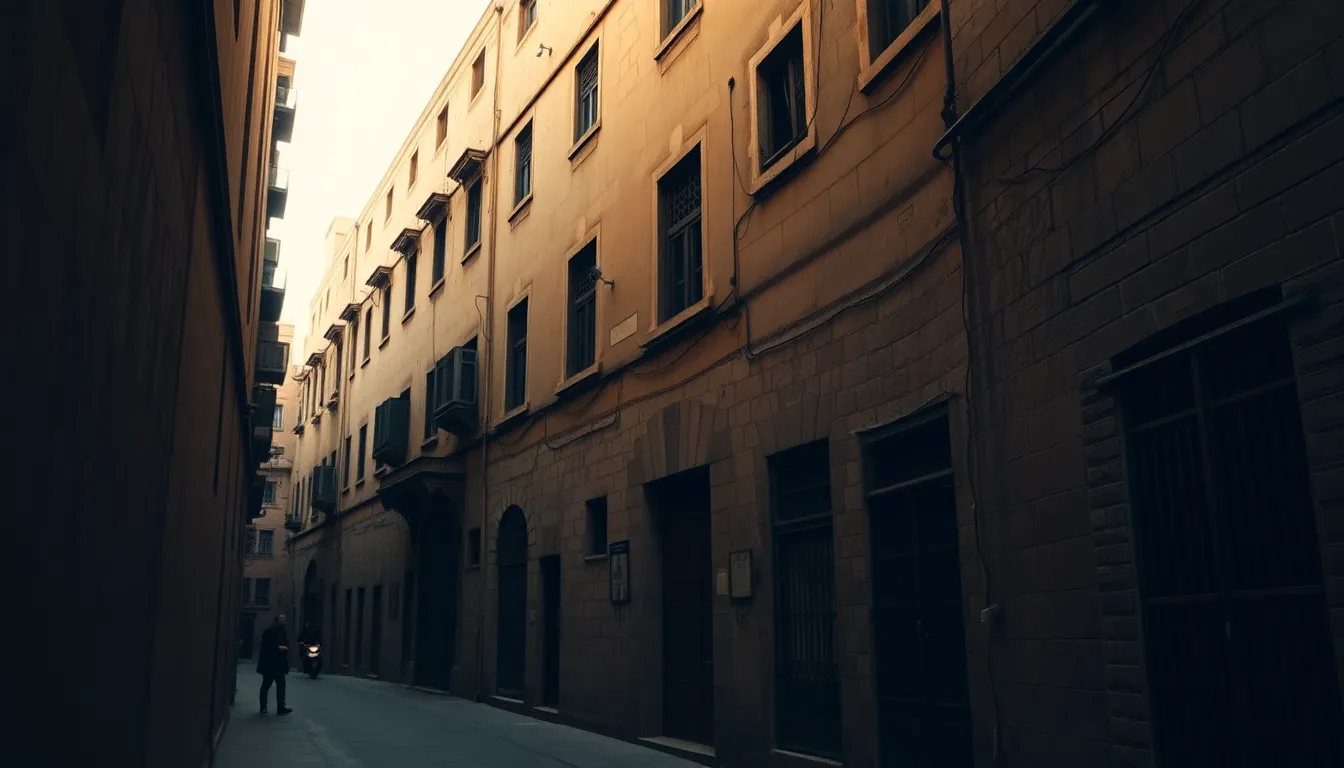
Most groups arrive in Cairo knowing one name: Ben Ezra. And they should. It is one of the oldest synagogues in the world, and the place where the Cairo Geniza was found. But I have learned over twenty years of leading Jewish groups here that the deepest moments often come at the sites nobody told them about. The quiet synagogue down a back lane. The grand sanctuary that fills with a handful of worshippers on the holidays. The streets of the old quarter where a whole world once lived.
This guide is for rabbis, educators, and travelers who want to go past the single famous site and understand the fuller map of Jewish Cairo. These are the lesser-known places, and they carry the story in a way the headline site cannot do alone.
Why Look Beyond Ben Ezra
Ben Ezra deserves every bit of its fame. But here is the limitation of seeing it alone: it can leave a group with the impression that Jewish Cairo is a single ancient relic in the Coptic Quarter, a museum piece, something finished. That is not the truth.
The truth is that Jewish Cairo was a living, layered, centuries-long civilization that stretched across the city. It had its medieval heart and its modern downtown. It had the synagogue of a great medieval sage and the grand house of worship of a prosperous twentieth-century merchant class. It had an old quarter where families lived for generations. To see only Ben Ezra is to read one page of a long book.
When a group sees the fuller map, the story changes from “there was once a synagogue here” to “there was once a whole world here.” That shift is what makes the visit land.
The Maimonides Synagogue
In the old Jewish quarter, Haret el-Yahud, stands the synagogue tied to the memory of Maimonides, the Rambam, the towering twelfth-century sage who lived in Cairo, served as a court physician, led Egyptian Jewry, and wrote the works that shaped Jewish law and thought for all the centuries since.
For most of its history this synagogue was a place of pilgrimage. Sephardic Jews would come and spend the night in a room associated with the Rambam, hoping for healing, drawing on his enduring reputation as both a holy man and a physician. The building fell into severe decay in the twentieth century, badly damaged by a rising water table and years of neglect, and then underwent a significant restoration that returned it to dignified condition.
I find that this site moves groups more than they expect. There is something about standing in the place tied to the man whose Mishneh Torah they may have studied, whose Thirteen Principles they recite, that collapses eight centuries in an instant. We treat the Rambam’s full Egyptian story in our dedicated guide to Maimonides in Cairo, but even a brief visit, with a few lines of his words studied on the spot, leaves a mark.
Sha’ar Hashamayim and the Adly Street Synagogue
If Ben Ezra and the Maimonides Synagogue belong to medieval Cairo, Sha’ar Hashamayim belongs to the modern city. Built in 1905 on Adly Street in downtown Cairo, it is also called the Adly Street Synagogue or the Ismailia Synagogue, and it is a grand building in Moorish Revival style, with imposing stonework and a soaring sanctuary.
This was the synagogue of a different Cairo entirely. In the early twentieth century, Cairo was a cosmopolitan Levantine capital, and it had a substantial Jewish professional and mercantile class: bankers, lawyers, doctors, merchants, many of them prosperous and fully woven into the life of the modern city. Sha’ar Hashamayim was their house of worship, and its scale and grandeur reflect their confidence and their prosperity.
It remains the principal functioning synagogue in Cairo today. The small remaining Jewish community gathers here on the high holidays, a handful of people in a sanctuary built for a thriving congregation. That contrast is one of the most powerful things a group can witness in Cairo. To stand in that grand space and understand both what it was built for and what remains is to feel the whole arc of the twentieth-century Egyptian Jewish story in a single room.
The building is maintained and dignified, with significant security reflecting its importance, and it is open to groups with advance coordination.
The Old Jewish Quarter: Haret el-Yahud
Beyond any single building, there is the quarter itself. Haret el-Yahud, the old Jewish quarter of Cairo, was once a dense and vibrant Jewish neighborhood, home to families who lived here for generations, some continuously from the medieval period through the mid-twentieth century.
Today it is a quiet residential area with few visible markers of its Jewish past. The synagogues are tucked into it, but the houses are occupied by others now, and an ordinary visitor walking through would never know what this place once was. That is exactly why it needs a guide who knows it.
The streets retain their old configuration. The buildings occupy the same footprints they did a century ago. With someone who can point and explain, who can say “this was a Jewish school, this lane held Jewish shops, families gathered here,” the quarter speaks. For a group, walking Haret el-Yahud is an act of listening for a community that has almost entirely gone, of trying to hear voices in a place that has fallen quiet. It is among the most contemplative experiences of any Cairo itinerary.
The Bassatine Cemetery
No honest map of Jewish Cairo is complete without Bassatine. The Bassatine cemetery is believed to date to the ninth century, which makes it one of the oldest Jewish cemeteries in the world. It holds the graves of Cairo’s Jews across more than a thousand years.
I will be honest with groups about Bassatine. It has suffered badly from neglect, encroachment, and urban pressure over the decades, and restoration efforts have been ongoing and difficult. It is not an easy or comfortable visit. But for a group with a serious commitment to the full story of Jewish Cairo, including its losses, Bassatine matters. It is where the community’s dead have rested for a millennium, and bearing witness to that, with dignity, is part of honoring what was here. We arrange access and, where appropriate, the guidance of someone who knows the cemetery well.
How These Sites Fit Together
The power of the lesser-known sites is in how they combine. Ben Ezra gives a group the ancient root and the story of the Geniza. The Maimonides Synagogue gives them the medieval golden age and one of the greatest minds in Jewish history. Sha’ar Hashamayim gives them the confident, cosmopolitan modern community. Haret el-Yahud gives them the texture of ordinary daily life. And Bassatine gives them the long memory and the honest reckoning with loss.
Together, these sites turn a single famous building into a continuous, three-thousand-year story with a beginning, a flourishing, and an ending within living memory. That is the arc I want every group to carry home. For the fuller national picture of surviving synagogues across the whole country, see our heritage map of the synagogues of Egypt, and for the long sweep of the community’s story, our history of Egypt’s Jewish community.
Practical Notes for Groups
A few things worth knowing when planning a fuller Jewish Cairo itinerary. All of these sites require advance coordination for group visits, which Heritage Tours handles, including notice to custodial authorities and arrangements for a minyan where a group wishes to pray. Security at the active sites is real and visible, which is normal and protective. Several of these locations sit within walking distance of one another in the old quarter, which lets a group move through the layered story on foot, the way the community itself once moved.
We also handle all hotel pickups and dropoffs in Cairo, a city of some twenty million people, so a group is never trying to navigate it alone. The work of a good guide here is less about logistics and more about meaning: standing in a quiet lane and helping a group hear what it once held.
FAQ: Lesser-Known Jewish Sites in Cairo
What Jewish sites in Cairo are worth seeing besides Ben Ezra?
Beyond Ben Ezra, the key sites are the Maimonides Synagogue in the old Jewish quarter, tied to the great medieval sage; Sha’ar Hashamayim, the grand 1905 Adly Street Synagogue downtown that remains Cairo’s principal functioning synagogue; the old Jewish quarter of Haret el-Yahud itself; and the ancient Bassatine cemetery, believed to date to the ninth century. Together these turn a single famous building into a continuous three-thousand-year story.
What is the Maimonides Synagogue in Cairo?
It is the synagogue in Cairo’s old Jewish quarter tied to the memory of Maimonides, the Rambam, who lived in Cairo in the twelfth century as a court physician and head of Egyptian Jewry. For centuries it was a place of pilgrimage, where Sephardic Jews would spend the night hoping for healing, drawing on the Rambam’s reputation as a holy man and physician. It fell into severe decay in the twentieth century and was significantly restored in recent years. It is accessible to groups with advance coordination.
Is Sha’ar Hashamayim still an active synagogue?
Yes. Sha’ar Hashamayim, the Adly Street Synagogue in downtown Cairo, built in 1905, remains the principal functioning synagogue in the city. Cairo’s small remaining Jewish community gathers there on the high holidays. The building is grand, in Moorish Revival style, and was built for the prosperous, cosmopolitan Jewish community of early twentieth-century Cairo. It is maintained, dignified, protected by significant security, and open to groups with advance coordination.
Can you walk through the old Jewish quarter of Cairo?
Yes, with a knowledgeable guide. Haret el-Yahud, the old Jewish quarter, is today a quiet residential area with few visible markers of its Jewish past, so a casual visitor would not recognize what it was. With a guide who knows the streets and can point out where Jewish schools, shops, and homes once stood, the quarter comes alive. Several of the synagogues are tucked within it, allowing a group to move through the layered story on foot.
Should a group visit the Bassatine cemetery?
For groups with a serious commitment to the full story of Jewish Cairo, including its losses, yes. Bassatine is believed to date to the ninth century, making it one of the oldest Jewish cemeteries in the world, and it holds Cairo’s Jewish dead across more than a millennium. It has suffered from neglect and encroachment, so it is not an easy visit, but bearing witness there with dignity is part of honoring the community. Heritage Tours arranges access and appropriate guidance.
If you want your community to see Jewish Cairo whole, not just its single famous landmark but the layered world around it, I would be glad to help you build that itinerary. The lesser-known sites are where the story turns from a relic into a life. Learn more at our Egypt heritage destination page, see how group heritage tours work, and reach out whenever you are ready.