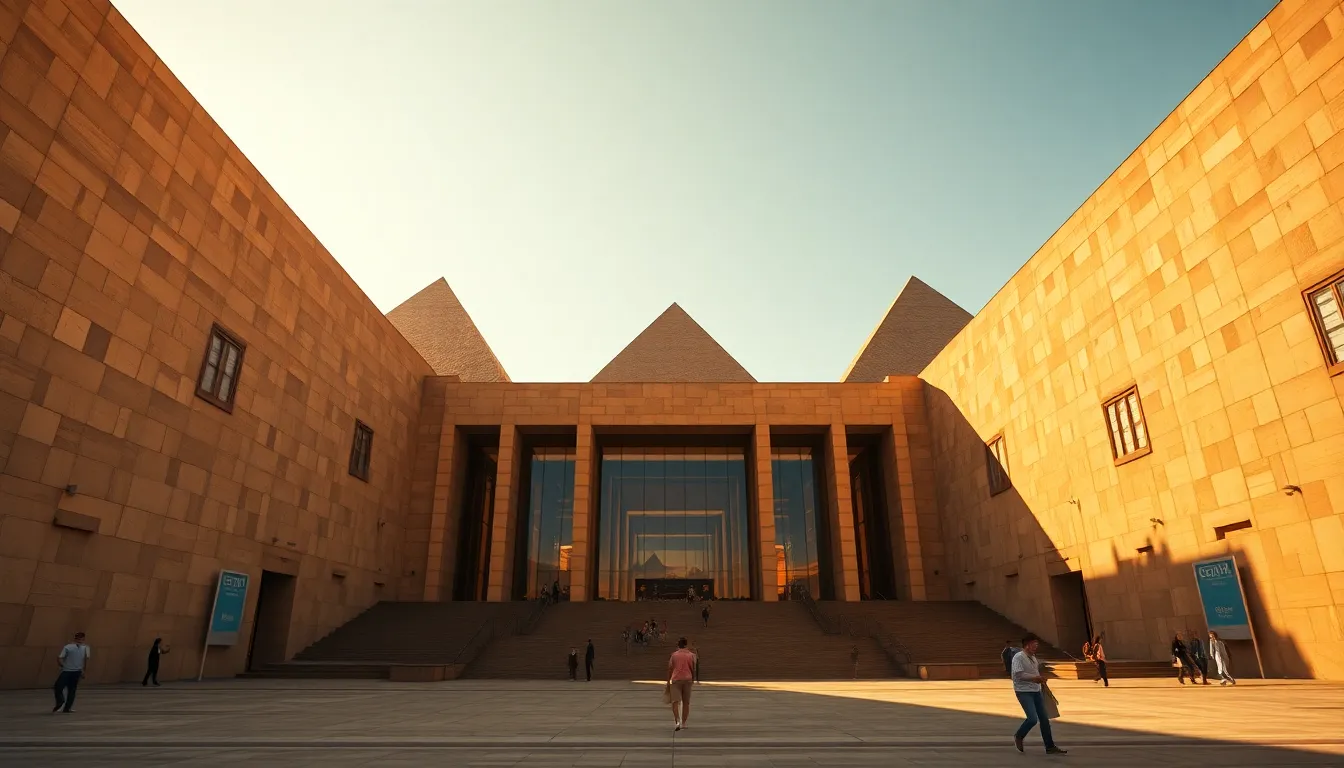
I have spent more than two decades bringing groups to the old Egyptian Museum on Tahrir Square, and I love that building. So I will admit I was cautious about the Grand Egyptian Museum when it began to open. A huge new facility, glass and stone on the Giza plateau, the headline collections moving across the city. Would it have the soul of the old place? Then I walked a group through the great staircase lined with colossal statues, with a window at the top framing the pyramids themselves, and I understood. The Grand Egyptian Museum is not a replacement. It is the largest archaeological museum in the world, built to give the treasures of ancient Egypt the space they always deserved. For a heritage group, it is a remarkable new chapter, and it needs to be approached deliberately. Let me show you how.
What the Grand Egyptian Museum Is
The Grand Egyptian Museum, known as the GEM, sits beside the Giza pyramids, about two kilometers from the Sphinx. It is enormous, purpose-built over many years to house the world’s greatest collection of ancient Egyptian artifacts in modern, climate-controlled, beautifully designed galleries. After a long phased opening, it has become the flagship museum of ancient Egypt.
Two things make the GEM distinct for a heritage group. First, scale and setting. The building is vast, and it is positioned so that the pyramids themselves are part of the experience, visible through the architecture. You are not looking at ancient Egypt in a downtown building. You are looking at it in the shadow of the monuments. Second, the Tutankhamun collection. The GEM is designed to display, for the first time in history, the complete treasures of Tutankhamun’s tomb together in one place, thousands of objects that were previously only partly shown. That alone makes it one of the most significant museum experiences in the world.
Why the GEM Changes How You Plan a Cairo Visit
For years, a Cairo heritage itinerary meant the Egyptian Museum downtown plus the Giza pyramids as separate stops across the city. The GEM brings the headline collections right next to the pyramids, which reshapes the logistics. It also means the old museum on Tahrir Square and the GEM now hold different things, and what sits where has been shifting as collections move. This is exactly the kind of detail our team tracks closely so a group’s day is built around the current reality, not last year’s arrangement. Our companion heritage guide to the Egyptian Museum covers the historic Tahrir Square collection and how to read it.
Reading the GEM Through a Faith-Heritage Lens
A new building does not change the thread a heritage group follows. The objects in the GEM are the same world of the Bible’s opening chapters, displayed with more room to breathe. Here is how I read it with a group.
The Tutankhamun Collection and the World of the Patriarchs
The complete Tutankhamun treasures are the centerpiece, and they are staggering: the golden funerary mask, the nested coffins, the thrones, the chariots, the thousands of objects buried with a king who died young more than three thousand years ago. For a faith group, Tutankhamun’s reign overlaps with the broad period of the Israelite presence in Egypt and the world of the later patriarchs. These objects show the unimaginable wealth and the elaborate funerary religion of the court that the Bible describes the Israelites living alongside.
I draw a group’s attention to what the lavishness means theologically. Every object here was made to secure a dead king’s passage into eternal life as a god. This is the religious world the Exodus directly confronts, the belief in the pharaoh’s divinity that the death of the firstborn strikes at the heart of. The gold is dazzling, but the theology behind it is the part that matters for understanding scripture.
Colossal Statues and the Scale of Pharaonic Power
The grand staircase and main halls of the GEM are lined with colossal statues, including the towering figure of Ramesses II that greets visitors. Ramesses II is the pharaoh most scholars identify with the Exodus oppression, and meeting his colossus at the entrance sets the tone. The scale of these statues is the scale of the power the Exodus story says God overturned. I let a group stand at the foot of that statue and feel small, because feeling small is exactly the point. The audacity of the Exodus claim only registers once you grasp the size of what it stood against.
The Pyramids as Part of the Exhibit
The genius of the GEM’s design is that the Giza pyramids are part of the experience, framed by the building’s windows and terraces. The pyramids predate the Exodus by more than a thousand years, which is itself a lesson in the depth of Egyptian antiquity. By the time Moses confronted pharaoh, these monuments were already ancient. Standing in the GEM with the pyramids in view, a group grasps the staggering span of time the biblical story is set inside.
How to Approach a GEM Visit as a Group
The GEM is new, vast, and popular, and approaching it well makes all the difference. Here is how I plan it.
Selectivity Still Wins
The same principle that governs the old museum governs the GEM: do not try to see everything. The building is too large for that, and a group that attempts it will be exhausted and remember little. We follow the heritage thread, the Tutankhamun collection, the colossal royal statues, the objects of daily life and religion that connect to the biblical world, and we go deep on those rather than skimming all of it. A focused two to three hours, well guided, is far more rewarding than a forced march through every gallery.
Timing and Tickets
The GEM is one of the most sought-after destinations in Egypt right now, and visitor numbers are high. Booking ahead matters, and arrangements for entry, timed tickets, and special exhibitions can change as the museum settles into full operation. This is precisely the kind of logistics our team manages, securing the right entry for a group and timing the visit to avoid the worst of the crowds. Group leaders should not have to navigate a brand-new ticketing system from another continent. That is our job.
Pairing the GEM with Giza
Because the GEM sits beside the pyramids, the natural plan is to combine them into one powerful day on the Giza plateau: the pyramids and Sphinx, then the museum, or the reverse depending on heat and crowds. This pairing gives a group the monuments and their treasures together, the fullest possible encounter with the civilization the Bible reckons with. Our Egypt heritage travel guide shows how this fits the wider Cairo itinerary, and for seasonal timing our guide to the best time to visit Egypt for a heritage journey helps you plan around the heat.
Practical Notes for a Group Visit
How long should we allow? Two to three focused hours inside the museum, ideally combined with the Giza pyramids into a full day on the plateau. The building is large, so good pacing matters.
Is it physically demanding? The GEM is modern and accessible, with the great staircase and long galleries to walk. It is flat and well-designed, manageable for nearly all travelers, with seating and rest points throughout. It is far easier going than the older museum in that respect.
Do we need to book ahead? Yes. Demand is high. We handle timed entry and group arrangements so your visit is secured and smoothly paced.
How does it compare to the old Egyptian Museum? Different, not better or worse. The GEM offers space, modern display, and the complete Tutankhamun collection beside the pyramids. The historic Tahrir Square museum keeps its own irreplaceable character and important collections. Many groups visit both. We advise on the right balance for your itinerary.
Does the group leader travel free? With 15 or more participants, yes. The group leader’s trip is fully covered, which makes a guided GEM and Giza day an easy part of your congregation’s journey.
FAQ: The Grand Egyptian Museum for Heritage Travelers
What is the Grand Egyptian Museum and why does it matter?
The Grand Egyptian Museum, or GEM, is the largest archaeological museum in the world, built beside the Giza pyramids to house the greatest collection of ancient Egyptian artifacts. It matters for heritage travelers because it displays, for the first time, the complete treasures of Tutankhamun together, and because its design integrates the pyramids into the visit. For a faith group, it offers the fullest modern encounter with the civilization the Bible reckons with, in the shadow of the monuments themselves.
Should a heritage group visit the GEM or the old Egyptian Museum?
Many groups visit both, since they hold different collections and offer different experiences. The GEM provides modern galleries, the complete Tutankhamun collection, and the pyramid setting. The historic Egyptian Museum on Tahrir Square keeps its own character and important pieces. Collections have been shifting between the two, so we confirm the current arrangement and advise on the right balance for each group’s time and focus.
How long do you need at the Grand Egyptian Museum?
For a heritage group, two to three focused hours inside the museum is ideal, best combined with the Giza pyramids into a full day on the plateau. The GEM is vast, so trying to see everything leads to fatigue. A guided visit following the biblical thread, going deep on the Tutankhamun collection and the key royal and religious objects, gives a group far more than a hurried full-museum sweep.
Do you need to book tickets for the Grand Egyptian Museum in advance?
Yes. The GEM is one of Egypt’s most sought-after destinations, and visitor numbers are high, so advance booking and timed entry matter. Arrangements can change as the museum settles into full operation. Our team manages entry, timing, and group logistics so leaders do not have to navigate a new ticketing system from abroad, and so the visit avoids the worst crowds.
Is the Grand Egyptian Museum suitable for older travelers?
Yes, very much so. The GEM is modern, flat, and accessible, with seating and rest points throughout and a far easier layout than the older downtown museum. Pacing the visit and following a focused route keeps it comfortable. Combined sensibly with the Giza pyramids, it makes a rich but manageable day for mixed-age groups.
The Grand Egyptian Museum is the newest and grandest stage for the world of the Bible’s opening chapters, and approached deliberately, it is one of the most rewarding stops on an Egypt journey. You can see how it fits a full Cairo and Giza itinerary on our Egypt heritage destination page, or look at how we run group heritage tours.
When you are ready to plan your congregation’s day at the GEM and the pyramids, reach out to us. I would be glad to help you make the most of Egypt’s remarkable new museum.