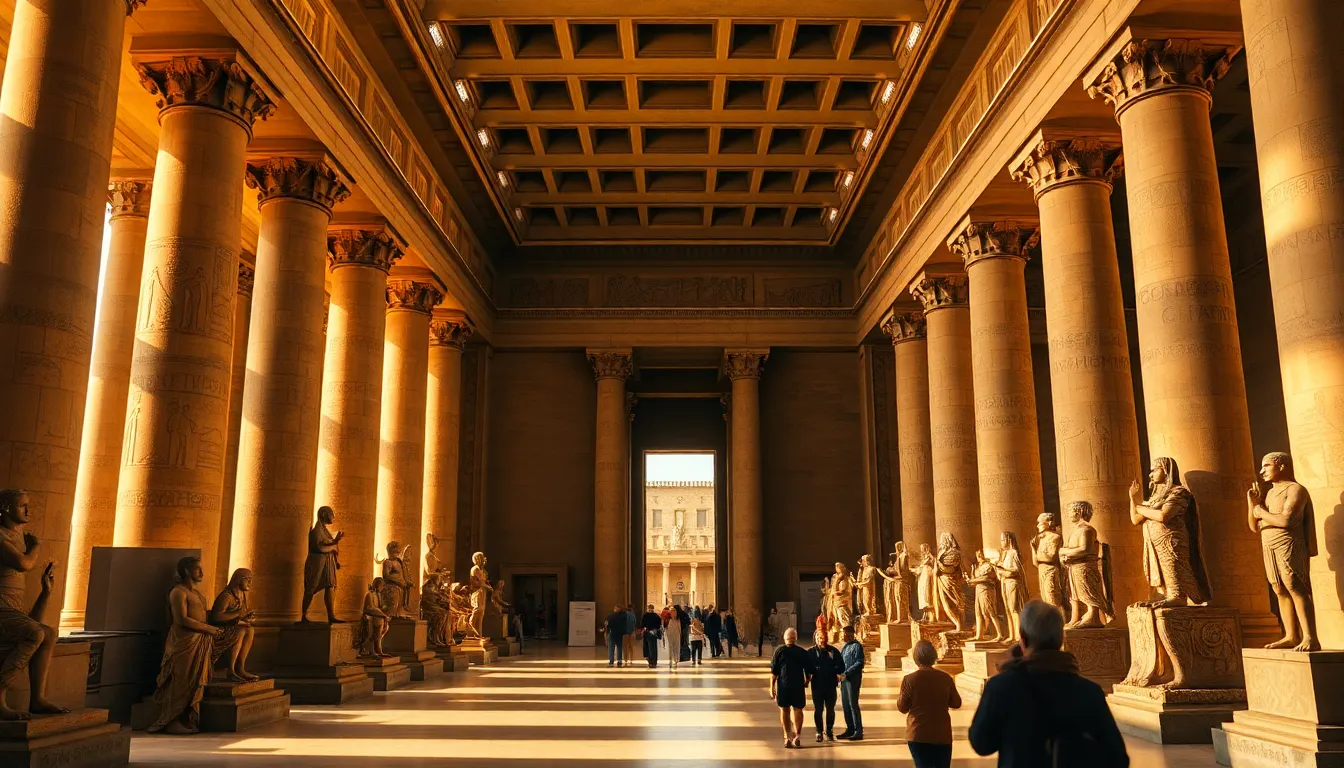
A museum can overwhelm a group, and few museums overwhelm like the Egyptian Museum in Cairo. More than a hundred thousand objects, halls packed floor to ceiling, room after room of statues and sarcophagi. I have watched groups walk in bright-eyed and walk out glazed, having seen everything and absorbed almost nothing. That is the trap I help groups avoid. Because read the right way, with the biblical story as your thread, this museum is not an exhausting catalog. It is the world of the Bible, gathered under one roof. Let me show you how I take a heritage group through it.
The key is selectivity. You are not here to see everything. You are here to see the objects that connect to the story your congregation knows, and to understand the civilization that the Bible spends so much of its opening chapters reckoning with. With that thread in hand, this becomes one of the most powerful stops on any Egypt journey.
Reading a Museum Through a Faith-Heritage Lens
Most visitors wander the Egyptian Museum as a parade of treasures. A heritage group does something different. We walk it as the backdrop to Genesis and Exodus. Every mummy of a New Kingdom pharaoh is a face from the world Moses grew up in. Every statue of a god is a piece of the religious system the plagues confronted. Every model of granaries and laborers is a window onto the Egypt of Joseph and the Israelite sojourn.
I tell groups at the entrance: do not try to see it all. Let me show you the objects that talk to your story, and let the rest be the magnificent setting they sit inside. That single shift turns the museum from a marathon into a meditation.
A Note on Two Museums
It is worth understanding the landscape before you go. Cairo now has two great museums of ancient Egypt. The original Egyptian Museum on Tahrir Square, often called the Cairo Museum, opened in 1902 and remains a treasure house with its own irreplaceable character. The new Grand Egyptian Museum near the Giza pyramids has taken on many of the headline collections, including most of the Tutankhamun treasures and, increasingly, the royal mummies. Collections have been shifting between the two, so which object sits where can change. Our guides always confirm the current arrangement before a visit, and we cover the Grand Egyptian Museum in its own heritage visitor’s guide. This guide focuses on how to read the great Cairo collection of ancient Egypt through a faith lens, wherever a given piece is currently displayed.
The Objects That Matter Most for a Faith Group
Here is the thread I follow with a heritage group, the objects that connect most directly to the biblical world.
The Royal Mummies: Faces from the Exodus Era
The collection of royal mummies is, for many faith travelers, the most arresting thing they will ever see. These are the actual preserved bodies of the pharaohs of the New Kingdom, the dynasty of the Exodus narrative. Among them, depending on current display arrangements, are kings such as Seti I, whose face is remarkably well preserved, and Ramesses II, the figure most scholars identify with the pharaoh of the oppression.
I prepare groups carefully before this room, because it is a profound experience. To stand a few feet from the body of a man who ruled Egypt at the height of its power, who may be the very king the book of Exodus describes, is something most people never expected to do in their lives. It is quiet in that room. It should be. I let the group take their time.
The Statues of the Gods: The Theology of the Plagues
Throughout the museum stand statues and images of the Egyptian gods: Ra the sun god, Hapi of the Nile, Hathor, Osiris, Isis, Horus. For a faith group, these are not just art. They are the theological targets of the Exodus. The plagues, read in their Egyptian context, are a systematic confrontation with this pantheon. The Nile to blood against Hapi. The darkness against Ra. The death of the firstborn against the divinity of the pharaoh himself.
When I gather a group in front of these images and explain what each god governed, the plague narrative comes alive as a coherent theological argument rather than a list of catastrophes. Groups leave reading their own scripture with new eyes. That is exactly what a heritage visit should accomplish.
Models of Daily Life: The World of Joseph and the Israelites
Some of the museum’s most quietly powerful objects are the painted wooden models from Middle Kingdom tombs: tiny granaries with workers measuring grain, cattle being counted, boats on the Nile, bakeries and breweries. These models show ordinary Egyptian life with extraordinary vividness, and they are the world of the Joseph narrative made visible. Grain storage, the counting of the harvest, the management of plenty and famine: this is the Egypt that Joseph rose to govern.
I always slow a group down here. The colossal statues impress, but these small painted scenes of everyday work are where a group can actually picture the Israelites and their forebears living, laboring, and surviving in this land.
The Narmer Palette and the Dawn of Pharaonic Power
Among the museum’s oldest and most important objects is the Narmer Palette, a carved ceremonial slab from around 3000 BCE that commemorates the unification of Upper and Lower Egypt under one king. It is one of the earliest historical documents in the world. For a heritage group, it marks the beginning of the institution of pharaoh itself, the very office that would later stand against Moses. Standing at the start of that long story helps a group grasp just how ancient and entrenched Egyptian kingship already was by the time the patriarchs arrived.
How I Pace a Museum Visit for a Group
The single biggest mistake groups make at the Egyptian Museum is trying to do it all and burning out. Here is how I keep a visit meaningful.
I plan for two to three focused hours, not a full exhausting day. We follow the biblical thread: the models of daily life, the great pharaohs and their statues, the gods of the plagues, the royal mummies. We stop at perhaps fifteen or twenty key objects and we actually understand them, rather than glancing at five hundred. A good guide is everything here. The difference between a wandering visit and a guided heritage reading is the difference between fatigue and revelation.
I also build the museum into the right point in the itinerary. It pairs naturally with the Coptic and Jewish heritage of Old Cairo and with the pyramids of Giza, so that a group sees the full sweep of ancient Egypt in dialogue with the biblical story. Our Egypt heritage travel guide shows how these Cairo sites fit together.
Practical Notes for a Group Visit
How long should we allow? Two to three focused hours is right for a heritage reading of the collection. More than that and most groups tire. We would rather go deep on the objects that matter than skim everything.
When is it least crowded? Early in the day, soon after opening, is best. We time visits to give your group room to gather around objects without fighting crowds.
Can we photograph the collection? Photography rules, including any fee for cameras and restrictions in the royal mummy halls, change from time to time. Our guides handle the current policy so your group is never caught out.
Is it physically demanding? It involves a good deal of standing and walking on hard floors, but it is flat and manageable for nearly all travelers. We build in pauses and seating where we can.
Does the group leader travel free? With 15 or more participants, yes. The group leader’s trip is fully covered, which makes a guided museum visit an easy part of your congregation’s itinerary.
FAQ: The Egyptian Museum for Heritage Travelers
What should a faith group focus on in the Egyptian Museum?
Focus on the objects that connect to the biblical story rather than trying to see everything. The royal mummies of the New Kingdom pharaohs, the statues of the gods confronted by the plagues, the Middle Kingdom models of granaries and daily life from the world of Joseph, and foundational pieces like the Narmer Palette together tell the story of the Egypt the Bible reckons with. A focused two to three hour guided visit on this thread is far more meaningful than an exhausting full-day sweep.
Can you see the mummy of the pharaoh of the Exodus?
You can see the royal mummies of the New Kingdom pharaohs, including kings such as Seti I and Ramesses II, the figure most scholars identify with the pharaoh of the oppression. The Bible never names the pharaoh, so this is the leading scholarly identification rather than proven fact. The royal mummies have been moving between Cairo’s museums in recent years, so our guides confirm the current location before any visit.
What is the difference between the Egyptian Museum and the Grand Egyptian Museum?
The original Egyptian Museum on Tahrir Square, opened in 1902, is the historic treasure house of ancient Egypt. The newer Grand Egyptian Museum near the Giza pyramids is a vast modern facility that has taken on many headline collections, including most of the Tutankhamun treasures. Collections have been shifting between the two, so we confirm which objects are where before each visit. We cover the Grand Egyptian Museum in its own dedicated heritage guide.
How much time do you need at the Egyptian Museum?
For a heritage group, two to three focused hours is ideal. The collection is enormous, and trying to see it all leads to fatigue and little retention. A guided visit following the biblical thread, stopping at fifteen to twenty key objects and understanding each one, gives a group far more than a hurried tour of hundreds of pieces.
Is the Egyptian Museum suitable for older travelers?
Yes. The museum is flat and accessible, though it involves a fair amount of standing and walking on hard floors. We pace visits with pauses and seating where available, keep the route focused so no one is overtaxed, and time entry for quieter hours. Most older travelers handle a well-paced heritage visit comfortably.
The Egyptian Museum is where the world of the Bible’s opening chapters comes together under one roof, if you know what you are looking at. With the right thread and the right guide, it becomes one of the most illuminating stops on the whole journey. You can see how it fits a full Cairo itinerary on our Egypt heritage destination page, or look at how we run group heritage tours.
When you are ready to plan your congregation’s time in Cairo, reach out. I would be glad to help you make the museum a revelation rather than a marathon.