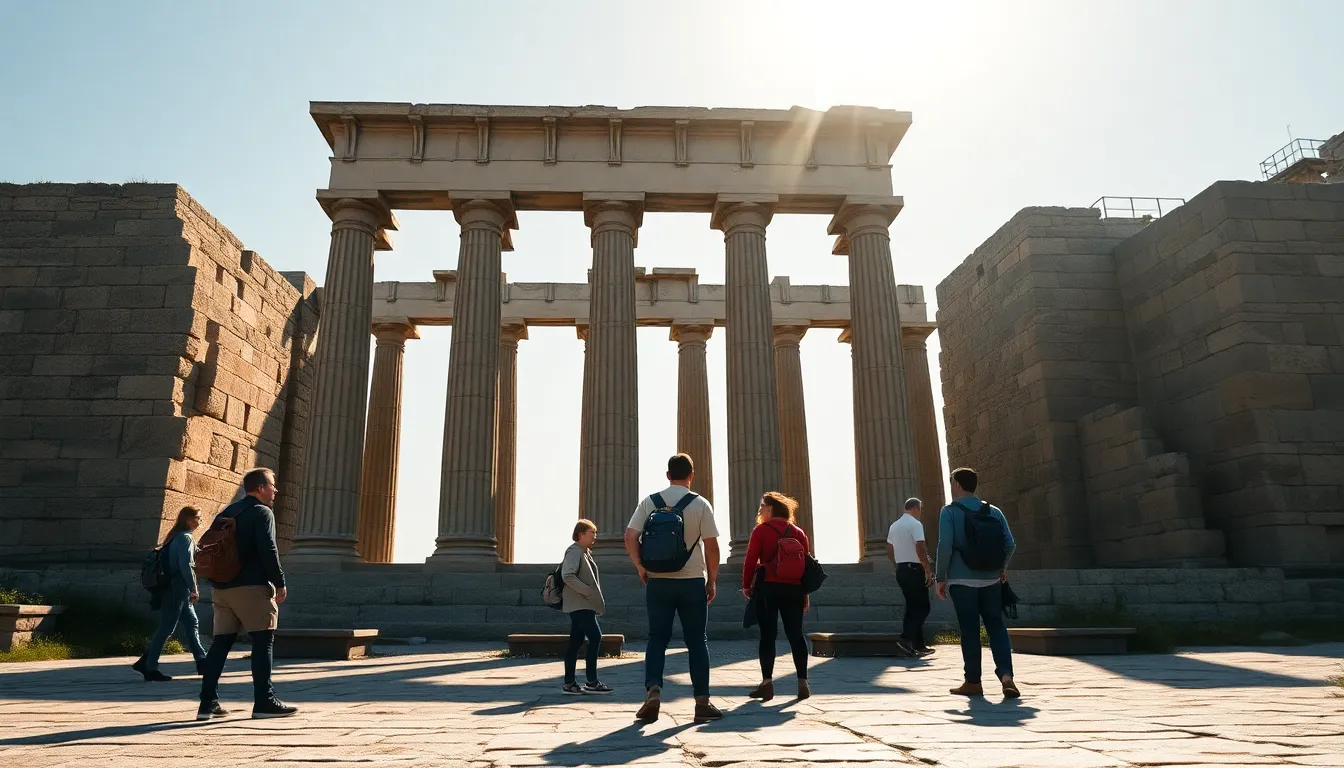
A pastor called me last spring with a question I get more often than any other when a congregation is new to heritage travel. “We want to take our people somewhere that matters,” he said. “But we can only do one trip in the next two years. Egypt or Israel?”
It is a fair question, and it deserves a real answer rather than a sales pitch. I have led groups to both for more than twenty years. They are not interchangeable. They serve different parts of the same story, and the right first journey depends less on which destination is “better” and more on what your community is ready to encounter.
Let me walk you through how I actually think about it.
Start with the Story Your Community Is Living
Most faith groups are not choosing a destination. They are choosing a chapter.
Israel is where the narrative resolves. It is the land of the promise, the place where the Exodus story arrives, where the Gospel accounts unfold, where most congregations already feel a deep emotional pull. For a group that has never traveled together, Israel offers immediate recognition. People know these names. Jerusalem, the Galilee, Bethlehem, the Jordan. They have heard them their whole lives.
Egypt is where the story begins, and where it gets harder and more interesting. It is the land of bondage and the land of departure. For Jewish groups, it is the Exodus before the Exodus, Goshen and the Nile Delta and the Red Sea coast. For Christian groups, it is the flight of the Holy Family and the ancient Coptic church that kept the faith alive on the edge of the desert. Egypt asks more of a group. It rewards them differently.
So the first question I ask a group leader is not “Egypt or Israel.” It is: what is your community ready to feel, and what do they need to feel first?
The Case for Israel First
I will be honest about why most congregations start with Israel, because the reasons are good ones.
Israel is the most legible heritage destination in the world for a faith community. Every site connects to a passage your people already know. The emotional return on a first trip is high and immediate. When a group stands at the Western Wall or renews baptismal vows in the Jordan, the meaning does not need to be explained. It lands on its own.
Israel is also operationally gentle for first-time group travelers. The tourism infrastructure is mature, distances between major sites are short, and the country is built to receive faith groups at scale. For a group leader who has never coordinated international travel for a congregation, that ease matters. It lets you focus on the spiritual experience rather than the logistics.
And Israel builds confidence. A successful first trip to Israel often becomes the foundation for everything else. Once a congregation has traveled together, prayed together in a foreign place, and come home changed, the appetite for a deeper journey grows. Egypt frequently becomes the second trip precisely because Israel made the community trust the experience.
Where Israel First Falls Short
The one limitation is sequence. The Exodus story, read in Israel, is read as memory. You stand in the land that was promised and you look back at a deliverance you did not physically encounter. That is meaningful. But it is a different thing than standing in the land of Goshen and feeling the weight of where the story started.
For a group whose central narrative is the Exodus itself, beginning in Israel can feel like reading the last chapter first.
The Case for Egypt First
Egypt as a first heritage journey is the less common choice, and for certain groups it is the stronger one.
If your community’s spiritual center of gravity is the Exodus, beginning in Egypt is chronologically and emotionally honest. You start where Israel started, in the narrow place. You stand in the Nile Delta, you trace the route toward the Red Sea, you climb Sinai at dawn and receive the law in the same desert the text describes. When that group later travels to Israel, they arrive the way the Israelites arrived: after the wilderness, into the promise. The two trips become one continuous narrative.
Egypt first also does something for a group that Israel rarely does on a first visit. It surprises them. Few congregants arrive with strong preconceptions about Coptic Cairo or Ben Ezra Synagogue or the Cairo Geniza. They come without a script, and that openness creates a particular kind of encounter. People discover rather than confirm.
Where Egypt First Is the Harder Road
Egypt asks more of a first-time group, and I do not pretend otherwise. The logistics are more complex. Sinai involves a demanding pre-dawn ascent and, depending on routing, border or checkpoint coordination. The distances are longer. The heat can be real outside the spring and fall windows. For a congregation that has never traveled together, Egypt is a steeper first step.
It also asks for more spiritual preparation. The meaning at Egypt’s sites is layered and sometimes hidden. A group that has not done the reading beforehand can miss what makes Goshen or the Geniza extraordinary. With the right guide and the right preparation, that depth becomes the entire point. Without it, the trip can feel like ancient history rather than living faith.
When Pairing Them Is the Real Answer
Here is what I tell most leaders who ask me Egypt or Israel: if your timeline allows it, the most powerful answer is both, in the right order.
Some groups do the two destinations as a single extended journey, Egypt into Israel, following the arc of the Exodus from bondage through wilderness into promise. It is logistically ambitious and it is one of the most transformative trips I have ever led. Standing at the Red Sea coast in Egypt and then, days later, standing in the land it was all moving toward, gives a congregation a sense of the whole story that neither destination delivers alone.
Other groups split it across two years. Egypt one year, Israel the next, or the reverse. This is often the more realistic path for a congregation building its travel rhythm, and it works beautifully. The first trip seeds the second. The community that traveled together once is ready to go deeper.
If you are weighing a paired journey, our private tour vs group tour guide is worth reading first, because the format decision shapes how a two-country trip is best structured. Our Cairo-only vs full-country comparison also helps if you are trying to fit Egypt alongside Israel without overextending your group.
How I Actually Advise a First-Time Group Leader
When a leader is genuinely unsure, I ask three questions.
What is your community’s central story? If it is the Exodus, Egypt has a strong claim to go first. If it is the Gospel narrative or the land of the promise, Israel is the natural opening.
Has your congregation traveled together before? If not, Israel’s gentler logistics make for a more forgiving first journey, and Egypt becomes a powerful second act.
How much spiritual preparation is your group willing to do before departure? Egypt rewards groups that arrive prepared. Israel meets a group where it already is.
Most first-time congregations land on Israel first, then Egypt. That sequence is common for good reasons. But the groups whose hearts are set on the Exodus, and who are willing to do the work, sometimes find that beginning in Egypt changes everything that follows.
FAQ: Egypt or Israel for a First Heritage Trip
Should a faith group visit Egypt or Israel first?
For most first-time groups, Israel is the gentler and more immediately recognizable starting point, with mature infrastructure and short distances between sites. Egypt is the stronger first journey for communities whose central story is the Exodus, since it follows the narrative in chronological order. The right answer depends on your community’s spiritual focus and travel experience.
Can you combine Egypt and Israel into one heritage trip?
Yes, and for many groups it is the most powerful option. A combined Egypt-into-Israel journey follows the Exodus arc from bondage through the wilderness into the promised land. It is logistically ambitious but it gives a congregation the full sweep of the story. Many groups also split the two across two years.
Is Egypt harder to travel than Israel for a first-time group?
Generally yes. Egypt involves longer distances, a demanding Sinai ascent, more heat outside the spring and fall windows, and more access coordination. Israel’s tourism infrastructure is built to receive faith groups easily. This is why many congregations do Israel first and Egypt second, once they have traveled together once.
Which destination is better for a Jewish congregation?
Both are essential, and the order depends on emphasis. Egypt holds the Exodus origin, the land of Goshen, the Red Sea coast, Sinai, and Cairo’s Jewish heritage at Ben Ezra Synagogue and the Geniza. Israel holds the arrival and the land of the promise. Groups focused on the Exodus often find Egypt first to be the more honest sequence.
How far in advance should we plan a first heritage journey?
For a single-country trip, eight to twelve months of lead time is comfortable for a group of fifteen or more. For a combined Egypt and Israel journey, or for spring travel around Passover and Easter, plan twelve to eighteen months ahead. Starting early also gives you time to build your group and present the trip properly to your congregation.
If you are standing at this fork and want to talk it through with someone who has led both journeys many times, I am glad to have that conversation. There is no wrong first step here, only the one that fits your community’s story best. You can explore our Egypt heritage destination page or our group heritage tours to see how these journeys take shape, and reach out any time when you are ready to start planning.