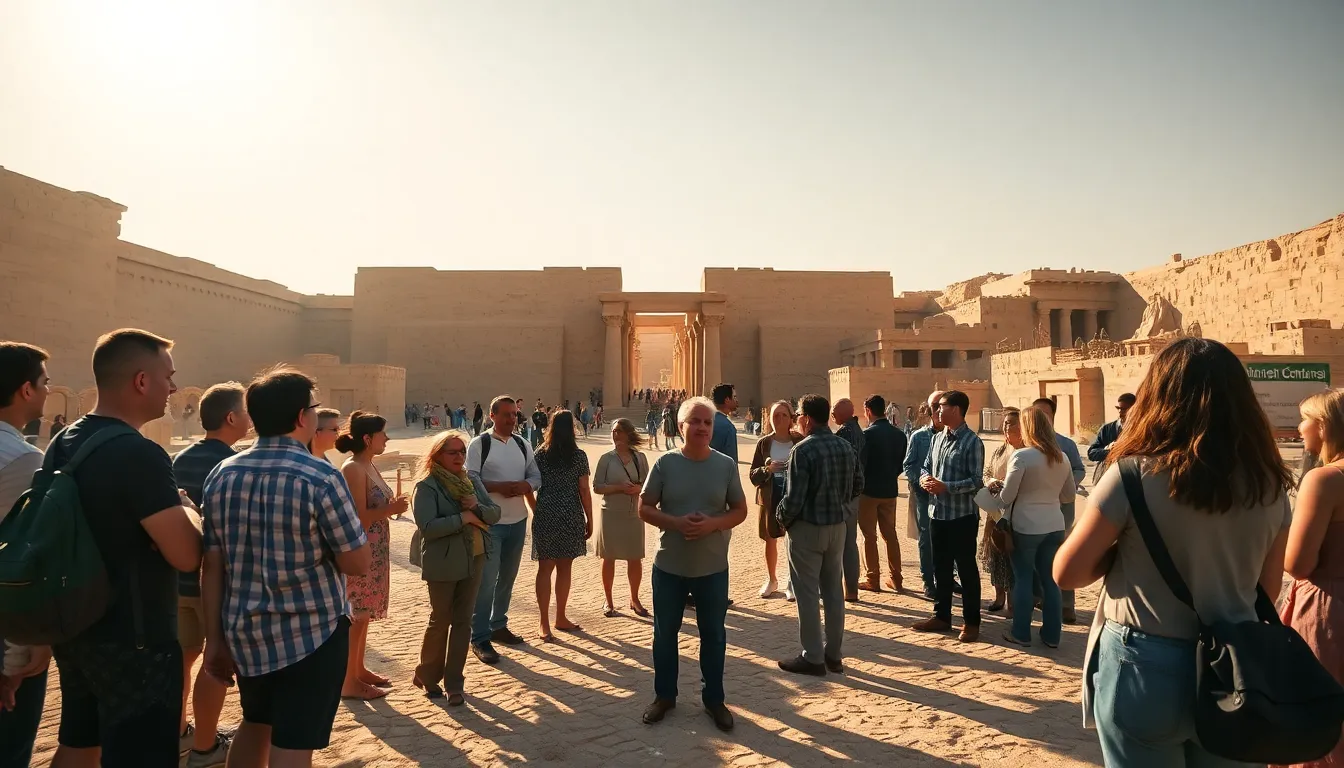
“How many people should I bring?” It sounds like a logistics question, and partly it is. But after more than twenty years of leading Egypt heritage journeys, I’ve come to think it’s one of the most important decisions a group leader makes, because group size quietly shapes everything: the cost per person, the feel of the trip, how intimate the spiritual moments are, and whether the whole thing is even financially feasible for your community.
There’s no single right number. There’s a right number for your congregation, your budget, and the kind of experience you want your people to have. Let me walk you through the trade-offs the way I’d walk a pastor or rabbi through them, including the threshold that changes the math entirely.
The Threshold That Changes Everything: Fifteen
Let me start with the number that matters most for the planning conversation. With Heritage Tours, the group leader travels free with fifteen or more participants.
That single fact reshapes the economics of leading a trip. For a pastor or rabbi, it often turns a personal expense into a free leadership opportunity, which changes whether you can say yes to leading at all. And it sets a natural target. If you can build your group to fifteen, you cross from “this costs me money to lead” into “this is covered.” Most of the planning conversations I have with first-time leaders orbit around reaching that fifteen-person number, because once you do, both the economics and the momentum tend to fall into place.
So fifteen is the floor I encourage most leaders to aim for. The question then becomes how far above it you want to go.
The Economics of Group Size
Why Bigger Often Means Cheaper Per Person
Heritage travel has real fixed costs that don’t change much whether you bring twelve people or thirty: the guide, the vehicle, the coordination of site access, the planning. Spread those costs across more participants and the per-person price tends to come down. Hotels and ground operators also have more flexibility on group rates as the numbers rise.
This is the core tension. Purely on cost per person, larger groups are usually more efficient. A group of twenty-five often delivers a lower per-person price than a group of fifteen for a comparable itinerary. For a congregation watching its budget, that pull toward larger numbers is real and legitimate.
Why Cheapest Per Person Isn’t Always Right
But cost per person is not the only number that matters, and chasing the lowest one can quietly cost you the experience. A group of forty is cheaper per head than a group of eighteen, and it’s also a fundamentally different trip. So the economics have to be weighed against the experience, which is where most leaders need help thinking clearly.
For more on the broader planning picture beyond size, our Egypt heritage travel tips cover what shapes the on-the-ground experience.
The Experience of Group Size
Small Groups (Roughly 15 to 20)
This is the range I quietly love most for a faith journey. Fifteen to twenty people is large enough to cross the fifteen-person threshold and keep the per-person cost reasonable, and small enough to stay genuinely intimate.
In a group this size, everyone hears the guide. People move through the Valley of the Kings tombs without a bottleneck. The quiet moments, the dawn at Sinai, the hour inside Ben Ezra Synagogue, stay personal. The group can eat together at one long table and actually talk. As a leader, you can keep your finger on the spiritual pulse of every member, because you can see all of them. For the meaning-making side of a heritage trip, that intimacy is worth a great deal.
Medium Groups (Roughly 20 to 30)
A strong, common range for an established congregation. The per-person economics improve, and with a good guide and a well-built itinerary the experience stays rich. The trade-off is logistical: boarding, restroom stops, and keeping everyone together at busy sites all take a little longer, and the most intimate moments feel slightly less so. It’s a fair trade for many groups, and it’s the size a lot of healthy church and synagogue trips land at.
Large Groups (30 and Up)
Possible, sometimes the right call for a big congregation with strong demand, and the most cost-efficient per person. But be clear-eyed about what changes. Large groups usually need to split for parts of the day, often with a second guide. The pace slows. The intimacy that makes a heritage trip different from ordinary tourism gets harder to protect. If you’re going large, I’d plan deliberately for sub-grouping and for protecting a few small-group moments inside the bigger trip, so the spiritual core doesn’t get lost in the logistics.
Matching Size to Your Congregation
The right number depends on who you’re leading and what you want the trip to be.
If this is your congregation’s first major heritage journey, I usually counsel aiming for fifteen to twenty. You hit the free-leader threshold, you keep costs reasonable, and you keep the experience intimate while you and your community learn how you travel together. It’s the lowest-risk way to build a tradition you can grow later.
If you have an established travel culture and strong demand, a medium group of twenty to thirty makes excellent use of the economics without giving up too much of the feel. And if demand is genuinely large, a big group can work beautifully with deliberate planning, just go in knowing what it asks.
Age and ability matter too. A group with many older members or a wide range of mobility often does better on the smaller side, where the pace can flex and no one feels rushed. Our guide to accessibility on Egypt heritage tours goes into how size and pace interact with mobility, and the season you choose affects comfort for everyone, which our best time to visit Egypt guide can help you think through.
A Word on Building Your Group
Whatever number you target, the lead time to build the group is what makes it reachable. Reaching fifteen, or twenty-five, takes time to present the trip to your congregation, answer questions, and build real excitement. Leaders who start early hit their numbers comfortably. Leaders who start late often scramble, sometimes ending up below the threshold that would have made the trip free to lead.
This is why I tell people the group-size question and the timing question are really the same question. Eight to twelve months of lead time gives most leaders room to build to a healthy number. You can see how the whole journey is structured on our Egypt destination page and how the leader role works on our group tours page.
FAQ: Egypt Heritage Group Size
What is the minimum group size to lead an Egypt heritage trip?
With Heritage Tours, the group leader travels free with fifteen or more participants, so fifteen is the threshold most leaders aim for. Below fifteen a trip can still be arranged, but you lose the free-leader benefit and the per-person economics are less favorable. Fifteen is the number that makes both the cost and the leadership opportunity work for most congregations.
Is a bigger group cheaper per person?
Generally, yes. Fixed costs like the guide, vehicle, and coordination spread across more people, so a group of twenty-five often has a lower per-person price than a group of fifteen for a comparable itinerary. The catch is that the lowest per-person cost isn’t always the best trip. Larger groups trade intimacy and pace for savings, so the economics need to be weighed against the experience you want.
What’s the ideal group size for a faith heritage trip?
For most congregations, especially first-timers, fifteen to twenty is the sweet spot. It crosses the free-leader threshold, keeps costs reasonable, and stays intimate enough that the quiet spiritual moments at Sinai and Ben Ezra remain personal. Established groups with strong demand often do well at twenty to thirty. Above thirty works with deliberate planning but asks more of the logistics.
Can I lead a very large group to Egypt?
Yes, with planning. Groups above thirty are the most cost-efficient per person but usually need to split for parts of the day, often with a second guide, and the pace slows. The key is planning sub-groups intentionally and protecting a few small-group moments inside the larger trip so the spiritual core isn’t lost. For a big congregation with real demand, it can be a wonderful journey.
How do I make sure I reach the fifteen-person threshold?
Start early. Eight to twelve months of lead time gives you room to present the trip to your congregation, answer questions, and build genuine excitement. Leaders who begin early reach their numbers comfortably. Leaders who start late often scramble and sometimes land below the threshold that would have made the trip free to lead. The group-size question and the timing question are really one question.
If you’re trying to figure out the right number for your community, that’s one of my favorite conversations to have, because it’s really a conversation about what kind of trip you want your people to have. Tell me about your congregation, and I’ll help you find the size that fits.
Contact us and let’s plan it together.