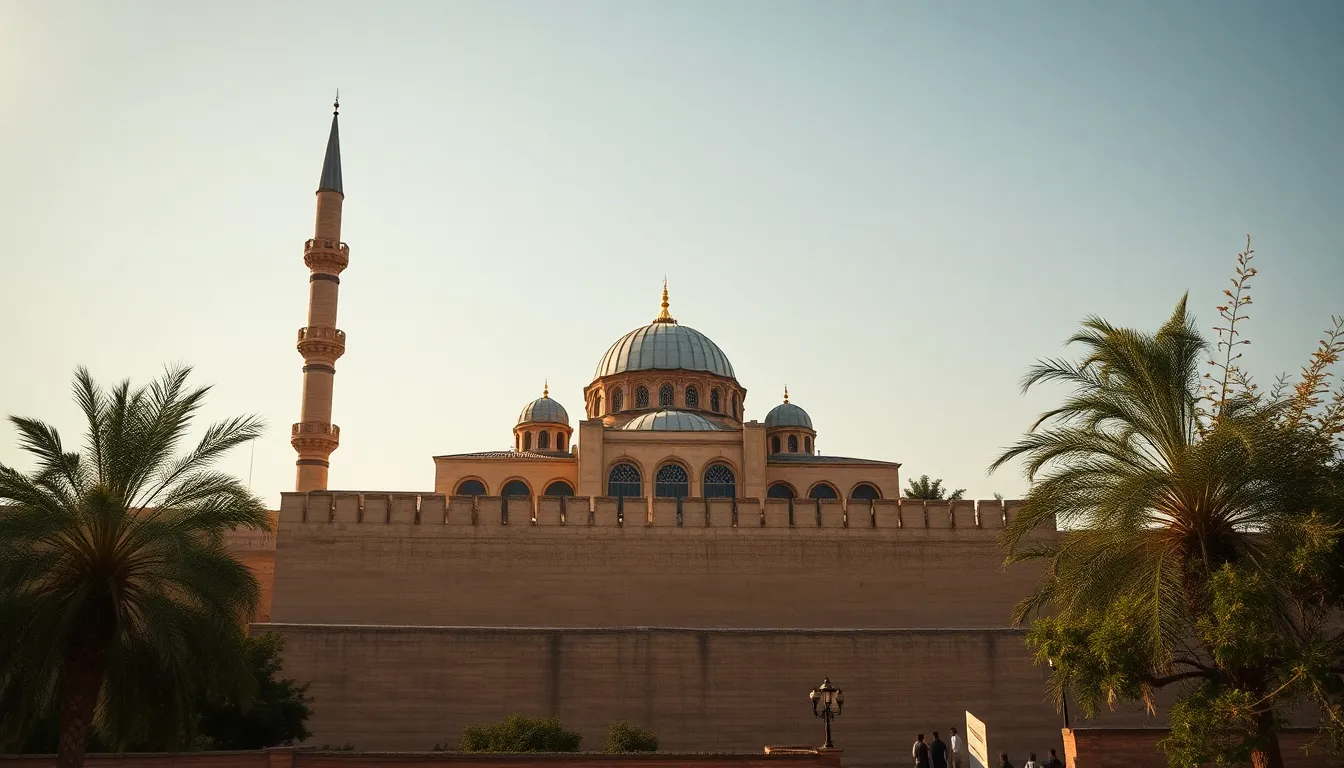
The first time I brought a group up to the Citadel, an older man in the congregation stopped at the parapet, looked out over the whole of Cairo, and did not say anything for a long while. Then he turned to me and said, “Now I understand the size of this place.” He did not mean the fortress. He meant Egypt. He meant the weight of the history we had been reading about all week. The Citadel does that to people. It sits on a spur of the Mokattam hills, above the haze and the traffic, and from up there the city that swallowed every empire that ever came through finally holds still long enough to be seen.
Most groups visit the Citadel as a single stop on a busy Cairo day. I want to give you enough here to make that stop mean something, rather than be a photo and a walk back to the bus.
What the Citadel Actually Is
The Citadel of Cairo, known in Arabic as Qal’at Salah al-Din, was begun in 1176 by Salah al-Din al-Ayyubi, the Kurdish general the West remembers as Saladin. He was the same commander who led the Muslim armies against the Crusaders and retook Jerusalem in 1187. He built the Citadel as a fortified seat of government and a defense for Cairo, drawing on the military engineering he had seen in the Crusader castles of the Levant.
For nearly seven hundred years after that, the Citadel was the center of Egyptian power. The Ayyubids built it. The Mamluks, the slave-soldier dynasty that followed, expanded it and ruled from it for two and a half centuries. The Ottomans held it. Napoleon’s forces occupied it briefly. And in the early nineteenth century, Muhammad Ali Pasha, the founder of modern Egypt, made it his own, tore down much of the older Mamluk construction, and crowned the rock with the great mosque that now defines the skyline.
So when you stand inside the Citadel, you are not standing in one period. You are standing in eight hundred years of layered rule, each dynasty building over the last. That layering is the whole point, and it is what makes the place worth explaining to a group rather than just walking through.
Why It Matters on a Heritage Journey
I lead a lot of groups whose hearts are set on the biblical sites, the land of Goshen, the Sinai, the Red Sea coast. Those are the soul of an Egypt heritage trip, and I would never argue otherwise. But a faith journey that only touches the ancient and the biblical leaves out something honest about Egypt: this is a land where Jewish, Christian, and Muslim history have been pressed together for a very long time, and the Citadel is where you can see that pressing happen in stone.
The Crusader Connection
For Christian groups especially, Salah al-Din is not an abstract name. He is the figure on the other side of the Crusades, the man who took Jerusalem back from the Crusader kingdoms. Standing in the fortress he built, looking at the same defensive logic that shaped the castles of the Holy Land, gives a group a fuller and more honest picture of the medieval world the Bible’s lands lived through. It is one thing to read about the Crusades. It is another to stand on the parapet of the man who ended the first Crusader kingdom of Jerusalem.
A Window Onto Old Cairo
The Citadel also gives you the best single view in the city. From the terrace beside the Muhammad Ali Mosque, you can pick out the medieval skyline of Islamic Cairo, the minarets of the Sultan Hassan Mosque just below, and on a clear day the pyramids of Giza far off to the west. For a group that has spent days reading about this city’s role in Jewish and Christian heritage, having one place where the whole map lays itself out is a gift. I use the view as a teaching moment more than a photo stop.
Inside the Walls: What a Group Actually Sees
The Citadel is large, and you will not see all of it. Here is what I make sure my groups do not miss.
The Mosque of Muhammad Ali
This is the building everyone photographs, the great alabaster mosque with its Ottoman domes and twin pencil minarets, built between 1830 and 1848. It is sometimes called the Alabaster Mosque for the stone that sheathes its lower walls. Inside, the scale is hushed and enormous, with a vast central dome and a forest of hanging lamps. It is a working mosque, so groups need to dress modestly and women should bring a scarf for the head. We remove shoes at the entrance. I always remind groups that this is a place of prayer, not just a monument, and the respect shows.
The Older Mosques and the Military Museums
Below Muhammad Ali’s mosque sits the older Mosque of al-Nasir Muhammad, a Mamluk building from the early fourteenth century, plainer and much less visited, which I find more moving precisely because it is quieter. The Citadel grounds also hold several museums, including a national military museum housed in a former palace. For most faith groups these are optional, and I treat them as such. The strength of the visit is the mosques, the walls, and the view.
How Groups Visit, and the Practical Side
The Citadel works best as part of a half-day in Islamic and Old Cairo. A pattern I use often: the Citadel in the morning when the light is good and the heat is lower, then down to the Sultan Hassan and al-Rifa’i mosques at the foot of the hill, then into the medieval streets toward Khan el-Khalili. It flows naturally because everything is close, and it tells one continuous story of medieval Cairo.
A few practical notes from years of doing this:
- Allow about ninety minutes to two hours inside the Citadel for a group. Less than that and you are rushing the mosque and the view, which are the two things worth slowing down for.
- Modest dress is required for the mosque, covered shoulders and knees for everyone, a head covering for women. I tell groups this the night before so no one is caught out.
- The ground is uneven and there is climbing. For groups with older members, I plan the route to minimize stairs and build in shaded rest stops. The terrace has seating.
- Go earlier rather than later. Midday heat on the exposed hilltop is real, especially spring through fall. Morning visits are cooler and the photographs are better.
- Tickets and timing are straightforward, but the site is large and popular, so a guide who knows the layout saves a group from wandering and from the worst of the crowds at the mosque entrance.
This is the kind of on-the-ground sequencing my team handles so the group leader does not have to. You can see how that broader Cairo and Egypt itinerary fits together on our Egypt heritage destination page.
Fitting It Into the Bigger Picture
The Citadel pairs naturally with the other layers of Cairo’s heritage that most groups want to reach. If your congregation is tracing the Jewish story of the city, you will likely also want Ben Ezra Synagogue and the lesser-known sites I describe in our guide to hidden heritage sites in Egypt. If the climate and calendar are still open questions for you, our season-by-season guide to visiting Egypt walks through exactly when the hilltop visit is most comfortable. And if your itinerary is heading south to Luxor, the Colossi of Memnon make a fine companion stop on a Theban day.
The Citadel is not a biblical site, and I never present it as one. What it is, is the place where a group finally sees the full sweep of the city that has held Jewish, Christian, and Muslim history in the same hands for centuries. That perspective makes everything else on the trip land deeper.
FAQ: The Citadel of Salah al-Din
Who built the Cairo Citadel and when?
The Citadel was begun in 1176 by Salah al-Din al-Ayyubi, the general the West knows as Saladin, the same commander who retook Jerusalem from the Crusaders in 1187. He built it as a fortified seat of government and defense for Cairo. Later dynasties, the Mamluks and Ottomans, expanded it, and in the nineteenth century Muhammad Ali Pasha added the great alabaster mosque that now defines the skyline.
Is the Cairo Citadel worth visiting on a faith heritage trip?
Yes, especially as part of a day in Islamic and Old Cairo. It is not a biblical site, but it gives a group the single best view of the whole city, a direct connection to Salah al-Din and the Crusader era, and a clear picture of the layered Jewish, Christian, and Muslim history that defines Egypt. For Christian groups in particular, standing in the fortress of the man who ended the Crusader kingdom of Jerusalem is genuinely meaningful.
What should I wear to visit the Citadel and its mosque?
Modest dress is required because the Mosque of Muhammad Ali is an active place of prayer. Everyone should have shoulders and knees covered, women should bring a scarf to cover their hair, and shoes come off at the mosque entrance. I tell my groups this the night before so no one is caught unprepared.
How long should a group spend at the Cairo Citadel?
Plan about ninety minutes to two hours. That gives you time for the Mosque of Muhammad Ali, a look at the older Mamluk mosque, and unhurried time at the terrace overlooking the city, which is the part worth slowing down for. Less than that and the visit feels rushed.
What else can we see near the Citadel in one day?
The Citadel pairs naturally with the Sultan Hassan and al-Rifa’i mosques at the foot of the hill and the medieval streets leading toward Khan el-Khalili. A common pattern is the Citadel in the cooler morning, then down into the old city for the afternoon. Everything is close, and together it tells one continuous story of medieval Cairo.
If a meaningful day in Cairo is part of the journey you are planning for your community, I would be glad to help you build it. With fifteen or more participants, the group leader travels free, and my team handles all the on-the-ground arrangements so you can focus on leading your people. Contact us whenever you are ready to talk it through.