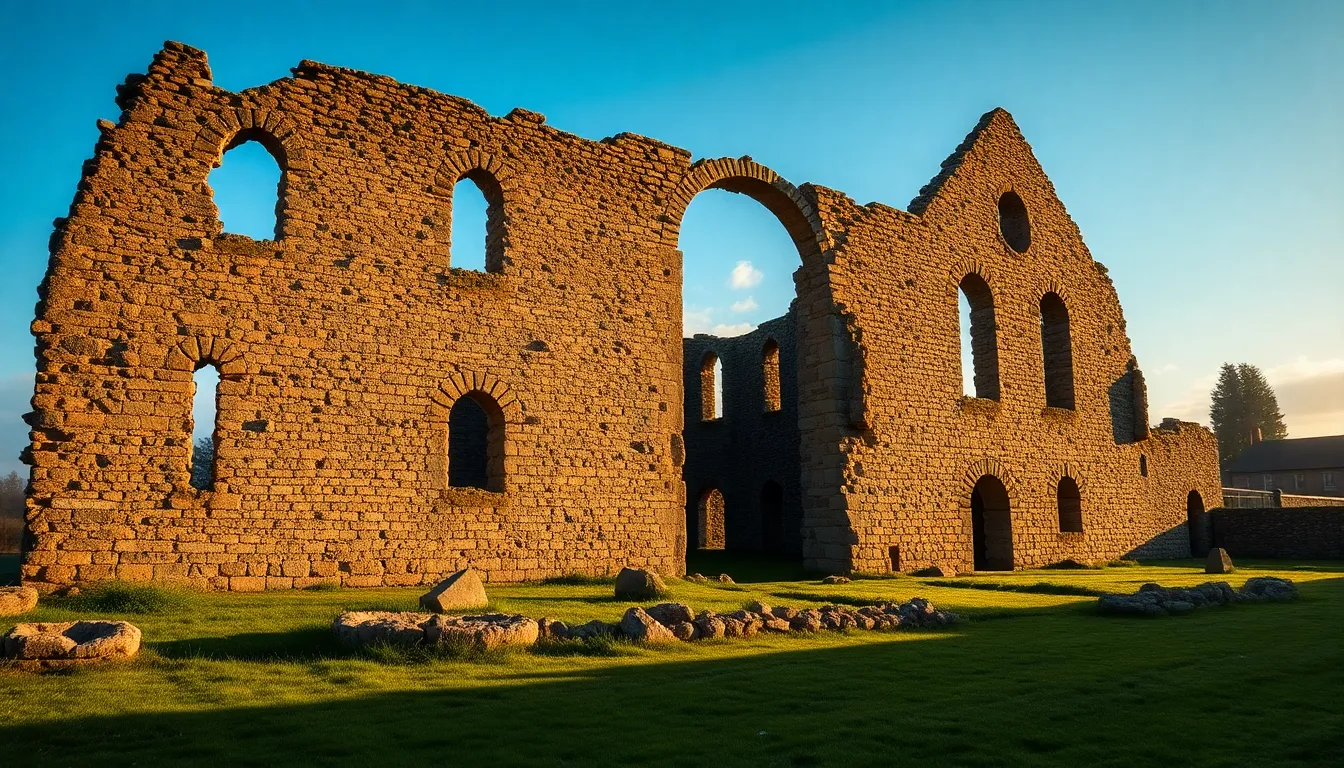
Ask most people where Scottish Christianity began and they will say Iona, Columba’s island in the west. It is a fair answer, and Iona is extraordinary. But it is not the earliest. More than a century and a half before Columba landed on Iona, a church already stood in the far southwest of Scotland, in Galloway, at a place called Whithorn. The man who built it was Ninian, and tradition calls his church the Candida Casa, the White House, the first Christian church in what is now Scotland. When I bring a group to Whithorn, I am bringing them to the oldest root of the faith in this land.
Whithorn does not have Iona’s fame or its crowds, and that is part of why I value it. It is a quieter, deeper place, and for a faith group willing to go to the far southwest corner of Scotland, it offers something rare: the sense of standing at the very beginning.
Who Was Saint Ninian?
Ninian is an early and somewhat shadowy figure, and I am always honest with groups about that. He lived around the late fourth and early fifth centuries, which places him before the great age of the Celtic saints, in the period when Roman Britain was beginning to fall away. Our main early source is the Venerable Bede, writing in the eighth century, who records that Ninian was a British bishop, trained at Rome, who preached to the southern Picts and built a church of stone at a place called Ad Candidam Casam, the White House.
The detail that the church was of stone matters. Bede notes it specifically because building in stone was unusual in Britain at that time, when most churches were timber. A whitewashed stone church would have shone, hence the name, the White House, the Candida Casa. Whether every detail of the tradition is historically precise is something scholars debate, and I say so to groups. But the core is solid: a Christian community existed at Whithorn from very early times, archaeology has confirmed early Christian activity on the site, and the memory of Ninian as its founder is ancient and continuous.
For a group leader, Ninian is a chance to talk honestly about how we know what we know in church history, where firm evidence ends and tradition carries the memory forward. Faith groups appreciate that honesty, and it makes the genuine antiquity of the site more impressive, not less.
Candida Casa: Scotland’s First Church
The Candida Casa is the heart of Whithorn’s significance. If the tradition is right, and the archaeology supports an early Christian presence, then here, in the fifth century, stood a working Christian church on Scottish soil generations before Columba, before the Synod of Whitby, before most of what we usually think of as British church history.
This makes Whithorn the cradle of Scottish Christianity. From this base Ninian and his successors are said to have evangelized the surrounding region and beyond. Whithorn became a center of Christian learning, a place where, according to tradition, other early saints came to study. Through the following centuries it grew into one of the most important pilgrimage sites in Scotland, with a great medieval priory built over the early foundation and a cathedral church dedicated to Saint Ninian.
When I stand with a group among the ruins and the early Christian stones at Whithorn, the point I make is the depth of time. We are not looking at the Reformation, or the Middle Ages, or even the age of the Celtic saints. We are looking past all of those, to the very first Christian presence in this nation. There are not many places where a group can stand that close to the beginning.
The Whithorn Pilgrimage: A Royal and National Devotion
Whithorn was not a forgotten backwater in the medieval period. It was one of the great pilgrimage destinations of Scotland, ranking with the most important shrines in the land. Pilgrims came from across the country and beyond to the shrine of Saint Ninian, seeking healing and blessing.
The pilgrimage had royal weight. Scottish kings and queens made the journey to Whithorn. The site drew the devotion of the crown as well as the common people, which tells you how central Ninian remained in Scottish religious life across the centuries. Pilgrims followed established routes through the Galloway countryside to reach the shrine, and the network of chapels and waypoints along the way marked Whithorn as the spiritual goal of southwest Scotland.
This deep pilgrimage history is a gift for a modern faith group, because it means that in coming to Whithorn you are not inventing a journey. You are rejoining one. Pilgrims have walked toward this place for well over a thousand years. Your group steps into a moving stream rather than starting from nothing, and that continuity is part of what makes a Whithorn visit feel like genuine pilgrimage rather than sightseeing.
What a Group Sees at Whithorn Today
Whithorn today brings together several layers in one walkable site. The ruins of the medieval priory stand on the early foundation. The early Christian stones, including some of the oldest Christian monuments in Scotland, are a tangible link to the first centuries of the faith here. Nearby, the Isle of Whithorn and St Ninian’s Cave add to the journey: the cave, on the coast a short distance away, is traditionally a place where Ninian withdrew for prayer and solitude, and it remains a place of quiet devotion, with pilgrims leaving small crosses on the shore.
That combination, the priory, the early stones, and the cave by the sea, gives a group both the institutional history and the personal, devotional heart of the story. The cave in particular tends to move people. There is something about a solitary place of prayer by the water, used for this purpose across so many centuries, that quiets a group without any prompting from me.
I usually frame Whithorn as a half to full day, depending on whether the group includes the cave and the wider Galloway pilgrimage landscape, and depending on how much quiet and walking the group wants to build in. Given the remoteness of the location, I encourage groups not to rush it. You have come a long way to the southwest corner of Scotland. Let the place do its work.
Whithorn in a Wider Scottish and British Journey
Whithorn rewards being set in context. It pairs powerfully with the wider Celtic story of Scotland and with the Reformation heritage of the Scottish church, showing the full arc from the very first church to the later transformations of Scottish Christianity. Its location in the southwest also places it close to the sea routes to Northern Ireland, which makes it a natural starting point for a journey that crosses to the Ulster-Scots and Presbyterian heritage just across the water. Beginning at the ancient root in Galloway and ending with the faith going out across the sea and on to America gives a group a journey with a real shape, from origin to outreach.
FAQ: The Whithorn Pilgrimage for Faith Groups
Is Whithorn really older than Iona?
Yes, according to the traditional accounts and supported by early Christian archaeology at the site. Ninian’s church at Whithorn, the Candida Casa, is dated to around the early fifth century, while Columba founded Iona in 563. That makes Whithorn the earliest known Christian church in what is now Scotland, more than a century and a half before Iona. Both are deeply significant, but Whithorn holds the claim to being first.
Who was Saint Ninian?
Ninian was an early British bishop, active around the late fourth and early fifth centuries, credited by tradition with founding the church at Whithorn and bringing Christianity to the southern Picts. Our main early source is the Venerable Bede. Some details of his life are debated by historians, but the antiquity of Christian Whithorn and the continuous memory of Ninian as its founder are well established. He is regarded as the apostle of the early Scottish church.
What is the Candida Casa?
Candida Casa means White House in Latin. It is the name given to the church Ninian is said to have built at Whithorn, so called because it was constructed of whitewashed stone, which was unusual and striking in a time and place where most churches were timber. The Venerable Bede records the name. It stands as the traditional first Christian church in Scotland, and the later priory and cathedral at Whithorn were built over its foundation.
Is Whithorn worth the journey to southwest Scotland for a group?
For groups drawn to the deepest roots of Christianity in Britain, very much so. Whithorn is more remote and far less crowded than famous sites like Iona, which is part of its appeal. The combination of the priory ruins, some of Scotland’s oldest Christian stones, and St Ninian’s Cave by the sea offers both genuine antiquity and a quiet, devotional atmosphere well suited to pilgrimage. We help groups plan the journey so the remoteness becomes a strength rather than an obstacle.
Whithorn is one of the most moving and least expected stops in a British pilgrimage, the very beginning of the faith in Scotland. Start with our United Kingdom spiritual sites guide, then read about planning a pilgrimage across Britain’s nations and the Presbyterian and Ulster-Scots heritage of Northern Ireland, since Whithorn makes a natural starting point for a journey that crosses the short sea to Ulster. Our United Kingdom destination page and our group heritage tours page explain how we structure these journeys, including free travel for group leaders bringing fifteen or more participants.
When you want to plan a Whithorn pilgrimage for your community, contact us and we will help you shape the journey.