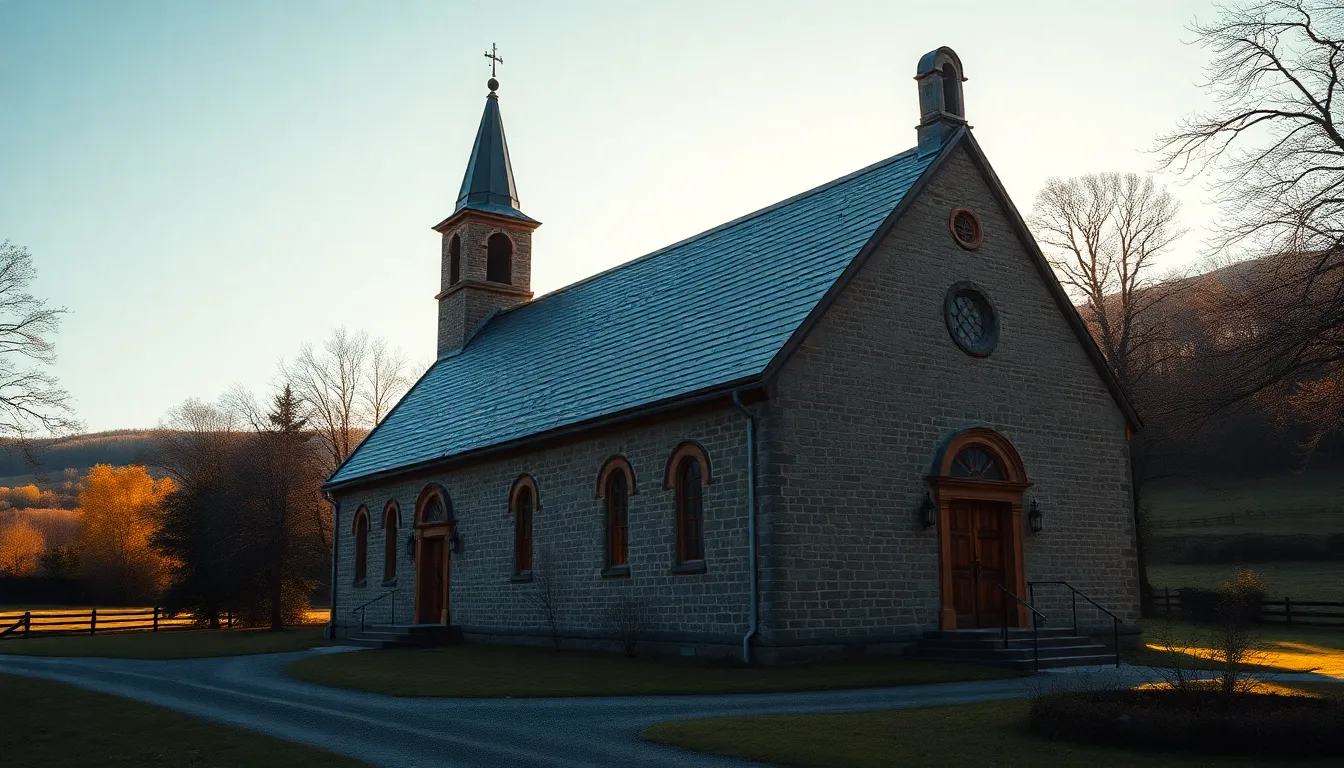
I remember a Presbyterian elder from Pennsylvania standing in a plain whitewashed meeting house in County Antrim with tears in his eyes. He had spent his whole life in churches built on this model, and he had never seen the original. “This is where my church came from,” he said. He was right, more literally than he knew. The Presbyterian tradition that crossed to America and shaped so much of its religious life did not begin in Scotland alone. It came through Ulster, carried by the Scots who settled there, and the story of that journey is one of the most rewarding a faith group can trace in Northern Ireland.
This is a heritage that gets overlooked. Visitors come to Northern Ireland for the Giant’s Causeway and the Titanic, and they miss the deep Presbyterian and Ulster-Scots story sitting all around them. Let me open it up.
The Plantation of Ulster: How the Scots Came
The story begins in the early seventeenth century. After a period of conflict and the flight of the old Gaelic nobility, the English Crown organized the Plantation of Ulster, a systematic settlement of the north of Ireland with Protestant settlers from Britain. A large share of those settlers came from the Scottish Lowlands, just a short sea crossing away across the North Channel. From the 1600s onward, tens of thousands of Lowland Scots crossed into Antrim, Down, and the wider province.
They brought their religion with them, and it was Presbyterian. These were people formed by the Scottish Reformation and the Kirk, with its distinctive structure of government by elders and ministers rather than bishops, its plain worship, and its high regard for preaching and scripture. Transplanted into Ulster, this Scottish Presbyterianism took root and grew into a tradition of its own, distinct both from the Anglican established church and from the Catholic majority of the island.
For a group leader, the Plantation is the essential frame. The Ulster-Scots are a people defined by a crossing, from Lowland Scotland to the north of Ireland, and their faith crossed with them. Everything else in this heritage flows from that movement.
The Presbyterian Tradition: Plain Worship and Strong Conviction
What does this tradition look like on the ground? It looks like the meeting house. Ulster Presbyterians did not build cathedrals. They built meeting houses, plain rectangular buildings, often whitewashed, with clear glass, a central pulpit, and seating arranged around the preaching of the word. The architecture itself is a statement of theology: the focus is on scripture proclaimed and a congregation gathered, not on elaborate ritual or imagery.
The tradition was structured and serious. Government by presbytery, by courts of ministers and elders, gave it a democratic character that historians have connected to later political developments. It valued education highly, founding schools and later academies, because a faith built on reading and understanding scripture needed a literate people. And it could be fiercely independent. Ulster Presbyterians frequently clashed with the established Anglican church, which for long periods restricted their civil rights, and that experience of being a dissenting minority shaped their outlook.
I find that Presbyterian and Reformed groups respond strongly to the meeting houses precisely because of their plainness. There is nothing to distract from the recognition: this is the root of our own way of worship. For groups from other traditions, the meeting houses offer a clear, tangible lesson in what Reformed Protestantism believed about worship and why.
Across the Atlantic: The Scots-Irish in America
Here is the chapter that lands hardest with American groups, and it is historically solid. From the early eighteenth century, large numbers of Ulster Presbyterians emigrated to the American colonies. Pressed by economic hardship and by the legal disabilities they faced as dissenters under the Anglican establishment, they crossed the Atlantic in successive waves, settling heavily in Pennsylvania and then moving down the Appalachian frontier into the Carolinas and beyond.
In America they became known as the Scots-Irish, or Scotch-Irish, and their influence was enormous, far out of proportion to their numbers. They carried their Presbyterian churches, their commitment to education, and their independent temperament into the new country. Numerous American presidents traced their ancestry to Ulster-Scots stock. The Presbyterian denominations of the United States owe a great deal of their early shape to these settlers and their ministers.
For a faith group from North America, this transforms a visit to Northern Ireland. You are not looking at someone else’s history. You are looking at the homeland of a tradition that helped build your own. That elder in the meeting house in Antrim was standing at his own source. Many of your group members may be too.
Sites to Build a Presbyterian and Ulster-Scots Journey
The heritage is spread across the province, concentrated in Antrim and Down. Several kinds of site come together to tell the story.
Historic meeting houses across rural Antrim and Down let groups see the plain Presbyterian style in its original setting. Some of the oldest congregations in Ireland are here, and a working meeting house with its surrounding graveyard tells you a great deal about a community’s life and faith. The Ulster-Scots story is also told through dedicated heritage and interpretive centers in the region, which set the meeting houses in their wider historical context, the Plantation, the emigration, and the language and culture of the Ulster-Scots.
Belfast itself carries the urban side of the story, with significant Presbyterian congregations and institutions, and it serves as a practical base. The ancestral and emigration dimension can be deepened with visits connected to families that crossed to America, which means a great deal to groups tracing their own roots.
I always tell group leaders to give this heritage room. It is quieter than the big-ticket attractions, and that is its strength. A morning in a rural meeting house and graveyard, unhurried, with time to talk about where your own congregation came from, will mean more than a packed schedule of major sites.
Holding the Whole Story Honestly
I want to be straightforward with groups about one thing. The history of Protestant settlement in Ulster is bound up with the longer and often painful history of Ireland, including the divisions that ran through the twentieth century. A good heritage visit does not pretend that story away. It approaches the Presbyterian and Ulster-Scots heritage with respect for its genuine faith and achievements, while remaining honest about the wider Irish context in which it sits. Group leaders consistently find that this honest framing makes the visit richer, not harder. Faith communities are well equipped to hold complicated history with grace.
FAQ: Presbyterian and Ulster-Scots Heritage for Faith Groups
Who are the Ulster-Scots?
The Ulster-Scots are the descendants of Lowland Scottish settlers who came to the north of Ireland from the early seventeenth century onward, chiefly during the Plantation of Ulster. They brought a Presbyterian faith and a distinct culture and speech. Many later emigrated to America, where they became known as the Scots-Irish. The community remains a significant presence in Northern Ireland, especially in Antrim and Down, with its own heritage, churches, and traditions.
Why is the Presbyterian tradition so strong in Northern Ireland?
Because the Scottish settlers who came during the Plantation of Ulster were formed by the Scottish Reformation and brought their Presbyterian church with them. Over the seventeenth and eighteenth centuries this transplanted Scottish Presbyterianism grew into a major tradition in Ulster, distinct from the Anglican establishment and the Catholic majority. Its plain meeting houses, government by elders and ministers, and emphasis on preaching and education are still visible across the province.
What is the connection between Ulster and American Presbyterianism?
A direct and substantial one. From the early eighteenth century, large numbers of Ulster Presbyterians emigrated to the American colonies, settling heavily in Pennsylvania and the Appalachian frontier. Known as the Scots-Irish, they carried their Presbyterian faith, their schools, and their independent character into America and strongly shaped early American Presbyterianism. Several US presidents descended from Ulster-Scots families. For American Presbyterian groups, Northern Ireland is in a real sense an ancestral homeland.
Is this heritage suitable for a non-Presbyterian group?
Yes. While Presbyterian and Reformed groups feel a particular personal connection, the Ulster-Scots story is engaging for any Christian group interested in how the Reformation spread, how faith and emigration shaped the modern world, and how a plain, scripture-centered tradition took root and traveled. The meeting houses, heritage centers, and emigration story make the history vivid and accessible regardless of a group’s own denomination.
The Presbyterian and Ulster-Scots heritage is one of the most rewarding and least expected threads in a Northern Ireland visit. Begin with our United Kingdom spiritual sites guide, then read about planning a pilgrimage across Britain’s nations and the Whithorn pilgrimage and Saint Ninian, since the Scotland and Ulster stories connect closely across the short sea crossing. Our United Kingdom destination page and our group heritage tours page explain how we structure these journeys, including free travel for group leaders bringing fifteen or more.
When you want to plan a Northern Ireland heritage journey for your community, contact us and we will help you build it.