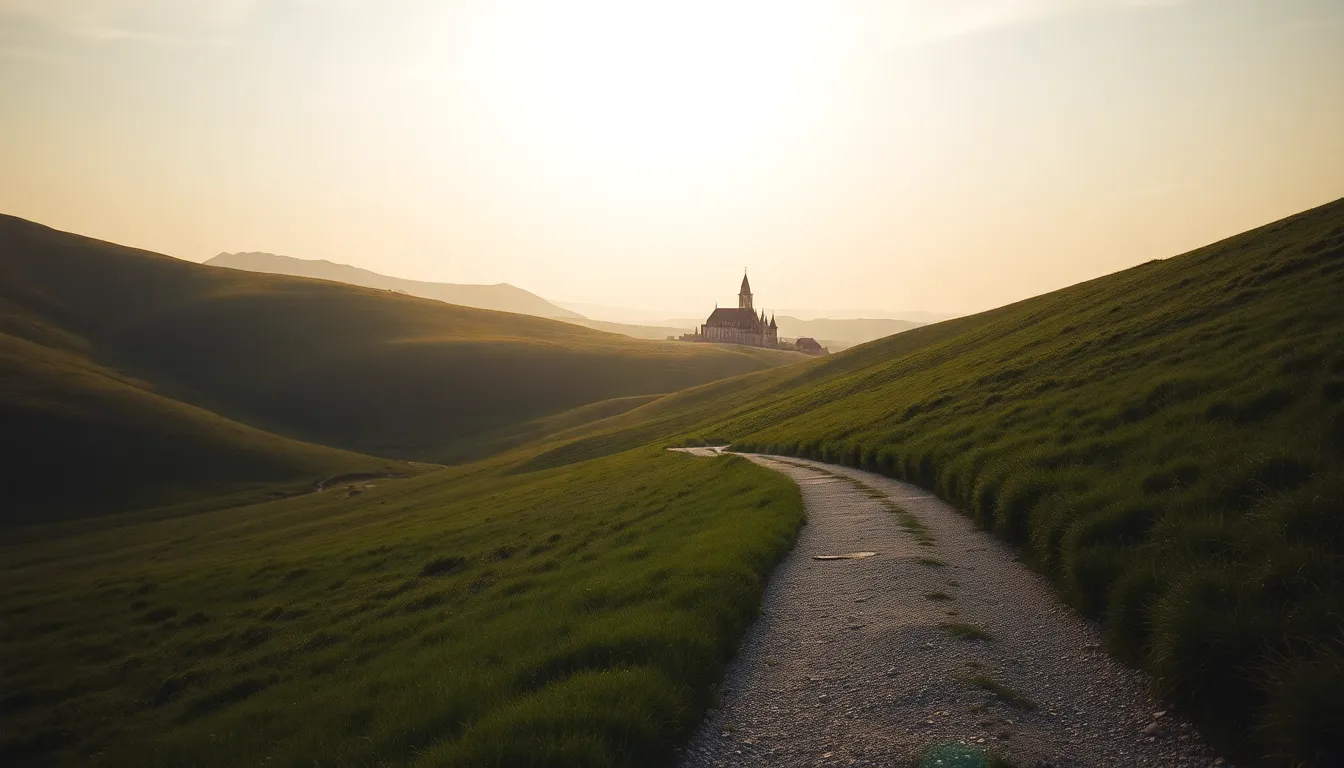
The hardest conversation I have with a group leader planning Britain is not about the sites. It is about restraint. Britain’s Christian heritage is so layered, and the distances between Wales, Scotland, and Northern Ireland are short enough on a map, that the temptation is always to fit in one more place. I have learned, after many years of leading these journeys, that a pilgrimage built on too many stops stops being a pilgrimage and becomes a tour. The whole point of a pilgrimage is that the journey itself forms you. That only happens if you give it time.
So this is a planning guide, not a list of attractions. I want to help you think through how to structure a Christian journey across Britain’s nations from end to end, in a way that holds together spiritually and works practically for a group. Let me take you through it the way I would on the phone.
First Decision: What Story Is Your Pilgrimage Telling?
Before you choose a single site, decide on the spine of your journey. Britain’s Christian heritage falls broadly into two great chapters, and the strongest pilgrimages are built around one of them, or around the relationship between the two.
The first chapter is the Celtic, the age of the saints. From roughly 400 to 700 AD, holy founders established Christianity across the western and northern fringes of Britain: Ninian at Whithorn in Scotland, the Welsh saints David, Teilo, and Beuno, Columba on Iona, Patrick reaching across to Ireland. This is ancient, monastic, landscape-rooted Christianity, built around wells, islands, and remote enclosures.
The second chapter is the Reformation and what followed: the Welsh Bible of William Morgan that saved a language, the Scottish Reformation and the Presbyterian tradition, the Ulster-Scots who carried that faith to Ireland and on to America. This is scripture-centered, congregational, world-shaping Christianity.
A pilgrimage can follow either spine. But the richest journeys I lead deliberately trace both, showing how the ancient Celtic foundations and the later Reformation flowering belong to one continuous story of faith in these islands. Deciding which spine you want is the first and most important planning step, because it determines everything that follows.
Second Decision: Which Nations, and How to Sequence Them
You do not have to cover all three nations. Many of the best pilgrimages take two, with enough depth to do them justice, rather than racing through all three. Here is how the nations relate.
Scotland and Northern Ireland connect naturally across the short North Channel crossing. The Celtic story links them, Ninian and Columba and Patrick moved through this same sea world, and so does the Reformation story, since the Ulster-Scots came directly from Lowland Scotland. A Scotland-and-Ulster journey has a real geographic and spiritual logic.
Wales stands somewhat apart, with its own intense concentration of Celtic saints and its unique Bible-and-language story. Wales can anchor a journey on its own, paired with parts of western England, or join a wider British circuit.
The sequencing principle I follow is simple: move with the story, not against it. If you are tracing the Celtic spine, follow the saints in a way that builds, ending somewhere that gives a sense of arrival, an Iona or a Whithorn. If you are tracing the Reformation spine, you might end with the emigration story in Ulster, the faith going out into the world. Let the shape of the journey carry meaning, not just convenience.
Third Decision: Pace and the Rhythm of a Pilgrimage
This is where I push hardest with group leaders. A pilgrimage needs a different rhythm from a sightseeing holiday. Three principles guide my planning.
First, fewer sites, more deeply. I would rather a group spend a full unhurried morning at one holy site, with time to walk, sit, worship, and talk, than visit three in the same window. The depth is where the formation happens.
Second, build in walking. The word pilgrimage means a journey on foot toward something sacred. Even short walks, the descent into St Davids, the final approach to a holy island, a stretch of an old pilgrim path, change the character of a visit. The body’s involvement is not decoration. It is the heart of what pilgrimage is.
Third, protect quiet. Faith groups need unprogrammed time, for prayer, for reflection, for the conversations that arise on their own. A schedule packed wall to wall leaves no room for the very thing people came for. I deliberately leave gaps.
I tell group leaders that the measure of a good pilgrimage is not how many sites your people saw. It is how changed they were by the ones they did.
Fourth Decision: Building Worship into the Journey
A Christian pilgrimage should pray, not just observe. The sites you are visiting are, many of them, living places of worship, and the strongest moments on these journeys come when a group worships in them rather than merely tours them.
That can take several forms. A group can attend a service at a working cathedral or meeting house and join the ongoing worship of that community. A group can hold its own short act of worship, a hymn, a reading, a prayer, in a holy place, where the site allows. And a group can mark the journey as a whole with a rhythm of daily devotion that ties the sites together, morning prayer before the day’s travel, reflection in the evening on what was seen.
Coordinating worship at the sites takes advance planning, and it is one of the things we arrange ahead of a group’s arrival wherever a site permits it. The difference it makes is large. A group that has sung in a Celtic chapel or prayed in a Presbyterian meeting house remembers the place differently from a group that only looked.
Fifth Decision: The Practicalities That Make or Break a Group Journey
The spiritual shape matters most, but the practical frame has to hold it up. A few things I always work through with a group leader.
Group size and economics. With Heritage Tours, group leaders travel free when they bring fifteen or more participants, which shapes the planning conversation with your church. Reaching that threshold is easier with enough lead time to present the journey to your congregation properly.
Lead time. For a multi-nation British pilgrimage, I encourage groups to plan eight to twelve months ahead at least, and more if the journey falls in a busy season or includes popular island sites that require ferry and access coordination.
Season. Britain rewards the late spring through early autumn window for these journeys, when daylight is long and the western and northern sites are most accessible. The remote Celtic locations in particular are easier and more rewarding outside the depths of winter.
Mixed-age accessibility. Some of the most meaningful sites involve walking, ferries, or uneven ground. A good plan accounts for the range of mobility in your group, so the people who cannot manage the longest walk still share fully in the journey.
These are exactly the details we work through together, so that the practical frame disappears into the background and your group is free to focus on the journey itself.
Putting It Together: A Sample Spine
To make this concrete, here is the shape of one journey I might propose, not a fixed itinerary but an example of how the principles combine. A Scotland-and-Ulster pilgrimage tracing both the Celtic and Reformation spines. Begin in southwest Scotland at Whithorn, Ninian’s Candida Casa, the earliest Christian site in Scotland, for the ancient root. Move through the Reformation heritage of the Scottish church. Cross the short sea passage to Northern Ireland for the Ulster-Scots and Presbyterian story, ending with the emigration chapter, the faith going out to the world. Two nations, one continuous story from ancient foundation to global reach, paced to allow walking, worship, and quiet throughout.
That is the kind of structure I help group leaders build, shaped to your congregation’s particular focus, calendar, and people.
FAQ: Planning a Christian Pilgrimage Across Britain
How many nations should a British pilgrimage cover?
Often two, done with depth, rather than all three in a rush. Scotland and Northern Ireland pair naturally across the short North Channel and share both Celtic and Reformation history. Wales, with its concentration of saints and its Bible-and-language story, makes a strong journey on its own or paired with western England. Covering fewer nations more deeply nearly always makes a better pilgrimage than trying to see everything.
What is the difference between a pilgrimage and a tour?
A tour is organized around seeing places. A pilgrimage is organized around being formed by a journey toward what is sacred. In practice that means fewer sites visited more deeply, walking built into the journey, worship at the holy places, and protected quiet time for prayer and reflection. The same destinations can be either, depending on how the journey is paced and framed. We plan these specifically as pilgrimages.
How far in advance should we plan a group pilgrimage to Britain?
For a multi-nation British pilgrimage, plan at least eight to twelve months ahead, and more if your journey falls in a busy season or includes island sites that need ferry and access coordination. Earlier planning also gives you the time to present the journey to your congregation and build your participant numbers, which matters because group leaders travel free with fifteen or more participants.
Can you build worship into the journey itself?
Yes, and we strongly encourage it. We help groups attend services at living cathedrals and meeting houses, arrange their own acts of worship at holy sites where permitted, and establish a daily rhythm of devotion that ties the journey together. Coordinating worship at the sites takes advance arrangement, which we handle ahead of your arrival. Groups that worship at these places, rather than only touring them, consistently describe a deeper experience.
What time of year is best for a British pilgrimage?
Late spring through early autumn is generally best. Daylight is long, and the western and northern Celtic sites, including remote islands and rural locations, are most accessible and rewarding then. Deep winter makes some of the most meaningful sites harder to reach. We help you weigh the season against your congregation’s calendar and any liturgical timing you want to honor.
A well-planned pilgrimage across Britain’s nations can be one of the most formative journeys a congregation ever takes. Start with our United Kingdom spiritual sites guide, then read about the Whithorn pilgrimage and Saint Ninian and the Presbyterian and Ulster-Scots heritage of Northern Ireland to see how a Scotland-and-Ulster journey takes shape. Our United Kingdom destination page and our group heritage tours page explain how we structure these journeys, including free travel for group leaders bringing fifteen or more participants.
When you are ready to begin planning, contact us. The planning conversation is one of my favorite parts of the whole journey, and I would be glad to have it with you.