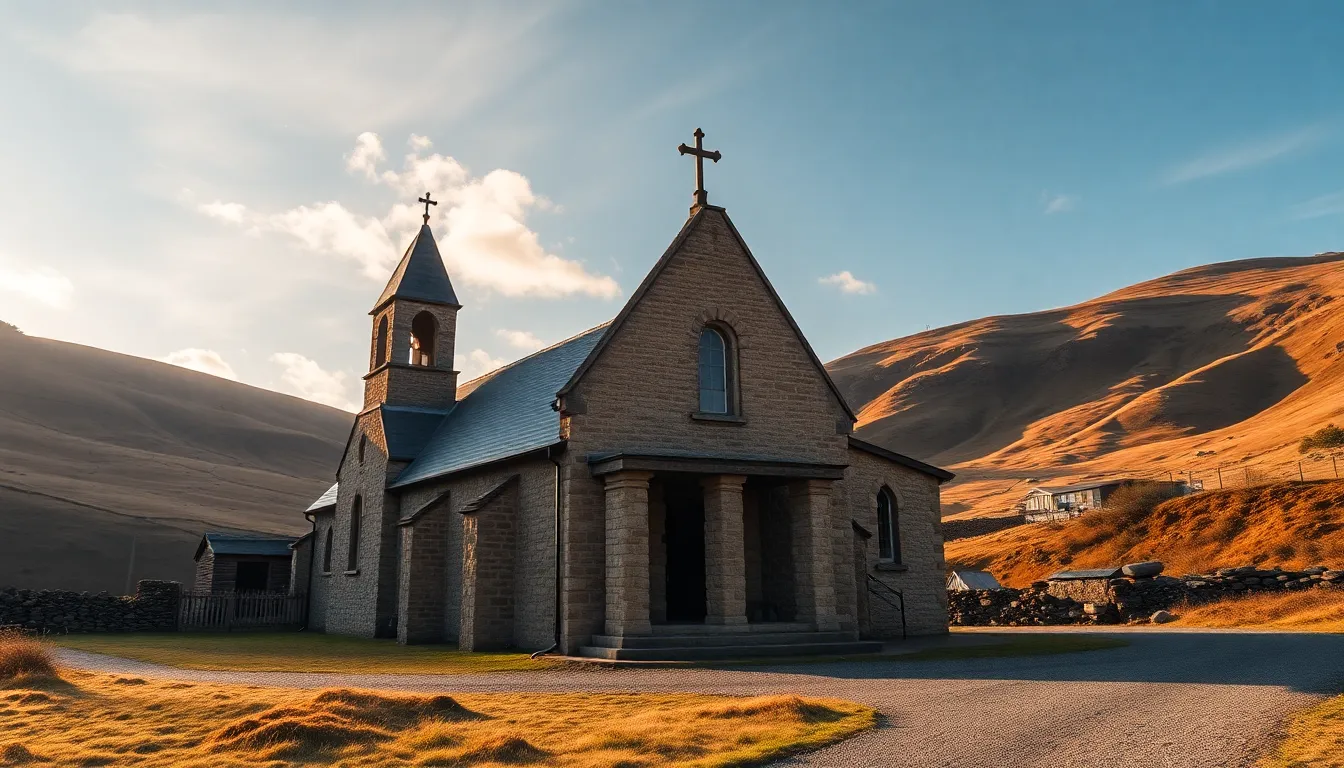
The Chapels That Built a Nation’s Soul
Drive up one of the South Wales valleys today and you will see them everywhere, even now: the chapels. Some still hold worship, some have become homes or workshops, some stand empty with their names still carved above the door in Welsh. The first time I brought a group up these valleys and explained that nearly every one of these buildings was paid for, brick by brick, by coal miners out of their own wages, the group fell quiet. Because once you understand that, you understand something essential about Wales: this was a nation whose soul was shaped in the chapel, not the cathedral.
I have led heritage groups across these nations for over twenty years, and the Welsh valley chapels are the place I take groups who want to understand the Nonconformist heart of Wales, the tradition of fervent, people-led, hymn-singing faith that made this one of the most chapel-going societies on earth. This guide orients you to the trail and how to plan it. For the wider picture across all three nations, start with our United Kingdom heritage travel guide, then come back here for the valleys.
What Nonconformity Means
To walk this trail well, a group needs to understand one word: Nonconformist. From the seventeenth century onward, growing numbers of Welsh people worshipped outside the established Church of England, in independent chapels, Baptist, Congregational, Methodist, and more. By the nineteenth century, this was the majority faith of Wales. The chapel, not the parish church, was the center of community life.
This mattered enormously. The chapel was where people worshipped, but also where they learned to read, to sing, to speak in public, to organize. The great Welsh tradition of choral singing was born in these buildings. So was much of Welsh political and social life. When you stand in one of these chapels, you are standing in what was, for generations, the true center of a Welsh community’s whole existence.
The Mining Valleys
The story reaches its peak in the mining valleys of the south. As coal transformed South Wales in the nineteenth century, workers poured into the valleys, and chapels rose with them at an astonishing rate. Communities that had been small farming settlements became dense industrial towns, and at the heart of each one stood the chapel, often several.
Chapels Built by Miners’ Wages
What moves people most is learning how these chapels were built. They were funded by the congregations themselves, by working miners and their families giving out of hard wages, sometimes building the chapel with their own hands after their shifts. The result was a landscape thick with places of worship, plain and dignified, raised by the very people who filled them. I take groups into one or two of these chapels and let the fact settle: every stone here was paid for by someone who went down a mine.
A Plain and Powerful Faith
The valley chapels are not ornate. Their power is in their plainness: the high pulpit, the curved gallery, the great pew-packed space built to hold a singing congregation. This was a faith of the word and the hymn, not of decoration. For a group used to cathedral Christianity, the contrast preaches its own sermon about what kind of faith this was, fervent, communal, and rooted in working people.
The Nonconformist Heart and the Revival
You cannot tell the story of the valley chapels without the Revival of 1904. The chapel culture of the valleys was the soil that the Revival grew in. When the awakening came, sweeping these communities under the preaching of the young miner Evan Roberts, it came through the chapels, filling them night after night with prayer and singing, and more than a hundred thousand people are said to have come to faith within a year.
So the chapel trail and the revival trail are really two views of the same story. The chapels are the structure; the Revival is the moment that structure caught fire. We map the awakening itself on the Welsh Revival of 1904 trail. And the valleys connect naturally to the coast and city around them, where the Gower and Swansea region makes a strong base for exploring the whole of South Wales. For a Christian group, walking from chapel to chapel through these valleys, hymns rising in the old buildings, is a chance to stand in the cradle of one of the great modern awakenings.
How the Chapel Trail Fits a Wider Trip
The valley chapel trail is the substance of any South Wales heritage trip. It pairs naturally with the Gower and Swansea region for a base and a coast to balance the intensity, and with the Revival trail to give the chapels their dramatic high point. Groups wanting the full sweep of Welsh faith can add the Celtic story west and north, from St Davids in Pembrokeshire to the North Wales saints’ coast, seeing how the ancient and the modern layers of Welsh Christianity sit within one small country.
Practical Notes for Group Leaders
A few honest things about planning the chapel trail.
First, work with a guide and an operator who can open doors, sometimes literally. Many of these chapels are no longer in regular use, and access is not always obvious. Knowing which chapels can be visited, and arranging it in advance, is the difference between looking at locked doors and stepping inside a building thick with history. This is exactly the kind of thing a heritage operator handles for you.
Second, choose a few chapels and go deep rather than racing past dozens. The valleys hold hundreds of chapels, and trying to see them all turns the trail into a blur. Pick a handful that tell the story well, and let the group truly absorb each one. A hymn sung inside one of these buildings teaches more than a windscreen view of twenty.
Third, prepare the group. A group that arrives understanding Nonconformity, the mining communities, and the Revival will see these plain buildings as the moving places they are. A group arriving cold sees only old chapels. The history is what makes the stones speak, so a short reading or session beforehand pays off.
A heritage tour through the valleys is not a standard coach trip. You want an operator who understands why your group is here, who can arrange access and worship in the chapels, and who handles the logistics so you can focus on leading your people. At Heritage Tours, we build every itinerary around your community’s interests, and with 15 or more participants, the group leader always travels free.
If the chapel heart of Wales is calling your community, start with our United Kingdom heritage destination and our group heritage tours. There is no obligation, just a conversation about what is possible.
FAQ: Welsh Valleys Chapel Heritage Travel
What is the Welsh valleys chapel trail about?
It follows the Nonconformist chapels of the South Wales mining valleys, the plain, dignified buildings that were the true center of Welsh community life for generations. These chapels were funded and often built by working miners out of their own wages, and they shaped Welsh faith, singing, and social life more deeply than any cathedral.
Why does Nonconformity matter to the story?
Because by the nineteenth century, most Welsh people worshipped not in the established church but in independent chapels, and the chapel became the heart of community life: worship, education, music, and organization all flowed through it. Understanding Nonconformity is the key to understanding why these buildings, and this nation’s faith, look the way they do.
How does this connect to the Welsh Revival of 1904?
Closely. The chapel culture of the valleys was the soil the Revival grew in. When the awakening swept through under Evan Roberts, it filled these very chapels night after night. The chapel trail is the structure of the story, and the Revival is the moment it caught fire. Many groups walk the two together.
Can we actually go inside the chapels?
Often yes, but it takes arranging. Many valley chapels are no longer in regular use, and access is not always obvious from the street. A heritage operator arranges entry in advance, which is the difference between looking at locked doors and standing inside. We handle this as part of planning your trip.
Do group leaders really travel free?
Yes. With 15 or more participants, the group leader travels free on all Heritage Tours group itineraries, including the Welsh valleys chapel trail. It is our way of honoring the work that pastors, rabbis, and educators put into bringing their communities together.