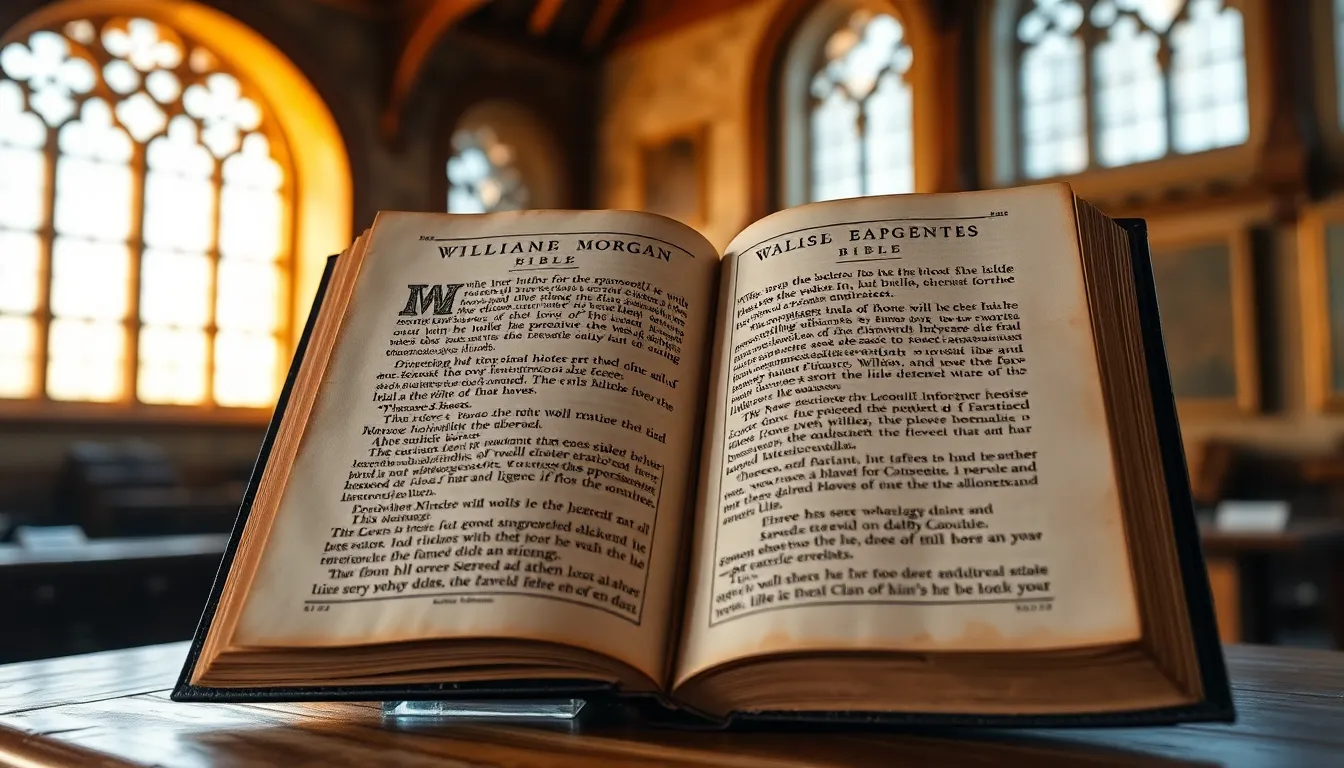
I had a rabbi on a Wales trip once who understood the William Morgan story faster than anyone I have ever guided. We were standing in a small church in the north, looking at a copy of the 1588 Welsh Bible, and I was explaining what it had done for the language. He cut in gently. “So this is your Septuagint moment. The text in the people’s own tongue, and the tongue survives because of it.” He had it exactly. The story of the Welsh Bible is a story about scripture, but it is also a story about how a language was rescued from disappearance by being made the language of the word of God.
For Christian and Jewish group leaders alike, this is one of the richest themes in Welsh heritage, because it sits right at the intersection of faith, language, and national survival. Let me lay out what happened and where you can go to stand inside the story.
Wales Before the Welsh Bible: A Language Under Pressure
By the sixteenth century, Welsh was an ancient language with a great literary tradition, but it was politically vulnerable. The Acts of Union of 1536 and 1543 joined Wales legally to England and made English the language of law, administration, and advancement. Welsh had no official status. There was a real prospect, over the long term, that it would decline into a spoken dialect with no public role, the path many minority languages have taken.
The Reformation cut across this in an unexpected way. Protestant conviction held that people should hear and read scripture in their own language. That principle, applied to Wales, raised an obvious problem: there was no complete Bible in Welsh. An English Reformation that gave the English their scripture but left the Welsh without theirs would either fail in Wales or drive the Welsh toward English. In 1563, Parliament passed an act ordering that the Bible and the Book of Common Prayer be translated into Welsh. The motive was partly to secure the Reformation in Wales. The effect went far beyond that.
William Morgan: The Scholar Who Did the Work
The New Testament and Prayer Book appeared in Welsh in 1567, translated chiefly by William Salesbury, a fine scholar whose version, however, was hard for ordinary people to read because of his unusual spelling and Latinized style. The full Bible, complete and readable, was the achievement of one man: William Morgan.
Morgan was born around 1545 at Ty Mawr Wybrnant, a farmhouse in a remote valley in Conwy, north Wales. He studied at Cambridge, mastered Hebrew, Greek, and Latin, and served as a parish priest while undertaking the immense labor of translating the entire Bible into Welsh. He worked from the original Hebrew of the Old Testament and the Greek of the New, not merely from English or Latin, and he did it largely in his rural parish, away from libraries and colleagues. The complete Welsh Bible was published in London in 1588.
What set Morgan’s work apart was its quality as Welsh. He did not produce a wooden, literal rendering. He wrote in a Welsh of such dignity, clarity, and rhythm that it became the standard for the written language. Where Salesbury had been learned but awkward, Morgan was learned and beautiful. His Bible could be read aloud in church and understood, and it sounded like the best Welsh anyone had heard.
How One Translation Saved a Language
This is the heart of the story, and it is the part group leaders most want to convey. For more than three centuries after 1588, the William Morgan Bible was the book every Welsh-speaking household possessed and read. In an age when most other reading was in English, the one book in Welsh that mattered, that was read daily, learned by heart, and heard every Sunday, was the Bible. Morgan’s Welsh became the standard against which all written Welsh was measured.
The effect on the language was decisive. A scattered set of regional dialects was given a single, prestigious, literary standard, fixed in the most important book in the culture. Generations learned to read in Welsh by reading scripture. When the Sunday school movement spread across Wales in the eighteenth and nineteenth centuries, it taught literacy through the Bible, and the Bible it taught was Morgan’s. Historians of the language are direct about this: without the 1588 Bible, Welsh might well have declined as so many other minority languages did. The scripture in the vernacular kept the vernacular alive.
This is why the Septuagint comparison my rabbi drew is so apt. A sacred text translated into the people’s tongue does not only carry the faith. It carries the tongue itself forward through history. For a faith group, that is a remarkable thing to contemplate standing in the church where Morgan once served.
The Sites of the Welsh Bible: Where to Stand in the Story
The story has real places attached to it, and that is what makes it a heritage journey rather than a lecture.
Ty Mawr Wybrnant, Morgan’s birthplace, is the obvious heart of it. The farmhouse in its quiet valley near Penmachno in Conwy is now in the care of the National Trust and holds a collection of Welsh Bibles. Reaching it requires a drive down a narrow valley road, and the remoteness is part of the point. From this isolated farm came the book that shaped a nation’s language. Groups often find the contrast between the humble setting and the vast achievement deeply moving.
St Asaph in Denbighshire is the other key site. Morgan became Bishop of St Asaph late in his life, and the small cathedral there, the smallest ancient cathedral in Britain, commemorates him and the other translators. A monument outside lists the men who gave Wales its scriptures. For a group, St Asaph closes the circle: the boy from the remote farmhouse ended his days as a bishop, honored in the church he served.
I usually frame these two sites as a pair, the beginning and the end of one man’s life laid out across north Wales, with the great work that joins them.
Building the Welsh Bible into a Faith Itinerary
The Welsh Bible theme weaves naturally into a wider north Wales journey. It pairs well with the Celtic saints of the north, Beuno’s country and the pilgrim routes, because together they tell the full arc of Welsh Christianity from its monastic beginnings to its Reformation flowering. It also connects to the chapel and Sunday school heritage of the eighteenth and nineteenth centuries, which carried Morgan’s Bible into every Welsh home.
For mixed Jewish and Christian groups, the language-and-scripture theme is unusually inclusive. The idea that a people’s survival can run through their sacred text is one that resonates powerfully across both traditions. I have seen this theme become the unexpected high point of a trip for groups who came expecting castles and landscape.
FAQ: The Welsh Bible for Faith Travel Groups
Who was William Morgan and what did he do?
William Morgan was a Welsh clergyman and scholar, born around 1545, who translated the complete Bible into Welsh, published in 1588. He worked from the original Hebrew and Greek and produced a translation of such literary quality that it became the standard for written Welsh. He later became Bishop of St Asaph. His Bible is widely credited with saving the Welsh language by giving it a prestigious, fixed literary standard read in every Welsh-speaking home for centuries.
How did the Welsh Bible save the Welsh language?
For more than three hundred years after 1588, Morgan’s Bible was the central book in Welsh life, read daily, learned by heart, and used to teach reading through the Sunday school movement. It gave the scattered dialects of Welsh a single respected standard and kept Welsh as a living language of literacy and worship at a time when English dominated public life. Language historians regard it as decisive in the survival of Welsh.
What sites tell the story of the Welsh Bible?
Two main sites. Ty Mawr Wybrnant, Morgan’s birthplace, a remote farmhouse near Penmachno in Conwy now cared for by the National Trust, which holds a collection of Welsh Bibles. And St Asaph in Denbighshire, where Morgan served as bishop and where a monument commemorates the translators. Together they mark the beginning and the end of his life and frame the story well for a visiting group.
Is the Welsh Bible theme suitable for a mixed Jewish and Christian group?
Yes, and it often works especially well for mixed groups. The core idea, that a sacred text in the people’s own language can carry a whole culture and language forward through history, resonates strongly with both Christian and Jewish traditions. Group leaders frequently tell us this theme became a shared point of connection between members of different faiths on the same trip.
The Welsh Bible is one of the most rewarding threads in a Wales heritage journey. Start with our United Kingdom spiritual sites guide, then read about the Celtic saints of Wales and Llandaff Cathedral and the heritage of Cardiff to see how the faith story of Wales fits together. Our United Kingdom destination page and our group heritage tours page explain how these journeys work, including free travel for group leaders bringing fifteen or more participants.
When you are ready to plan a Welsh Bible journey for your community, contact us and we will help you shape it.