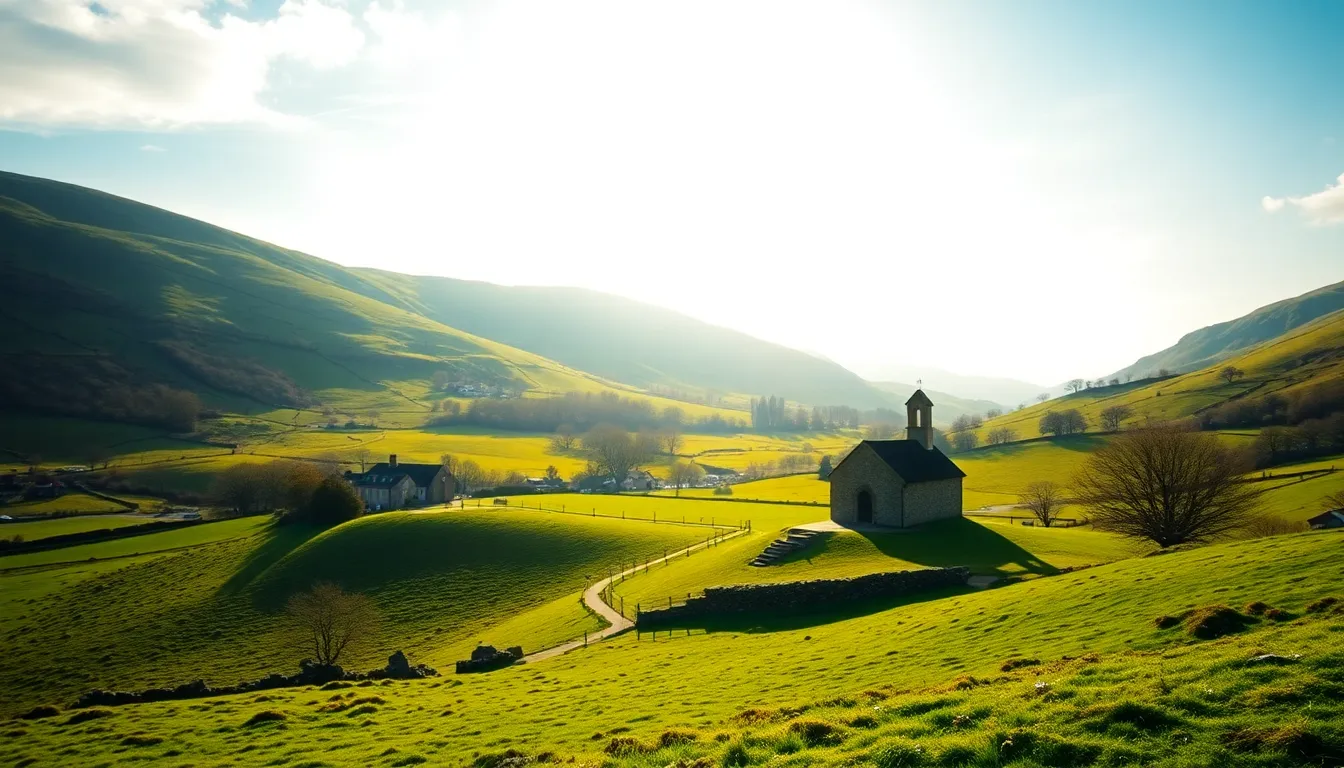
Most years, when a group leader tells me they want to walk the path of the Celtic saints “while it is still quiet,” I steer them toward spring. Not all of spring, though. Spring in Scotland, Wales, and Northern Ireland is three different trips wearing one name, and the difference between a March crossing and a May crossing is larger than most American groups expect.
Let me take you through the spring window the way I would on a planning call, month by month, so you can match it to your congregation. If you are still weighing spring against summer or autumn, our season-by-season hub for these nations sets the whole year side by side. This piece narrows in on the spring months alone.
What “Spring” Actually Means This Far North
Spring here is a season of recovery. The land is climbing out of a long, dark winter, the daylight is stretching back toward the long Celtic summer, and the ferry companies are rebuilding their schedules week by week. None of that happens on a fixed date. It happens gradually across March, April, and May, which is exactly why the month you choose matters so much.
The two forces that drive every decision in these nations, daylight and island access, are both in motion through spring. In early spring they are still limited. By late spring they are close to their summer best. Pick your month with that climb in mind.
March: The Edge of the Season
I will be honest with you, because honesty serves you better than a brochure. March is early. It can hand you a crisp, clear week with the first green coming into the glens, or it can hand you cold rain driven sideways off the Atlantic. Temperatures sit around 7 to 11°C (45 to 52°F), and the wind makes it feel colder.
Daylight in March is genuinely useful again, roughly twelve hours by the equinox, climbing toward thirteen by month’s end. That is enough to drive the Antrim coast or cross to a mainland site without racing the dark. But the island ferries are the catch. In March many island routes are still running winter or shoulder schedules, with fewer daily sailings and a real chance of weather cancellation. If reaching Iona is the heart of your trip, March is a gamble I would rather not take on your behalf.
Where March works beautifully: a small, flexible group focused on mainland sites. Think Iona’s home abbey can wait for a later trip, while you give your people the cathedral hill at Armagh, the Welsh chapels of the valleys, the Covenanter country of southwest Scotland. Fewer visitors, lower accommodation prices, and a stark, moving quality to the landscape.
April: The Season Turns
April is where spring becomes itself. By mid-April the daylight has stretched to around fourteen hours, the glens and valleys are vivid green, and the worst of the winter weather is genuinely behind you. Temperatures climb to about 9 to 14°C (48 to 57°F). Crucially, most island ferry routes have moved onto their summer timetables by Easter, which means access to Iona and the Hebrides becomes reliable in a way it simply is not in March.
For Christian groups, April usually carries Easter, and that changes the texture of the whole journey. Walking among the Celtic saints in the weeks around Easter gives every site visit a liturgical frame. Standing in Iona Abbey in Eastertide is not the same as standing there in July, and the people in your group feel that difference without anyone having to explain it.
One practical note. Easter itself draws British domestic travelers, so the few days around the holiday see busier sites and tighter accommodation. I usually plan a group either side of Easter week rather than straight through it, which keeps the resonance while easing the crowds.
May: My Quiet Favorite
If you press me for a single spring recommendation, it is May, and it is not close.
By May the daylight is generous, fifteen hours and climbing, with long, soft evenings that let you linger at a site instead of rushing the bus back. Temperatures sit around 11 to 16°C (52 to 61°F), the landscape is at its greenest, and the ferries are running full summer schedules, so island access is dependable. And here is the part groups love: the high-summer crowds have not yet arrived. You can walk Iona Abbey or the cathedral close at St Davids without the late-June press of visitors.
May also tends to be the driest stretch of the spring, statistically speaking, across much of Scotland’s west and the Welsh coast. I will not promise you a dry week, because no honest guide can in these nations. But your odds in May are about as good as they get all year.
The one honest caveat for all of spring, and May included: the weather is changeable. A May week can be glorious or wet, sometimes both inside a single day. Pack as if both will happen, because they might. Layers, a real waterproof, and footwear that handles a damp abbey courtyard.
A Quick Month-by-Month Summary
- March: Early and changeable. Useful daylight, but island ferries often still on reduced schedules. Best for a small, flexible, mainland-focused group at lower cost.
- April: The season turns. Green landscape, ferries onto summer timetables by Easter, reliable island access. Easter brings liturgical depth and busier days right around the holiday.
- May: My top spring pick. Long daylight, full ferry schedules, greenest landscape, lighter crowds, and your best statistical shot at dry weather. Still pack for rain.
For the on-the-ground details that shift by season, our practical heritage travel tips for these nations go deeper on packing, driving, and pacing. If island sites are central to your hopes, read getting to Iona and the island sites before you lock a March or early-April date.
How Far Ahead to Book a Spring Group
For spring travel, eight to twelve months of lead time is comfortable for a group of fifteen or more. That gives you room to secure accommodation near the historic quarters, lock in ferry reservations for the island crossings, and build your group to the number that works economically. Group leaders travel free with fifteen or more participants, and earlier planning makes that threshold far easier to reach because you have time to market the trip properly to your congregation.
If your heart is set on the Easter window specifically, start at the longer end. Easter is the one stretch of spring where British domestic demand collides with yours, and the best hotels near the historic quarters go first.
FAQ: Spring Heritage Travel in the UK
What is the best spring month to visit Scotland, Wales, and Northern Ireland?
May, for most faith groups. You get fifteen hours of daylight, full ferry schedules for reliable island access, the greenest landscape of the year, lighter crowds than summer, and your best statistical odds of dry weather. April runs a close second, especially for Christian groups who want to travel around Easter for the liturgical resonance.
Can we reach Iona in spring?
By late April and through May, yes, reliably. Most island ferry routes move onto their summer timetables around Easter, so Hebridean crossings to Mull and across to Iona run a full daily schedule. In March, many island routes are still on reduced winter or shoulder schedules with a real chance of weather cancellation, so I would not build a March group around reaching Iona.
How cold is it, and what should we pack?
Spring temperatures climb from around 7 to 11°C (45 to 52°F) in March to 11 to 16°C (52 to 61°F) in May, and the Atlantic wind makes it feel cooler. Pack layers, a genuine waterproof jacket, and footwear that handles damp abbey courtyards and ferry decks. Plan for the possibility of both sun and rain in the same day, because spring here is changeable.
Is it worth traveling around Easter?
For Christian groups, yes. Walking among the Celtic saints in the weeks around Easter gives every site visit a liturgical frame that deepens the whole journey. The one trade-off is crowds: the few days right around the holiday draw British domestic travelers, so I usually plan a group just before or just after Easter week rather than straight through it.
How much daylight will we have in spring?
A lot more than most American groups expect, and it grows fast. Daylight runs about twelve hours at the March equinox, around fourteen by mid-April, and fifteen and climbing through May, with long soft evenings in late spring. That gives you real room for long drives to remote sites and island crossings without racing the dark.
Spring is the season I send most groups, but the right month inside it depends on your people, your calendar, and whether the islands are central to your hopes. That is a conversation worth having before you set a date.
Contact us and let’s find the spring window that fits your community.